
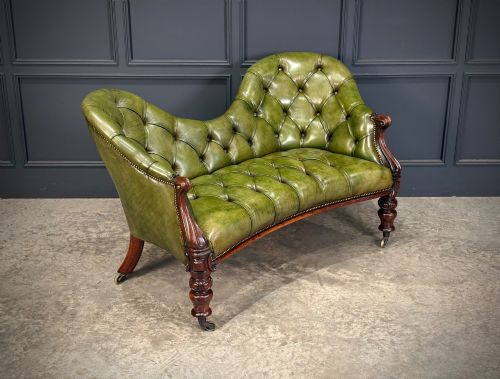
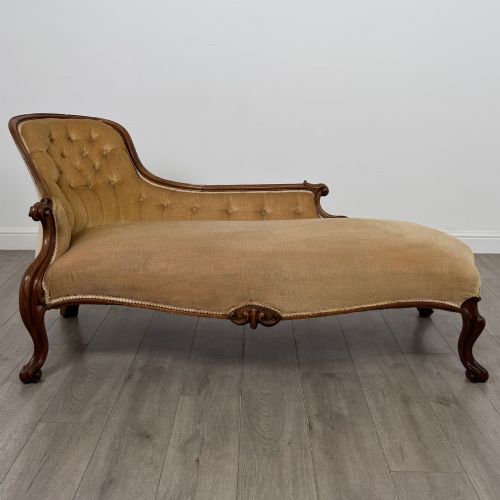
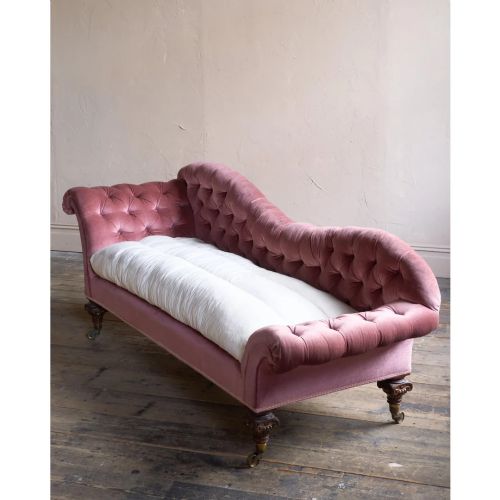
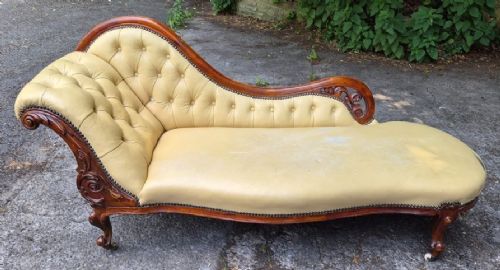


Carved Mahogany Chaise Longue
A carved mahogany chaise longue offers an elongated seat for reclining, combining timber frames with upholstered comfort across Victorian and Regency periods.
Carved Mahogany Chaise Longue
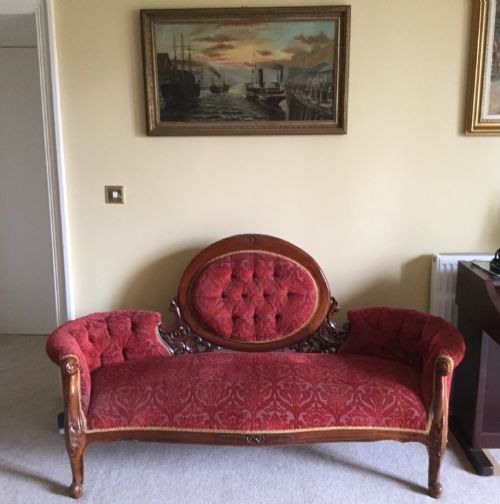
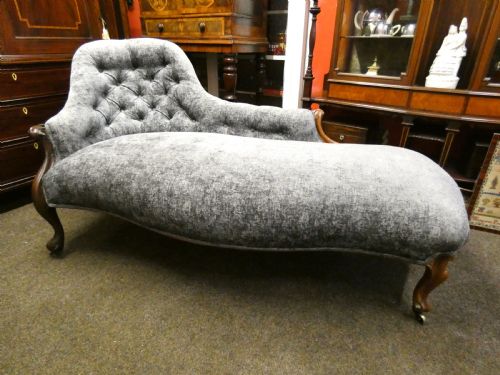
A carved mahogany chaise longue is a reclining seat designed for interior lounging, appearing frequently in Victorian and Regency forms across these listings. These pieces combine timber frames with extended seats built for resting in a semi-recumbent position.
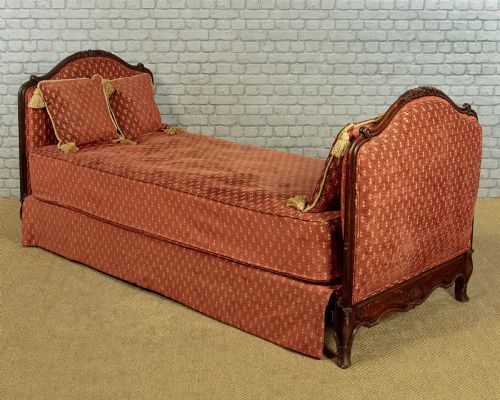
The versions most commonly met here span the nineteenth century, including early Victorian and William IV examples. Makers shaped solid timber into scroll ends, double-ended sofas, and récamier daybeds intended for principal rooms.
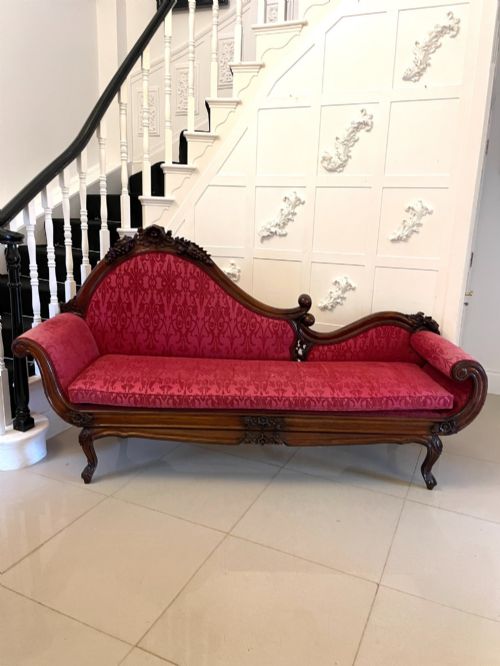
Many items feature showwood frames paired with upholstered surfaces in buttoned leather, damask, or brocade. Structural variations include ionic column legs, barley twist supports, and scroll arms.
How they were made
Cabinet makers used dense mahogany timber for the structural frames, allowing for deep carving along the crest rails, showwood surrounds, and scroll ends. Timber sections were joined using traditional woodworking joints before finishing with polish or wax.
Upholstery techniques involved sprung bases, horsehair stuffing, and webbing secured beneath layers of fabric, velvet, leather, or brocade. Metal components such as brass castors occasionally appeared on the feet to aid movement across carpets.
Some nineteenth-century models included conversation seats designed so two people could chat face-to-face without bumping their crinolines.
What varies in quality
The crispness and depth of the carved woodwork separate simpler production from finer examples. Sharp, well-defined scrollwork and detailed mouldings indicate skilled hand-carving by experienced cabinet makers.
The integrity of the internal frame and the quality of the timber grain also determine standing. Dense mahogany with rich figuring supports superior structural stability compared to plain or heavily repaired timber.
The Carved Mahogany Chaise Longue Glossary
- Récamier
- A type of daybed or chaise longue featuring two raised ends, typically asymmetrical. This form gained popularity during the nineteenth century and draws inspiration from neoclassical French seating.
- Showwood
- Exposed timber framing visible around the upholstered edges of a sofa or chaise longue. This highlights the carved mahogany structure rather than concealing it beneath fabric.
- Scroll arm
- A curved, volute-shaped armrest resembling a rolled scroll. It provides both structural support at the end of the seat and decorative contouring.
- Brocade
- A heavy, jacquard-woven fabric featuring raised patterns, often utilised in traditional upholstery. It adds texture and colour to nineteenth-century seating.
- Double-ended
- A seating design featuring two raised ends or backs facing opposite directions. This allows a person to recline comfortably facing either side of the room.
Carved Mahogany Chaise Longue: Frequently Asked Questions
Where were these placed in houses?
These pieces were typically positioned in principal reception rooms, drawing rooms, or large parlours where residents rested during the day. Their decorative backs and carved showwood allowed them to sit away from walls as freestanding furniture.
In larger country houses, they also appeared in private bedrooms or morning rooms. The design accommodated daytime lounging without requiring individuals to retire to a bed.
How do I identify a Victorian piece?
Victorian examples often feature heavier carved mahogany frames, deep buttoning, and scroll arms. Common variations include double spoon-backs and ornate showwood borders.
Many pieces from this era incorporate brass castors and dense upholstery fabrics such as velvet, damask, or brocade. The timber tends to be dark and heavily figured compared to earlier Regency designs.
How do I care for the upholstery?
Maintenance depends on the fabric material, whether it is leather, brocade, damask, or velvet. Regular gentle dusting prevents particles from settling into the weave or leather grain.
Leather surfaces benefit from appropriate conditioning balms to maintain flexibility. Professional cleaning is advisable for antique textiles to preserve the original fibres.