

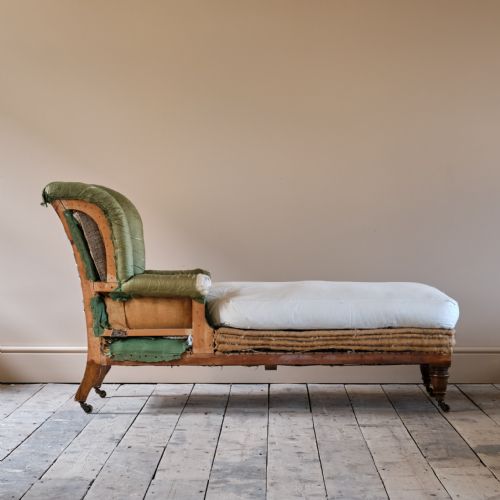


Upholstered Bed Frame
An upholstered bed frame brings textile warmth and carved timber structure together, offering a central bedroom piece drawn from Victorian, Edwardian, and continental traditions.
Upholstered Bed Frame
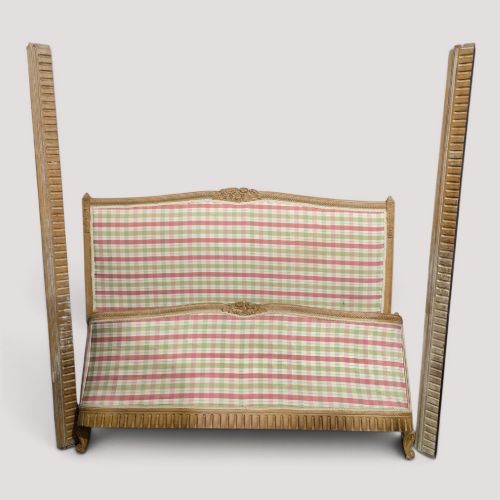
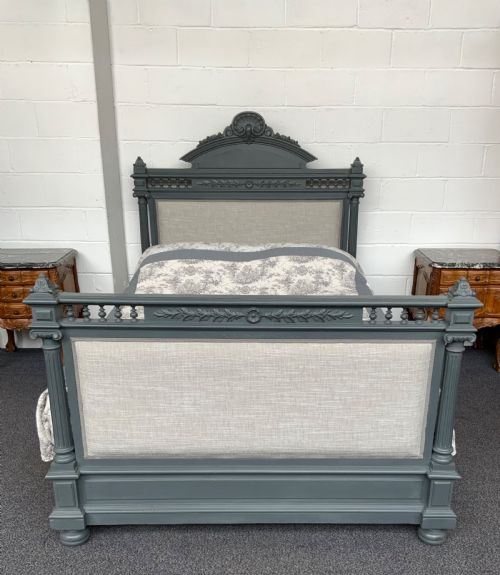
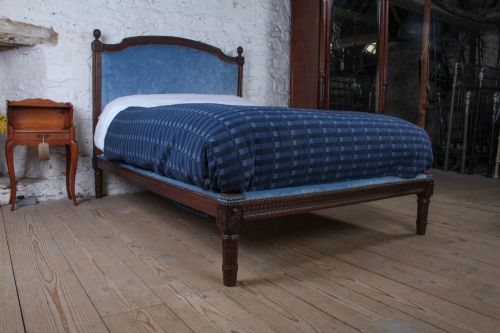
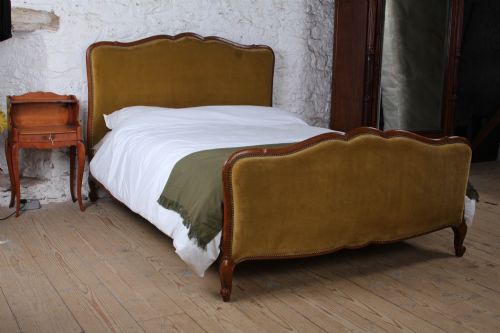
When you search for an upholstered bed frame, you examine large sleeping furniture built around supportive timber or metal structures with padded, fabric-covered headboards and footboards. The selections span double, king, and super king sizes, frequently drawing on French provincial design alongside British Victorian craftsmanship.
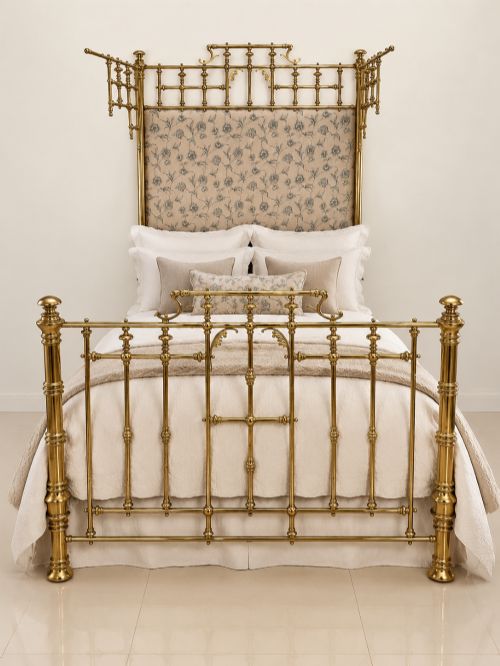
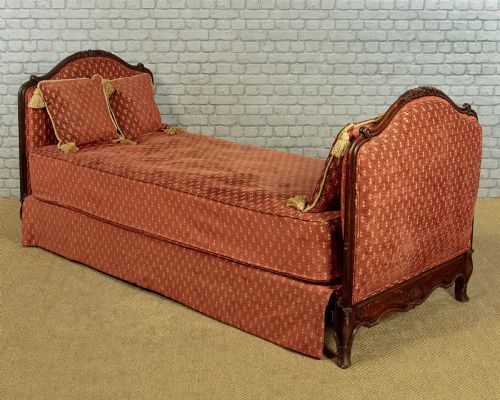
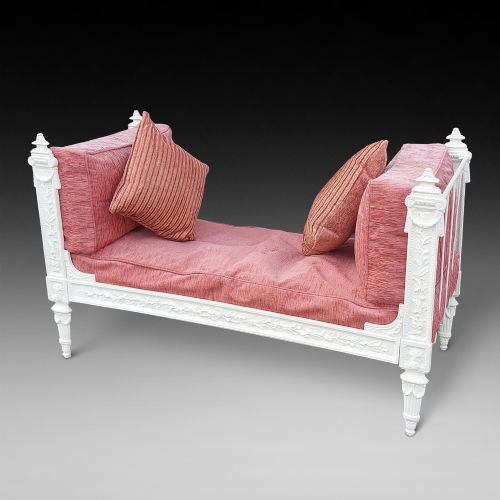
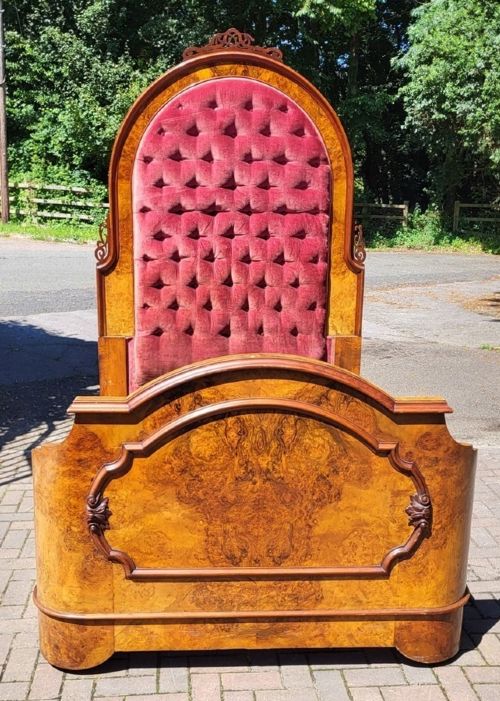
You meet pieces originating across the nineteenth and early twentieth centuries, encompassing Edwardian output, 1920s examples, and robust Victorian designs. Formats range from traditional high-back bedsteads and low-end frames to daybeds and window seats.
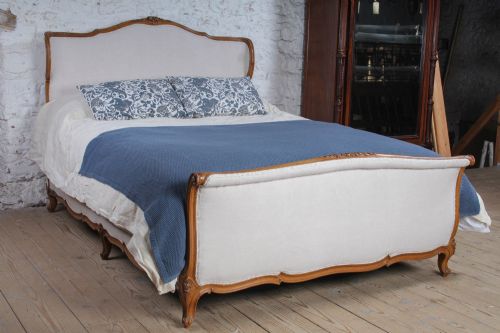
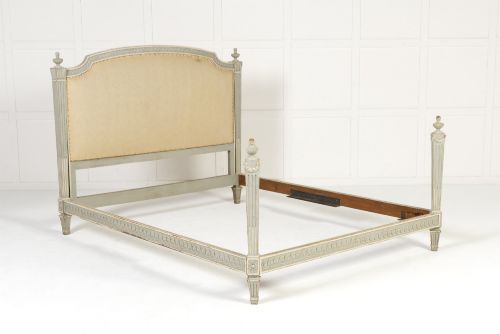
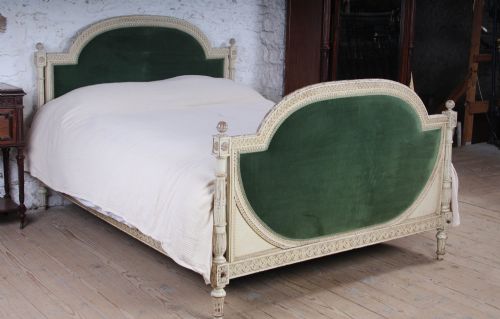
The aesthetic vocabulary leans heavily on continental taste, featuring Louis XV and Louis XVI styles alongside Italian Rococo and Empire influences. French chateau interpretations sit alongside straightforward English mahogany and oak frames.
Materials and construction
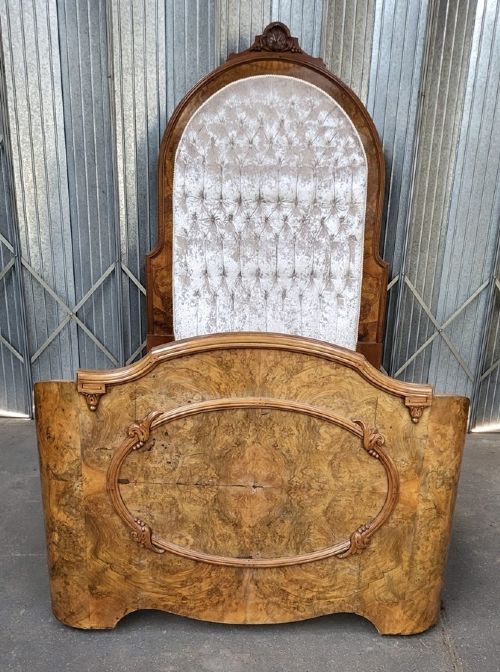
Makers utilised solid timbers such as mahogany, walnut, oak, and burr walnut for the structural frames, often applying paint, gilt decoration, or limed finishes to the wood. Carved wood details, including floral motifs and shaped mouldings, define the exposed structural elements.
Upholstery relies upon textiles like velvet and patterned fabric, applied over padded foundations on high backs, button backs, and daybed slats. Many pieces combine carved wooden frames with fresh fabric upholstery while retaining original structural joinery.
Listings feature painted wood, mahogany, walnut, and velvet across Victorian, Edwardian, and 1920s periods.
Evaluating craftsmanship
The distinction between standard production and exhibition quality rests in the depth and crispness of the hand-carved woodwork on the frame. Elaborate moulded details, balanced proportions, and dense hardwoods like burr walnut or rosewood elevate individual pieces.
Construction integrity depends on the rigidity of the side rails and the precision of the joints supporting the mattress base. Original finishes and intact carved elements carry more weight than heavily altered surfaces.
Howard And Sons·Harrods
The Upholstered Bed Frame Glossary
- Bedstead
- A framework of wood or metal supporting a bed. This term often appears in nineteenth-century descriptions for complete bed structures.
- Daybed
- A long seat that functions as a bed for lounging or sleeping. These items feature upholstered backs and ends suitable for daytime use.
- Louis XVI Style
- A neoclassical design style characterised by straight lines, symmetrical carvings, and classical motifs. Furniture from this tradition often displays geometric restraint compared to earlier curves.
- Burr Walnut
- Timber featuring intricate, swirling grain patterns formed from tree growths. Cabinet makers prized this veneer for high-end Victorian furniture panels.
- Half Tester
- A bed featuring a partial canopy extending from the headboard over the upper portion of the mattress. This style was popular during the Victorian era.
Upholstered Bed Frame: Frequently Asked Questions
How do I choose the right size?
Measure your bedroom floor space carefully, accounting for the projecting footboards and side rails typical of antique frames. Standard mattress sizes apply, but older frames can vary slightly from modern metric dimensions.
Verify whether the piece includes side rails and a suitable base to support modern mattresses securely. King and super king formats require substantial clearance within the room layout.
Are these beds comfortable for sleeping?
These frames accommodate contemporary mattresses once proper internal support slats or bases are installed. The solid timber construction provides a stable foundation for nightly use.
Upholstered headbacks offer comfortable support for reading or sitting up in bed. Many historic frames have been adapted with modern fixings while retaining their period appearance.
How do I care for antique upholstery?
Vacuum fabric surfaces gently using a soft brush attachment to remove dust accumulation. Protect velvet and antique textiles from direct sunlight to prevent fading.
Treat exposed wooden frames with appropriate furniture wax according to the timber finish. Avoid harsh chemical cleaners on painted or gilt surfaces.
How do I identify French style beds?
French style frames typically display sweeping curves, carved floral scrolls, and painted or gilt finishes characteristic of Louis XV and Louis XVI designs. Cabriolet legs and shaped headboards frequently distinguish them from British counterparts.
Labels or stamps from continental workshops sometimes appear on the timber rails, though many pieces rely entirely on stylistic markers.