



Upholstered Armless Chairs
Upholstered armless chairs are low seating forms designed for comfort and ease of movement, offering compact elegance for bedrooms and salons.
Upholstered Armless Chairs
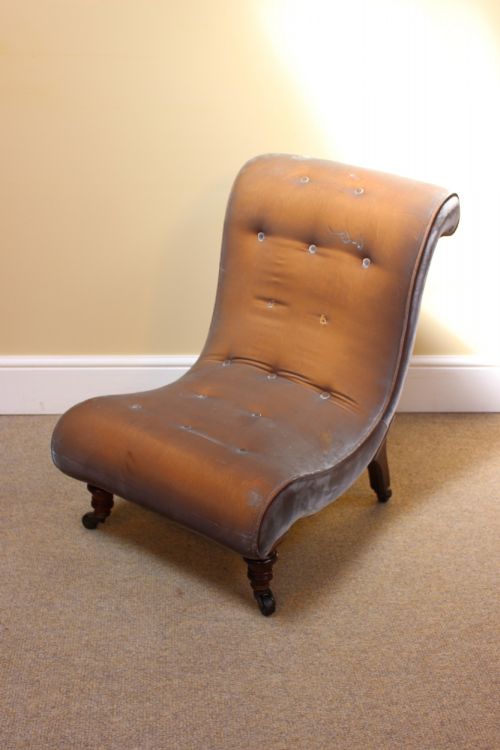
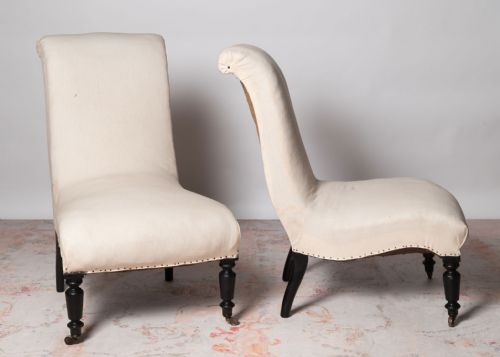
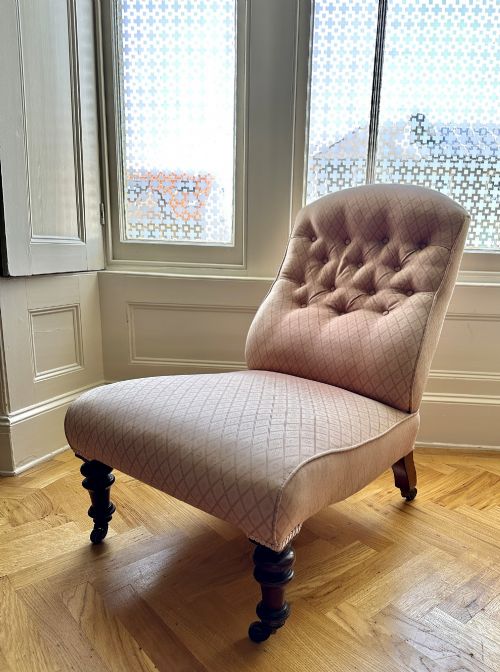
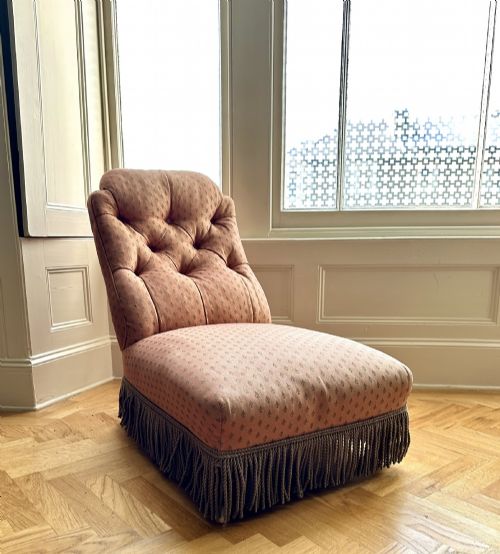
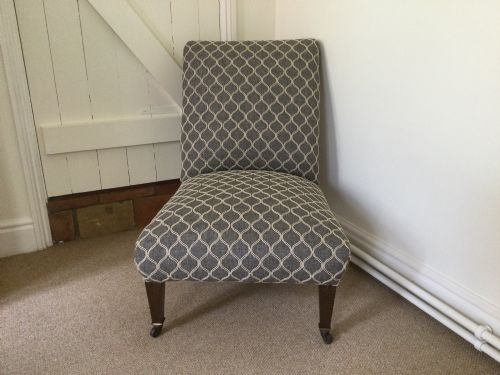
Upholstered armless chairs primarily appear in forms such as slipper chairs, nursing chairs, and bedroom chairs. These low-slung seating options emerge predominantly from the nineteenth century, including Victorian and Edwardian periods, alongside French Napoleon III and Regency examples.
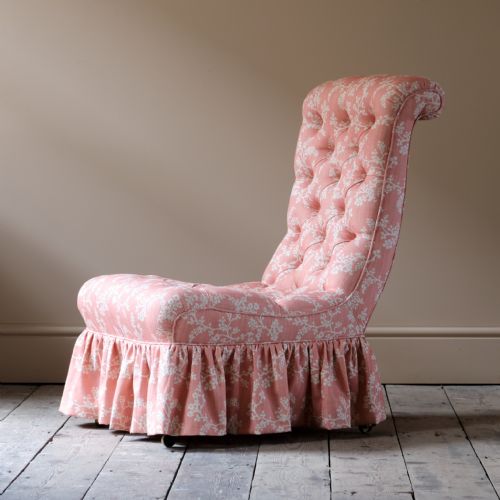
Buyers seeking upholstered armless chairs encounter pieces designed to sit close to the floor, often featuring deep seats and supportive backs. The selection spans walnut, mahogany, and rosewood frames paired with varied fabric coverings, from buttoned velvet to carpet upholstery.
How They Were Made
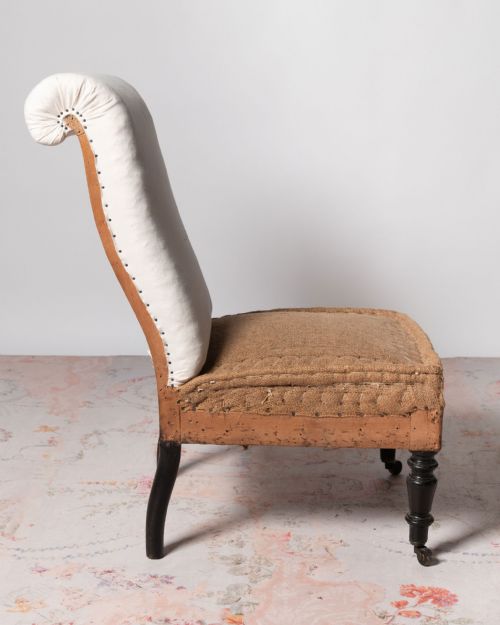
Frames rely on solid timbers such as walnut, mahogany, oak, and rosewood, shaped into cabriole legs, bobbin turnings, or ebonised and gilt supports. Woodworkers constructed these low frames to support sprung and padded upholstery upholstered in heavy textiles.
Craftsmen applied decorative details including brass castors, intricate wood carving, fringe trim, and button-backed padding. Exposed woodwork often received polishing, ebonising, or gilding to complement the rich fabrics.
The listings feature nineteenth-century and Edwardian pieces constructed from walnut, mahogany, rosewood, and oak, alongside fabric, velvet, and brass.
What Varies in Quality
The distinction between standard and exceptional pieces rests upon the integrity of the timber frame and the refinement of its carving. Superior examples exhibit substantial hardwood construction, such as walnut or mahogany, paired with balanced proportions and sculptural lines.
Maker attribution elevates a piece significantly, with workshop signatures or stamps from esteemed firms indicating superior cabinetmaking. Furthermore, the sophistication of the joinery and the original detailing, such as fine turnings and gilt accents, separate ordinary items from masterworks.
Gillows·Hindley and Sons·Howard and Sons
The Upholstered Armless Chairs Glossary
- Slipper chair
- A low-seated upholstered chair originally designed for bedrooms to allow women to dress comfortably. These chairs stand close to the floor and lack arms.
- Nursing chair
- A low nineteenth-century chair traditionally used by mothers for feeding infants. They feature supportive backs and comfortable, low seats.
- Cabriole leg
- A furniture leg that curves outward in a convex arc and then bends inward in a concave arc, ending in a pad or foot. This form derives from classical antiquity and appears frequently on Victorian seating.
- Button back
- An upholstery technique where buttons are pulled deep into the padding to create a diamond pattern. This method secures the internal stuffing while adding texture.
- Ebonisation
- A chemical or staining process applied to timber to imitate costly ebony. Cabinetmakers used this finish to create a dramatic black surface, often highlighted with gold leaf.
Upholstered Armless Chairs: Frequently Asked Questions
What is a slipper chair?
A slipper chair is a low-seated, armless chair originally designed for nineteenth-century bedrooms. Its low profile made it practical for dressing and putting on footwear.
Today, these chairs function well as accent seating in living spaces or dressing rooms due to their compact footprints.
How do I date an antique chair?
Dating relies on examining the timber species, framing techniques, leg styles, and upholstery methods. Nineteenth-century pieces often feature solid walnut or mahogany frames with hand-turned legs.
Comparing structural details and decorative motifs against documented period examples helps confirm the approximate decade of manufacture.
Where should I place these chairs?
These chairs suit smaller spaces where traditional armchairs overwhelm the room layout. Bedrooms, dressing rooms, and corners of sitting rooms provide ideal locations.
Their armless design allows them to sit neatly under window frames or beside low tables without blocking sightlines.
What fabrics were originally used?
Original coverings included woven carpets, rich velvets, and patterned textiles secured with decorative fringe or brass piping. Upholstery choices evolved from heavy Victorian wools to lighter Edwardian treatments.
Many surviving pieces retain their historic fabric or showcase subsequent period re-upholstery.