


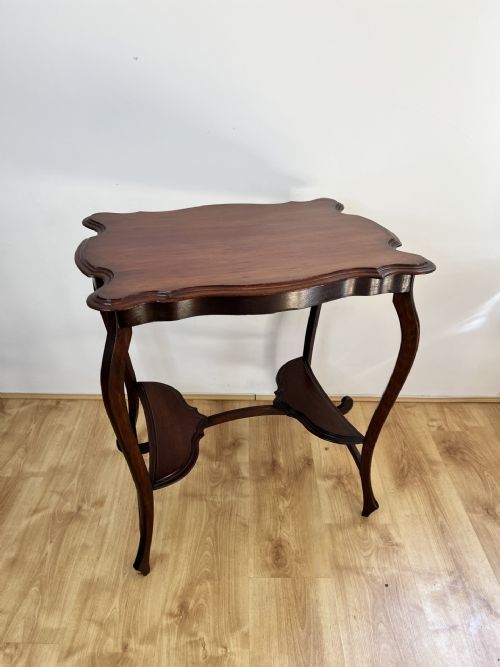


Undertier Accent Table
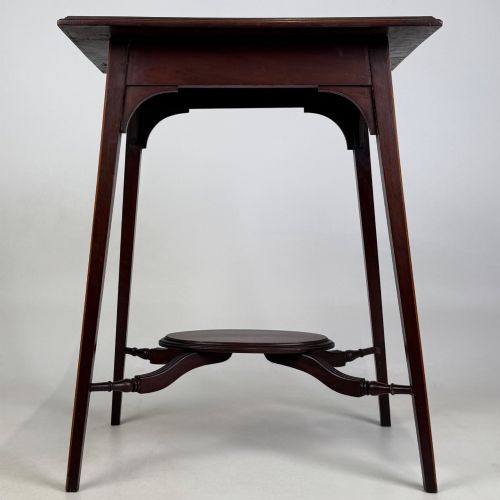
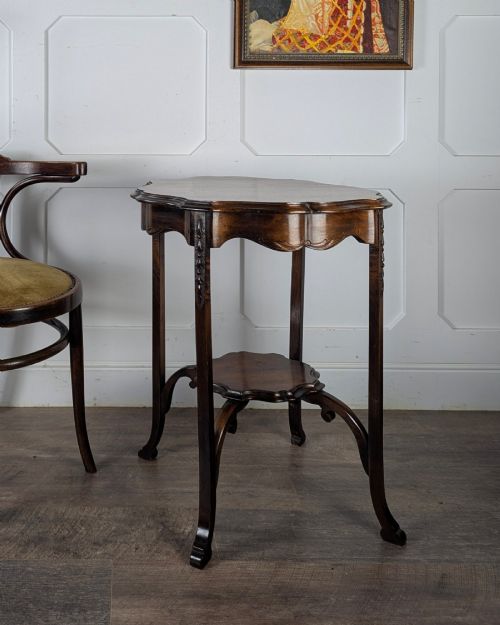
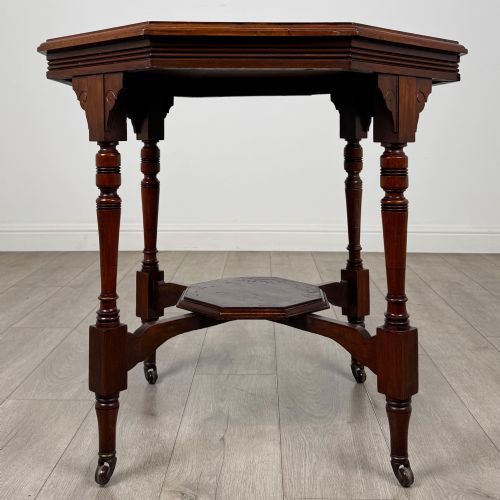
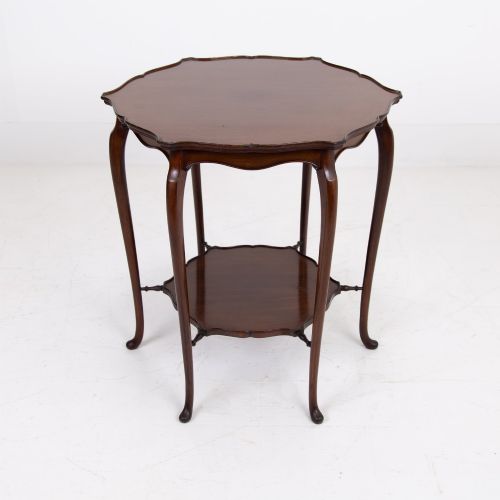
An undertier accent table brings useful surface space and architectural interest to a room through a secondary lower shelf.
Undertier Accent Table
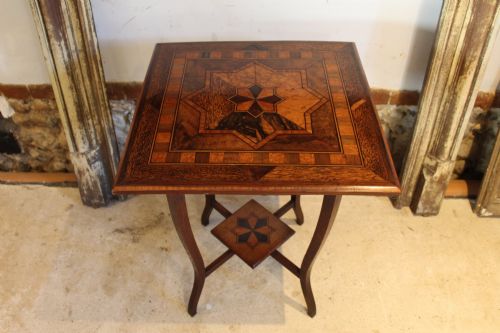
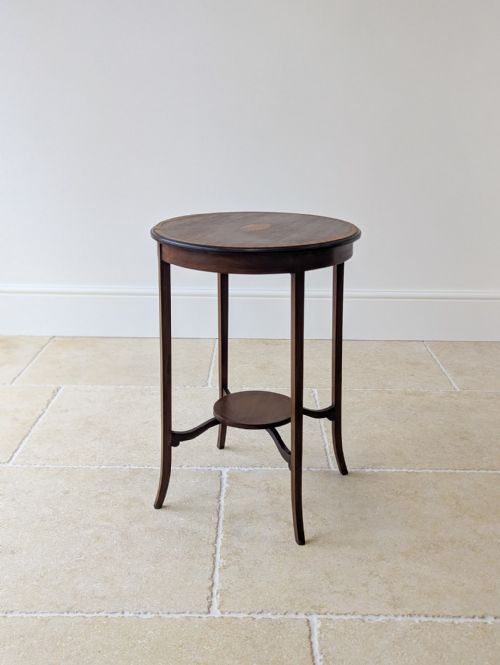
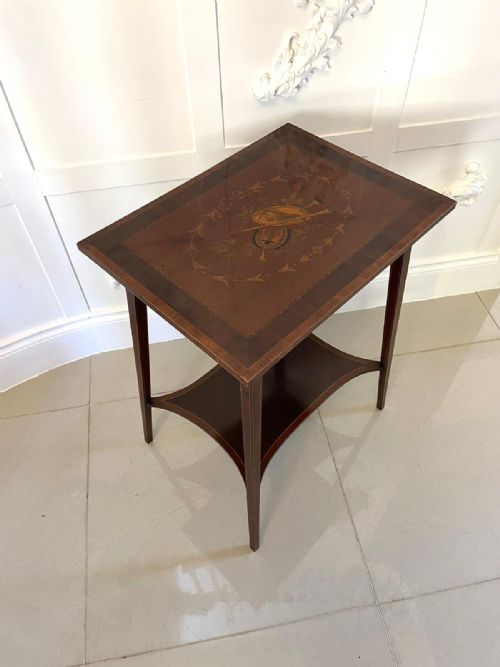
When you search for an undertier accent table, you encounter practical side and occasional tables designed to hold lamps, books, or decorative objects. The most common versions on this page date from the Edwardian period and the early twentieth century, offering portable surface utility.
Makers shaped these occasional pieces in circular, oval, octagonal, and kidney-shaped forms. Many rely on slender turned legs or tapered supports to hold the lower undertier shelf firmly beneath the main surface.
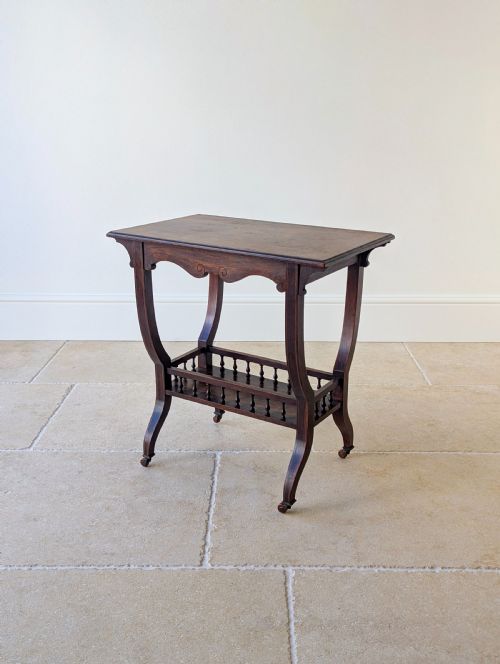
Victorian and nineteenth-century examples also appear, alongside rustic cricket tables and larger centre tables. These variations give buyers a choice between refined parlour furniture and simpler country house forms.
Materials and construction
Cabinet makers constructed these tables primarily in mahogany, walnut, and rosewood, frequently applying satinwood, boxwood, and ebony inlay to define the borders and tops. Marquetry decoration and painted finishes add visual depth to specific Edwardian and nineteenth-century examples.
Joiners integrated the undertier shelf directly into the leg structure to brace the legs and provide a secondary display surface. Turned wooden legs, carved details, and brass accents complete the construction of these lamp and occasional tables.
A travelling table from Paris proves that even occasional furniture once packed its bags for grand continental tours.
Distinctions in quality
The distinction between standard examples and the finest pieces rests on the precision of the timber selection and inlay work. Finely figured mahogany or rosewood paired with intricate marquetry and crisp satinwood banding separates superior tables from plain production pieces.
Structural refinement also defines the better items, visible in balanced proportions, neatly turned legs, and sturdy undertier attachments. Tables bearing maker labels or specific retail attributions demonstrate higher workshop standards.
Haentgos Freres Paris·Liberty of London
The Undertier Accent Table Glossary
- Undertier
- A secondary shelf positioned beneath the main top of a table. This lower shelf provides extra surface area while bracing the legs.
- Cricket table
- A small, lightweight wooden table typically featuring three splayed legs and a circular top. These utility tables originated in rural houses during earlier centuries.
- Marquetry
- Decorative veneer work arranged in pictorial or geometric patterns using various coloured woods. Craftsmen applied these patterns to tabletop surfaces and borders.
- Occasional table
- A small, portable table designed to serve light, specific purposes around a room. They function easily beside chairs or sofas as lamp and side tables.
- Satinwood
- A durable, lustrous hardwood with a yellowish golden sheen. Cabinet makers utilised this timber for contrasting inlay work and decorative painted table tops.
Undertier Accent Table: Frequently Asked Questions
What is an undertier accent table used for?
These pieces serve primarily as side, lamp, or occasional tables placed beside seating to hold lighting, drinks, or small objects. The lower shelf offers additional space for books or display.
Their compact size allows them to move easily around a room as living arrangements require.
How do I identify an Edwardian occasional table?
Edwardian tables frequently feature light timbers such as mahogany or satinwood enhanced by delicate inlay work, stringing, or painted decoration. They often exhibit slender legs and refined proportions influenced by eighteenth-century revivals.
Construction methods from this period typically show machine-cut components combined with hand-finished decorative details.
What timber was used most often?
Mahogany appears most frequently across these listings, often selected for its rich grain and stability. Walnut and rosewood also feature prominently in lamp and occasional tables.
Inlaid details frequently incorporate contrasting light woods like boxwood and satinwood.
Where should I place a lamp table?
Lamp tables suit corners, hallways, and living rooms beside armchairs or sofas where surface space is needed at hand level. The undertier shelf provides a convenient spot for magazines.
Their finished backs and detailed tops allow them to sit freestanding away from walls.