




Underglaze Cobalt Floral Platter
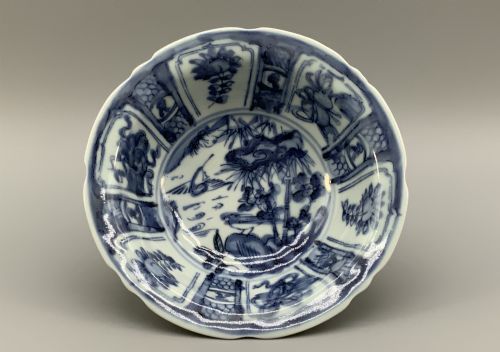
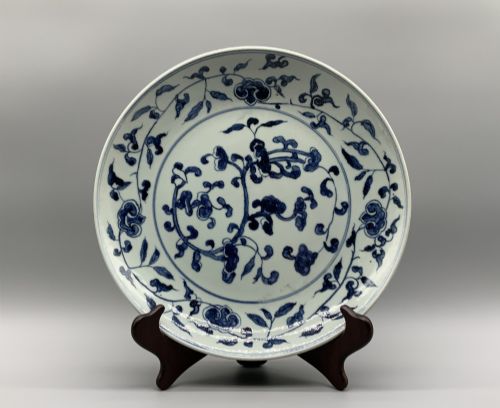
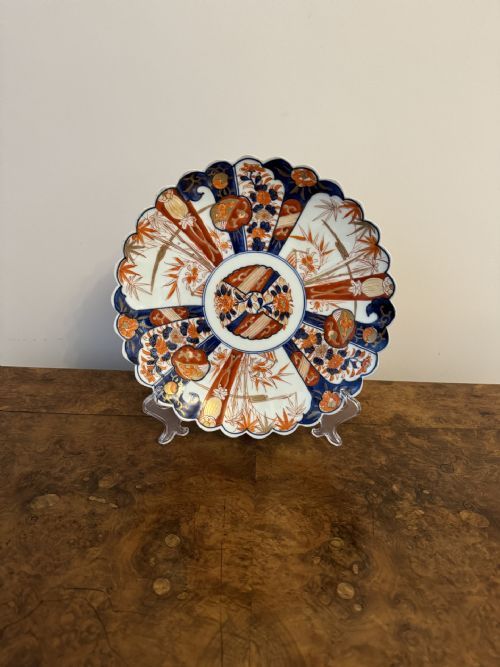
An underglaze cobalt floral platter brings deep blue botanical decoration straight to the table, and this selection ranges from early Chinese porcelain to later Japanese Imari ware.
Underglaze Cobalt Floral Platter
When you search for an underglaze cobalt floral platter, you are looking at large ceramic dishes and chargers painted in blue pigments beneath a clear glaze. The examples gathered here span several centuries and origins, moving from seventeenth-century Chinese blue and white porcelain to nineteenth and early twentieth-century Japanese Imari ware and English earthenware.
The most common form you will meet on this page is the large charger or plate, often featuring scalloped edges, barbed rims, or lobed bodies. These larger vessels were designed for display on sideboards or walls just as much as for serving food at the table.
The decorative schemes rely heavily on floral motifs, sometimes combined with moulded elements and contrasting enamel or gold leaf details. Pieces range from the Kangxi period of the Qing dynasty up to the Edwardian era, showing how potters across Asia and Britain utilised cobalt pigments over generations.
How they were made
The makers of these pieces applied cobalt pigment directly onto the unfired ceramic body before applying a transparent glaze and firing the vessel at high temperatures. This underglaze technique ensured that the blue decoration remained permanent, protected beneath the glassy surface against wear and fading over centuries of use.
Potters shaped porcelain, ceramic, and clay bodies using moulding and throwing techniques, frequently adding carved details like barbed rims or lobed contours. Subsequent decoration on certain wares involved the addition of enamel colours and gold leaf over the glaze, followed by a lower-temperature secondary firing.
Underglaze Cobalt Floral Platter Retail Price Guide 2026
Typical asking prices for underglaze cobalt floral platter among the pieces listed under this phrase on Sellingantiques today, from the lower quarter to the upper quarter. They describe what is for sale here now, not the wider market.
One persistent elephant pattern plate reminds us that historic potters occasionally borrowed unexpected fauna for their botanical borders.
What varies in quality
The clarity and depth of the cobalt pigment dictate much of the visual success of each piece, distinguishing sharp, controlled brushwork from blurred or muddy application. Superior examples display a vibrant, luminous blue that sits crisply beneath the glaze without running into the surrounding white ground.
Form and moulding precision also separate the finer pieces from standard production, seen in the even symmetry of scalloped edges, well-defined lobed walls, and balanced proportions. Finer items often carry six-character marks on the reverse, reflecting the care taken during production in established Asian and English potteries.
John Rogers and Son
The Underglaze Cobalt Floral Platter Glossary
- Underglaze
- A method of decorating pottery using pigments applied to the unglazed ceramic body before the protective glaze layer is applied. This technique locks the design permanently beneath the glassy surface.
- Cobalt Blue
- A deep blue metallic pigment derived from cobalt ores that withstands high kiln temperatures without fading. It remains the defining colour for traditional blue and white ceramics.
- Charger
- A large decorative plate or platter traditionally used for ceremonial dining or displayed upright on sideboards. They measure significantly larger than standard dinner plates.
- Imari
- A style of Japanese porcelain exported from the port of Imari, typically featuring underglaze blue combined with iron red, gold, and enamel highlights. The patterns often incorporate dense floral and botanical arrangements.
- Kangxi Period
- An era of the Qing dynasty spanning from sixteen sixty-two to seventeen twenty-two noted for excellence in blue and white porcelain production. Pieces from this time frequently display brilliant cobalt tones and refined potting.
Underglaze Cobalt Floral Platter: Frequently Asked Questions
How were these platters used?
These large dishes served both functional and decorative roles in historic homes, holding food at feasts or acting as ornamental display pieces on walls and dressers. Their substantial size made them ideal centerpieces for grand tables.
Over time, collectors shifted toward displaying chargers upright on plate stands to protect the painted surfaces from cutlery marks and daily wear.
Can I use them for food?
Most antique pieces of this age are better suited for display or careful serving rather than heavy daily use, as historic glazes can be sensitive to modern detergents and dishwashers. Hand washing in lukewarm water keeps the surface safe.
Crazing and minor manufacturing flaws in older ceramics mean they require gentle handling if brought back to the dining table.
How do I tell periods apart?
Early pieces from the Kangxi period feature fine, luminous cobalt painting on dense porcelain bodies, sometimes bearing period reign marks on the reverse. Later nineteenth-century Japanese Imari wares introduce heavier enamel colours and gold leaf overglaze details.
English transferware from the nineteenth century presents a different aesthetic entirely, using printed patterns rather than hand-painted brushwork under the glaze.
What does underglaze mean?
Underglaze refers to pigment applied directly to the raw clay body before the transparent glaze goes on top and enters the kiln. This protects the blue decoration from wearing away during use.
Any added gold leaf or enamel colours sit above the glaze as overglaze decoration and feel slightly raised to the touch.