


Underglaze Blue Pottery Vessel
These underglaze blue pottery vessel items span multiple centuries and traditions, offering enduring appeal for collectors of historic ceramic art.
Underglaze Blue Pottery Vessel
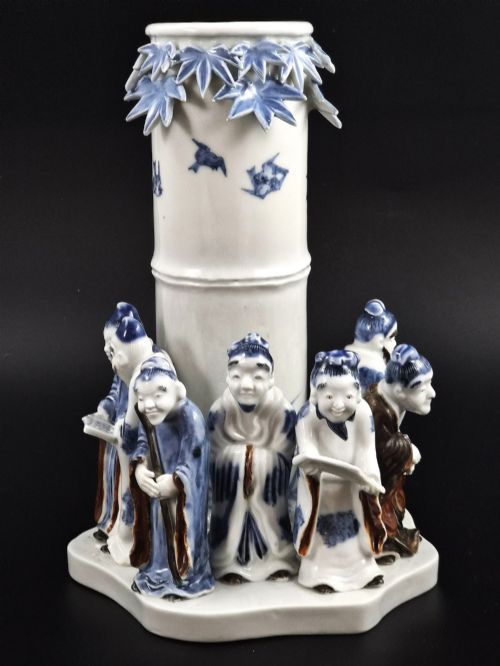
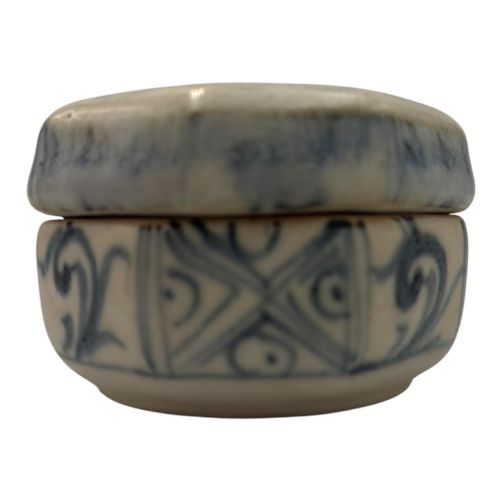
An underglaze blue pottery vessel brings together centuries of global ceramic traditions, ranging from early Chinese export wares to Persian fritware and Japanese Imari. When exploring this category, collectors encounter diverse forms such as brush pots, bottle vases, jars, and covered boxes.
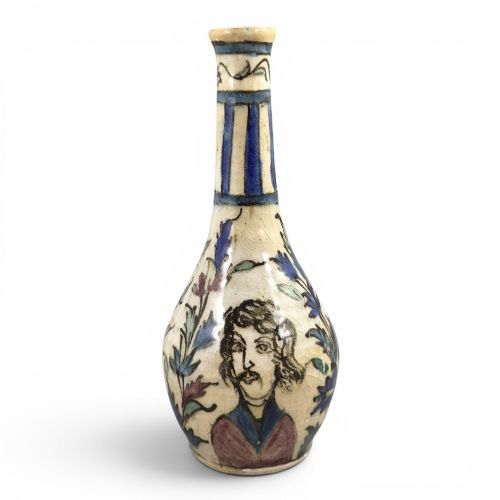
The selections on this page are dominated by Chinese porcelain from the Qing Dynasty alongside Persian Qajar and Safavid examples, alongside Japanese Imari pieces. These artefacts reflect both utilitarian storage and scholarly pursuits across different Asian and Middle Eastern cultures.
Materials and construction methods
Potters applied cobalt pigment directly to the clay body or fritware substrate before applying a transparent glaze, sealing the decoration permanently beneath the surface during high-temperature firing. This technique allowed for sharp brushwork that survived centuries without fading.
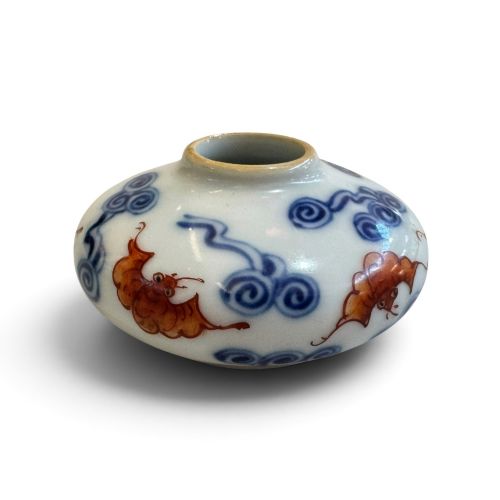
Makers utilised porcelain, stoneware, and fritware combined with cobalt pigment and clear glaze, sometimes incorporating additional enamel colours or underglaze red highlights to enrich the surface pattern.
Materials represented across the inventory include porcelain, stoneware, fritware, cobalt pigment, enamel, and glaze.
Distinguishing quality in historic ceramics
Quality rests upon the purity of the cobalt pigment and the precision of the brushwork, where confident, fluid lines distinguish master workshops from provincial production. The clarity of the glaze and the refinement of the underlying clay body further separate ordinary utilitarian wares from fine scholar items.
Artistic execution in the painted motifs - such as bats, clouds, portraits, or floral arrangements - determines the visual strength of each piece, alongside the symmetry and stability of the form.
The Underglaze Blue Pottery Vessel Glossary
- Underglaze blue
- A method of decoration where cobalt pigment is applied to the raw ceramic body before glazing and firing, creating a durable blue design beneath the glassy surface.
- Fritware
- A type of pottery developed in the Middle East using a composite clay body mixed with ground glass, allowing for thin walls and delicate forms.
- Imari
- A style of Japanese export ceramics characterised by rich underglaze blue combined with iron red and gilt details.
- Brush washer
- A small scholarly vessel used in East Asian calligraphy for cleaning brushes before applying ink.
- Double gourd vase
- A ceramic container shaped in two bulbous sections resembling a traditional water carrier.
Underglaze Blue Pottery Vessel: Frequently Asked Questions
What is an underglaze blue pottery vessel?
These items are ceramic containers and scholar objects decorated with cobalt blue pigment beneath a transparent glaze, originating from various Asian and Middle Eastern traditions.
Peculiar to traditions spanning the 16th to early 20th centuries, they encompass forms ranging from ginger jars to brush pots.
How do I identify Persian Qajar ceramics?
Persian Qajar pieces often feature distinctive portrait decoration and specific glaze characteristics associated with nineteenth-century Iran.
They stand apart from Chinese porcelain through their unique fritware bodies and regional artistic motifs.
Where were Japanese Imari vases made?
Japanese Imari items were produced in the town of Arita and exported extensively through the port of Imari during the late nineteenth and early twentieth centuries.
They are easily recognised by their distinctive palette and decorative panel layouts.
How should I display these vessels?
Displaying historic ceramics requires stable shelving away from direct sunlight and heavy foot traffic to protect their glazed surfaces.
Grouping items by period or origin highlights their stylistic evolution across different centuries.