




Antique Islamic Pottery
Antique islamic pottery brings centuries of Persian craftsmanship into a room, offering striking bowls, tiles and vases shaped from fritware and earthenware.
Antique Islamic Pottery
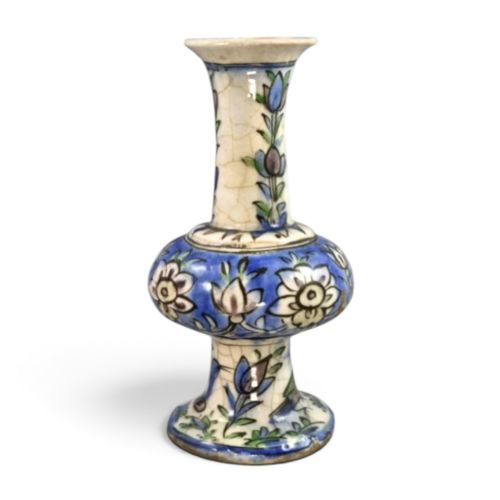
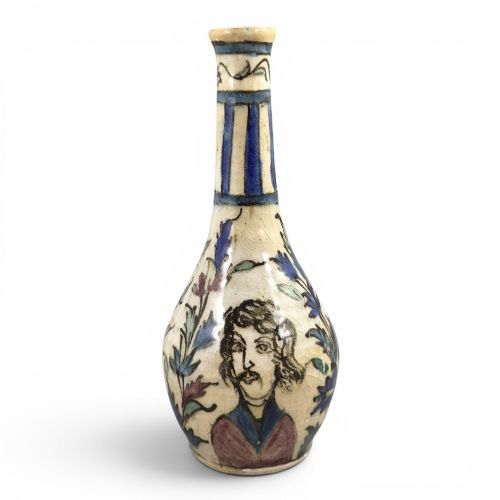
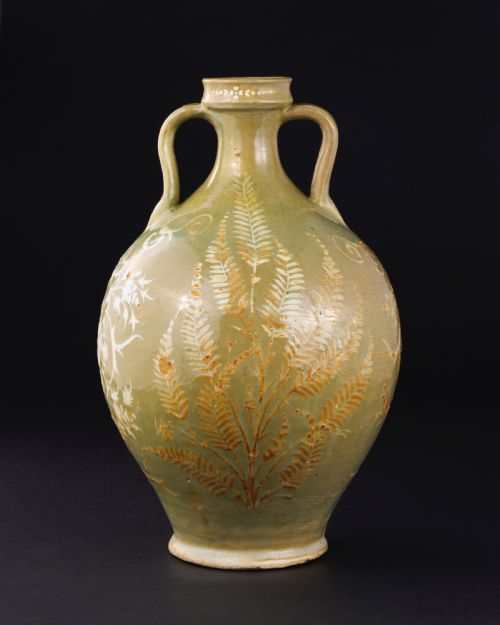
Antique islamic pottery encompasses centuries of ceramic vessels, tiles and wall plaques originating primarily from Persia across periods ranging from the tenth century up to the nineteenth century. Collectors seeking these items encounter diverse forms including bottle vases, architectural tiles, kendis and decorative bowls decorated with figures, horses or script.
The pieces on this page span several distinct eras such as the early Islamic period, Seljuk, Safavid dynasty and Qajar Persian styles. Bowls and vases from Kashan and Nishapur sit alongside later nineteenth-century Qajar examples, showing the broad chronological range available to a buyer.
How they were made
Potters utilised materials such as earthenware, fritware and slip, applying glaze and metallic oxides to achieve durable decorated surfaces. Early works often feature slip-painted earthenware or buffware, while later production incorporates complex tin glaze and polychrome finishes.
Vessels and tiles rely on underglaze-painting techniques or lustre applications that require precise firing control. The interaction between metallic oxides and glazes produces the characteristic surface textures seen on Safavid and Qajar pieces.
Materials represented across the inventory include fritware, earthenware, tin glaze and metallic oxides.
What varies in quality
Quality in these ceramics rests on the clarity of the painting, the preservation of the glaze and the precision of the form. Pieces featuring detailed figurative work, such as portraits or riders, demand a higher level of artisan skill than simpler geometric patterns.
The integrity of the ceramic body and the depth of the glaze layer distinguish superior examples. Early fritware and well-preserved lustre surfaces demonstrate technical mastery that elevates the standing of an individual vessel or tile.
The Antique Islamic Pottery Glossary
- Fritware
- A composite ceramic body containing quartz, developed to allow finer detail and thinner walls than traditional earthenware. It forms the basis of many sophisticated medieval Persian vessels.
- Lustre
- A type of metallic overglaze applied to ceramics to create an iridescent, metallic sheen when fired in a reducing atmosphere. This technique requires specialist kilns and skilled artisans.
- Buffware
- An unglazed or lightly slipped earthenware pottery utilising a pale buff-coloured clay body. It is frequently associated with early Islamic production from centres like Nishapur.
- Underglaze-painted
- Decoration applied to a ceramic body before the application of a transparent glaze and subsequent firing. This protects the pigments and creates a glossy, enduring finish.
- Slip
- A mixture of clay and water applied to the surface of pottery before firing to smooth the body or provide a background colour for painted decoration.
Antique Islamic Pottery: Frequently Asked Questions
How are antique Islamic ceramic bowls best displayed?
These bowls suit placement on dedicated stands or within secure display cabinets where their glaze and painted details receive adequate light. Handling should remain minimal to protect fragile historic surfaces.
Wall plaques and tiles require professional mounting systems designed to support ceramic weight without placing stress on the historical material.
What is the difference between Qajar and Safavid pottery?
Safavid pottery, spanning the seventeenth century, often exhibits underglaze-painted designs and forms influenced by trade and court patronage. Pieces from this era include celadon-toned vessels and kendis.
Qajar pottery, dating from the nineteenth century, frequently displays vibrant polychrome glazes and portrait decorations reflecting nineteenth-century Persian aesthetics and historical revivalism.
Are architectural tiles suitable for wall installation?
Historic tiles possess delicate ceramic bodies and aged glazes that require careful conservation considerations before any modern wall placement. Many collectors choose specialist framing or display brackets rather than permanent mortar installation.
Consulting a professional restorer ensures that mounting methods respect the structural integrity of seventeenth and nineteenth-century tilework.