


Underglaze Blue Porcelain Vase
An underglaze blue porcelain vase brings cobalt pigment beneath a clear glaze, offering centuries of ceramic artistry for domestic display.
Underglaze Blue Porcelain Vase
An underglaze blue porcelain vase spans centuries of production across Chinese and Japanese kilns, drawing collectors toward forms like garlic-mouth bottles, double-gourds, and ginger jars.
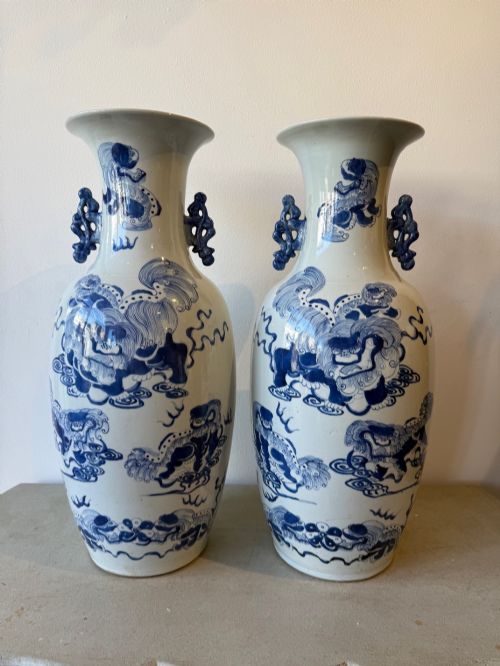
The pieces appearing on this page range from 16th-century imperial wares to 19th-century export pieces, encompassing Qing Dynasty and Meiji Period aesthetics.
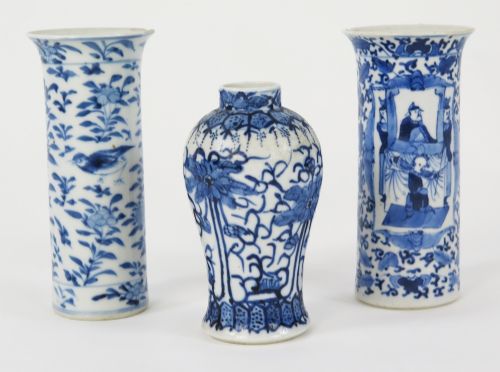
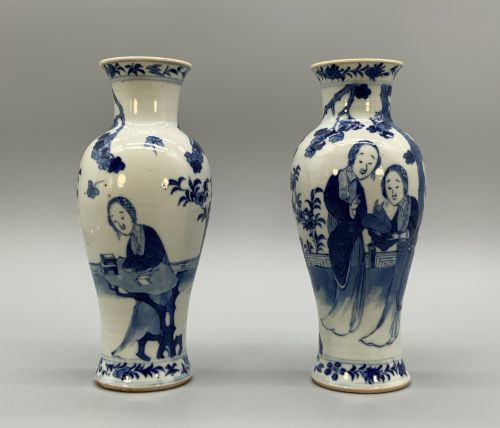
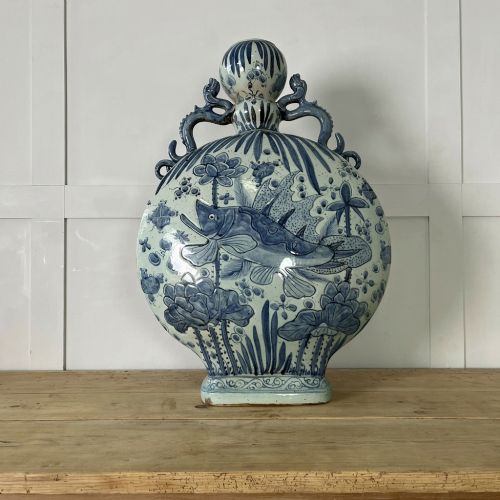
Buyers encounter diverse vessel types, including baluster shapes, trumpet-shaped beaker vases, and moon flasks, created for both domestic utility and scholarly display.
Materials and Technique
Potters applied cobalt pigment directly onto unburnt porcelain clay bodies before coating the vessel in a transparent glaze and firing the piece at high temperatures.
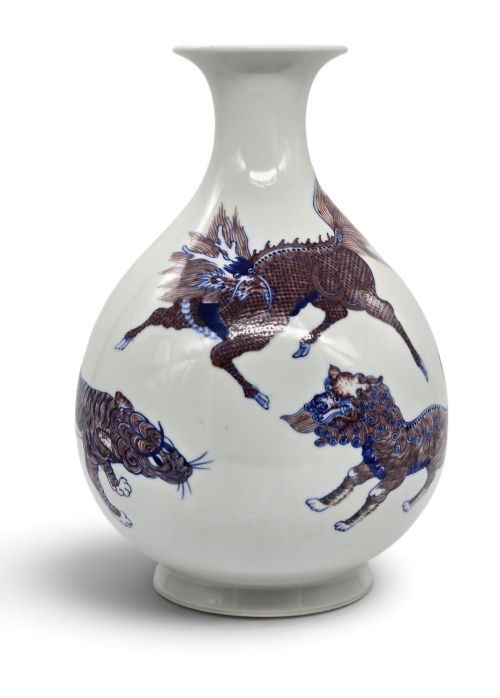
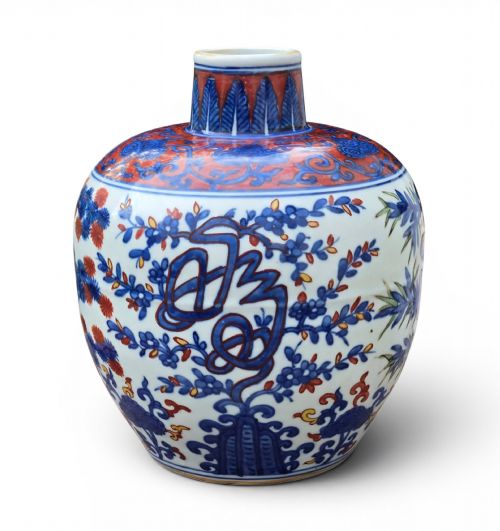
Selected works incorporate contrasting iron-red and green enamels or copper-red pigments alongside the cobalt underglaze to build complex polychrome designs.
The resulting ceramic body holds the blue decoration permanently beneath the glassy surface, protecting the painted motifs from wear over generations.
The selection includes Japanese Arita and Imari wares alongside Chinese export and imperial Qing Dynasty porcelain.
Craftsmanship and Execution
The refinement of the cobalt pigment and the crispness of the brushwork separate superior vessels from ordinary production, distinguishing hasty commercial output from deliberate studio work.
Control over the high-temperature kiln firing dictates whether the white porcelain ground remains clear and bright while the cobalt reaches a deep, vibrant tone without bleeding.
Balanced proportions and precise potting define the better examples, where the weight of the ceramic matches the scale and ambition of the painted ornamentation.
Makuzu Kozan·Fukagawa
The Underglaze Blue Porcelain Vase Glossary
- Underglaze blue
- Pigment applied to the ceramic body before glazing and firing. This technique protects the blue decoration beneath a glassy surface.
- Meiping
- A high-shouldered plum vase with a narrow neck. Potters traditionally designed this form to hold a single flowering plum branch.
- Imari
- Japanese export porcelain decorated in underglaze blue, iron red, and gilt. Kilns in Arita produced these wares primarily for European trade.
- Double-gourd
- A vessel shape formed by two bulbous sections stacked vertically. This silhouette carries auspicious symbolism relating to fortune and longevity.
- Wucai
- A polychrome ceramic technique meaning five colours. Artisans combine underglaze blue with overglaze enamels such as iron-red and green.
Underglaze Blue Porcelain Vase: Frequently Asked Questions
What is an underglaze blue porcelain vase?
An underglaze blue porcelain vase is a ceramic vessel painted with cobalt pigment before receiving a clear glaze and a high-temperature kiln firing. This method locks the decoration permanently beneath the surface.
These pieces originate predominantly from historical Chinese and Japanese kilns, encompassing styles from the Ming and Qing Dynasties as well as the Meiji period.
How do I identify periods on these vases?
Period identification relies on examining the potting style, the tone of the cobalt pigment, and any reign marks or seals located on the base. Stylistic shifts between Ming, Qing, and Meiji production offer clear visual clues.
Familiarity with forms such as baluster jars, garlic-mouth bottles, and trumpet beakers also helps narrow down the probable date of manufacture.
How do I care for antique porcelain?
Antique porcelain requires gentle handling and placement away from edges where accidental knocks might occur. Dusting with a soft, dry cloth keeps the glazed surface clean without abrasive contact.
Avoid using chemical cleaners or immersing antique vessels in water, particularly if they feature overglaze enamels or gilt highlights that could flake off.