



Two Tier Whatnot
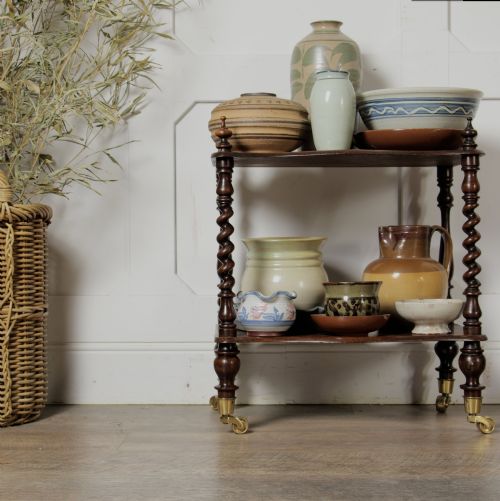
These two tier whatnot pieces are compact display and utility stands, offering tiered surfaces for books, plants, and decorative objects.
Two Tier Whatnot
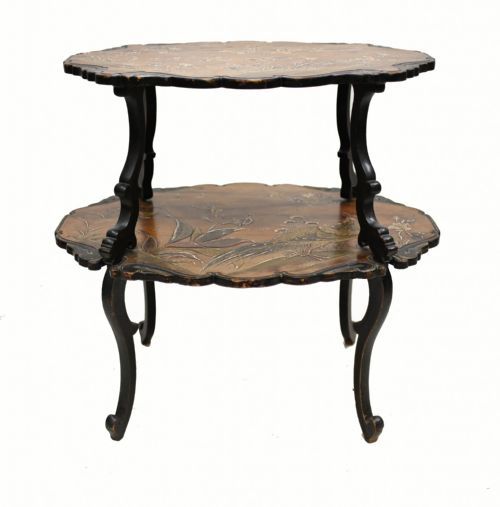
A two tier whatnot is a versatile piece of furniture designed for display and storage, appearing frequently across the Regency and Victorian periods. These pieces provide stacked platforms supported by upright columns or turned supports, making them ideal for holding books, decorative objects, or plants in compact spaces.
The versions most commonly met on this page span the nineteenth century, including specific iterations like dumb waiters, plant stands, and bedside display units. They function primarily as auxiliary tables, utilising vertical space efficiently without dominating a room.
Materials and construction methods
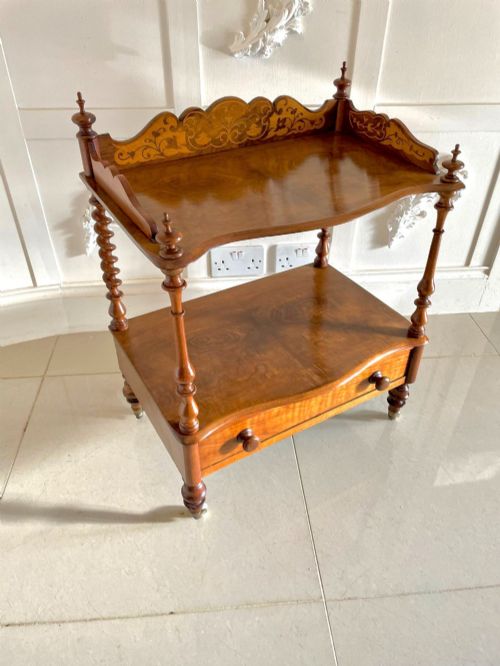
Makers constructed these pieces using dense hardwoods such as mahogany, rosewood, and burr walnut, often selecting figured veneers for visual depth on the top surfaces. Secondary woods provided structural stability to the upright supports and tiered platforms.
Detailing often included brass castors, brass binding, and turned elements like barley twist columns, reflecting the prevailing Regency and Victorian cabinet-making techniques of the nineteenth century.
Two Tier Whatnot Retail Price Guide 2026
Typical asking prices for two tier whatnot among the pieces listed under this phrase on Sellingantiques today, from the lower quarter to the upper quarter. They describe what is for sale here now, not the wider market.
Listings for this phrase feature pieces primarily from the Regency and Victorian eras, utilising mahogany, rosewood, and burr walnut.
Distinctions in quality
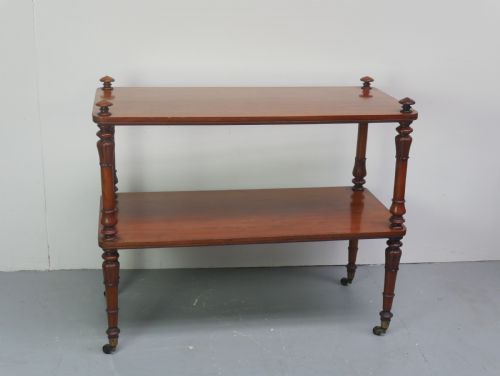
The division between standard and superior pieces rests upon the choice of timber and the precision of the joinery in the tier supports. Finely figured burr walnut or rich rosewood veneers indicate higher workshops, whereas plain mahogany serves utility formats.
The Two Tier Whatnot Glossary
- Whatnot
- A piece of furniture with open shelves or tiers for displaying small objects, books, or ornaments. They gained popularity during the late eighteenth century and remained a staple through the Victorian era.
- Etagere
- A French term for a piece of furniture consisting of a series of open shelves for displaying ornaments. It is functionally synonymous with the English whatnot.
- Dumb waiter
- A tiered stand or serving table used to hold food, tableware, or tea items without the need for immediate servant attendance. In later contexts, the term overlaps with the whatnot.
- Canterbury
- A low stand with partitions used for holding sheet music, newspapers, or magazines, occasionally incorporated into the lower tier of a whatnot. It reflects the Victorian demand for specialised household tidies.
Two Tier Whatnot: Frequently Asked Questions
What is a two tier whatnot?
A two tier whatnot is a compact piece of furniture featuring two stacked platforms used historically for display, serving, or holding books. They became popular in the nineteenth century as flexible additions to drawing rooms and parlours.
These pieces use vertical space efficiently while offering accessible surfaces for daily use. Their open design distinguishes them from enclosed cabinets.
How were they used historically?
These stands served diverse functions depending on their exact form, acting as bedside tables, plant stands, tea tables, or music tidies. In dining rooms, dumb waiter variants held extra tableware during meals.
Their mobility allowed servants or family members to reposition them easily around the room as social needs dictated.
How do I date a two tier whatnot?
Dating relies on identifying the primary timbers, turnings, and stylistic cues present in the construction. Regency pieces often display restrained classical lines, while Victorian examples introduce heavier timbers, burr veneers, and barley twist columns.
Hardware details like brass castors and joinery methods further narrow down the decade of manufacture.
Where should I place a whatnot?
These stands fit well in corners, beside seating, or against blank walls where a full-sized cabinet would prove too bulky. Their open shelves suit the display of small collections, plants, or lighting.
Because they are finished on all sides in better examples, they also work effectively as freestanding occasional tables in living spaces.