
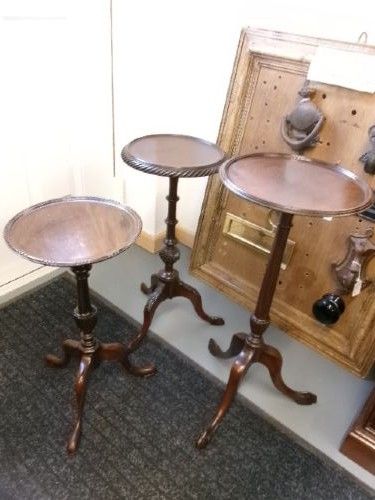
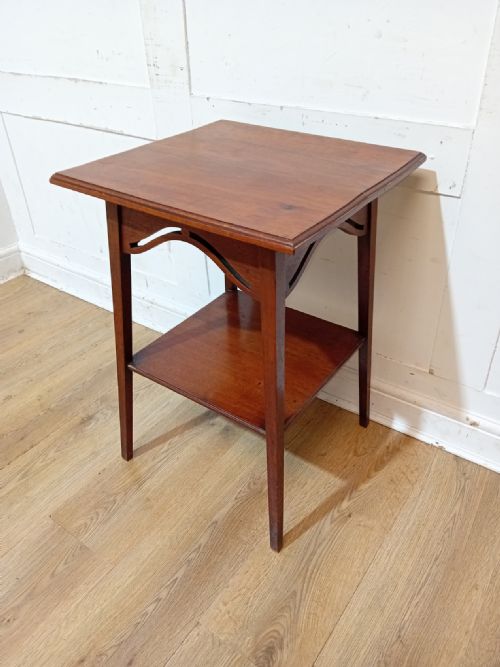

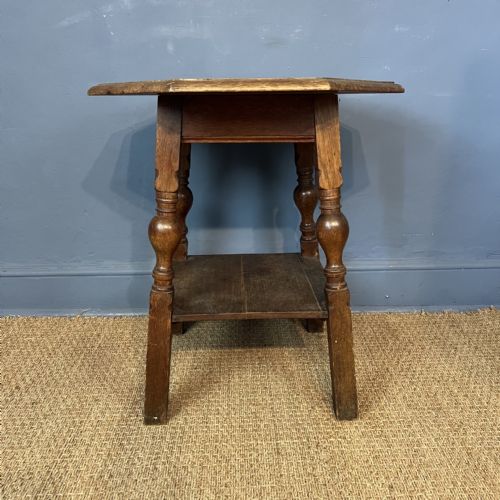
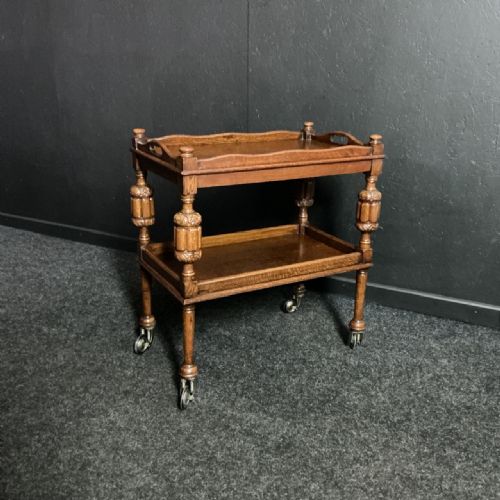
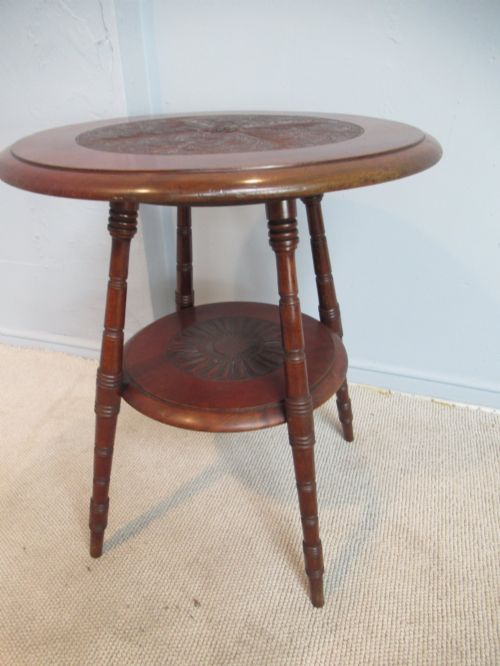
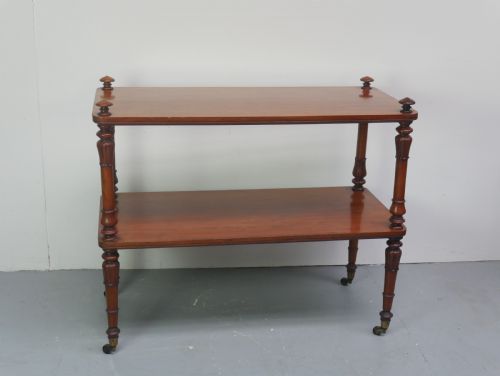
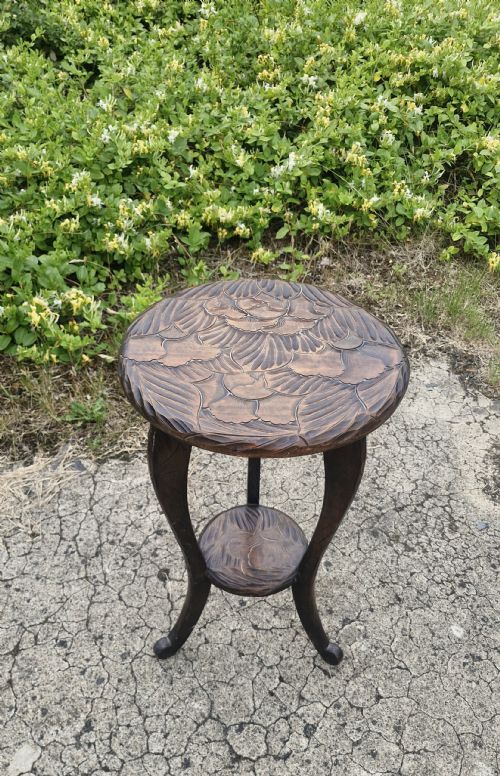
Edwardian Carved Tier Table
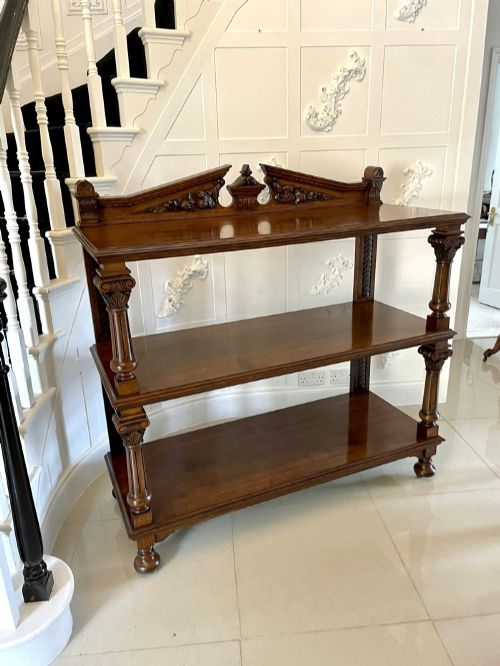
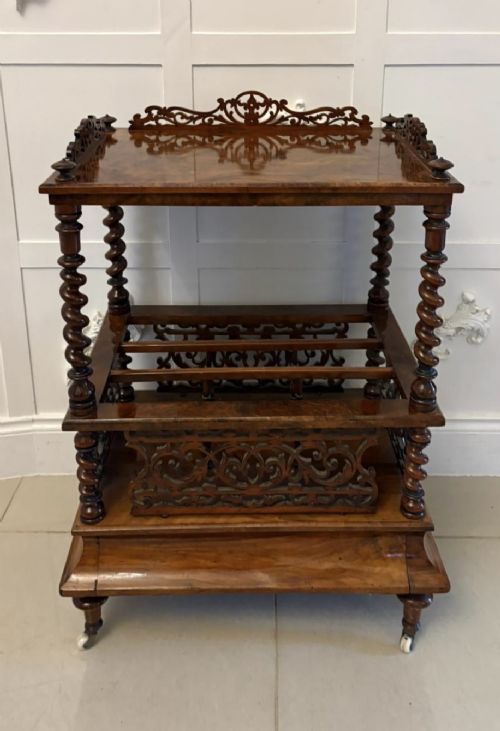
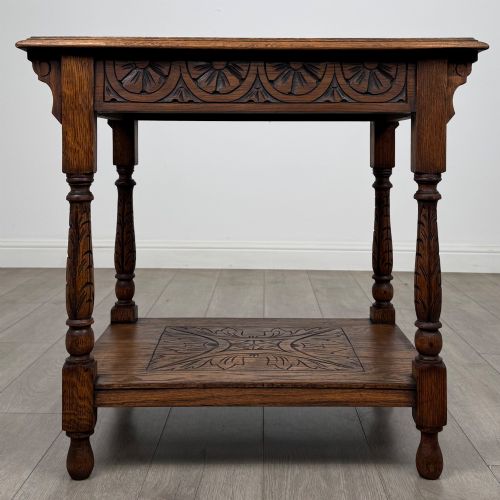
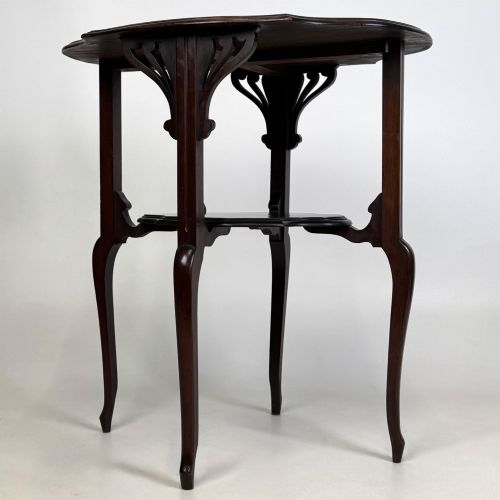
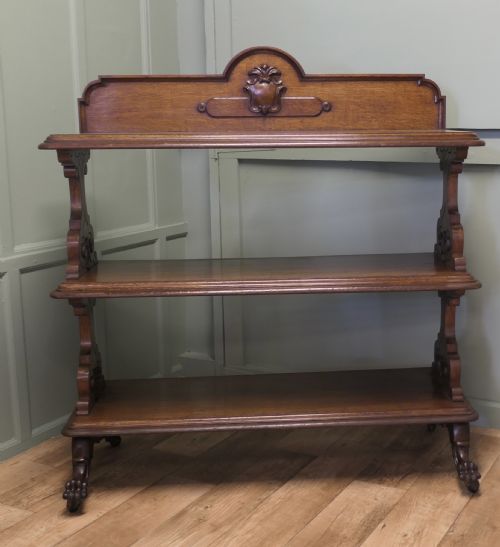
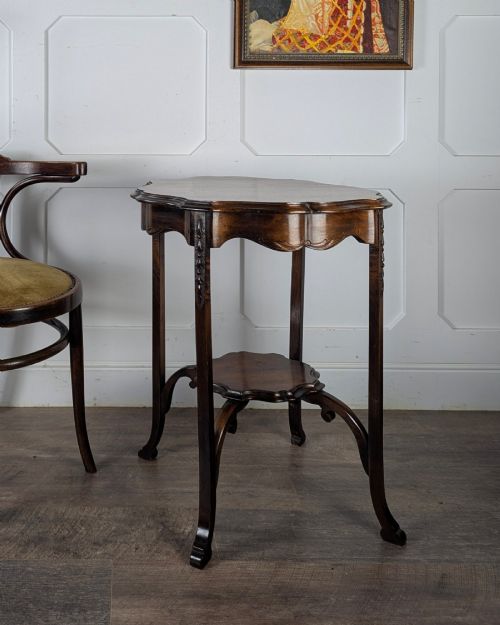
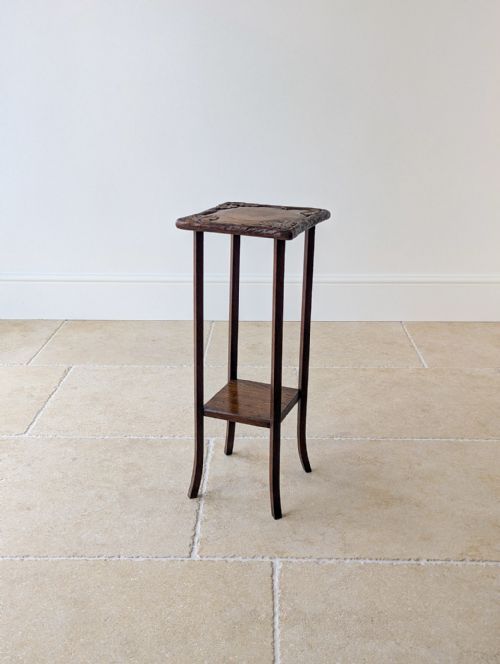
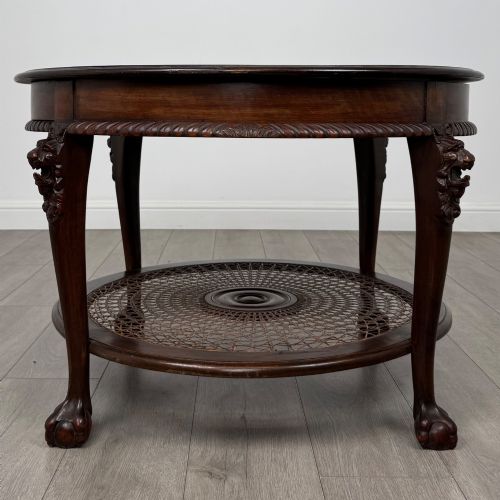
When you search for an Edwardian carved tier table, you seek a multi-level wooden display piece defined by period craftsmanship and functional tiers.
Edwardian Carved Tier Table
An edwardian carved tier table is a multi-level surface designed for display and utility, frequently meeting you as an occasional table, plant stand, or tea table with stacked wooden platforms.
The evidence shows these tiered forms appearing primarily across the Edwardian era and the early twentieth century, alongside Victorian and Arts and Crafts precedents that share similar multi-level timber construction.
Makers and workshops of the period utilised various formats, from six-sided occasional tables to two-tier plant stands and rectangular side tables featuring carved detail.
How they were made
Makers constructed these tiered surfaces using solid hardwoods and veneers such as mahogany, oak, walnut, rosewood, and satinwood, supported by turned legs or carved uprights.
Decoration relied on hand carving, fretwork, and inlaid details applied to the edges and surfaces of the tiers, reflecting prevailing revival styles including Chippendale and Jacobean influences.
Listings show these tiered wooden tables spanning the Edwardian period alongside late Victorian and early twentieth-century examples in oak, walnut, and mahogany.
What varies in quality
Quality in these tiered pieces rests upon the selection of timber and the crispness of the hand carving rather than the mere presence of decoration.
Fine examples demonstrate careful timber matching across multiple tiers and stable joinery that supports the stacked platforms without structural wobble.
Liberty and Co·Liberty of London
The Edwardian Carved Tier Table Glossary
- Tier table
- A piece of furniture featuring two or more stacked horizontal surfaces connected by upright supports or legs.
- Occasional table
- A small movable table intended for specific, intermittent use in a principal room.
- Arts and Crafts
- A design movement prioritising honest construction, plain surfaces, and visible hand craftsmanship over machine mass-production.
- Inlay
- A technique where contrasting materials are inserted into recessed cavities in the wood surface to form decorative patterns.
Edwardian Carved Tier Table: Frequently Asked Questions
What is an edwardian carved tier table used for?
These pieces served as versatile surfaces for afternoon tea, holding lamps, or displaying ornamental plants and decorative objects within Edwardian reception rooms.
Their stacked tier design allowed households to maximise surface space in smaller sitting areas without cluttering the floor plan.
How do I distinguish edwardian pieces from victorian ones?
Edwardian tier tables generally exhibit lighter proportions, brighter mahogany or satinwood timbers, and refined carving styles inspired by eighteenth-century revivals.
Victorian predecessors tend to utilise heavier dark oak or burr walnut, featuring denser ornamentation and more robust structural forms.
Are these tables sturdy enough for daily use?
Most surviving examples retain sound structural integrity if the joints connecting the tiers to the legs remain tight and unmodified.
Placing them on level flooring prevents undue strain on the upright supports when items are placed on the upper platforms.
What woods were used for these tables?
Craftspeople predominantly selected mahogany, oak, and walnut for their strength and suitability for detailed hand carving and turning.
More decorative versions incorporated satinwood, rosewood, or burr walnut veneers on the prominent display surfaces.