
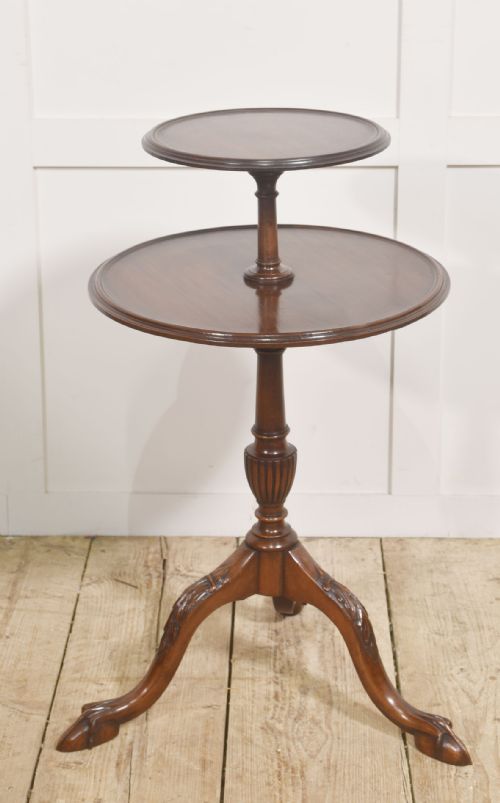

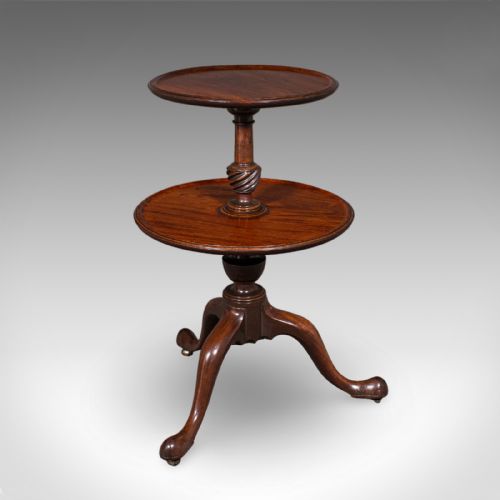


Two Tier Mahogany Dumbwaiter
A two tier mahogany dumbwaiter is a practical tiered serving stand designed to hold dishes or drinks during meals.
Two Tier Mahogany Dumbwaiter
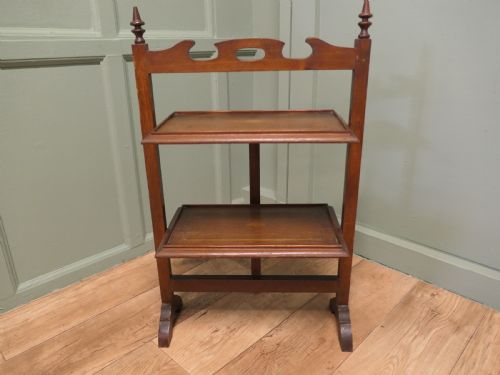
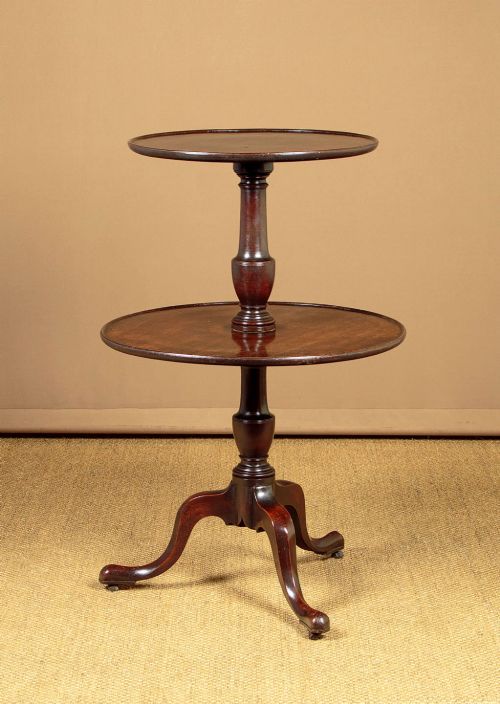
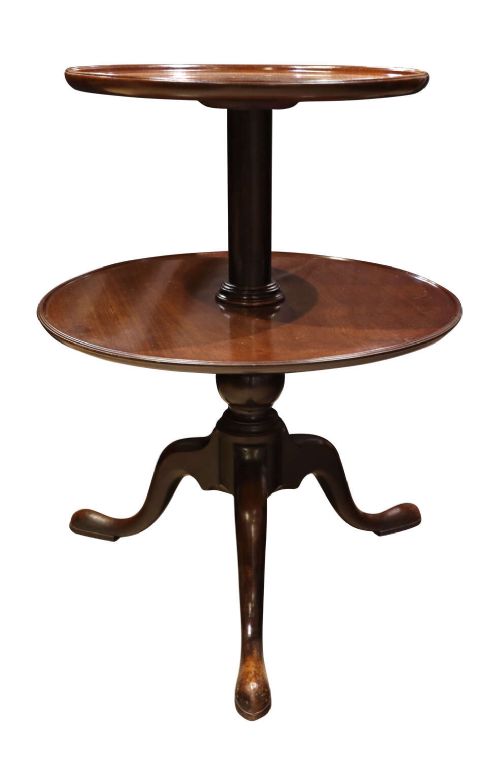
A two tier mahogany dumbwaiter provides graduated circular shelves supported on a central column and tripod base for dining room service. These serving stands appear in forms spanning the Georgian, Regency and Victorian periods, with examples ranging from simple folding designs to revolving tiers.
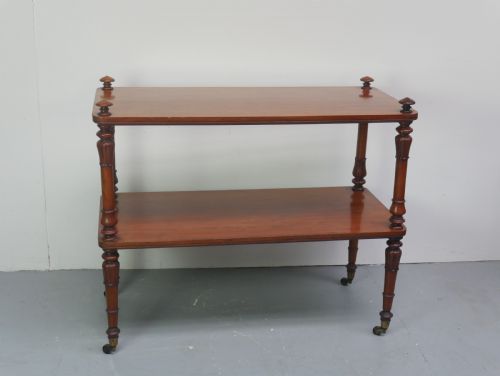
The most common pieces on this page date from the eighteenth and nineteenth centuries, alongside later revival styles from the early twentieth century. Buyers encounter round tiered side tables, étagères and occasional tables serving the same function as traditional dining room dumbwaiters.
Makers utilised rich timbers and thoughtful mechanics to create items that functioned both as heavy-duty serving furniture and refined parlour accessories. Whether stationary or folding, each piece reflects the changing social dining habits of the period in which it was produced.
Construction and materials
Craftsmen built these pieces predominantly from solid and veneered mahogany, sometimes enhanced with inlay in rosewood, satinwood or boxwood. Brass fittings and castors frequently appear on the tripod bases, while select examples incorporate leather tops or ceramic elements.
Structural integrity relied on sturdy central pedestals branching into three legs, supporting graduated circular trays that often featured pivoting or folding mechanisms. Joinery methods varied from traditional pegged joints in Georgian pieces to later mechanical hinges in nineteenth and twentieth-century versions.
Listings feature mahogany, rosewood, and satinwood alongside brass and leather details across various periods.
Assessing quality and craftsmanship
Quality reveals itself in the choice of timber figures, the precision of the turning on the central column and the stability of the tripod base. Superior examples demonstrate refined proportions and tight, original joinery rather than loose pivot mechanisms.
The presence of maker attribution, subtle marquetry inlay or specialised folding hardware elevates a piece above standard utility items. Condition of the polished mahogany surface and originality of the brass fittings further distinguish finer examples.
Gillow
The Two Tier Mahogany Dumbwaiter Glossary
- Dumbwaiter
- A freestanding tiered serving table used to hold food and utensils without the need for attending servants. These tables typically feature two or three circular rotating or stationary trays.
- Étagère
- A piece of furniture consisting of a set of open shelves for displaying small objects or serving food. These tiered stands often double as side tables or occasional display units.
- Tripod base
- A three-legged support structure commonly found beneath the central column of these serving tables. This configuration ensures stability on uneven dining room floors.
- Marquetry
- Decorative inlay work where pieces of wood veneer are fitted together to form geometric or floral patterns. Craftsmen utilised contrasting timbers like satinwood and boxwood to achieve this visual depth.
Two Tier Mahogany Dumbwaiter: Frequently Asked Questions
What is a two tier mahogany dumbwaiter?
A two tier mahogany dumbwaiter is a traditional tiered serving stand featuring graduated circular shelves on a central pedestal. These tables were designed to hold plates, dishes and drinks during meals.
Today, buyers use them as versatile side tables, plant stands or display surfaces in living spaces and dining rooms. Their stacked design offers generous surface area while maintaining a compact footprint.
How do I date a antique dumbwaiter?
Dating relies on observing structural characteristics, timber selection, and turning styles associated with periods like the Georgian and Regency eras. Earlier eighteenth-century pieces often display hand-turned pedestals and pegged joinery.
Later nineteenth and twentieth-century interpretations introduce standardised metal hardware, different secondary woods, and revival styling. Comparing the patina and construction methods to documented pieces helps narrow down the decade of production.
Were these tables used in dining rooms?
Dining rooms were the primary location for these serving stands, allowing diners to help themselves to courses without servants present. They stood beside the main dining table to hold extra dishes and beverages.
Over time, their utility expanded into drawing rooms and libraries as general display surfaces and occasional tables. Their portability made them convenient for afternoon tea and casual entertaining.
How do I care for mahogany furniture?
Mahogany surfaces require regular dusting with a soft, dry cloth to prevent the accumulation of abrasive particles. Maintaining a stable indoor humidity level prevents the timber from drying out or splitting.
Applying a traditional beeswax polish periodically helps nourish the wood and preserve its deep, lustrous finish. Avoid placing these tables in direct sunlight or near heat sources to protect the antique polish.