

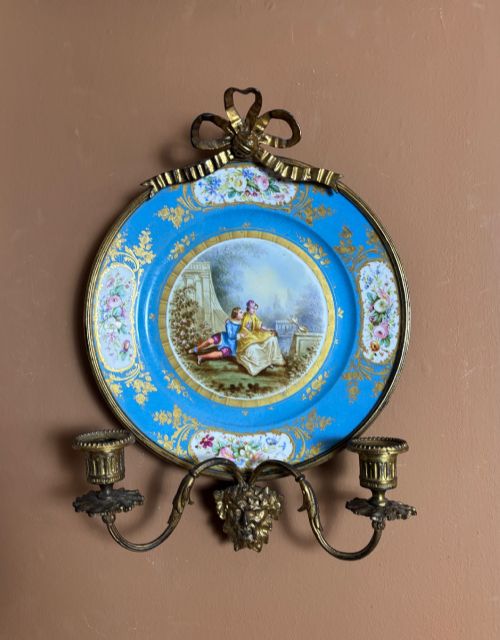
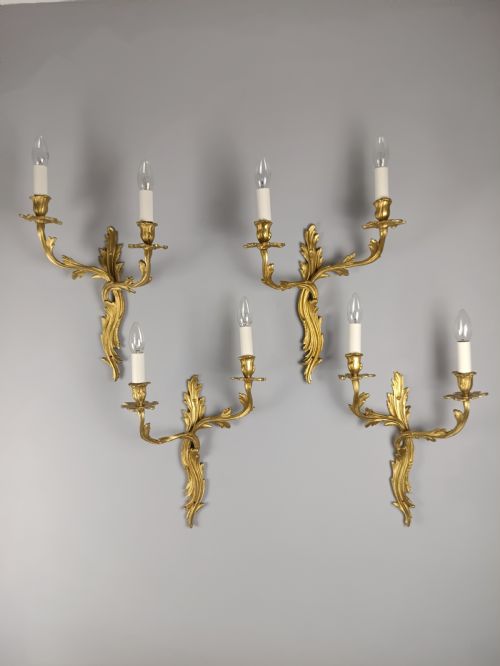
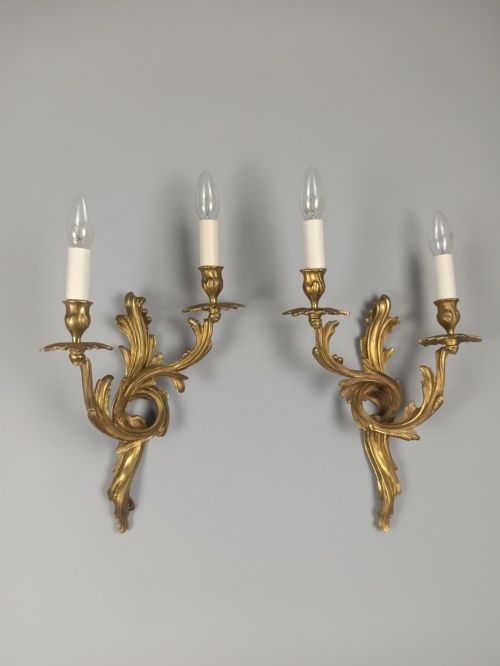
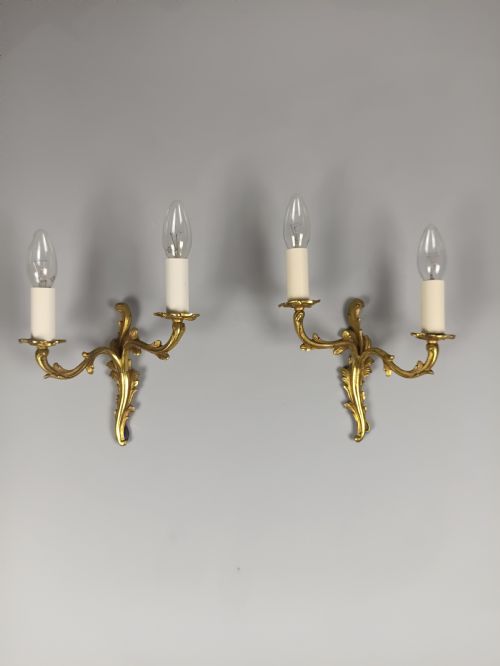
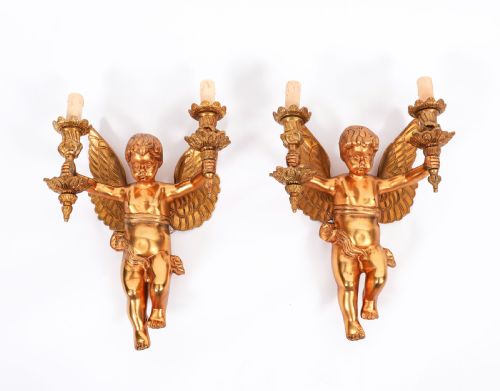


Two Light Gilt Sconces
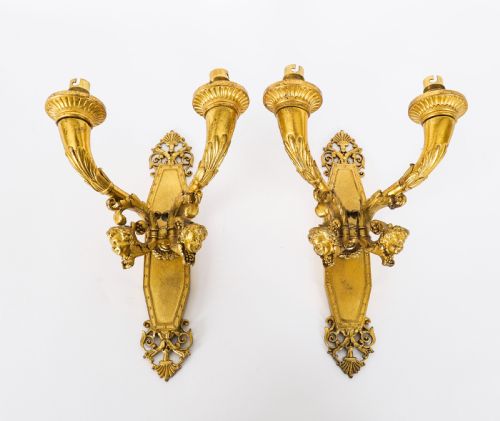
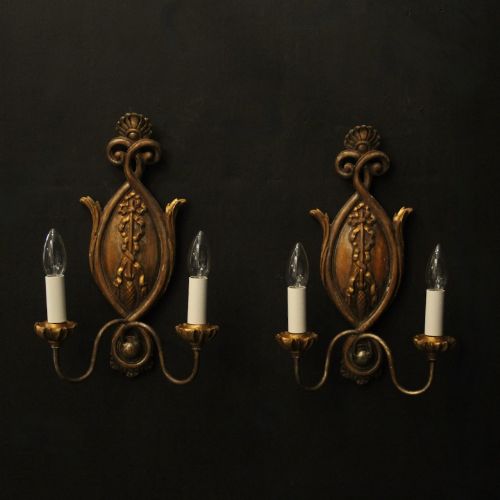
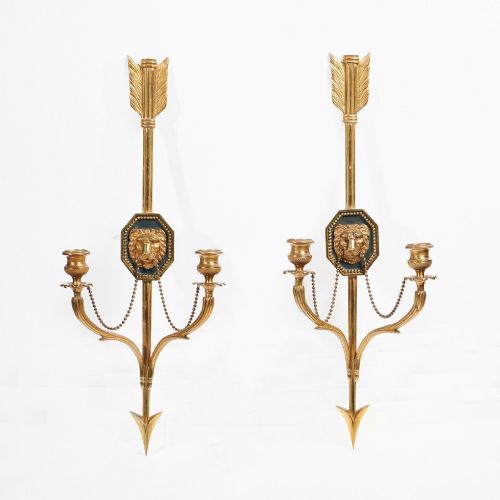
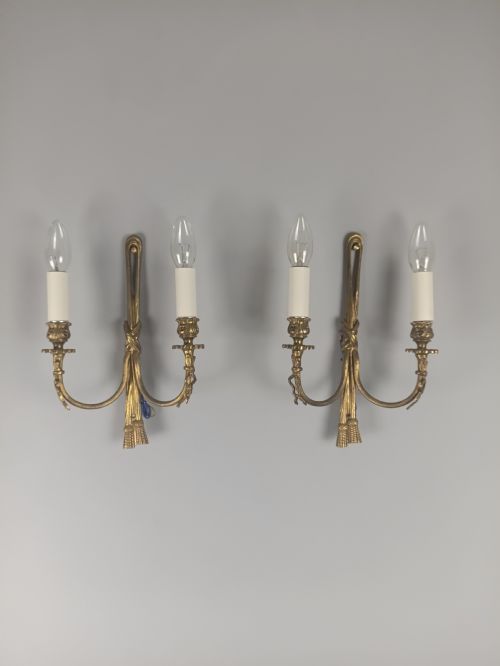
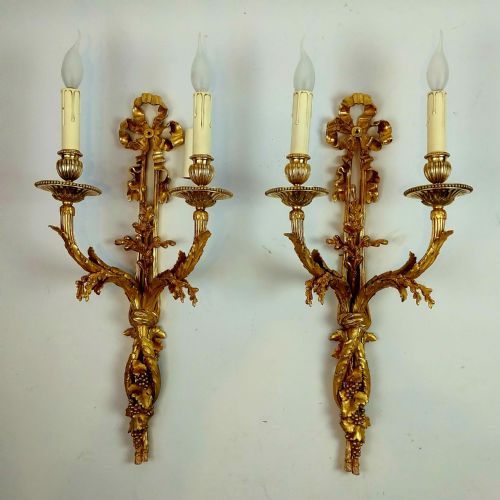
Two light gilt sconces bring warmth and decorative focus to an interior, channelling historical styles from French Empire to Florentine.
Two Light Gilt Sconces
Two light gilt sconces are wall-mounted illumination fixtures designed with twin arms, frequently encountered in French Rococo, Louis XV Revival and Empire styles. These decorative pieces project candle or bulb light across a room while adding metallic texture and sculptural form to wall spaces.
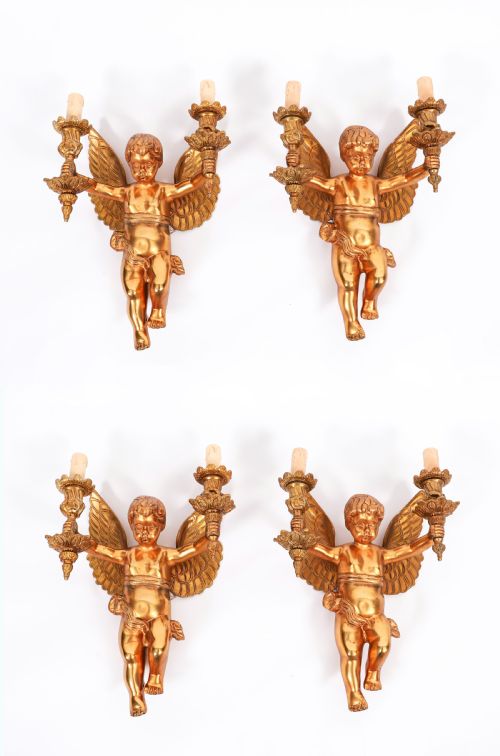
The selections span from nineteenth-century pieces down to items from the decades of the early twentieth century. Buyers will find items originating primarily from French workshops alongside Italian examples featuring carved wood and ormolu.
Forms include wall lights, appliques and wall candelabras, often appearing in matched pairs or larger sets. The predominant configuration relies on two branches spreading from a central backplate.
Materials and Construction
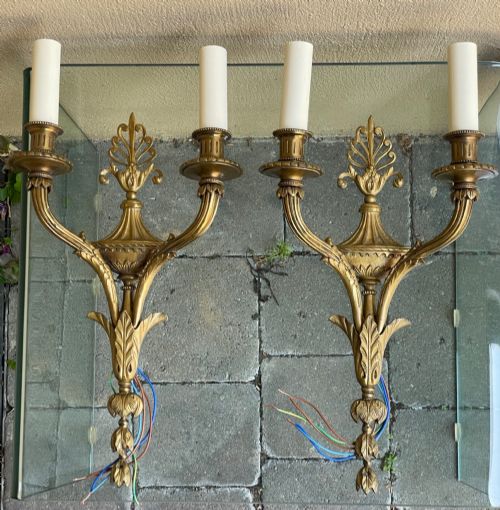
Gilt bronze, ormolu, brass and gilded bronze form the metallic backbone of these fixtures, providing durable armatures that accept gold leaf or chemical gilding. Foundries cast these metals into ornate scrolls, ribbons and cherub motifs before finishing the surfaces.
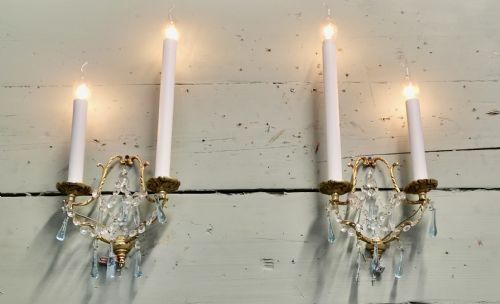
Giltwood provides a carved wooden alternative, seen in Florentine and Victorian examples where timber receives a layer of gesso and gold leaf. Crystal drops and porcelain mounts occasionally supplement the metalwork to catch and refract the illumination.
Craftsmanship and Proportion
Quality rests in the crispness of the casting and the depth of the chasing on bronze and brass components. Superior examples display sharply defined acanthus leaves, scrollwork and figures without the softening that comes from worn moulds.
The integrity of the gilding distinguishes finer pieces, whether through the warm retention of original ormolu mercury gilding or meticulous gold leaf application on carved wood. Balanced proportions between the backplate and the branching arms also define the better items.
The Two Light Gilt Sconces Glossary
- Ormolu
- Gilded bronze produced by applying a mercury and gold amalgam to a bronze base and heating it to drive off the mercury. This technique creates a durable, warm metallic finish found on many nineteenth-century French fixtures.
- Applique
- A wall-mounted lighting fixture designed to direct illumination outward into a room. The term often applies to French wall sconces with decorative backplates.
- Giltwood
- Timber that has been carved, coated in gesso, and covered in thin sheets of gold leaf. This material appears frequently in Florentine and Victorian wall lights.
- Rococo
- An ornate design style characterised by asymmetrical scrollwork, C-scrolls, and naturalistic motifs like shells and foliage. This aesthetic heavily influences Louis XV revival wall lights.
Two Light Gilt Sconces: Frequently Asked Questions
How do I wire old sconces?
Many vintage and antique wall lights require rewiring to meet modern electrical safety standards before installation. Professional electricians can adapt the internal channels or fit appropriate candle tubes.
Buyers should inspect the backplate wiring channels to ensure modern cables can pass through the structure safely without altering the visible exterior parts of the fixture.
How do I date a gilt sconce?
Dating relies on stylistic clues, casting techniques, and material composition associated with periods like the Regency or Louis XVI Revival. Nineteenth-century pieces often display heavier cast bronze with deep chasing.
Twentieth-century reproductions and adaptations from the nineteen-twenties and thirties adopt earlier French and Italian motifs while exhibiting distinct assembly methods on the reverse.
Where should I mount them?
Wall sconces perform best when positioned at eye level or slightly above to create ambient glow and highlight vertical surfaces in hallways, living rooms or dining areas. Their twin arms cast balanced light across surrounding wall art or plasterwork.
Ensure the mounting height accounts for furniture placement and door clearances so the projecting arms remain unobstructed.