
Ormolu Wall Lights Pair
These ormolu wall lights pair selections bring French and Italian period elegance, decorative illumination, and cast metal craftsmanship directly to domestic interiors.
Ormolu Wall Lights Pair
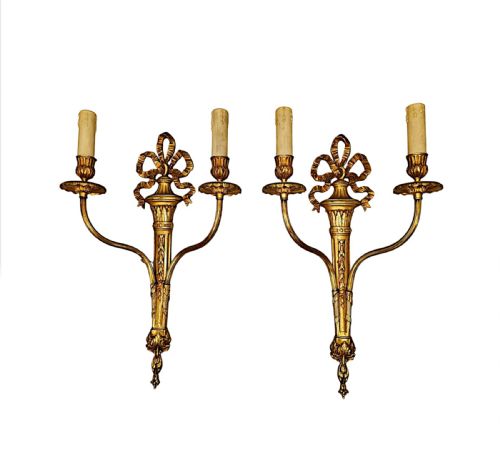
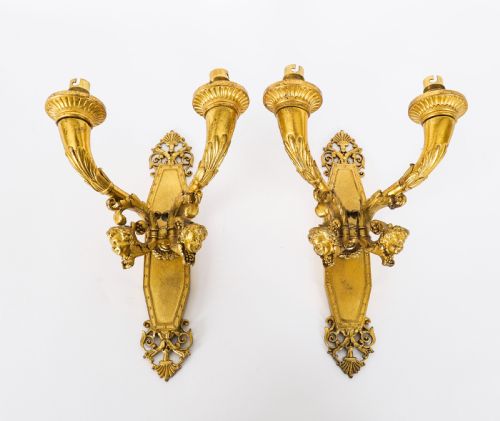
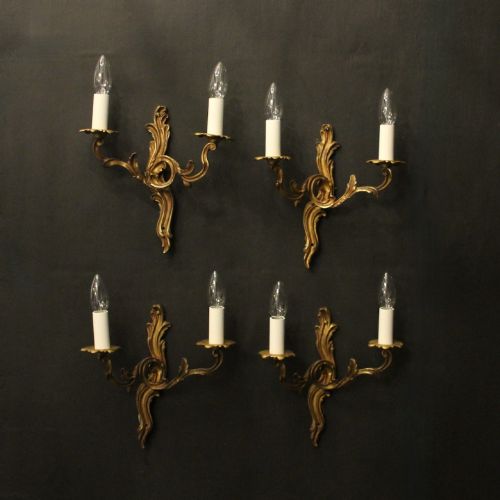
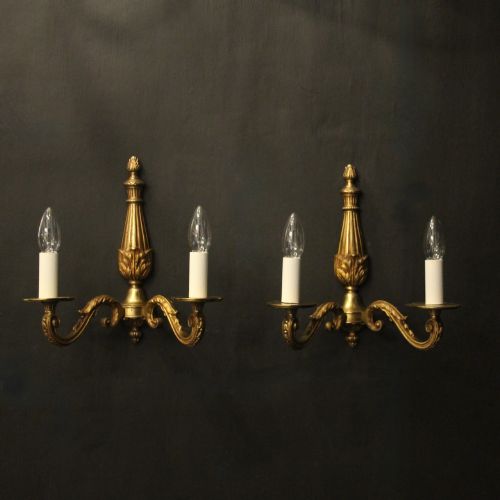
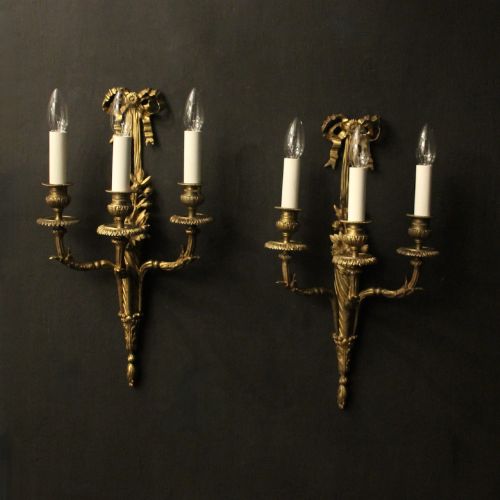
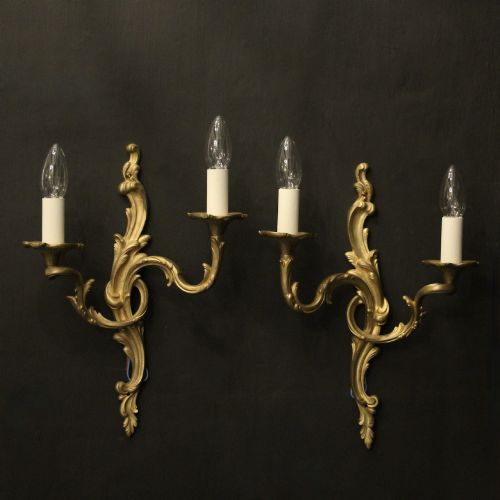
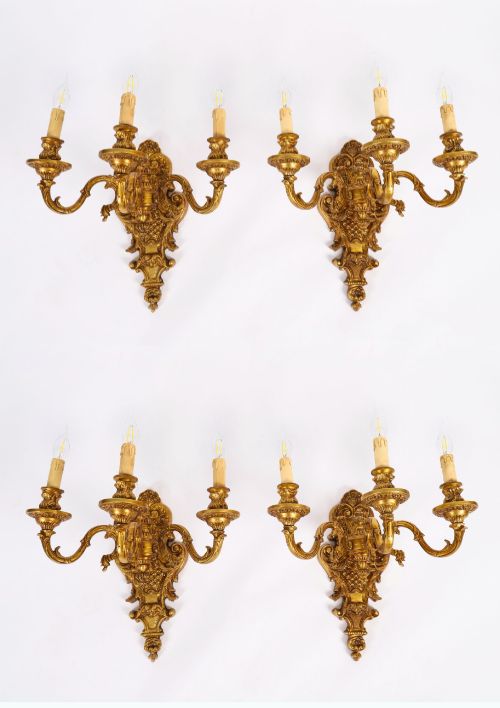
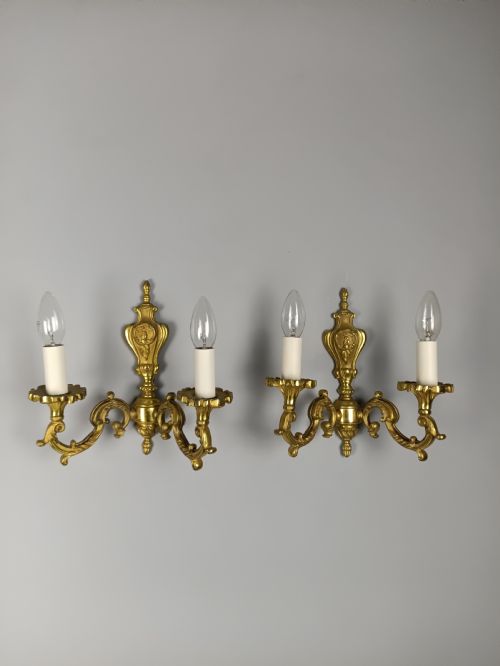
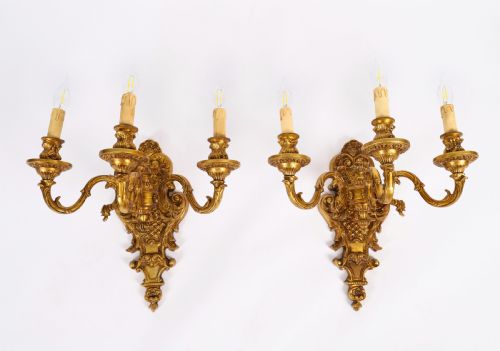
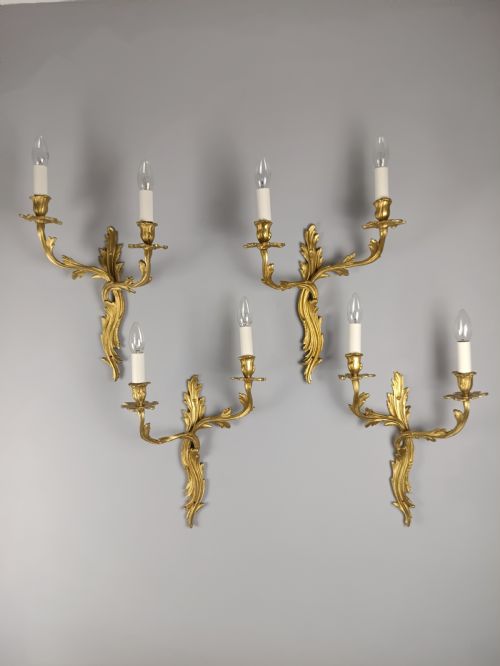
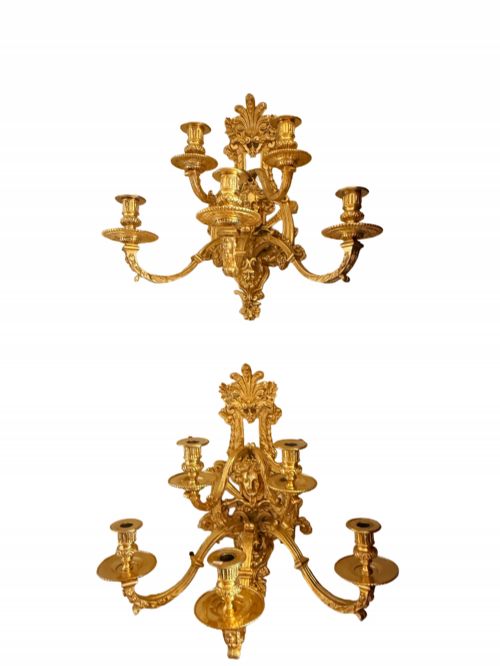
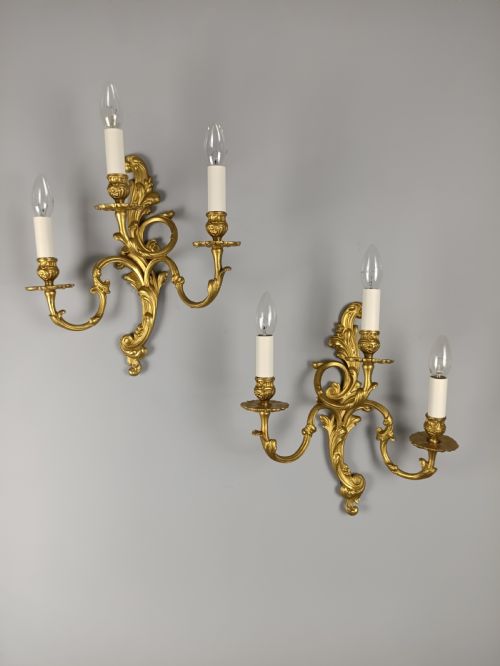
When searching for ormolu wall lights pair items, collectors examine matched sets designed to mount directly onto interior walls for ambient illumination. Most examples found here originate from French and Italian workshops spanning the nineteenth and early twentieth centuries.
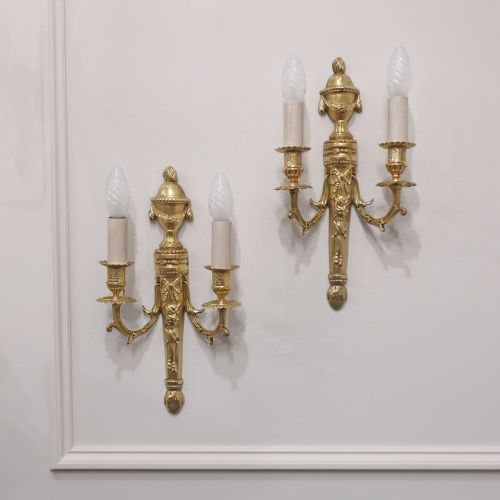
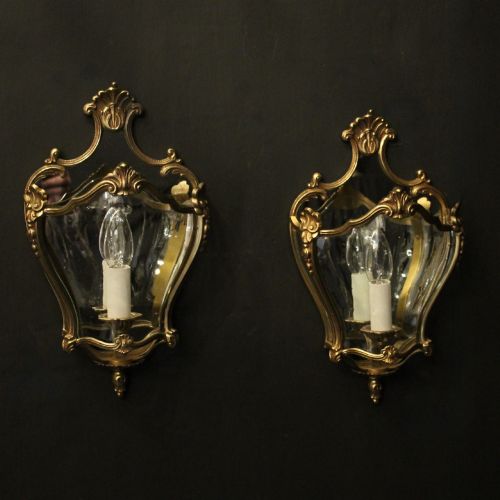
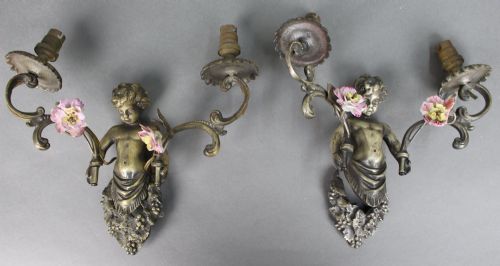
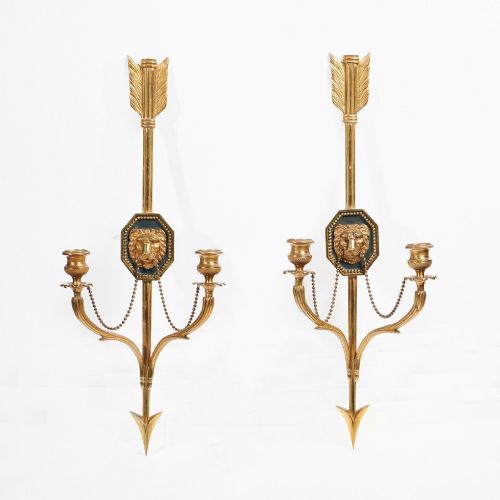
The dominant forms are twin and triple-arm sconces adhering to Rococo, Neoclassical, and Empire stylistic traditions. Many incorporate decorative motifs such as cherubs, flaming torches, porcelain flowers, and ram's head masks.
Makers produced these fixtures to flank mirrors, paintings, or architectural doorways in formal reception rooms. Buyers encounter everything from compact two-branch designs to monumental multi-light appliques.
Materials and construction methods
Foundry workers cast the structural components in bronze, brass, or copper alloys before applying mercurial gilding or modern electroplating to create the characteristic golden ormolu finish. The resulting metal surfaces combine bright highlights with recessed patination.
Many designs integrate secondary materials including cut glass, opaline glass, crystal drops, and painted porcelain elements such as Sevres or Limoges plaques. Electrical wiring often represents later adaptation, as these fixtures originally held candles.
Listings feature periods from the nineteenth century through 1930, alongside Regency and Louis XVI styles.
Distinctions in standard and execution
Construction weight and structural integrity differentiate high-grade output from commercial production. Substantial gauge metal supports heavy branch arms securely, whereas lesser pieces rely on thin stampings and visible assembly seams.
Casier·Henri Vian
The Ormolu Wall Lights Pair Glossary
- Ormolu
- Gilded bronze produced by applying an amalgam of gold and mercury to a base metal, then heating to vaporise the mercury. This historic technique yields a warm, durable golden surface.
- Applique
- A wall-mounted light fixture designed to direct illumination outwards into a room. These decorative brackets mirror the style of free-standing candelabras.
- Rococo
- An ornate artistic style characterised by asymmetrical scrollwork, C-scrolls, and naturalistic plant motifs. It appears frequently in nineteenth-century revival lighting.
- Girandole
- An ornamental branched wall light or candelabrum incorporating reflective elements like glass or mirrors. They maximise the spread of candlelight or electric illumination.
Ormolu Wall Lights Pair: Frequently Asked Questions
How were ormolu wall lights used historically?
These fixtures served to illuminate grand drawing rooms and hallways by holding wax candles. Placed in pairs flanking mirrors or doorways, they amplified candlelight across the interior.
Over time, many surviving examples were converted to electricity while retaining their decorative wall-mounting brackets.
What styles are common in these wall lights?
French Rococo and Neoclassical revival designs dominate the available selection, drawing on Louis XIV, Louis XV, and Louis XVI aesthetics. Italian interpretations also appear frequently.
Common decorative elements include cherubs, flaming torches, urns, and intricate acanthus leaf scrolls.
How can I tell the period of a pair?
Dating relies on casting quality, assembly methods, and stylistic details that correspond to nineteenth-century revival movements or early twentieth-century production. Examining the metal fixings and backplates provides further clues.
Some exceptional pieces bear maker stamps or foundry marks from established Parisian workshops.
Can these antique sconces be rewired for modern use?
Most pieces have already undergone rewiring to meet contemporary electrical safety standards while preserving the original metalwork. Qualified electricians can easily adapt the internal candle tubes for standard modern bulbs.
Careful installation is necessary to support the substantial weight of cast bronze and brass branches.