




Two Leaf Table
When you search for a two leaf table, you are looking at expandable dining surfaces and versatile occasional furniture designed to adapt to company.
Two Leaf Table
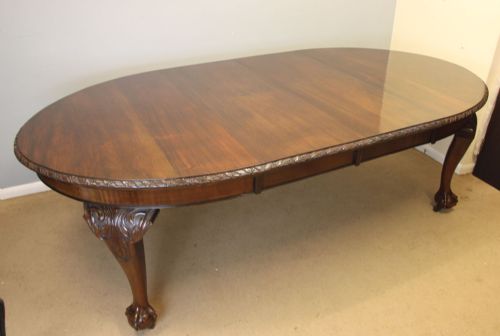
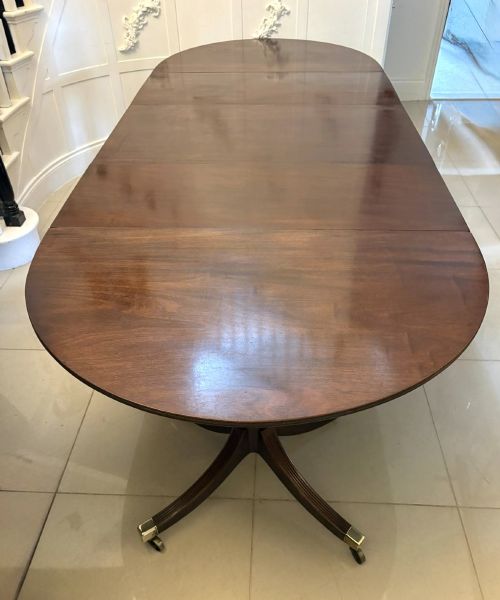
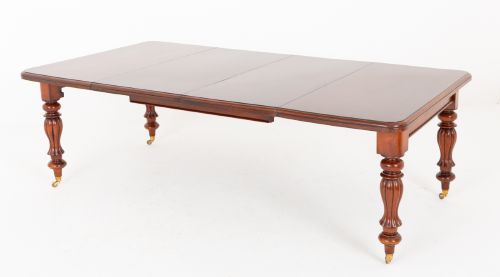
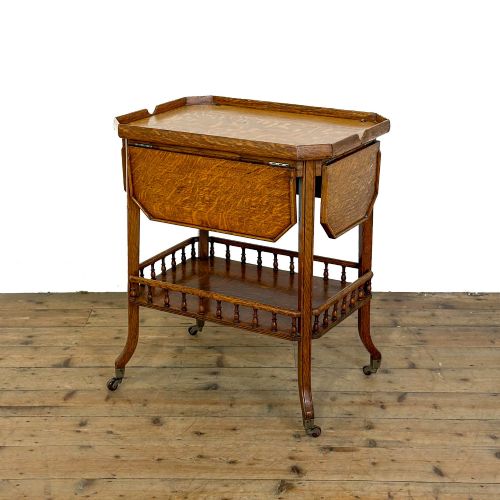
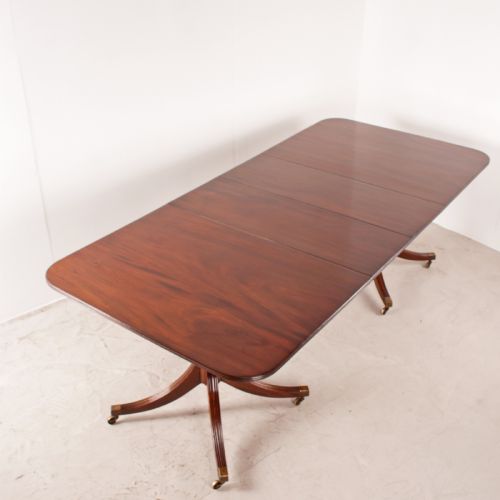
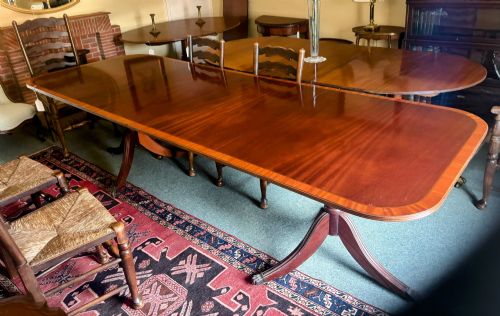
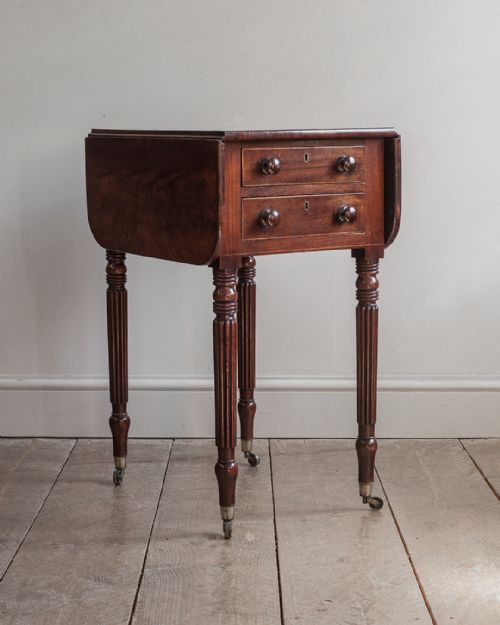
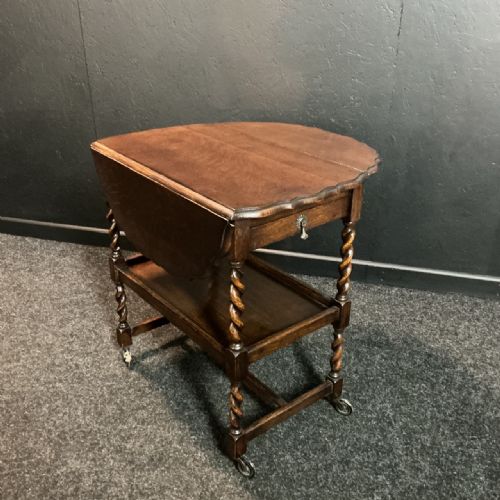
A two leaf table encompasses extending dining furniture and drop-leaf designs that accept removable extra boards or fold out to increase surface area. You will most frequently encounter Victorian and Georgian mahogany extending dining tables fitted with two leaves, alongside occasional sofa tables and tea trolleys.
The form exists to balance everyday compactness with the capacity to seat larger groups for meals or social gatherings. Makers across the eighteenth and nineteenth centuries adapted this mechanism for dining rooms, drawing rooms, and libraries.
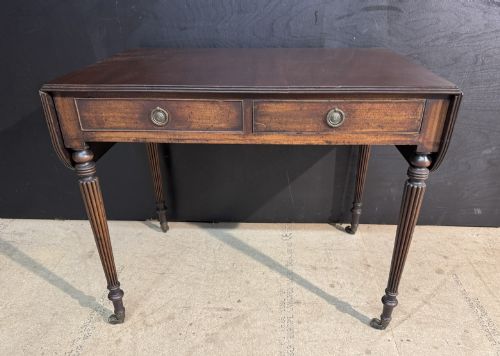
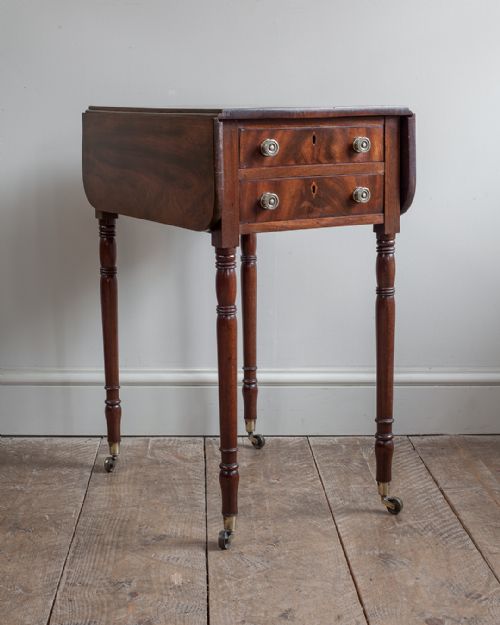
Pieces span formal twin-pillar dining suites to smaller Pembroke and Sutherland tables with drop leaves. The unifying element is the capacity to alter the footprint of the furniture through hinged flaps or inserted leaves.
Materials and construction
Makers relied heavily on dense timbers such as mahogany, walnut, and rosewood, frequently selecting Cuban mahogany or burr walnut for decorative grain pattern on primary surfaces. Secondary structural supports often incorporated sturdy oak or pine.
Extending dining formats utilised wind-out mechanisms with brass or iron screws to part the frame smoothly for two additional leaves. Drop-leaf and Sutherland variants depended on pivoting wooden brackets or gateleg actions to support hinged flaps.
Inlay work utilised contrasting boxwood or brass stringing set into dark mahogany or rosewood surfaces to define borders and panels. Cabinetmakers joined framing timbers using traditional mortise and tenon joints to withstand the stress of repeated extension.
A revolving dumb waiter lets you argue over the port without ever reaching across your aunt.
What separates the finest examples
Quality rests in the selection of timber figures, such as heavily figured burr walnut or rich Cuban mahogany matched across the main top and the additional leaves. Grain continuity when the leaves are inserted marks superior workshop practice.
The integrity of the mechanical parts dictates structural longevity, from smooth-running wind-out screws in dining tables to tight, well-fitted hinges on drop-leaf flaps. Well-executed brass inlay and crisp hand-carving on pillars or reeded legs distinguish high-grade production.
Original surface patination achieved through decades of waxing reveals depth in the timber rather than a flat, modern finish. Proportion and balance in smaller items like work tables and sofa tables separate standard workshop output from bespoke cabinet work.
Andrew Thomson & Sons·Whytock & Reid of Edinburgh·Merryweather of Holloway London
The Two Leaf Table Glossary
- Leaf
- A removable section of timber inserted into a dining table to lengthen the top. When not in use, these extra boards are stored separately.
- Wind-out mechanism
- A mechanical screw system operated by a crank handle that separates the halves of an extending dining table to accept leaves. This innovation became common during the Victorian period.
- Pembroke table
- A small occasional table featuring two hinged drop leaves on opposing sides, often equipped with one or two small drawers. It originated in the eighteenth century.
- Dumb waiter
- A tiered serving stand with rotating or stationary circular shelves mounted on a central pillar. It allowed diners to help themselves without servants present in the room.
Two Leaf Table: Frequently Asked Questions
How do you insert the leaves?
Extending dining tables typically use a winding handle connected to an internal wooden or metal screw mechanism. Turning the handle parts the ends of the table to create the gap required.
Once the frame is open wide enough, the matching leaves drop into alignment pins or dowels on the edges. The mechanism is then wound back gently to lock the timber sections tightly together.
Where were they used?
These tables served primarily in formal dining rooms, drawing rooms, and parlours of large homes. Dining versions sat in the centre of the room ready for family meals or dinner parties.
Smaller drop-leaf, sofa, and work variants stood against walls or beside seating in drawing rooms for tea, reading, or needlework. Their adaptable size suited rooms that changed function throughout the day.
How can I tell the period?
Dating relies on examining timber choices, structural joinery, and leg styles characteristic of specific eras like Georgian, Regency, or Victorian. Georgian pieces often display straight mahogany with subtle bracket feet, while Regency items feature brass inlay and pillar supports.
Victorian extending tables frequently show heavier proportions, reeded legs, and mechanical wind-out systems patented during the nineteenth century. Examining the underside reveals tool marks and construction methods consistent with workshop practices of the time.