



Two Handled Porcelain Vase
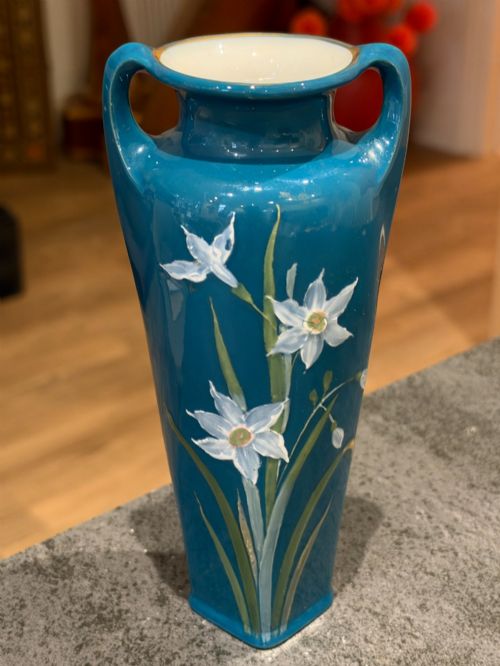
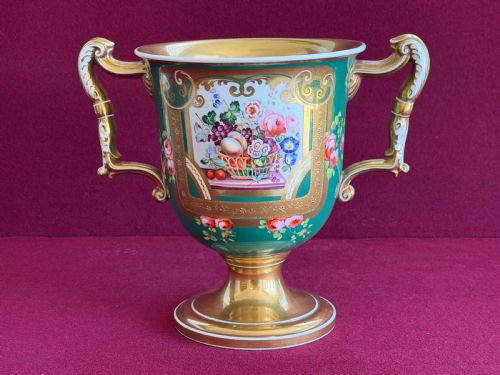
These two handled porcelain vase examples range from Regency works to Japanese export pieces, offering classic symmetrical form and painted detail.
Two Handled Porcelain Vase
When you search for a two handled porcelain vase, you enter a field of twin-handled vessels spanning English factories and Japanese kilns. The pieces on this page include nineteenth-century urns, loving cups, and pedestal vases created across Victorian, Edwardian, and Regency periods.
You are most likely to meet English factory output, particularly Royal Worcester pieces alongside Derby and Spode examples. These sit alongside continental porcelain and Japanese Imari or Satsuma wares from the same eras.
How they were made
The makers formed these vessels in porcelain and earthenware, often incorporating handles as integral structural and decorative elements of the body. Kiln-fired ceramics received painted decoration, sometimes applied by named artists working within the factories.
Surface finish involved enamel colours, gilding, and gold leaf or gilt highlights. Certain nineteenth-century pieces combined traditional ceramic bodies with specific aesthetic styles, ranging from Neoclassical motifs to Japanese export designs.
Two Handled Porcelain Vase Retail Price Guide 2026
Typical asking prices for two handled porcelain vase among the pieces listed under this phrase on Sellingantiques today, from the lower quarter to the upper quarter. They describe what is for sale here now, not the wider market.
Some loving cups were built with multiple handles so friends could hoist a drink without spilling on their waistcoats.
What varies in quality
The distinction between standard factory production and the top of the range rests on the execution of hand-painted detail and the application of gilding. Pieces painted by known artists command greater attention than simple transfer-printed or plain factory stock.
Form and scale also dictate worth, where balanced proportions on pedestal urns and loving cups indicate superior modelling. The integrity of the porcelain body and the crispness of the Neoclassical or Japanese motifs separate fine studio output from mass output.
H and R Daniel·Derby Porcelain·Royal Worcester·KPM
The Two Handled Porcelain Vase Glossary
- Loving cup
- A large drinking vessel typically featuring two or three handles, designed for communal passing during toasts. In ceramic terms, these function primarily as decorative display pieces.
- Gilding
- The application of gold leaf, gold gilt, or powdered gold paint to ceramic surfaces for highlights and borders. This technique enhances the decorative impact of nineteenth-century urns.
- Neoclassical
- A revival style drawing on classical Greek and Roman art, prominent in Georgian and Victorian design. Pieces in this style use balanced forms and restrained classical ornamentation.
- Imari
- A style of Japanese porcelain featuring distinctive underglaze blue and iron red, with added gold highlights. These export wares heavily influenced Western ceramic design during the nineteenth century.
Two Handled Porcelain Vase: Frequently Asked Questions
What is a two handled porcelain vase used for?
These vessels served primarily as ornamental display pieces in nineteenth-century interiors, standing on mantelpieces or pedestals. Some forms, such as loving cups, originated as drinking vessels before becoming purely decorative.
Today, collectors use them to anchor traditional room schemes or display them as cabinet pieces. Their symmetrical handles make them natural focal points on side tables.
How do I identify the period of a vase?
Dating relies on factory marks, painter signatures, and stylistic shifts between Regency restraint and Victorian ornamentation. Examining the base often reveals manufacturer stamps that narrow down the decade.
Material finishes like blush ivory or Imari patterns also point to specific eras such as the Edwardian period or the Meiji era. Comparing handle shapes with known factory catalogues confirms the timeline.
Are Japanese and English vases different?
English examples from factories like Royal Worcester or Derby typically follow European classical or Neoclassical traditions. They lean on white porcelain bodies with gilt borders and painted floral or landscape scenes.
Japanese pieces from the same centuries employ distinct glaze traditions, such as Satsuma earthenware or Imari porcelain. Their iconography draws on Eastern motifs rather than Western revival styles.
How should I display a pedestal vase?
Pedestal urns require stable surfaces that accommodate their elevated height and base width. Placing them away from high-traffic areas protects the handles and delicate gilt work from accidental knocks.
Good lighting brings out the hand-painted details and enamel colours without exposing the piece to direct sunlight. Pairing them with complementary ceramic items creates a balanced period display.