
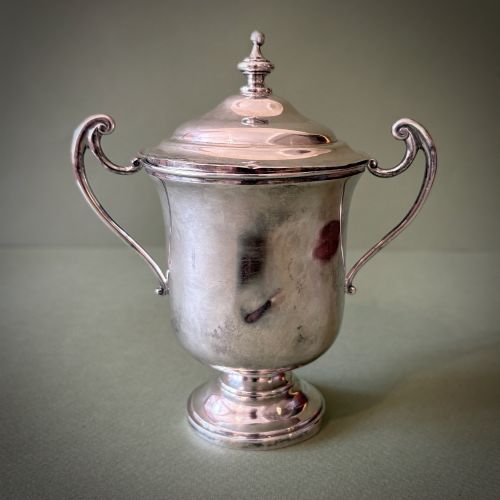
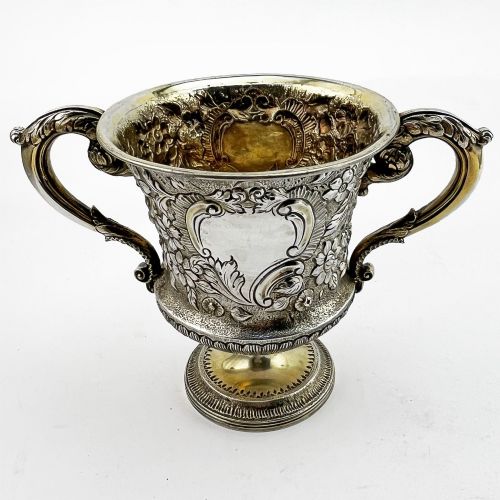
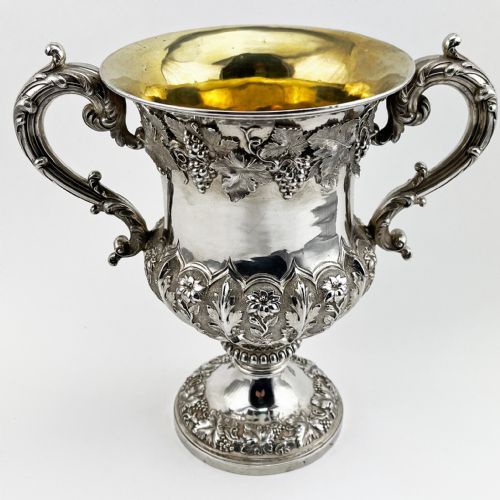


Two Handled Goblet
These two handled goblet examples bring together centuries of metalwork and glass, offering substance and form that catch the eye in any room.
Two Handled Goblet
A two handled goblet spans centuries of drinking vessels and presentation pieces, appearing in silver, silver plate, copper, vermeil, and lead crystal. When you examine this selection, you encounter forms that served as commemorative items, loving cups, and hunting trophies.
The objects originate across multiple eras, including Georgian, William IV, Regency, Victorian, Edwardian, and Art Deco periods. Pieces range from early eighteenth-century Irish silver with liners to twentieth-century English commemorative glassware.
Most entries function as trophy cups or loving cups designed with twin handles for ceremonial passing or display. Makers in England, Scotland, and early America shaped these vessels into campana profiles, chalice forms, and covered cups.
Markers of distinction
The weight of the metal and the crispness of chased decoration separate standard vessels from exceptional works. Superior examples maintain clear hallmarks, balanced handles, and proportional bases that reflect the skill of the silversmith.
Surface preservation dictates the visual impact of plated and solid metal alike. Pieces retaining original gilding or crisp detail on engraved crests demonstrate superior survival through the centuries.
The metal selection spans sterling silver, silver plate, copper, vermeil, and lead crystal across Georgian, Victorian, and Art Deco periods.
Richard Gurney·Joseph Rodgers & Sons·Thomas Sutton
The Two Handled Goblet Glossary
- Campana shape
- A vase-like profile curving outward towards the rim, resembling an inverted bell. This silhouette appears frequently on Georgian presentation cups.
- Loving cup
- A large drinking vessel equipped with multiple handles, traditionally passed among guests at banquets. These often served communal functions during celebrations.
- Old Sheffield plate
- A fused layer of silver over a copper base, produced before the invention of electroplating. It shows a distinctive rich tone where the base metal hints beneath the wear.
- Vermeil
- Gold plating applied over sterling silver. This technique provides the warm lustre of solid gold while utilising silver as the structural base.
- Hallmark
- An official stamp indicating the purity of the metal, the maker, and the year of assay. These marks provide definitive records for dating British silver.
Two Handled Goblet: Frequently Asked Questions
What is the difference between a loving cup and a trophy?
Loving cups traditionally feature two or more handles designed for passing between people during toasts and communal gatherings. Trophy cups are usually presented for sporting or civic achievements and often include covers or commemorative inscriptions.
Both forms utilise similar twin-handle configurations in silver or plate.
How do I date a silver goblet?
Examine the stamped hallmarks on the body or base to find the assay office mark and date letter. Reference tables correlate these symbols directly to the year of manufacture.
Stylistic cues such as campana shapes or Art Deco geometric lines also help narrow down the period.
Can these vessels still hold liquids?
Many solid silver and glass pieces remain structurally sound for holding liquids, provided they have no internal cracks or liner damage. Silver-plated items require care to prevent wearing through the thin metal layer.
Display remains the primary use for most antique presentation pieces.