
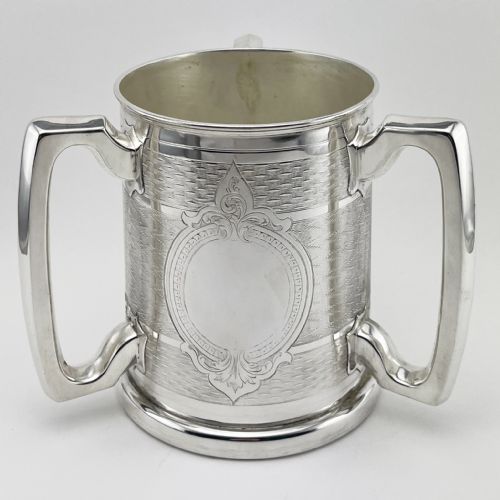


Engraved Silver Loving Cup
These engraved silver loving cup examples bring historic ceremony to the table, offering heavy metals and detailed incisions that collectors prize for display.
Engraved Silver Loving Cup
When you search for an engraved silver loving cup, you encounter vessels designed for shared drinking at formal banquets or later repurposed as presentation pieces and trophies. The majority of pieces on this page span the 18th and 19th centuries, taking the form of substantial two-handled or three-handled vessels.
You will find Georgian, Victorian, and Edwardian examples alongside specific regional variations such as Anglo-Indian Kutch items and Irish cups. These objects range from heavy sterling silver iterations to Old Sheffield plate and silver-plated copper constructions.
The decorative schemes rely heavily on personal or commemorative engraving, transforming plain metal into historical records. Whether designated as trophies or presentation cups, these items showcase the enduring appeal of communal drinking vessels from past centuries.
Materials and construction methods
Makers utilised sterling silver, silver plate, Old Sheffield plate, and copper, often enhancing the base metal with gilt interiors or applied handles. The technique of fusing silver to copper, seen in Old Sheffield plate, created durable vessels with the appearance of solid silver.
Engraving was executed by hand using sharp gravers to cut lines, crests, and foliate scrolls directly into the metal surface. Additional methods included casting handles separately and soldering them securely to the body of the cup.
Certain pieces incorporate liners or feature intricate repoussé work alongside the engraved panels, demonstrating advanced smithing skills. The combination of sturdy core metals and careful surface decoration ensured these cups survived centuries of handling.
Some Victorian examples feature three squared handles, ensuring nobody fumbled the toast after the third round of ale.
Distinctions in craftsmanship and condition
Quality rests upon the crispness of the hand engraving and the structural integrity of the applied handles. Superior pieces display deep, sharply defined cuts that retain their original geometry without excessive thinning from polishing.
The weight of the metal and the balance of the vessel separate standard production items from master silversmith output. Early Georgian examples with recorded maker marks and documented provenance command greater attention than unsigned later pieces.
Surface preservation matters significantly, particularly on plated items where the underlying base metal begins to show through worn areas. Pieces that retain their original gilding inside the bowl demonstrate higher initial status and better overall survival.
Thomas Sutton
The Engraved Silver Loving Cup Glossary
- Old Sheffield Plate
- A composite material made by fusing a thin sheet of sterling silver to a thicker copper base. This technique was widely utilised before the advent of electroplating.
- Sterling Silver
- An alloy consisting of silver and other metals, usually copper, meeting a strict fineness standard. It provides the heavy feel and lasting durability expected in fine tableware.
- Repoussé
- A metalworking technique where the artist hammers the metal from the reverse side to form a raised design in relief. It often appears in combination with surface engraving.
- Gilt
- A thin layer of gold applied to the interior surface of a silver or plated vessel. This prevented acidic liquids from tarnishing the main metal.
- Presentation Cup
- A vessel inscribed to commemorate a specific event, achievement, or individual. These often superseded domestic loving cups in popularity during the Victorian era.
Engraved Silver Loving Cup: Frequently Asked Questions
How were these cups used historically?
These vessels played a central role in ceremonies and banquets where a cup of wine or ale passed from person to person. Multiple handles allowed drinkers to hold the heavy vessel securely while standing.
Later examples often served as presentation pieces awarded for achievements, shifting from functional drinking vessels to static display objects.
How do I care for silver loving cups?
Display these cups away from direct sunlight and damp environments to protect the metal and any underlying copper bases. Occasional gentle dusting with a soft cloth prevents surface grime buildup.
Avoid harsh chemical dips that strip away the aged patina and soften fine hand engraving. Minimal, careful cleaning preserves the historical character of the piece.
How can I tell the period of a cup?
Dating relies on stylistic markers, engraving techniques, and any accompanying hallmarks stamped into the metal. Georgian pieces often show simpler classical forms, whereas Victorian items frequently display heavier, more ornate decoration.
Comparing the manufacturing method, such as distinguishing Old Sheffield plate from later electroplate, narrows the timeline of creation.