

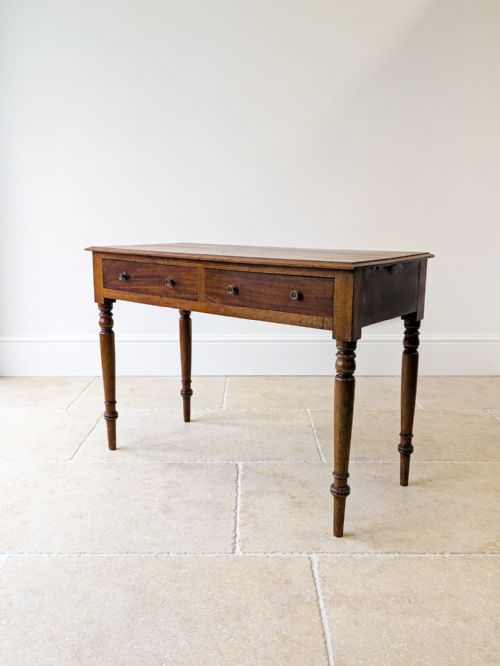
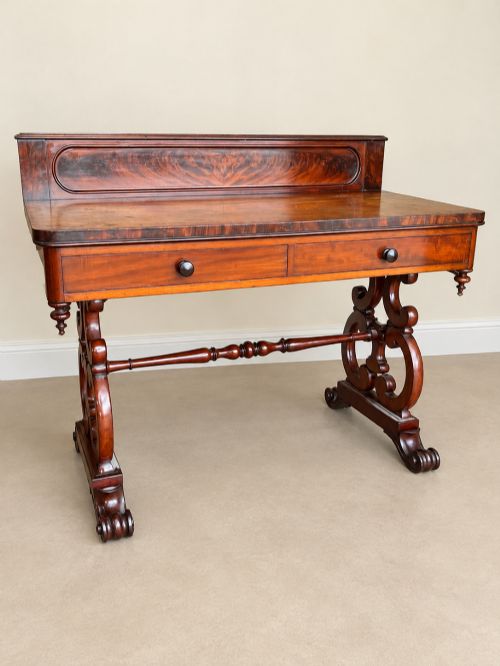
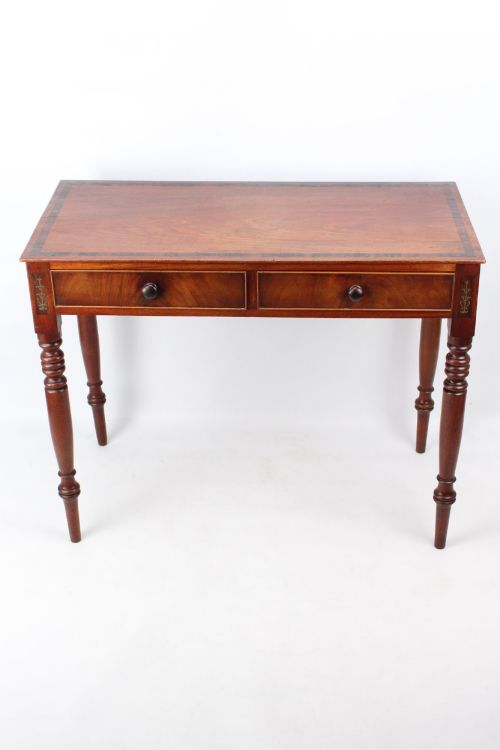
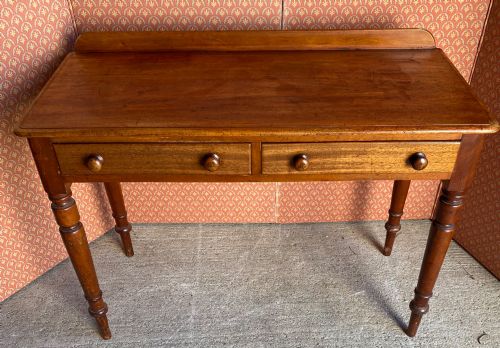
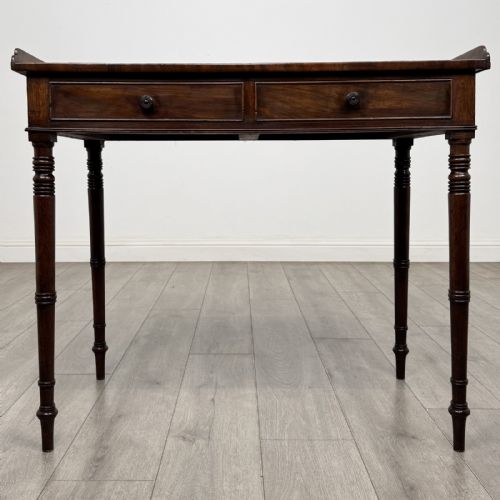
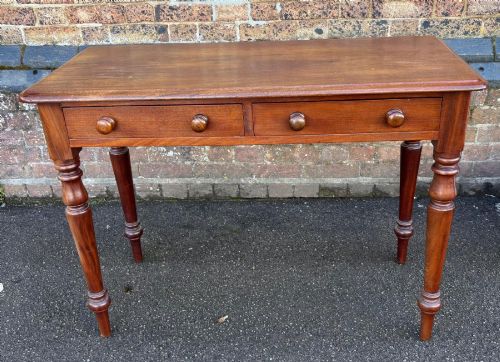
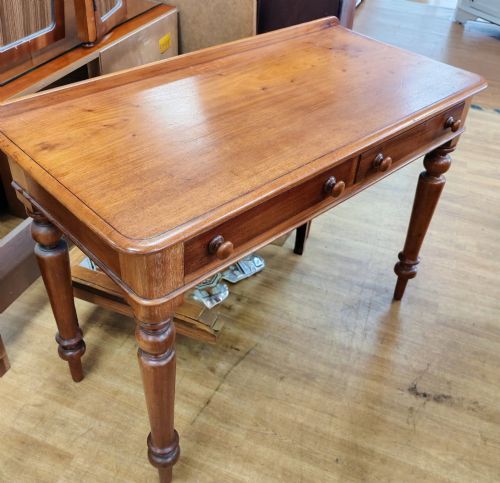
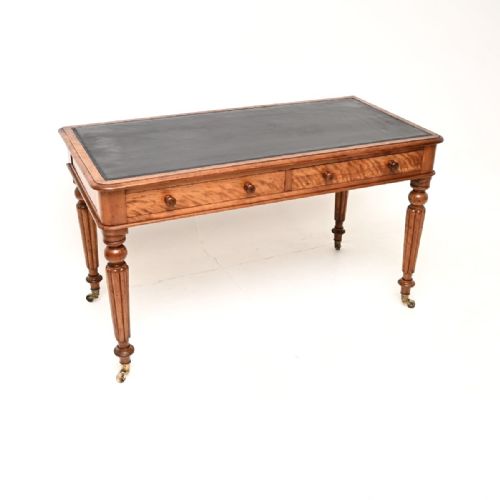
Two Drawer Study Table
A two drawer study table provides a dedicated writing surface with compact storage, offering functional utility and period character for a home study.
Two Drawer Study Table
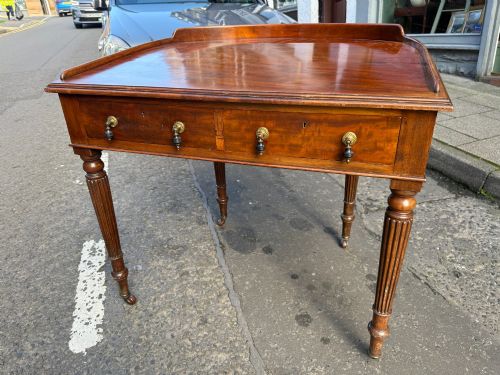
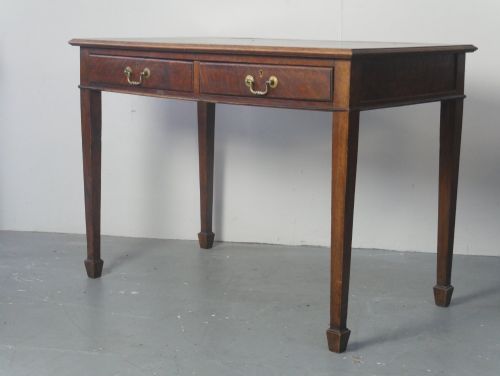
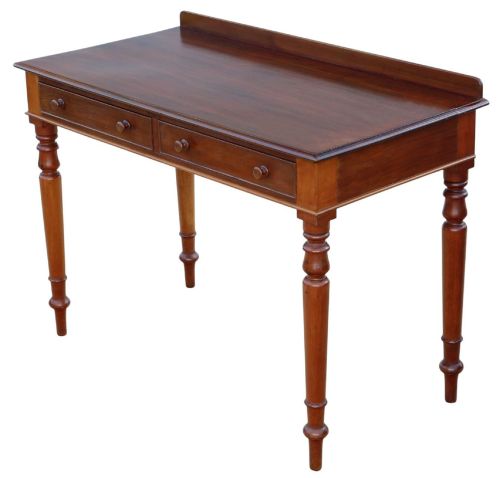
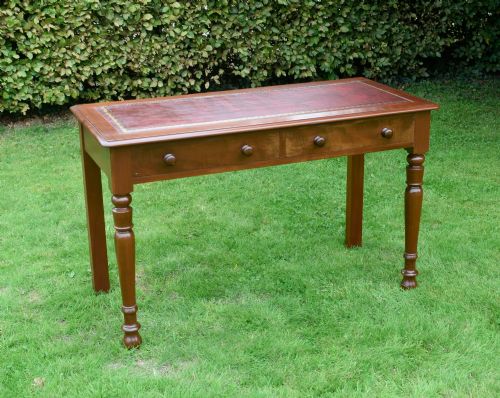
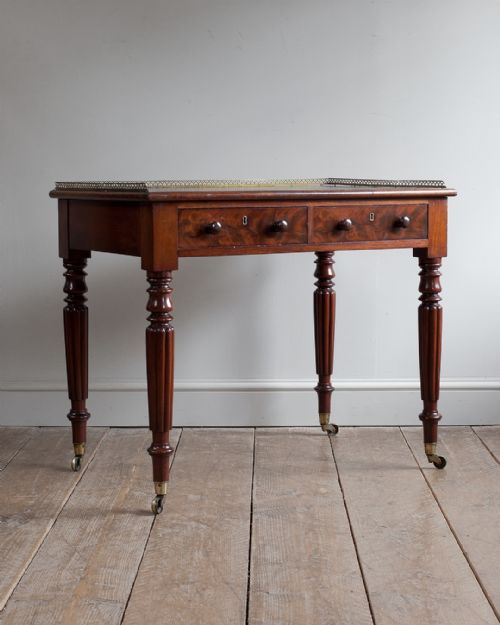
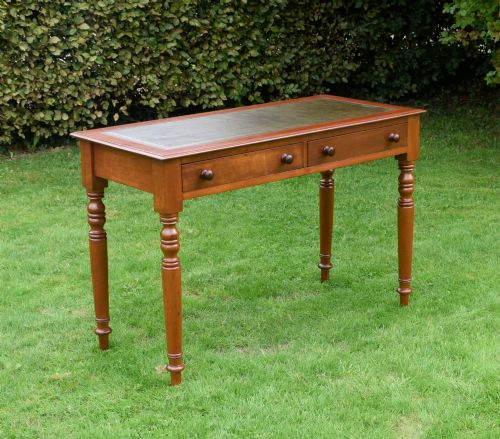
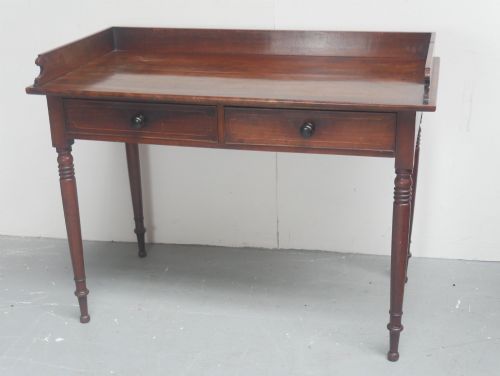
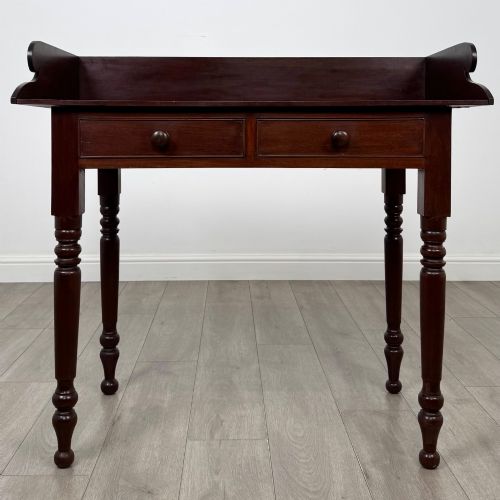
When you search for a two drawer study table, you encounter practical writing desks designed for domestic and library use. These pieces typically feature a rectangular top above a frieze fitted with two small drawers.
The versions you meet most frequently on this page date from the nineteenth century, including Victorian and Edwardian examples. They span forms such as writing desks, library tables, and side tables.
Timbers like mahogany and oak dominate the selection, often complemented by inset leather writing surfaces and turned or reeded legs. They reflect the utilitarian yet refined cabinetry of their respective periods.
What varies in quality
Quality rests in the selection of timber figures, such as figured mahogany or burr walnut, and the crispness of any inlay or carved detail. Superior examples show meticulous attention to drawer linings and secondary woods.
The integration of original brass hardware and well-executed tooled leather writing surfaces distinguishes finer pieces. Structural integrity in the leg turnings and joint work further separates standard utility items from superior cabinetmaking.
Two Drawer Study Table Retail Price Guide 2026
Typical asking prices for two drawer study table among the pieces listed under this phrase on Sellingantiques today, from the lower quarter to the upper quarter. They describe what is for sale here now, not the wider market.
A Scottish oak table bears the stamp of Jenners, reminding us that grand department stores once retailed fine writing furniture.
Heal and Son·Mein of Kelso·Gillows·Jenners
The Two Drawer Study Table Glossary
- Frieze
- The horizontal band beneath the top of the table where the drawers are housed. This area often displays moulding or timber grain.
- Dovetail
- A joint used in drawer construction formed by interlocking wedge-shaped fingers. It provides strong tensile resistance for everyday opening and closing.
- Tooled leather
- Leather inset into the top of a desk decorated with blind or gold-stamped patterns. It creates a smooth writing surface.
- Reeded legs
- Vertical rounded mouldings carved into furniture legs in relief. This decorative technique appears frequently on Victorian pieces.
- Secondary wood
- The internal timber used for unseen parts like drawer sides and bases. Cabinetmakers often utilised pine or oak for these structural elements.
Two Drawer Study Table: Frequently Asked Questions
How were two drawer study tables used?
These tables served as compact desks for correspondence, household administration, and reading in studies or libraries.
The two drawers provided convenient storage for writing instruments, paper, and small documents while keeping the surface clear.
What materials should I expect?
The listings show a predominance of mahogany and oak, alongside walnut, satinwood, rosewood, and birch.
Many examples incorporate brass hardware and leather writing surfaces inset into the top.
How do I identify a Victorian example?
Victorian pieces often feature dense mahogany or walnut timbers, sometimes combined with turned legs and tooled leather tops.
Stylistic markers range from plain utilitarian designs to more ornate Victorian interpretations.
Can these tables fit in modern rooms?
Their modest proportions make them suitable as writing desks or side tables in contemporary home offices and living spaces.
The inclusion of two drawers offers practical storage without occupying excessive floor space.