
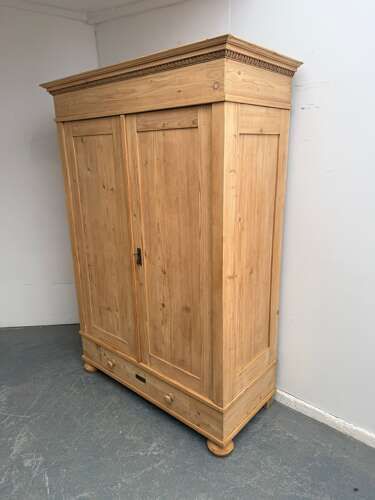
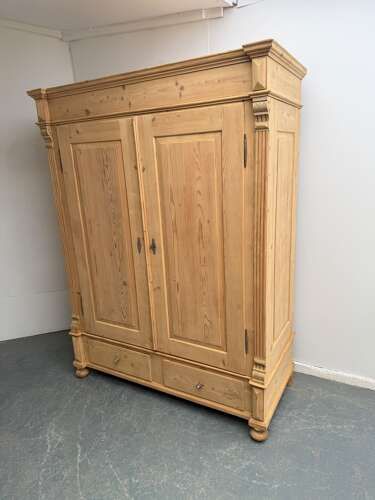
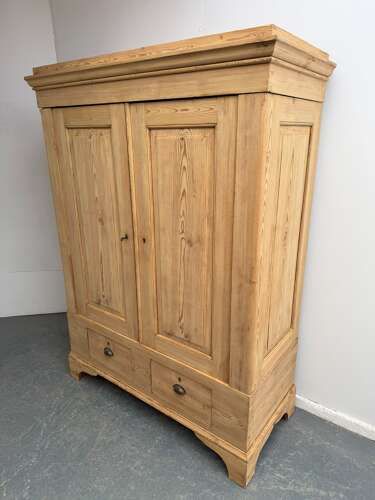
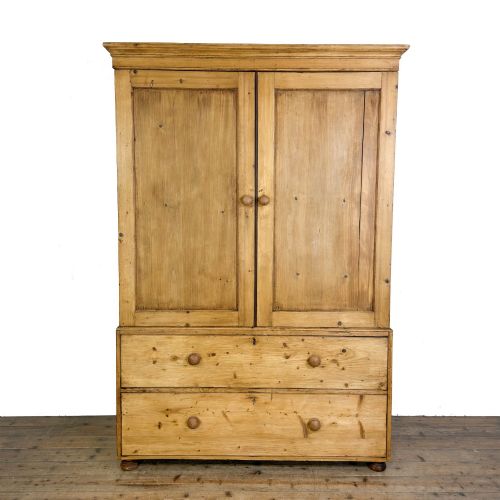
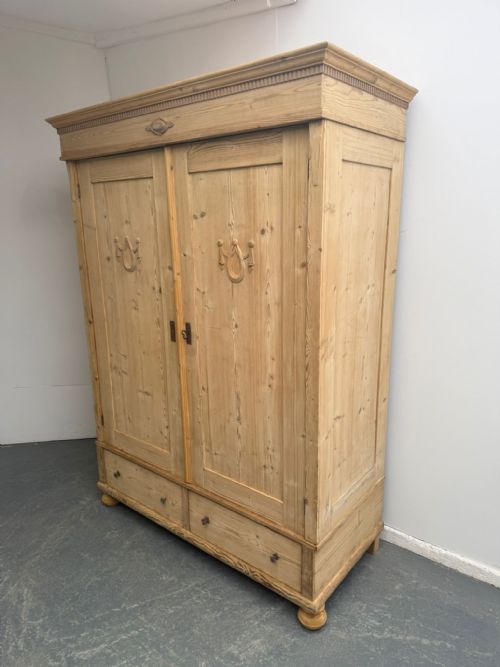

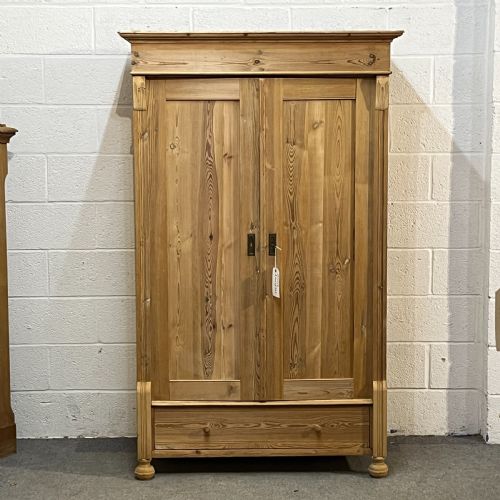


Two Drawer Pine Wardrobe
A two drawer pine wardrobe offers sturdy domestic storage with the characteristic warmth of historic softwood.
Two Drawer Pine Wardrobe
A two drawer pine wardrobe combines hanging space or shelving above a lower storage drawer within a single timber cabinet. Buyers seeking a two drawer pine wardrobe will encounter examples spanning the Georgian, Victorian, and Arts and Crafts periods, alongside early twentieth-century pieces.
The pieces appearing here include knockdown versions designed to dismantle for transport, alongside cottage and farmhouse cupboards. Regional variations range from low Georgian forms to tall Victorian configurations with columned details or combination layouts.
How they were made
Construction relies primarily on pine timbers, frequently handled as waxed, painted, or stripped finishes. Many Victorian iterations utilise knockdown frameworks that allow the carcass to separate into manageable sections for moving.
Hardware details incorporate iron, brass, and occasional bone elements for handles, hinges, and escutcheons. Joinery methods support the utilitarian origins of these bedroom cupboards while accommodating deeper base drawers.
Recorded formats range from tall knockdown bedroom cupboards and linen presses to low cottage pieces and fitted storage units with integrated drawers.
What varies in quality
The calibre of a piece rests on the proportion of the timber, the crispness of architectural details such as columns or cornices, and the integrity of the original knockdown mechanisms. Finer examples retain balanced proportions despite generous internal capacity.
Surface preparation distinguishes standard workshop output from more ambitious commissions, with careful wax finishes highlighting the grain. The presence of integrated lower drawers that run smoothly within the base carcass adds practical distinction.
The Two Drawer Pine Wardrobe Glossary
- Knockdown wardrobe
- A wardrobe built to dismantle into modular sections for ease of transport and installation in domestic chambers. This construction method uses pegged joints or threaded bolts concealed within the frame.
- Linen press
- A tall cupboard combining upper shelving for textiles with lower drawer storage, often serving functions similar to a wardrobe. These pieces frequently feature double doors enclosing sliding trays or shelves.
- Combination wardrobe
- A multi-section storage piece uniting hanging compartments, shelving, and external drawers in a single structure. They represent more complex designs produced during the later nineteenth century.
- Cottage furniture
- Domestic pieces produced in regional workshops for smaller rural dwellings, prioritising utility and straightforward construction. They typically display simpler mouldings and unpretentious pine surfaces.
Two Drawer Pine Wardrobe: Frequently Asked Questions
How do knockdown wardrobes work?
Knockdown wardrobes dismantle into separate side panels, cornices, bases, and doors to facilitate movement through narrow stairwells and historic doorways. Internal wooden pins or metal bolts secure the sections together firmly once positioned in the room.
This modular construction was particularly common for large Victorian pine pieces that would otherwise prove too bulky for domestic spaces.
How should I care for a waxed pine surface?
Waxed pine benefits from occasional applications of natural beeswax to nourish the timber and maintain a soft, protective sheen against household dust. Avoid placing these wardrobes near direct heat sources or strong sunlight to prevent the softwood from drying out.
Gentle dusting with a dry cloth is sufficient for regular maintenance of both waxed and painted finishes.
Are these wardrobes difficult to assemble?
Most historic knockdown pieces assemble straightforwardly with basic hand tools once the logical sequence of base, sides, and cornice is understood. Having an extra pair of hands ensures the upright panels remain steady during the process.
Marked internal joints on period examples often guide the correct placement of individual components.