
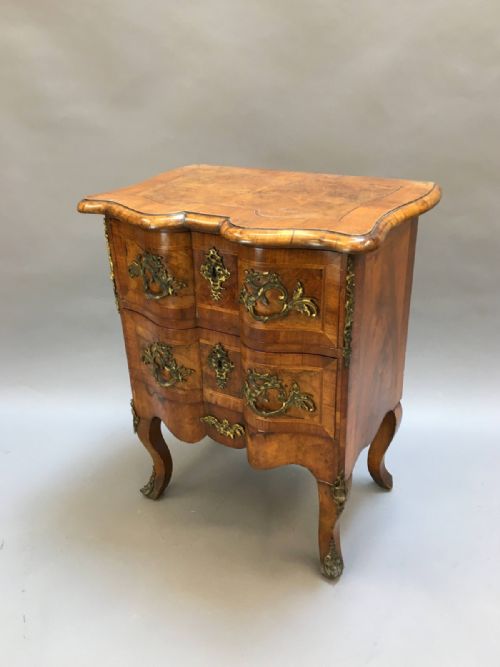
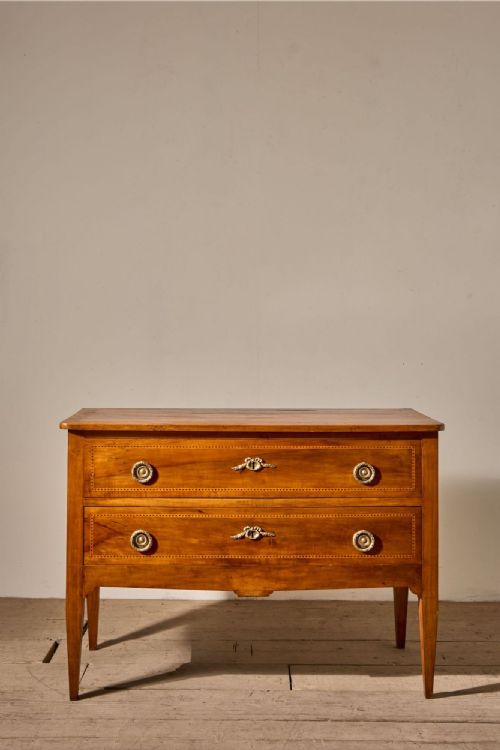


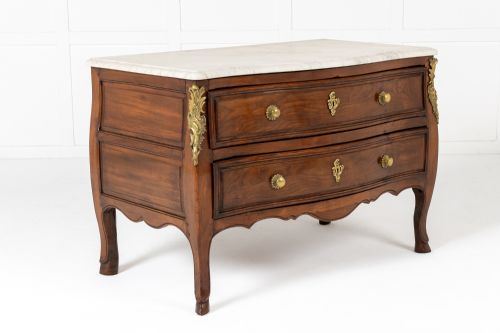


Two Drawer French Commode
A two drawer french commode brings architectural presence and generous bedside storage to a room through balanced proportions and tactile timber.
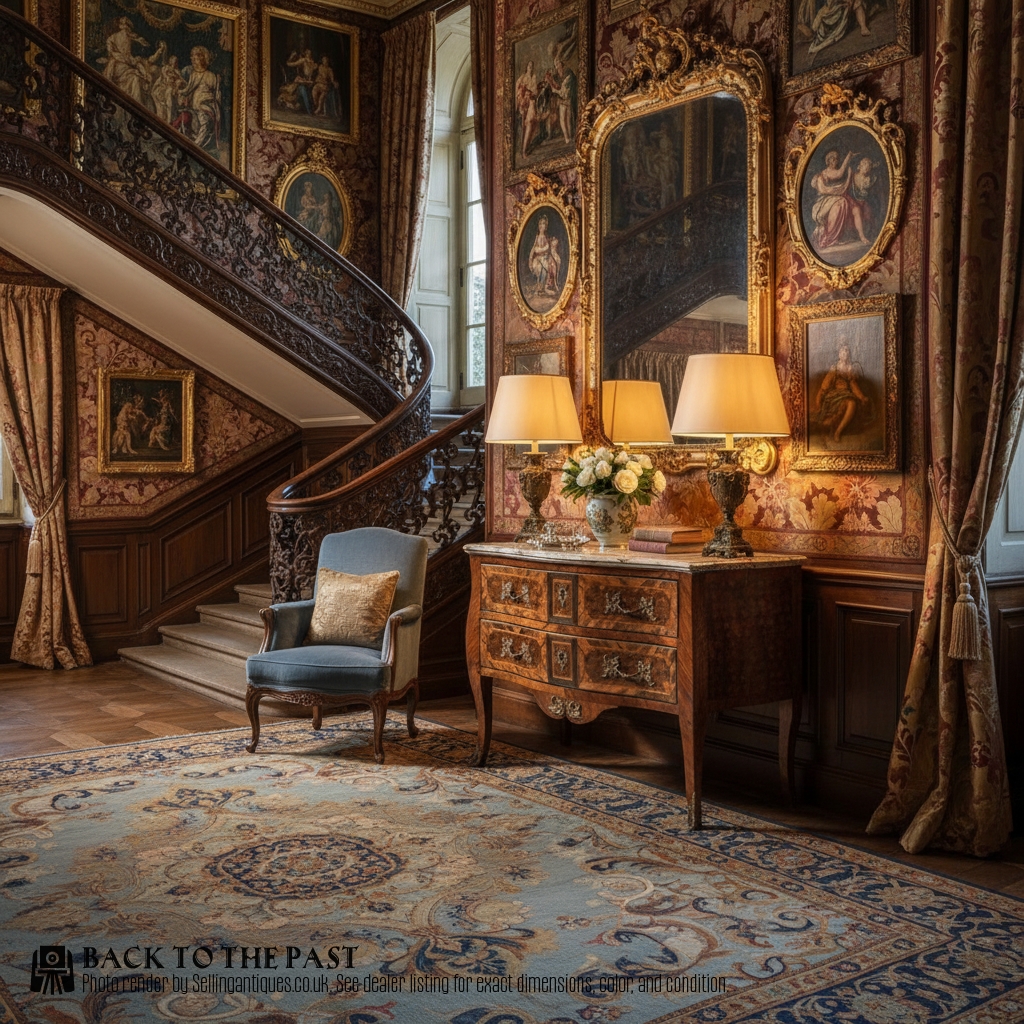
Two Drawer French Commode
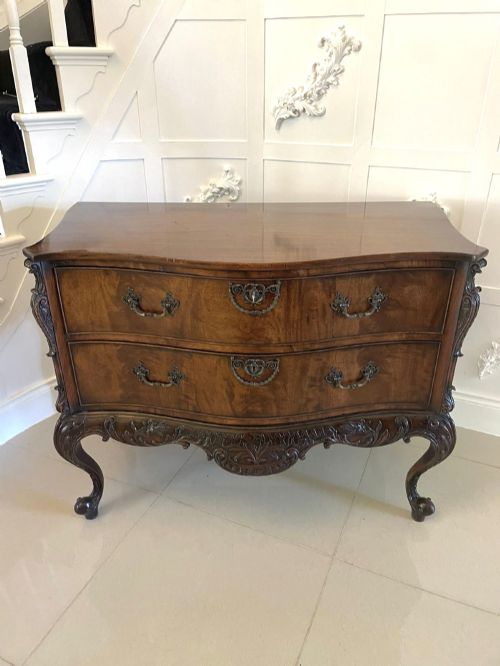
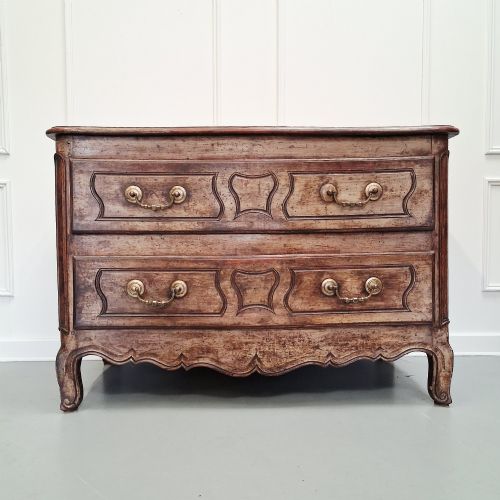
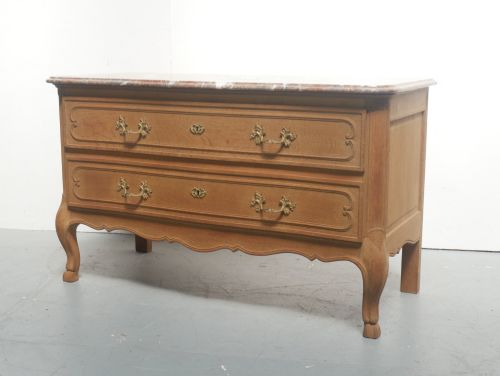
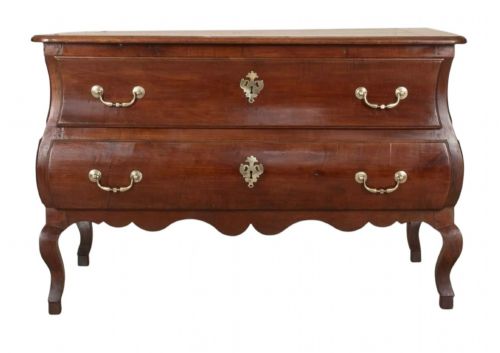
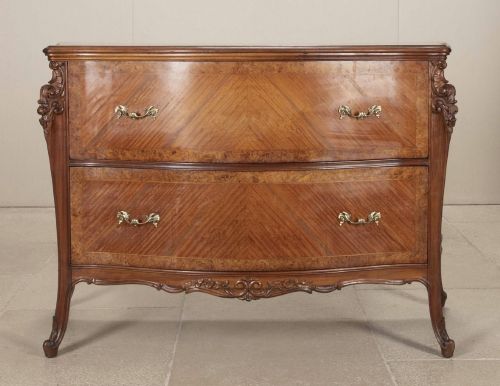
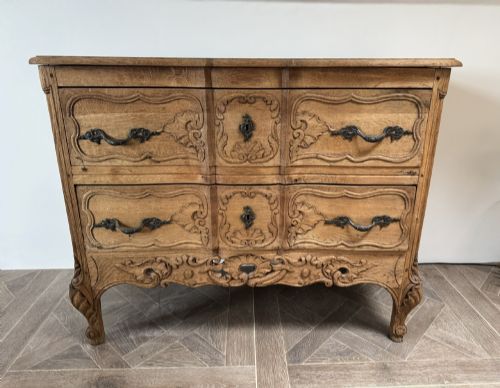
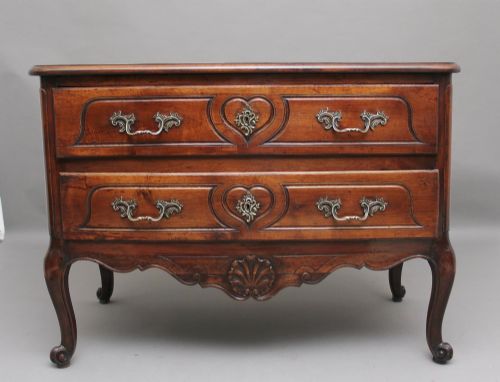
When you search for a two drawer french commode, you encounter low chests built for the bedroom or salon, spanning provincial walnut and polished cherrywood forms. These pieces offer deep storage paired with a wide surface, frequently topped in marble and finished with brass handles.
The selections on this page range from eighteenth century cherrywood and painted country examples to nineteenth century revival pieces and later walnut specimens. You meet serpentine profiles, bombe shapes, and straight fronts originating from French provincial workshops and urban cabinetmakers.
Most entries adhere to the classic two drawer configuration, which elevates the main body of the chest and provides distinct proportions compared to taller case furniture. Walnut and oak dominate the timber selections, while marble slabs and painted finishes appear regularly across different periods.
How they were made
Cabinetmakers constructed these chests using solid hardwoods like walnut, oak, and cherrywood for the primary frames, applying veneers of burr walnut, rosewood, or satinwood to visible surfaces. Joinery relied on hand cut dovetails for the drawers and pegged mortise and tenon joints for the structural carcase.
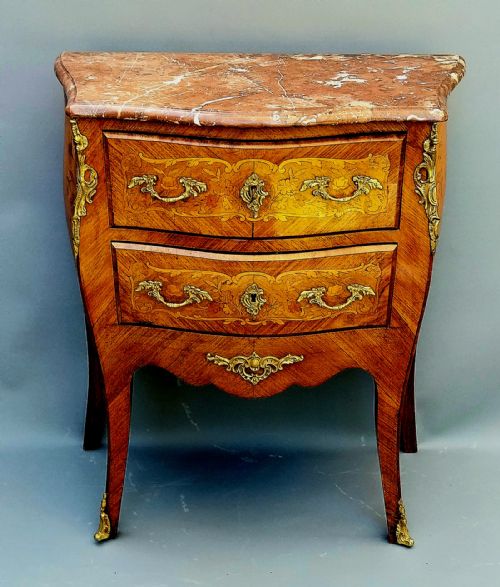
Marble tops, particularly breccia varieties, were cut and polished to fit precisely onto the wooden frames, adding substantial weight and a durable surface. Ormolu mounts and cast brass handles were secured to the drawer fronts to accent the contours of the woodwork.
Painted wood finishes utilised layered pigments over a gesso base, often distressed or aged over time to achieve a provincial aesthetic. Marquetry versions incorporated contrasting wood inlays arranged in geometric or floral patterns across the drawer faces.
A rogue cherrywood chest hides behind its polite facade, waiting to hold your midnight reading.
What varies in quality
The refinement of the timber selection and the complexity of the carcase shape dictate the standing of a piece within the range. Straight walnut or oak chests present simpler utilitarian lines, whereas serpentine and bombe forms demand advanced woodworking skill to shape the timber and fit the drawers.
The integration of materials also separates standard regional examples from finer urban commissions. Heavy, figured marble slabs, intricate ormolu mounts, and precise marquetry indicate workshops with greater resources and specialised labour.
Drawer construction reveals the underlying standard of manufacture, where thin hand cut dovetails and clean secondary woods demonstrate deliberate workmanship. The preservation of original surface finishes and mounts contributes significantly to the integrity of the piece.
The Two Drawer French Commode Glossary
- Bombe
- A bulging or swelling outward contour on the front and sides of a chest. This swelling profile requires shaped framing timbers.
- Serpentine
- A wave shaped front with a convex centre flanked by concave curves, or vice versa. This contour softens the rectangular appearance of case furniture.
- Ormolu
- Gilded bronze used for decorative mounts, handles, and escutcheons on furniture. The metal is cast and chased before receiving a gold wash.
- Breccia
- A type of marble composed of broken rock fragments embedded in a fine grained matrix. It provides a variegated, multicoloured surface top.
- Marquetry
- The art of applying small pieces of veneer to a structure to form decorative patterns. Craftsmen use contrasting woods to create pictorial designs.
- Sauteuse
- A light chest of drawers raised on long legs, typical of eighteenth century French design. The term denotes a mobile piece of furniture.
Two Drawer French Commode: Frequently Asked Questions
What rooms suit a two drawer french commode?
These chests function effectively as bedside tables, hallway surfaces, or low drawer units in living spaces. Their compact height allows them to sit beneath windows or alongside seating.
The marble tops provide a durable surface for daily use, while the two deep drawers accommodate clothing, linens, or household items out of sight.
How do I identify an eighteenth century piece?
Eighteenth century examples display hand cut joinery, older secondary timbers behind the drawers, and natural surface wear accumulated over centuries. Provincial pieces often show tool marks from hand planes on the interior panels.
Makers from this era relied on solid regional woods like cherrywood and oak, shaping the carcases with subtle curves rather than rigid symmetry.
What is the difference between provincial and revival pieces?
Provincial pieces originate from regional French workshops and feature simpler construction, native fruitwoods or oak, and practical forms. Revival pieces date to the nineteenth or early twentieth centuries, mimicking earlier styles like Louis XV with refined veneers and ormolu.
Revival commodes often incorporate mass produced hardware or standardised mechanical joinery while maintaining the decorative silhouette of the eighteenth century originals.
How should I care for a marble top commode?
Marble surfaces require regular dusting with a soft cloth and immediate blotting of acidic liquids like wine or citrus juice to prevent etching. Avoid abrasive cleaners that dull the polished stone finish.
Treat the wooden body with appropriate furniture wax according to the timber type, keeping the piece away from direct heat sources to prevent wood splitting.