
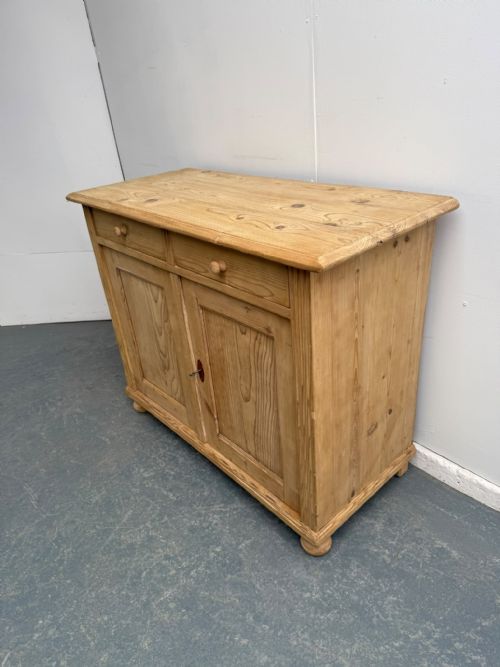
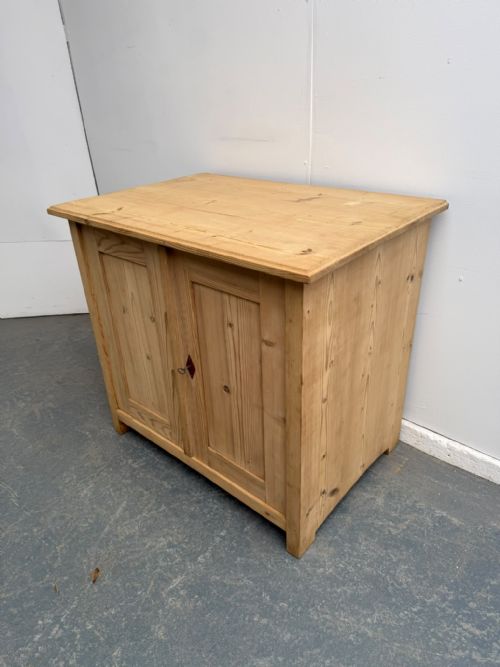
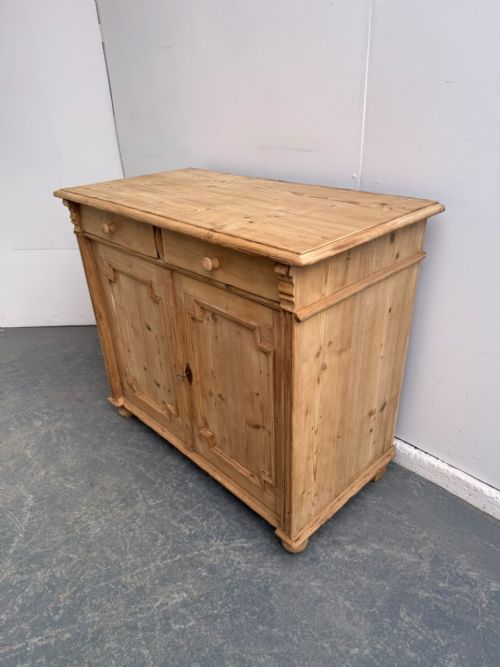
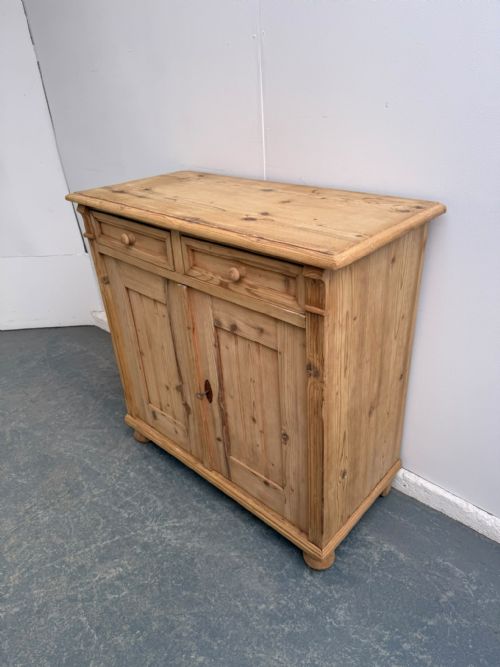


Two Door Pine Sideboard
A two door pine sideboard offers practical storage with honest character, spanning country workshops and Victorian kitchens.
Two Door Pine Sideboard
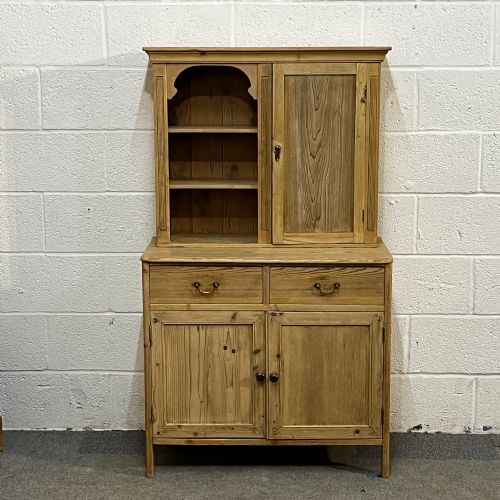
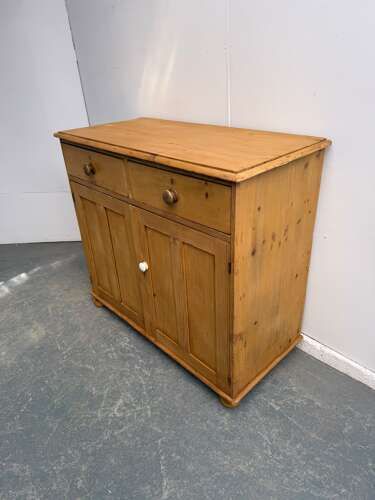
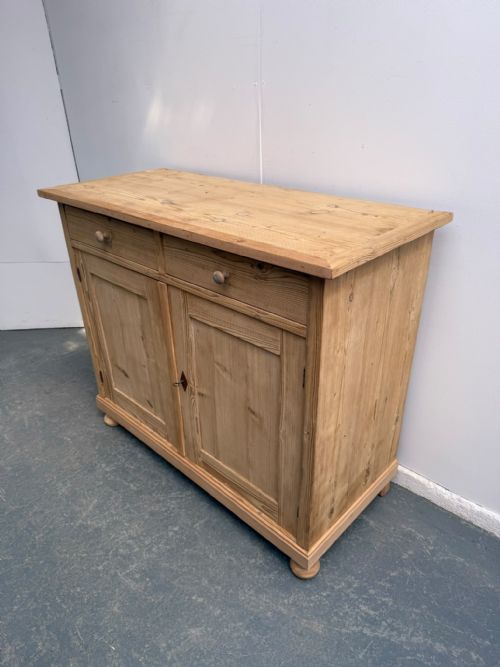
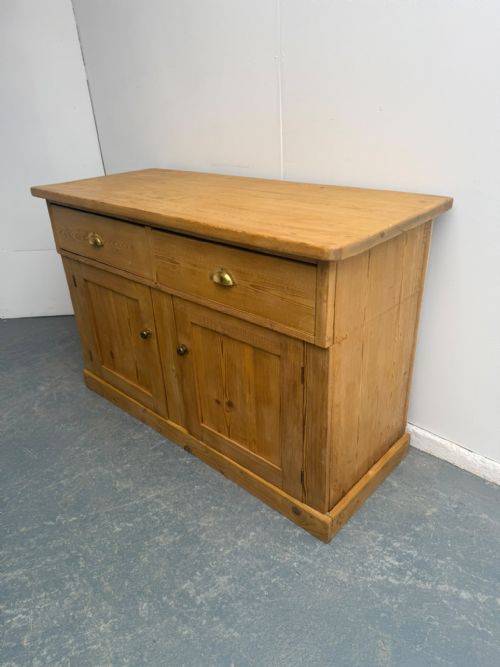
When you search for a two door pine sideboard, you are looking at utilitarian wooden storage pieces that bridge the gap between kitchen dressers and formal cabinets. These items take several forms in the evidence, appearing most frequently as Victorian dresser bases with two doors and two drawers, alongside dedicated cupboards and chiffoniers from the nineteenth century.
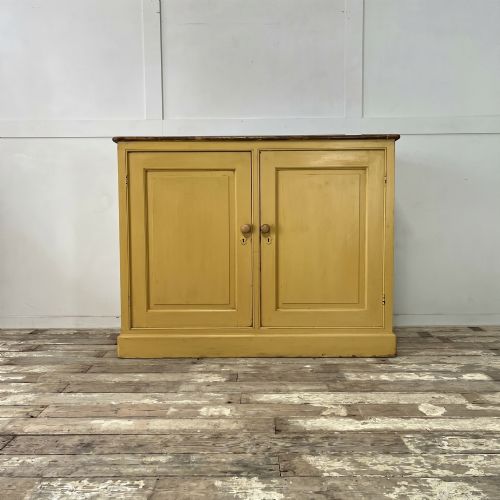
The pieces on this page originate from diverse domestic traditions, ranging from English provincial workshops to Scandinavian country interiors and Hungarian folk art. You will encounter low wide storage units, shallow dresser bases, and tall school cupboards, all sharing a functional two door format built from sturdy timber.
Victorian examples dominate the selection, often offered in a raw state ready for waxing or painting, while earlier Georgian and Regency pieces show refined proportions. Alongside these, nineteenth-century painted cupboards from Sweden and England bring colour and regional variety to the category.
What varies in quality
Proportion and scale establish the initial visual impact of a piece, separating compact low cupboards from grander tall dresser bases. The harmony between the two doors and any accompanying drawers dictates the overall balance of the front elevation.
Surface preservation tells the story of an item's working life, from untouched painted finishes on Scandinavian cupboards to clean waxed timbers on English Victorian bases. The integrity of the original construction and the character accumulated in the wood define the standing of each individual piece.
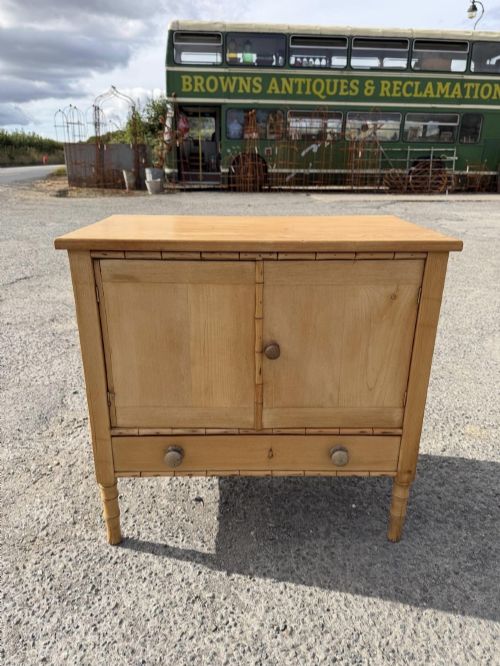
One unexpected piece wears faux bamboo turned mouldings, proving that even utilitarian pine could dress up for fashionable company.
The Two Door Pine Sideboard Glossary
- Dresser base
- The lower section of a kitchen dresser, usually combining drawers above a two door cupboard without the upper plate rack. This form provides substantial surface space and enclosed storage.
- Chiffonier
- A low sideboard or cabinet developed in the Regency period, typically featuring enclosed storage beneath a useful surface top. It represents a more polite domestic form than the kitchen cupboard.
- Faux bamboo
- A decorative technique where solid wood is carved or turned to imitate the segmented stalks of bamboo. This style appears on nineteenth-century pieces influenced by exotic design trends.
- Painted pine
- Timber finished with decorative or protective coats of paint rather than clear wax or polish. This finish is particularly characteristic of Scandinavian and regional European folk furniture.
Two Door Pine Sideboard: Frequently Asked Questions
What is a dresser base?
A dresser base is the lower half of a traditional kitchen dresser, constructed with a flat top surface above cupboards and drawers.
These pieces served as workspace and storage in country houses before moving into general living areas as sideboards.
How do I date a pine cupboard?
Dating relies on construction methods, hardware, and stylistic indicators such as drawer dovetails and timber preparation.
Nineteenth-century examples often display the proportions and utilitarian details typical of Victorian and Georgian country workshops.
Are these pieces painted or waxed?
Pine furniture in this category appears in both original painted surfaces and natural waxed finishes.
Many Victorian pieces are listed ready to wax or paint, allowing buyers to adapt the exterior to their interior scheme.
Where do painted cupboards originate?
Painted cupboards in these listings frequently come from Scandinavian countries like Sweden, alongside English and Hungarian examples.
Regional folk traditions dictated the use of distinct paint colours and decorative treatments on the pine timber.