
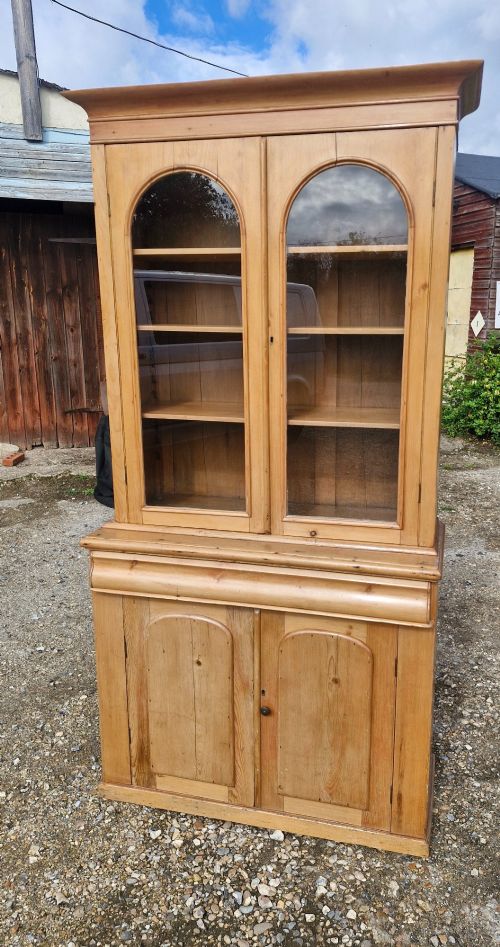
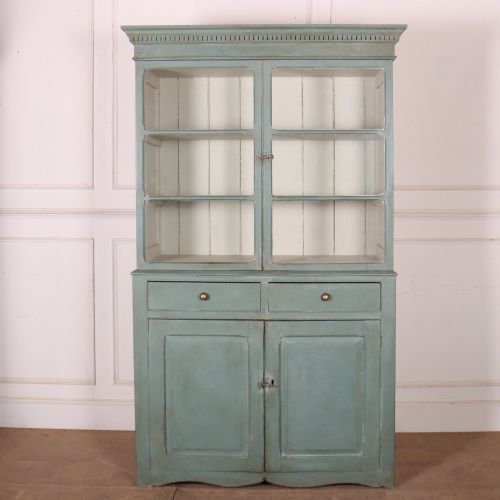
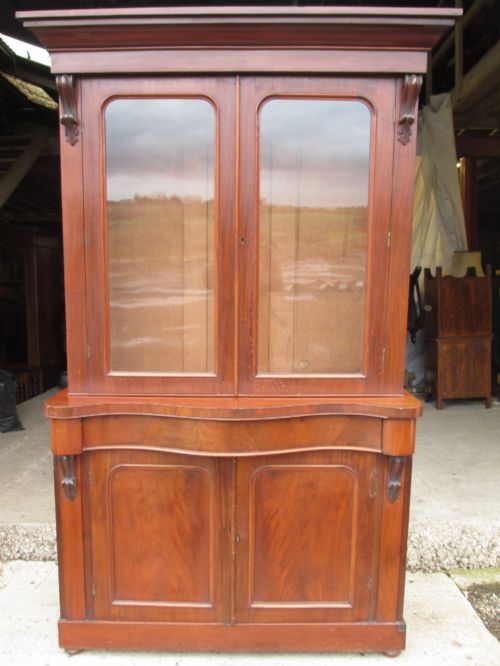
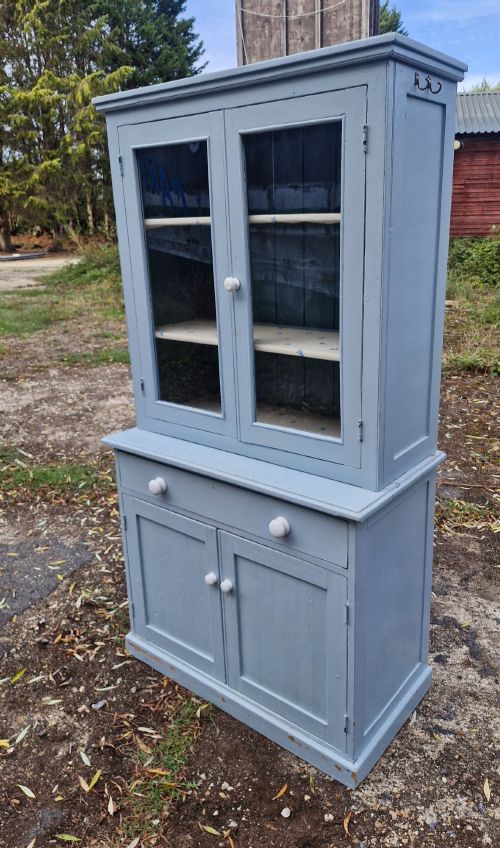
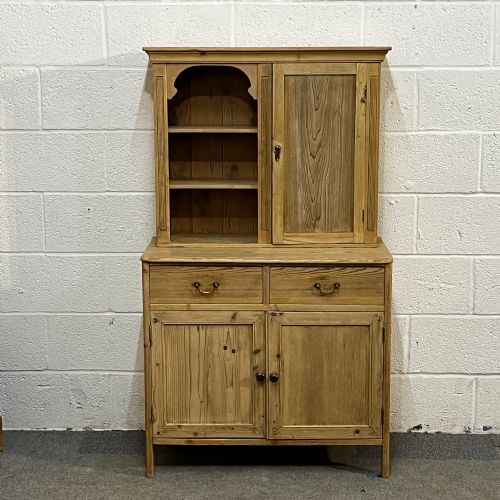
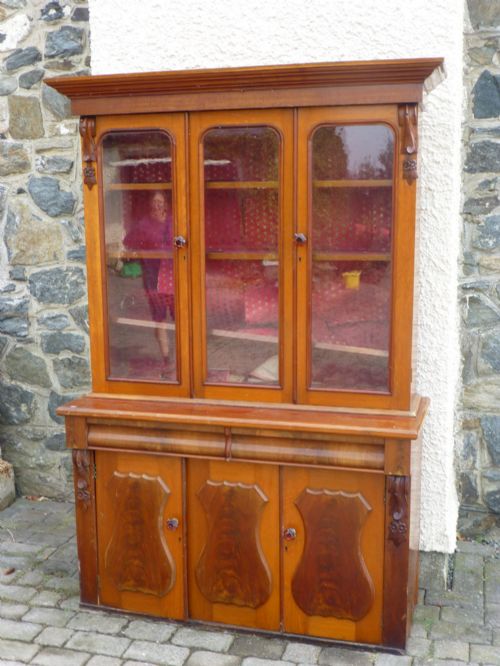
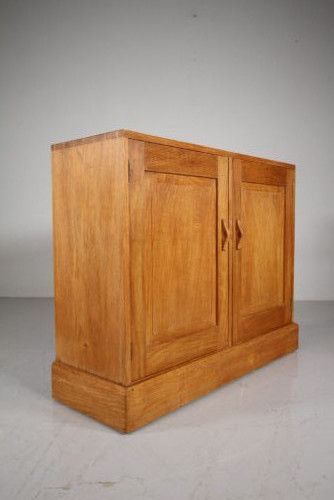
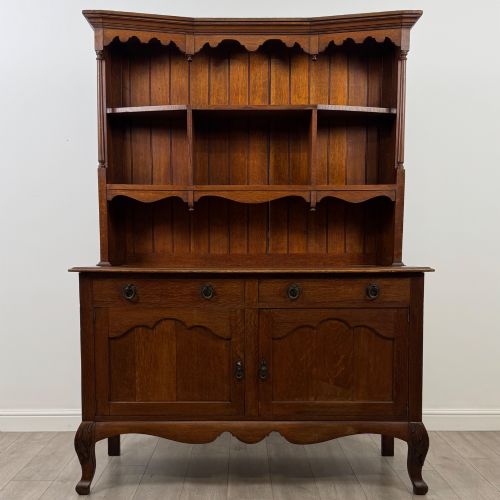
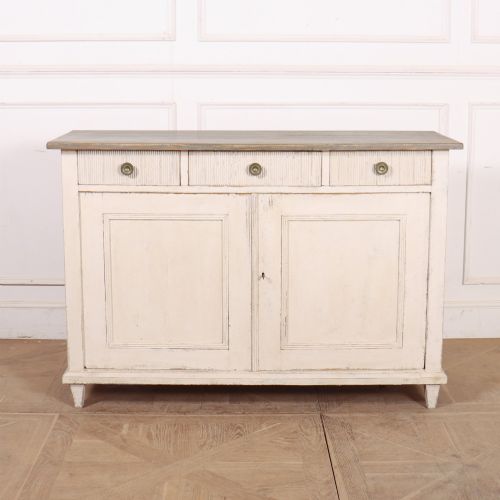
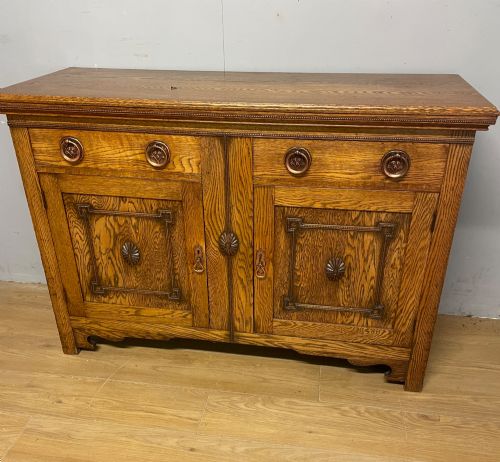
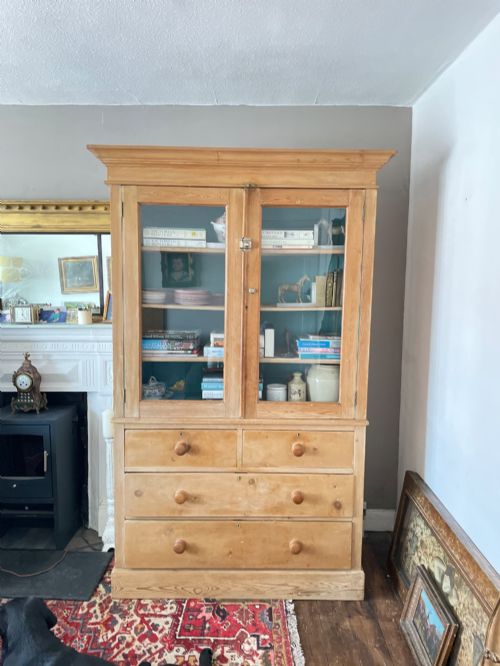
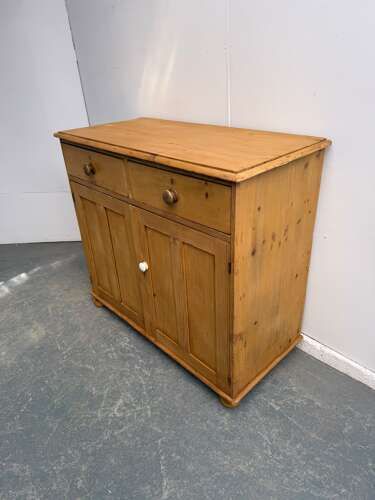
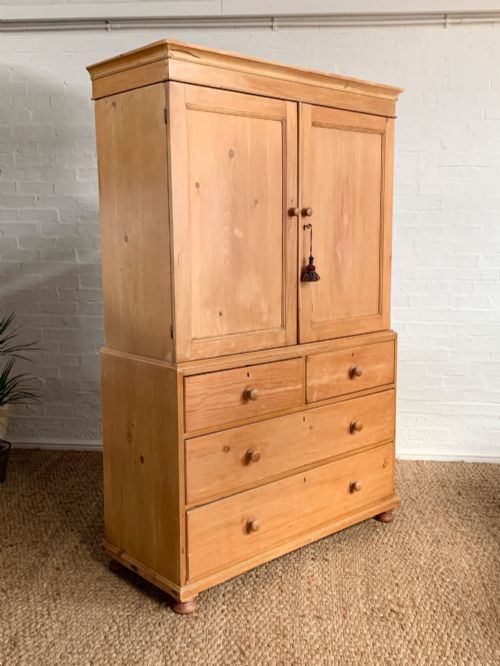
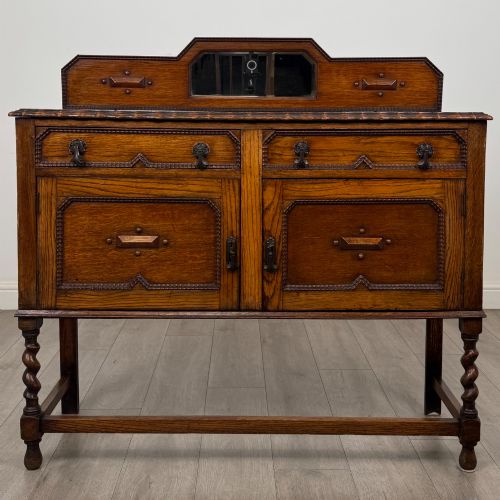
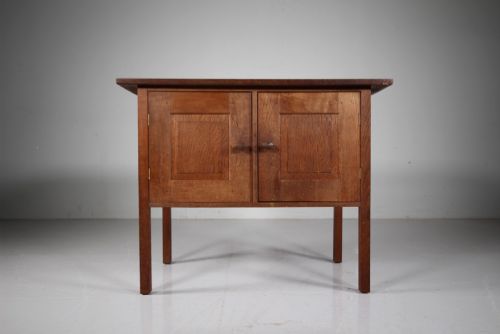
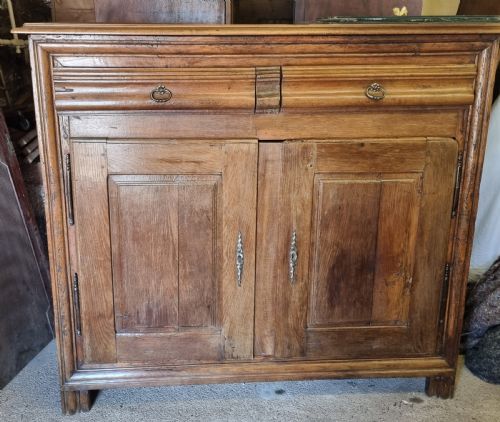
Two Door Dresser
These two door dresser pieces combine practical storage with historical character, offering fitted shelving and enclosed cupboard space for everyday living.
Two Door Dresser
A two door dresser serves primarily as a utilitarian storage unit, often combining a glazed or open upper display with a sturdy lower cabinet base. The pieces on this page span several centuries, with a strong representation of Victorian and Edwardian examples alongside earlier George II and Georgian origins.
Makers and workshops construct these items in varied forms including kitchen dressers, sideboards, glazed bookcase cabinets, and housemaid cupboards. Regional variations emerge from English, Scottish, Welsh, French Provincial, and Scandinavian workshops.
Pine and oak form the vast majority of the surviving framework, finished in plain waxed surfaces, traditional paint, or golden tones. Buyers encounter both single-piece configurations and two-part constructions that separate the upper shelving from the lower cupboard base.
Materials and Construction
Carpenters build the primary carcass using solid timbers such as native pine, English and golden oak, and occasionally mahogany or fruitwood. Joints rely on traditional hand-cut joinery methods appropriate to the period, supporting heavy shelving and panelled doors without synthetic adhesives.
Glazed upper sections incorporate individual glass panes secured with wooden glazing bars, whilst lower storage areas utilise panelled wooden doors fitted with brass or iron hardware. Painted finishes often consist of layered historical pigments or later decorative surface treatments applied over pine and softwood.
Several cupboards still wear their original kitchen paint, holding centuries of culinary history within their hidden drawers.
Build and Material Integrity
Quality rests upon the preservation of original timber surfaces, unaltered hardware, and sound structural joinery across the cabinet carcass. Superior examples retain their initial proportions and uncompromised backboards, whereas heavily altered items show replaced sections and modern fixings.
The refinement of the mouldings, the crispness of carved details in oak and mahogany, and the smooth operation of drawers and doors distinguish high-grade cabinet work from utilitarian school or workshop cupboards.
Peter Waals·Heals of London·Maple & Co.
The Two Door Dresser Glossary
- Dresser base
- The lower section of a kitchen storage unit, usually comprising cupboards beneath one or more drawers.
- Glazed bookcase
- A tall cabinet featuring glass-fronted upper doors designed for the display and protection of books.
- Cotswold School
- An early twentieth-century design movement focusing on honest construction and simple craftsmanship in natural oak.
- Two-part form
- A piece constructed in two separate upper and lower sections to facilitate transport and placement within a room.
Two Door Dresser: Frequently Asked Questions
What is a two door dresser?
A two door dresser is a traditional storage unit comprising a lower cabinet enclosed by two doors, frequently paired with upper shelving or display space.
These pieces function primarily as kitchen cupboards, sideboards, or bookcase cabinets across various regional styles.
How do I style a wooden cupboard?
Wooden cupboards suit traditional and contemporary interiors alike, providing a strong anchor point for dining rooms or kitchens. Natural waxed pine and golden oak add warmth against neutral walls.
Display ceramics or books inside glazed sections whilst utilising lower cabinets to conceal household items.
Are these cabinets made of solid wood?
Surviving examples consist predominantly of solid timbers including pine, oak, mahogany, and fruitwood. Carpenters of the period utilised native hardwoods and softwoods for structural stability.
Plywood and modern manufactured boards do not feature in the construction of these antique pieces.
How do I date an antique cabinet?
Dating relies upon examining construction methods, timber choice, and hardware styles. Hand-cut joinery and original brass or iron pulls typically indicate earlier periods.
Proportions and decorative motifs also align pieces with specific eras such as the Georgian, Victorian, or Arts and Crafts movements.