


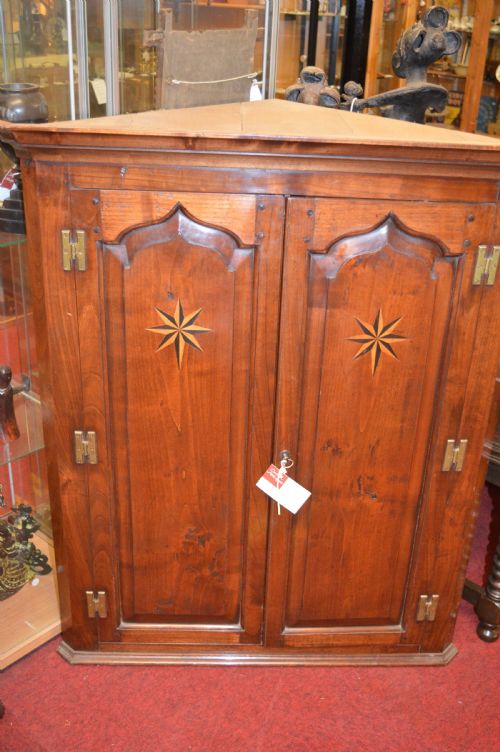


Two Door Corner Cabinet
A two door corner cabinet is a clever piece of architectural joinery designed to turn unused angles into handsome storage.
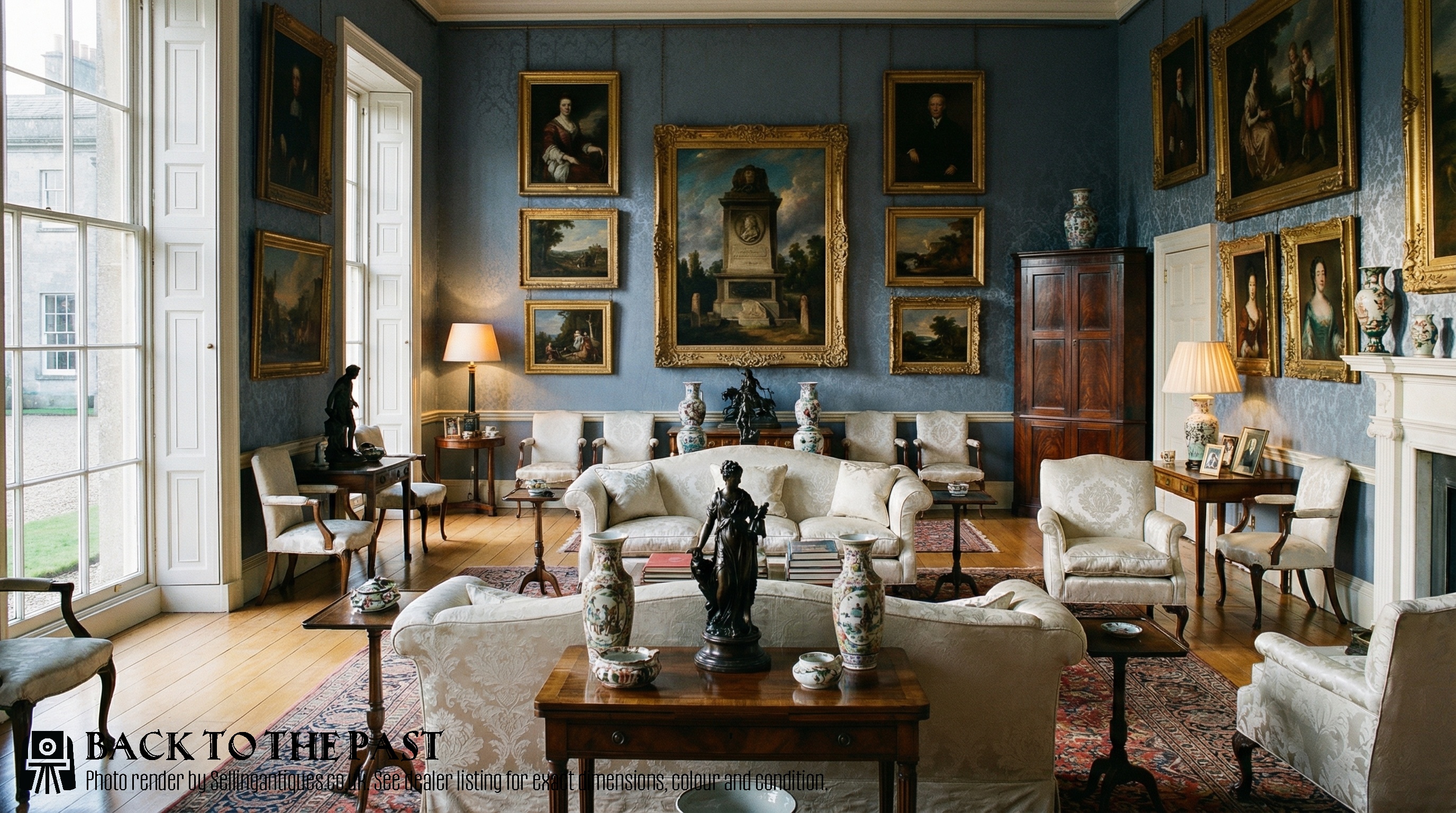
Two Door Corner Cabinet
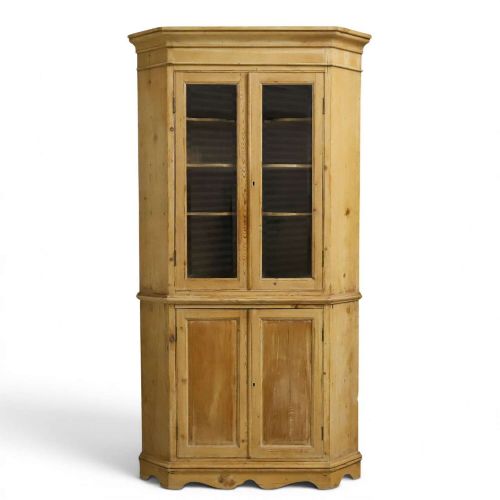
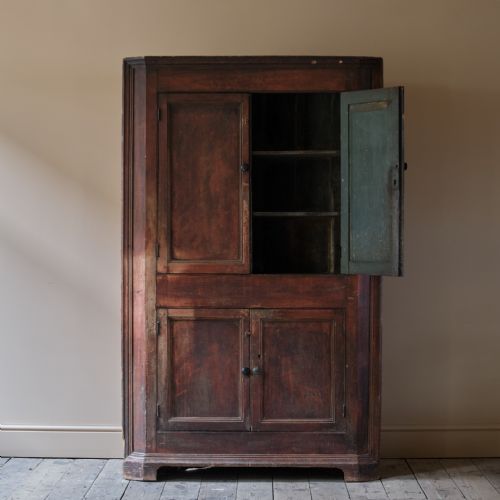
A two door corner cabinet makes efficient use of awkward room junctions by fitting snugly into a ninety-degree angle while offering substantial interior display or concealed shelving. When you search for a two door corner cabinet, you encounter forms that range from modest hanging cupboards to tall, two-part floor-standing furniture.
The pieces appearing here span several distinct eras, with Georgian examples in mahogany and oak sitting alongside nineteenth-century country pieces and occasional twentieth-century interpretations like Art Deco oak bookcases. Many examples employ double doors to reveal fitted interior shelves, sometimes featuring glass panels for displaying china or books rather than solid timber.
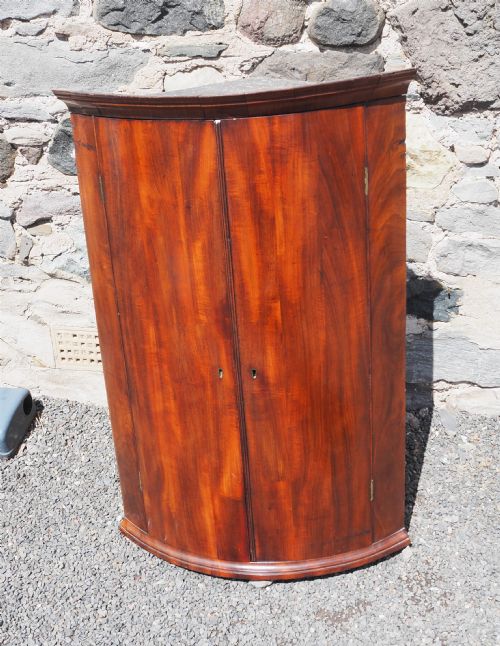
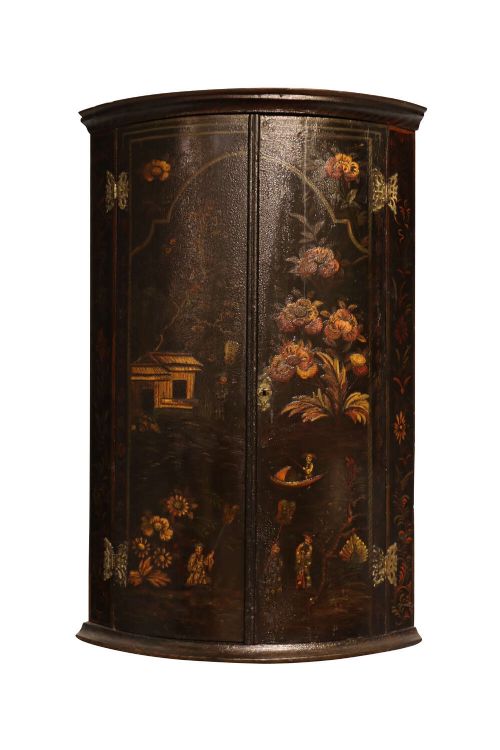
Originating largely from British workshops, these cabinets serve both practical and decorative functions in domestic interiors. You find them executed in timbers such as mahogany, oak, pine, and occasionally finished with painted surfaces or black lacquer Chinoiserie decoration.
How they were made
Cabinetmakers constructed these angled units primarily from native and imported timbers, selecting mahogany, oak, and pine depending on whether the piece was destined for a formal parlour or a country house kitchen. Panels were fitted carefully into rebated frames to accommodate the natural seasonal movement of solid wood without splitting the structure.
Surface treatments vary significantly across the period range, utilising clear polished finishes to highlight mahogany grain, painted surfaces, or intricate black lacquer Chinoiserie decoration. Brass hardware such as hinges and escutcheons secured the doors while adding functional metalwork detail to the angled facade.
Listings feature mahogany, oak, pine, and lacquer as primary materials across eighteenth, nineteenth, and twentieth-century periods.
What varies in quality
The distinction between ordinary and superior pieces rests on the choice of timber and the sophistication of the exterior surface. Mahogany examples with figured flame veneers or refined bow fronts demonstrate greater ambition than utilitarian pine versions meant for modest domestic service.
Joinery execution also separates standard production from finer work, visible in the snug fit of the doors and the subtlety of decorative mouldings or fine detailing. Cabinets retaining original brass fittings, glazing bars, and painted or lacquered schemes command greater appreciation from collectors.
The Two Door Corner Cabinet Glossary
- Bow front
- A convex curved cabinet front that projects outward in a smooth arc. This shape requires skilled carpentry to bend wood or shape solid timber to a precise radius.
- Escutcheon
- A protective plate surrounding a keyhole. It prevents the wood around the lock from wearing down through repeated use of the key.
- Rebate
- A recess or groove cut into the edge of a piece of timber. This allows panels or glass to sit flush within a door or frame.
Two Door Corner Cabinet: Frequently Asked Questions
How do I place a corner cabinet?
These cabinets are built specifically to occupy the junction where two walls meet at a right angle. They anchor room layouts by utilising dead space that standard flat furniture cannot inhabit.
Depending on the specific form, you can choose between hanging versions mounted directly to the wall or floor-standing variations that rest independently on the floorboards.
What is a two-part corner cabinet?
A two-part form consists of an upper section and a lower section built to stack together as a single tall unit. This construction method helped tradesmen transport heavy furniture through narrow doorways and up winding staircases.
Once positioned in the room, the two sections lock together visually and structurally to create a commanding floor-standing presence.
Are these cabinets purely decorative?
While their unique geometry makes them strong visual focal points, they were engineered for practical storage. Interiors typically feature wooden or glass shelving intended to hold household items, books, or tableware.
Cabinets with glazed doors served primarily for display, whereas solid timber doors kept contents entirely out of sight.
How do I distinguish eighteenth-century pieces?
Eighteenth-century examples often display specific regional timber choices, such as rich mahogany or native oak, paired with period construction methods like hand-cut dovetails. Stylistic cues like Georgian proportions and fine detailing offer clues to their age.
Comparing the interior secondary woods and backboards also helps confirm the manufacturing period of older furniture.