
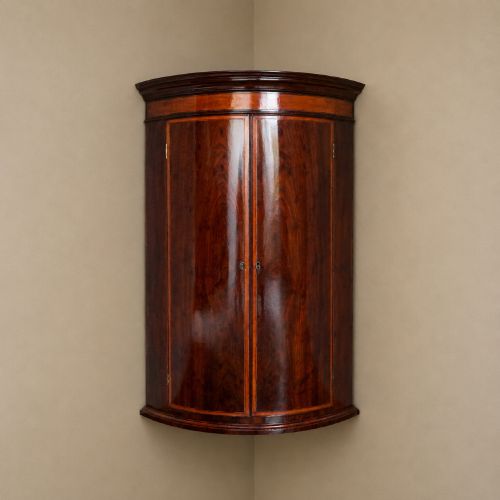
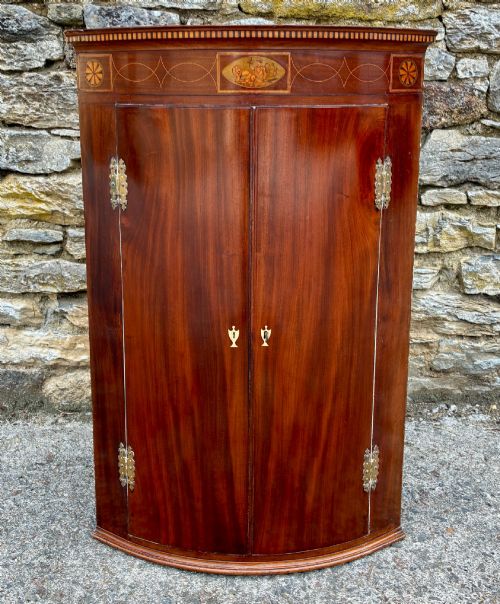
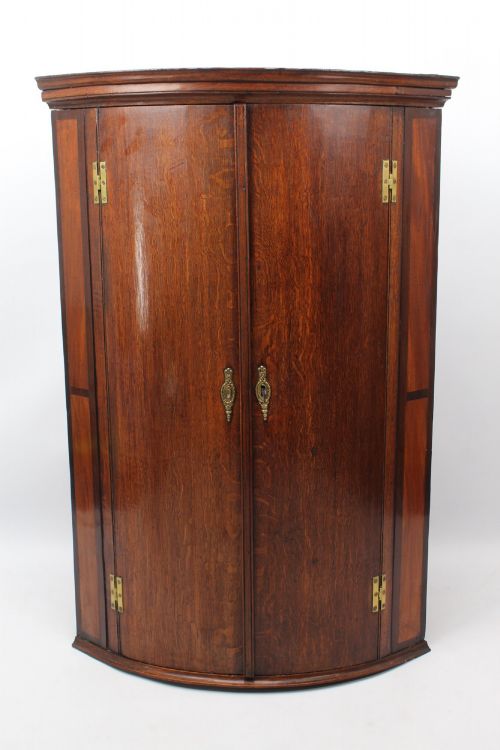
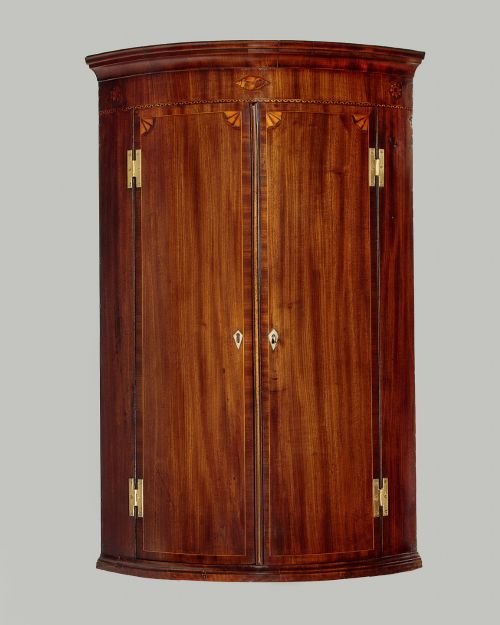
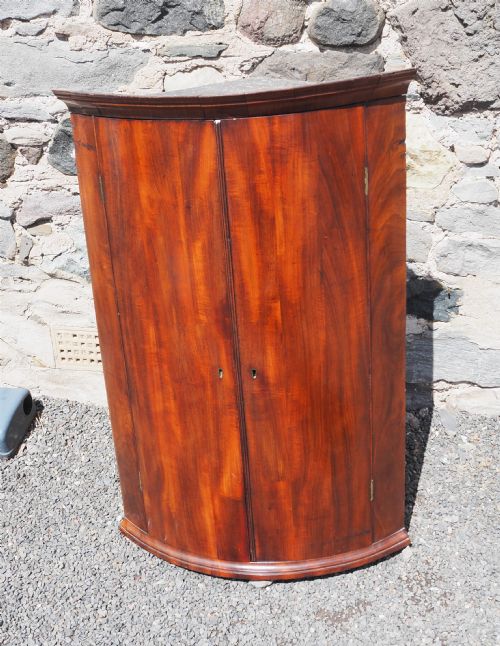


Bow Front Hanging Cabinet
A bow front hanging cabinet offers a clever way to utilise corner space while introducing curved timber lines to a room.
Bow Front Hanging Cabinet
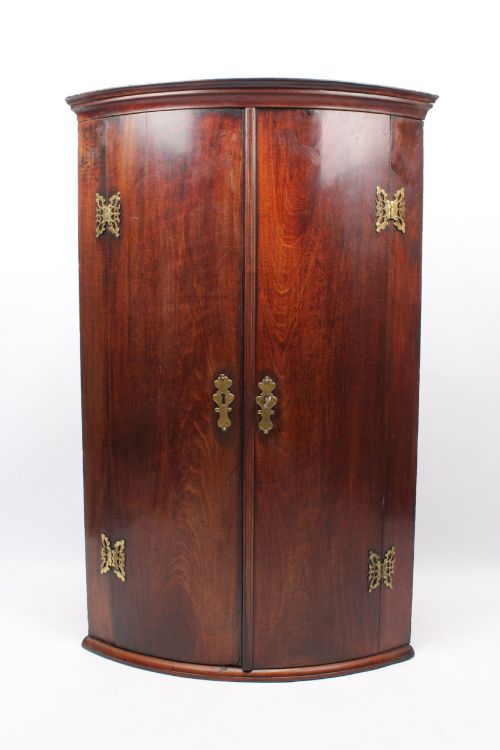
A bow front hanging cabinet is primarily a wall-mounted storage piece designed to fit snugly into the corner of a room. When buyers search for a bow front hanging cabinet, they encounter mostly Georgian and Victorian examples shaped with a convex curving door. These wall cupboards turn awkward angles into visual assets by projecting softly into the space.
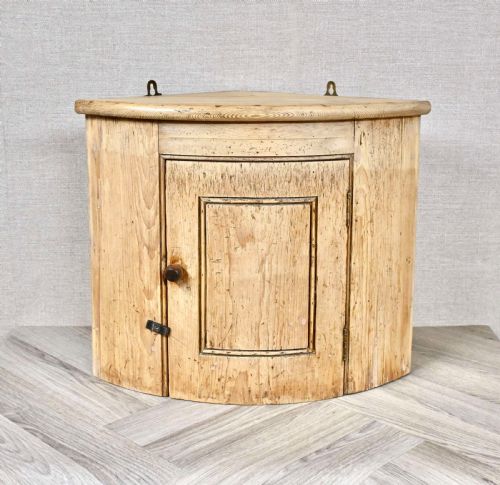
The materials seen in these pieces range from sturdy oak and elm to rich mahogany, plum pudding mahogany, and walnut. Many incorporate hanging brass fixtures designed to secure the heavy timber frame safely to domestic walls. Interior shelving typically provides compact storage for glassware, china, or small household items.
The dominant forms on this page are corner cupboards and wall cabinets, alongside occasional display variations and related case furniture. Surviving examples span from the eighteenth century through to the Edwardian period, each reflecting the stylistic preferences of its decade. These cabinets remain practical additions to period hallways, studies, and dining rooms.
Materials and construction techniques
Cabinet makers constructed the curved fronts using solid timber shaped by hand or thin veneers applied over secondary woods. Mahogany and oak form the structural core of most pieces, supplemented by walnut, pine, and exotic hardwoods. Craftspeople utilised dovetail joints for drawer construction and pegged mortise joints for the main housing.
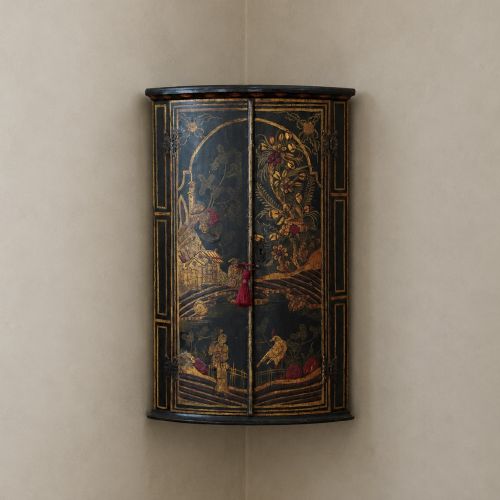
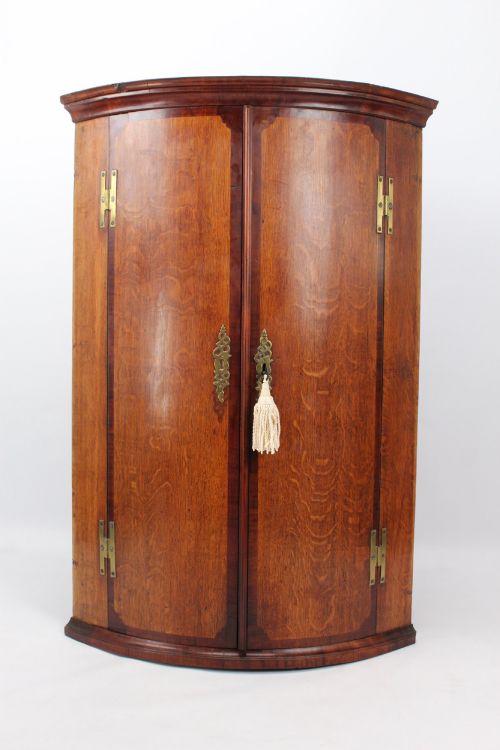
Surface decoration frequently involved delicate boxwood stringing, wood inlay, and marquetry to accent the curved grain. Japanned Chinoiserie finishes appear on select pieces, adding painted oriental scenes over a dark lacquer ground. Brass hinges and escutcheons were cast and fitted by hand to secure the doors and keyholes.
The archive and active listings show forms ranging from wall-mounted corner cupboards and hanging cabinets to large display units and wardrobes.
Distinguishing quality across pieces
Quality in a bow front hanging cabinet is evident in the selection and bookmatching of the timber veneers, particularly figured mahogany or plum pudding grain. Superior examples display meticulous attention to the curved door frame, ensuring the convex sweep aligns flush with the cabinet body. Fine stringing and precise inlay work require high levels of joinery skill.
The structural integrity of the internal shelving and the original brass hanging hardware also separate standard utilitarian cupboards from finer parlour pieces. Cabinets retaining their original glass panes, working locks, and key escutcheons command greater appreciation from collectors. Subtle details such as carved cornice mouldings reveal the original maker's hand.
The Bow Front Hanging Cabinet Glossary
- Bow front
- A convex, outwardly curving cabinet facade that softens the rigid right angles of a room corner. This curved profile requires specialised woodworking techniques to shape the solid wood or veneer.
- Plum pudding mahogany
- A highly figured mahogany timber displaying distinctive circular markings resembling the fruit in a traditional pudding. Cabinet makers reserved this premium wood for the most expensive facades.
- Japannng
- A European imitation of East Asian lacquerwork used to decorate furniture surfaces. It involves layered varnishes and painted designs, often featuring Chinoiserie motifs.
- Stringing
- Thin bands of contrasting wood inlay used to outline panels and drawers on antique furniture. Boxwood is frequently utilised against dark mahogany for this decorative contrast.
- Escutcheon
- A protective metal plate surrounding a keyhole, often cast from brass on these cabinets. It prevents the timber around the lock from sustaining wear and tear over centuries of use.
Bow Front Hanging Cabinet: Frequently Asked Questions
How were bow front cabinets used historically?
These cabinets served primarily to store and display valuable porcelain, glassware, or household provisions in domestic interiors. Placed high on walls, they kept delicate items safely away from bustling floor activity while making use of unutilised corners.
In period dining rooms and parlours, they functioned much like modern display shelving. The enclosed doors protected contents from dust and smoke from open hearths.
How do I hang a heavy antique corner cabinet?
Hanging an antique timber cabinet securely requires fastening directly into wall studs or masonry using appropriate fixings. The original brass mounting brackets on the back frame must be thoroughly inspected before installation.
Given the substantial weight of dense hardwoods like mahogany and oak, professional installation is strongly recommended. Distributing the load prevents strain on the historic joints.
What is the difference between Georgian and Victorian models?
Georgian cabinets, particularly those from the George III era, tend to feature restrained classical proportions with fine mahogany veneers and subtle boxwood stringing. Their construction prioritises understated elegance and architectural cornices.
Victorian pieces often incorporate heavier proportions, darker finishes, or elaborate decorative elements. Some Victorian examples expand into larger furniture forms such as wardrobe compactums.
Can these cabinets fit into modern rooms?
Corner cabinets integrate smoothly into contemporary spaces by occupying vertical wall junctions that typically remain empty. Their curved fronts soften the straight lines common in modern interior architecture.
They provide functional storage for tight spaces without projecting far into the main floor area. Their historic woods also add warmth and texture to minimalist settings.