
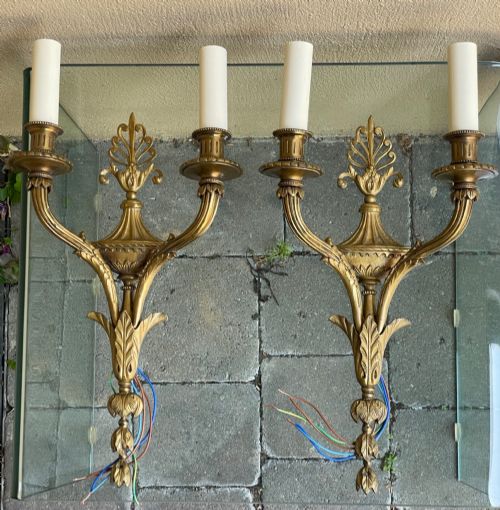
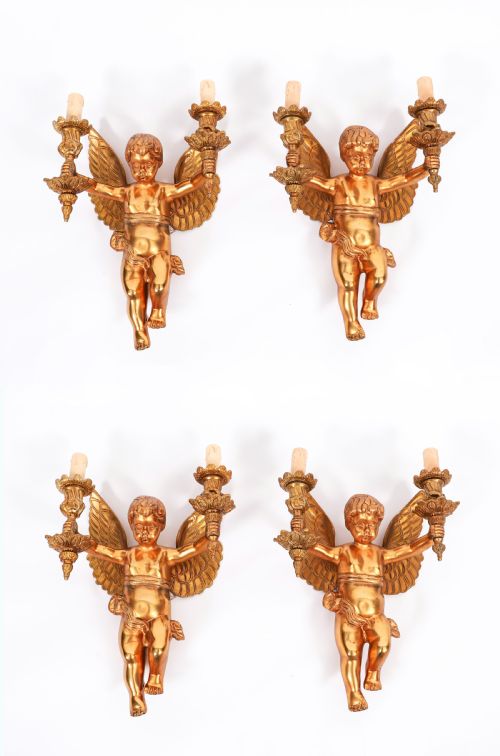
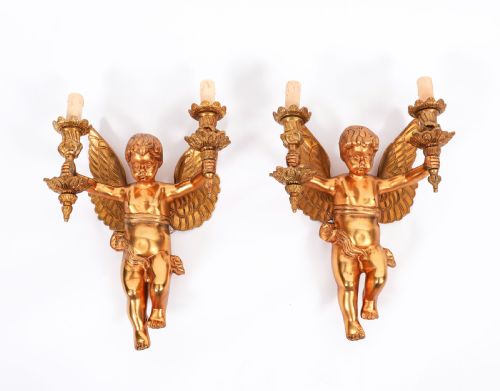


Two Branch Wall Lights
Two branch wall lights illuminate interiors with paired candle or electric arms cast in bronze, brass, or giltwood.
Two Branch Wall Lights
Two branch wall lights encompass pairs of twin arm fixtures designed to mount directly onto interior walls. Buyers searching for two branch wall lights encounter symmetrical lighting forms intended to frame mirrors, fireplaces, or architectural focal points.
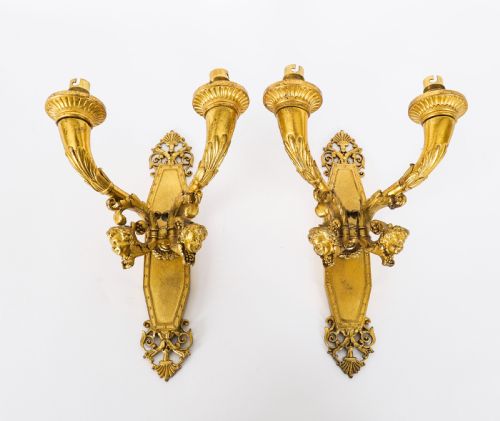
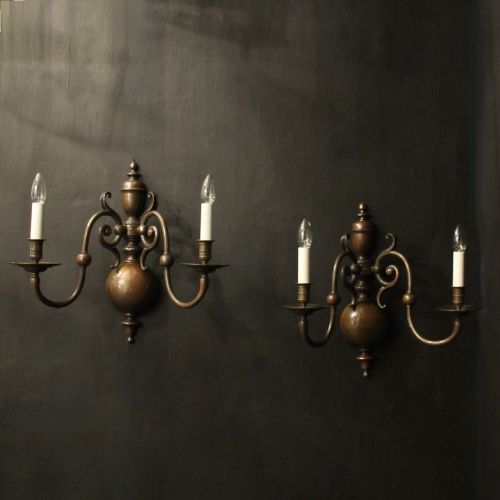
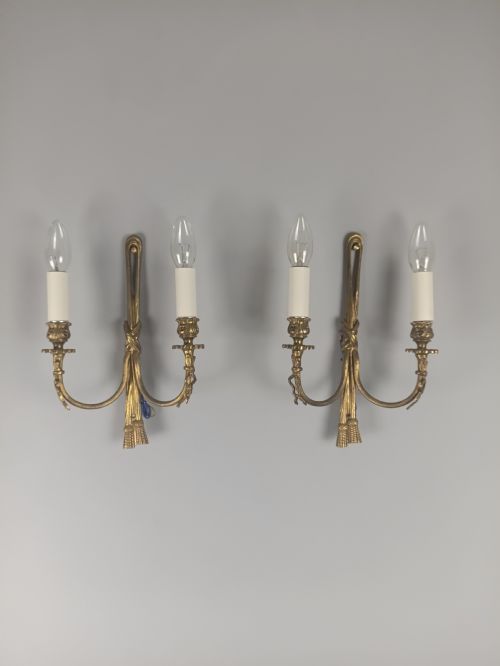
The selection ranges across European workshops from the nineteenth century into the early twentieth century. French models dominate the offerings, spanning revived Louis styles, Rococo flourishes, and Neoclassical symmetry alongside Dutch and English brass interpretations.
Materials and construction methods
Foundry workers cast metal components in bronze, brass, and gilt metal, frequently applying ormolu or gold leaf finishes to create a luminous surface. Giltwood alternatives carved from timber offer an organic warmth distinct from cast metal alloys.
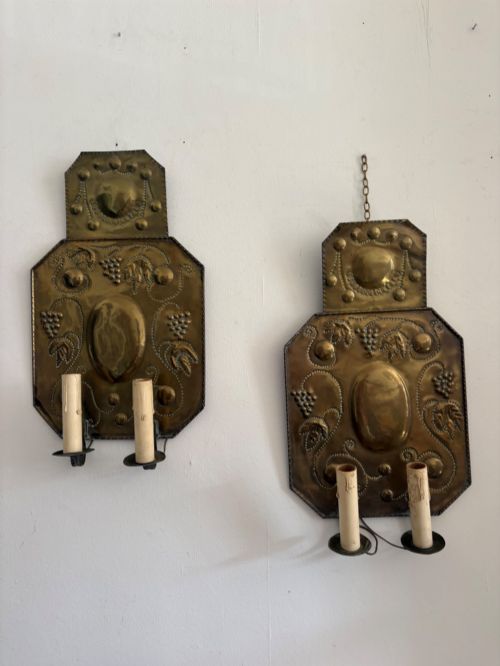
Decorative details often combine cast elements with repousse work, ceramic plaques, or porcelain inserts. Assembly typically involves mechanical joints securing individual candle arms to a backplate designed for wall hanging.
Two Branch Wall Lights Retail Price Guide 2026
Typical asking prices for two branch wall lights among the pieces listed under this phrase on Sellingantiques today, from the lower quarter to the upper quarter. They describe what is for sale here now, not the wider market.
Recorded periods stretch from 1800 through the Victorian era and the 1930s.
Assessing quality and craftsmanship
Depth of cast definition distinguishes superior examples from simpler production pieces, particularly where cherubs, foliage, or ribbon motifs adorn the backplates. Crisp chiselling across bronze and ormolu surfaces reveals the hand of a skilled metalworker.
Weight and rigidity indicate the calibre of the underlying metal, while the integrity of gilding or surface patination determines the visual harmony of the fixture. Matching pairs demonstrate consistent casting dimensions and uniform wear over time.
The Two Branch Wall Lights Glossary
- Ormolu
- Gilded bronze produced by applying a mercury and gold amalgam to a cast bronze base before heating. This traditional technique creates a distinctive warm lustre found on finer French light fittings.
- Repousse
- Metalworking technique where a design is hammered into relief from the reverse side. This method appears frequently on Dutch and continental brass backplates.
- Girandole
- An ornamental wall light featuring branches for candles alongside a reflective backplate. The reflective surface helps amplify the candlelight within a room.
- Sconce
- A wall-mounted lighting fixture designed to hold candles or electric bulbs. The term is often used interchangeably with wall lights.
- Backplate
- The flat or shaped structural section that fastens to the wall and supports the projecting lighting branches. It serves as the primary canvas for decorative carving or casting.
Two Branch Wall Lights: Frequently Asked Questions
How do I wire antique wall lights?
Most antique fixtures require professional rewiring to meet modern electrical safety standards. Electricians can route contemporary internal flex through the hollow cast arms without damaging the historic metalwork.
Qualified installers should also provide appropriate wall mounting brackets to support the combined weight of the metal and backplates.
Where should I place wall lights?
Two branch fixtures work effectively when mounted at eye level on either side of a fireplace, architectural doorway, or large wall mirror. This placement creates balanced illumination and frames focal points within a room.
Spacing them evenly along a hallway or dining room wall provides ambient light without overwhelming the proportional scale of the space.
How do I clean gilt bronze?
Dust surfaces gently with a soft, dry artist brush to remove accumulated particles from intricate crevices. Avoid commercial metal cleaners or abrasives that strip fragile gold leaf and ormolu finishes.
Preserving the aged patina protects the underlying metal and maintains the historical character of the piece.
Are these lights matching pairs?
Many listings comprise matched pairs created concurrently in the same foundry or workshop. Close inspection of casting marks, dimensions, and decorative motifs confirms whether two sconces originated together.
Slight variations in hand-finished chasing often distinguish genuine period pairs from later assembled combinations.