


Twin Handled Porcelain Urn
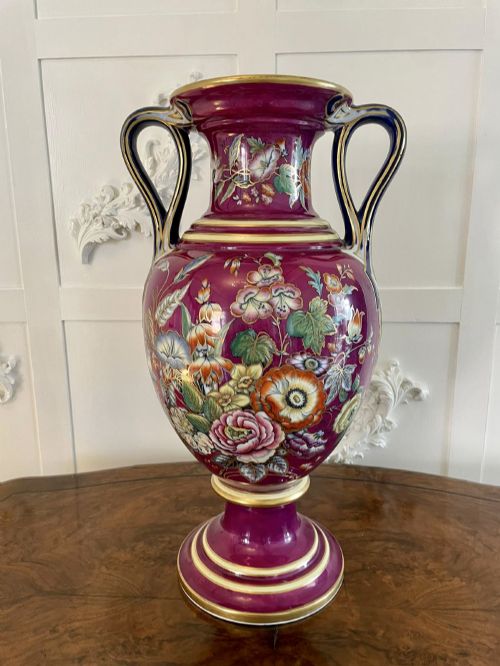
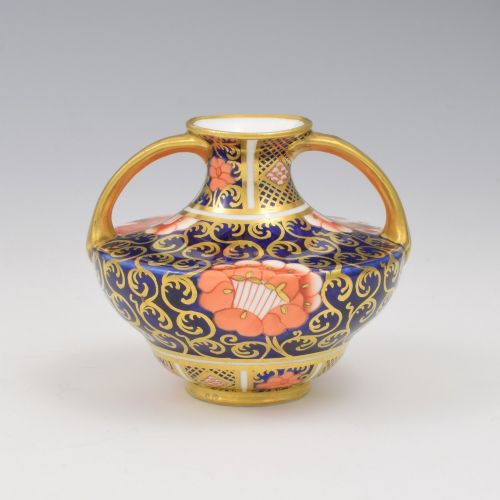
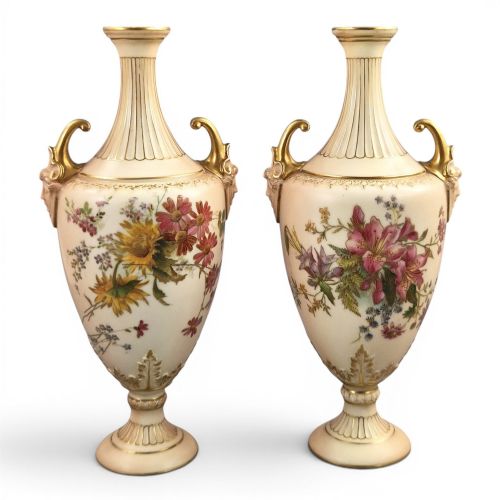
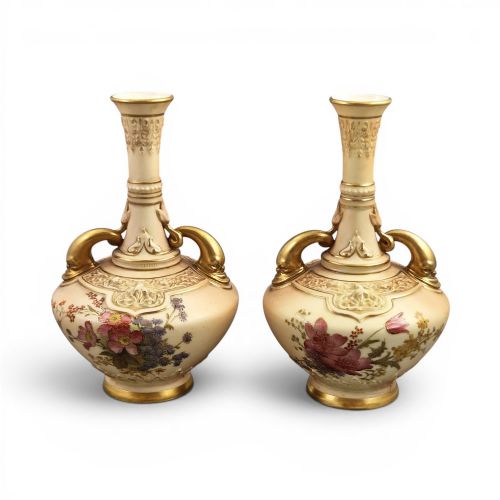
A twin handled porcelain urn brings neoclassical symmetry and hand-painted artistry directly into a room.
Twin Handled Porcelain Urn
A twin handled porcelain urn combines sculptural form with decorative utility, designed primarily for display on mantelpieces, pedestals, or cabinets. These vessels appear across the nineteenth and early twentieth centuries in forms ranging from monumental pedestals to delicate cabinet pieces.
The versions most commonly met on this page span the Victorian and Edwardian eras, produced by prominent British potteries alongside continental and Japanese workshops. Makers applied classical shapes, often incorporating dolphin motifs, pedestal bases, or covers alongside symmetrical side grips.
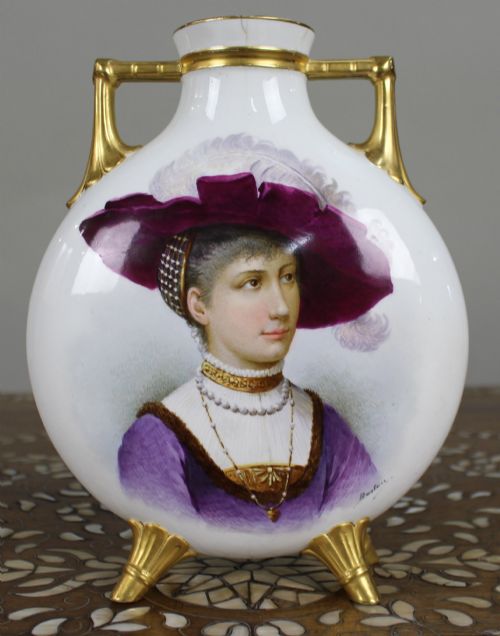
Many of these objects function as decorative vases, while others serve specific purposes such as potpourri containers or table lamps. Hand-painted floral scenes, birds, and portraits frequently adorn the porcelain surfaces, paired with gilt detailing and raised enamel work.
How They Were Made
Potters shaped these vessels from fine porcelain, bone china, or earthen bodies, sometimes utilising moulds to achieve complex ovoid, moon flask, or pedestal profiles. Twin handles were separately formed and attached to the main body before firing.
Surface decoration relied upon hand-painted pigments applied over or under the glaze, frequently depicting birds, landscapes, and floral arrangements by named artists. Artisans then added gold leaf, gilding, and raised white enamel accents, followed by subsequent kiln firings to set the colours.
Twin Handled Porcelain Urn Retail Price Guide 2026
Typical asking prices for twin handled porcelain urn among the pieces listed under this phrase on Sellingantiques today, from the lower quarter to the upper quarter. They describe what is for sale here now, not the wider market.
Several Victorian artists spent their days painting meticulous storks, swans, and blackberries onto porcelain surfaces just before tea time.
What Varies in Quality
The standard of a twin handled porcelain urn rests upon the execution of its hand-painted decoration and the crispness of its moulded details. Pieces painted by recognised artists display superior brushwork, depth of colour, and fine shading compared to standard factory output.
The application and preservation of gold leaf, gilding, and raised enamel also dictate quality, as does the clarity of the porcelain or bone china body. Vases retaining their original matching covers and intact handles demonstrate higher preservation levels.
Royal Worcester·Royal Crown Derby·Spode·Coalport·Minton·Derby Porcelain·Samson Paris·Royal Vienna·Hadley's Worcester·Alexandra Porcelain Works Ernst Wahliss
The Twin Handled Porcelain Urn Glossary
- Blush ivory
- A softly shaded cream and pink porcelain ground popular during the late nineteenth and early Edwardian periods, often used by Royal Worcester. This matte finish provides a muted backdrop for painted florals.
- Bone china
- A type of soft-paste porcelain containing bone ash, yielding a strong, milky-white body suited to thin-walled vessels. It allowed makers to produce lighter twin handled forms.
- Gilding
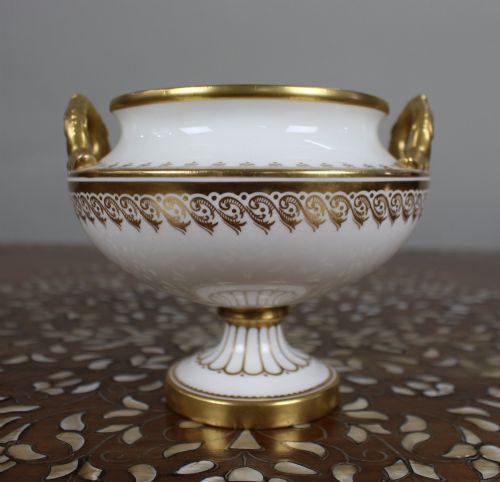
- The application of gold leaf or gold paint to highlight handles, rims, and decorative borders. On better pieces, burnishing creates contrast against the matte porcelain.
- Moon flask
- A flattened circular flask form standing on a pedestal base, fitted with two loop handles connecting the neck to the body. This shape originates from ancient ceramic traditions.
- Imari
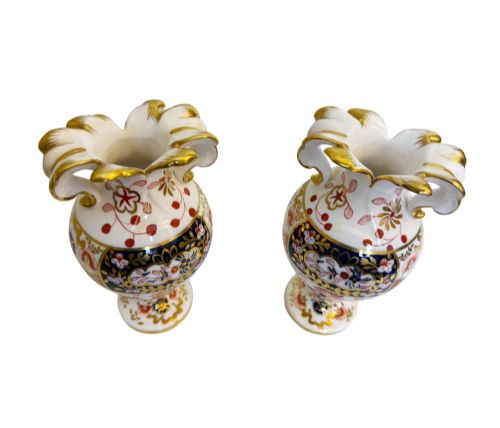
- A decorative style featuring underglaze blue and overglaze iron red, green, and gold, originating in Japan and widely copied by European potteries. The palette remains vibrant and distinct.
Twin Handled Porcelain Urn: Frequently Asked Questions
How were twin handled porcelain urns used?
These vessels served primarily as ornamental centrepieces on mantelpieces, sideboards, and display tables within Victorian and Edwardian drawing rooms. Some variations functioned as containers for potpourri, releasing scent through pierced covers.
Larger examples stood upon pedestals or hearths to demonstrate household refinement and wealth. Over time, certain pieces were adapted into table lamps while retaining their original ceramic bodies.
How do I identify an Edwardian urn?
Edwardian pieces often feature softer pastel grounds, blush ivory surfaces, and naturalistic depictions of flowers, birds, or portraits. The forms lean towards refined ovoid shapes and delicate handles rather than heavy neoclassical revival styling.
Factory marks printed on the base frequently correspond to the early twentieth century, accompanied by pattern numbers or artist signatures.
What is a moon flask?
A moon flask is a flattened, circular vessel fitted with a short neck, a pedestal base, and two small side handles linking the shoulder to the neck. This shape derives from ancient pilgrim flasks and provides a broad flat surface for detailed hand-painted scenes.
Makers utilised this distinct profile to display landscapes, floral compositions, and Japanese-inspired motifs.
Are these urns painted by hand?
Many examples feature genuine hand-painted decoration executed by individual ceramic artists working for major potteries. Artisans signed their work with initials or full names on the body or base, depicting subjects such as birds, fruit, and storks.
Simpler production pieces relied upon transfer-printed outlines finished with manual colour washes and gilding.