
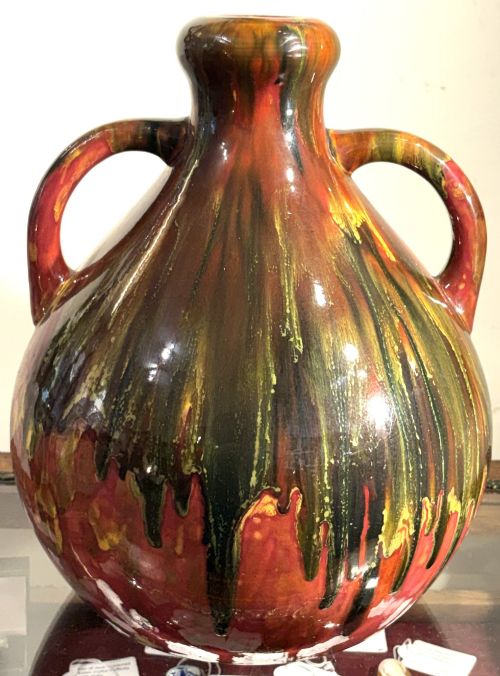
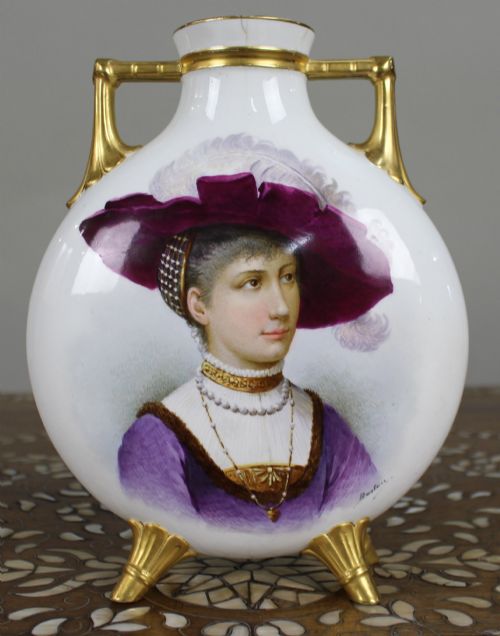
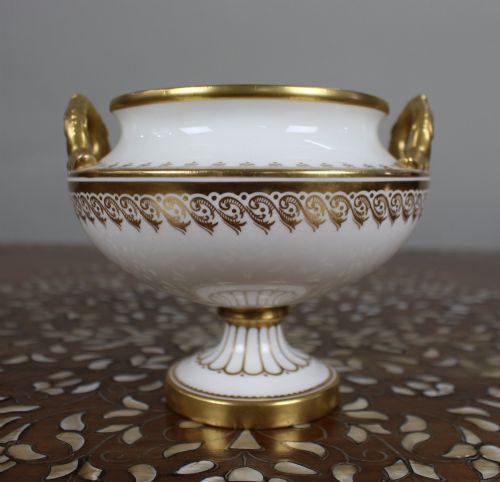
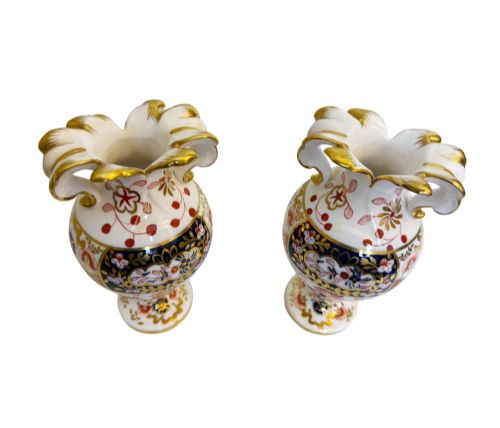


Twin Handled Ceramic Urn
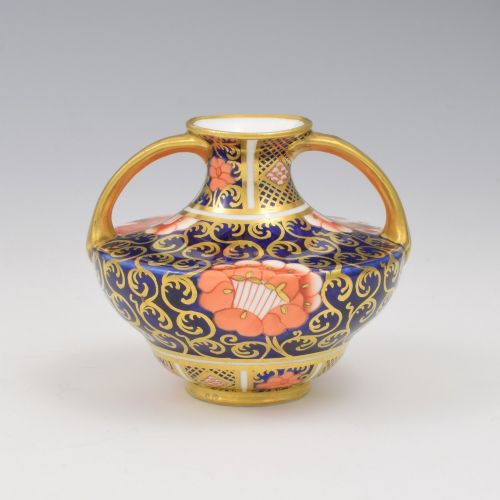
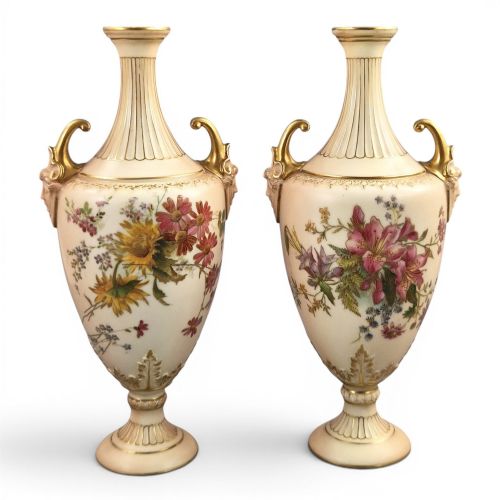
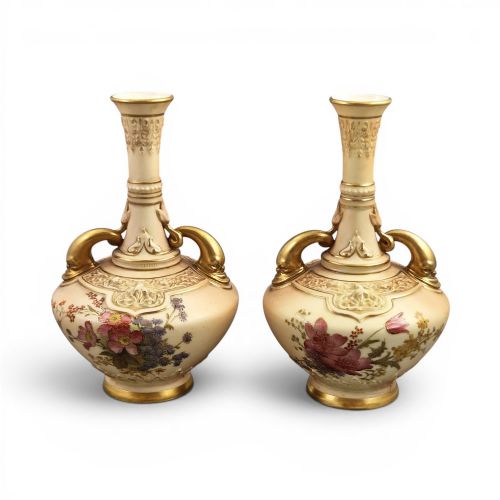
These twin handled ceramic urn pieces combine symmetry and painted decoration, serving as decorative table centrepieces or mantel ornaments.
Twin Handled Ceramic Urn
A twin handled ceramic urn brings classical form and domestic display together, drawing on 19th-century, Edwardian, and Victorian traditions. These vessels take the shape of decorative vases, amphorae, and covered pot-pourri jars.
Makers across England, Europe, and Japan produced these forms using earthenware, bone china, and porcelain. Buyers encounter English factory pieces alongside Japanese Satsuma and Imari works on this page.
How They Were Made
Potters shaped clay on the wheel or cast it in moulds before applying glazes, enamels, and mineral colours. Many examples incorporate hand-painted floral, animal, or portrait scenes fired at high temperatures.
Gilding and gold leaf accent handles and rims, often applied by hand over the glaze. Some workshops combined raised white enamel with printed or painted ground colours to create depth.
Listings feature pieces from the 1880s, 1890s, and early 1900s, including Edwardian and Victorian porcelain, earthenware, and bone china.
What Varies in Quality
The precision of the hand-painted brushwork distinguishes standard production ware from artist-signed exhibition pieces. Details such as the crispness of gilded handles and the subtlety of shaded glazes define the upper tier.
The execution of form and the integration of twin handles into the body reflect the skill of the pottery. Well-preserved surfaces retain their original lustre without excessive rubbing to the gilding.
Royal Worcester·Royal Crown Derby·Wileman Intarsio·Brannam Art Pottery·Alexandra Porcelain Works Ernst Wahliss
The Twin Handled Ceramic Urn Glossary
- Bone china
- A type of porcelain containing bone ash that produces a durable, white body. This material allows for thin-walled vessels with delicate handles.
- Blush ivory
- A soft cream-coloured ceramic ground developed by Royal Worcester in the late 19th century. It provides a muted background for painted floral motifs.
- Imari
- A style of Japanese export ceramics featuring underglaze blue and iron red, often enhanced with gold leaf. English factories frequently copied these patterns.
- Moon flask
- A flattened circular ceramic vessel with a short neck and two handles. This form originates from ancient metal prototypes.
- Pot-pourri
- A jar or urn with a pierced cover designed to hold scented dried plant materials. These vessels often feature elaborate twin handles.
Twin Handled Ceramic Urn: Frequently Asked Questions
How were twin handled ceramic urn pieces used?
These vessels functioned primarily as decorative mantel ornaments, cabinet pieces, or containers for dried floral pot-pourri mixtures.
Larger examples stood on pedestals or tables as formal interior decoration within Victorian and Edwardian homes.
How do I identify a Victorian urn?
Victorian pieces often display characteristic nineteenth-century styles such as Aesthetic Movement designs, heavy gilding, or hand-painted floral panels.
Date marks, factory stamps, and registration numbers found underneath the base help confirm the period of manufacture.
Are these urns waterproof?
Many antique ceramic urns were made for decorative display rather than functional use with water and fresh flowers.
Unglazed interiors or delicate painted enamel surfaces mean some vessels are best kept dry to protect the finish.
How do I clean an antique ceramic urn?
Dusting gently with a dry, soft brush is the safest way to maintain the surface of painted and gilded ceramics.
Harsh chemical cleaners and excessive moisture must be avoided to prevent damage to delicate gold leaf and enamel details.