


Twentieth Century French Art
Twentieth century french art brings together oil paintings, watercolours, glass vases and clocks spanning Art Nouveau to Mid-Century Modern.
Twentieth Century French Art
Twentieth century french art encompasses diverse visual and decorative objects produced across decades of shifting stylistic movements. Buyers seek these pieces to capture the distinct aesthetic developments originating in France throughout the nineteen hundreds.
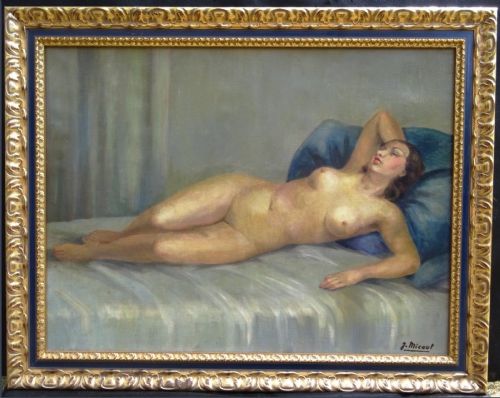
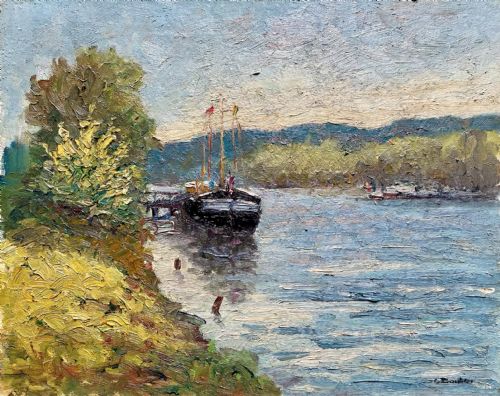
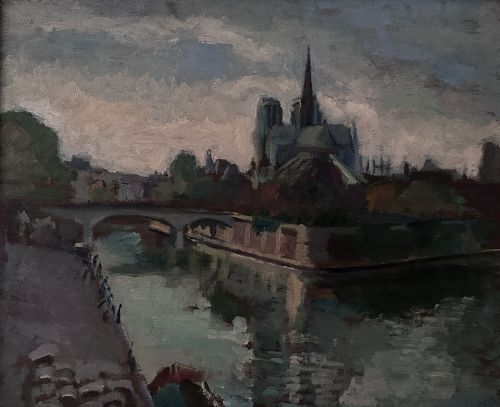
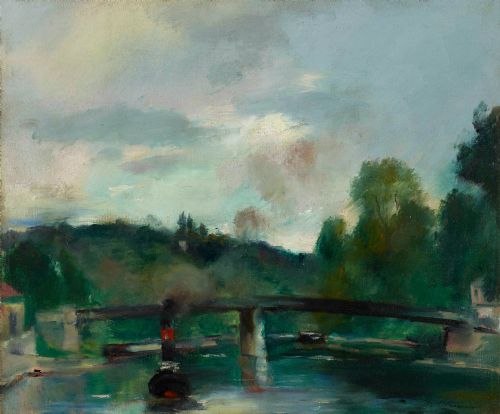
The selection frequently presents oil paintings and watercolours depicting townscapes, river scenes and portraits. Canvases range from Impressionist water views to Post-Impressionist landscapes and modernist compositions.
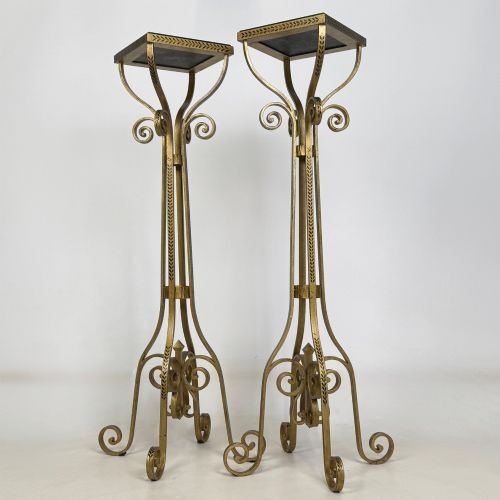
Decorative items such as mantel clocks, cameo glass vases and plant stands appear alongside fine art paintings. These domestic objects reflect the craftsmanship associated with Edwardian production and later decades.
Materials and construction methods
Painters utilised oil paint and watercolour applied to canvas, paper, board and panel to achieve varied textures and light effects. Works often display visible brushwork characteristic of Post-Impressionist and Expressionist techniques.
Glassmakers employed cameo techniques to shape decorative vessels with layered coloured motifs. Metalworkers and cabinetmakers shaped brass, enamel on copper, and wood for clocks, commodes and plant stands.
A mannequin by Pierre Iman stands quietly among the paintings, waiting to model the century's changing silhouettes.
Evaluating quality and execution
Quality rests upon the handling of medium and the distinctness of the artistic vision executed by the maker or painter. Superior canvases demonstrate confident mark-making and balanced composition within townscapes and portraits.
Decorative objects show variation in the precision of their physical construction and the depth of surface decoration. Finer glass vessels and enamel pieces exhibit intricate detailing and controlled colour application.
Maurice & Marcel Moulin Favre-Bulle·Paul Nicolas·Pierre Iman·Henri Ottmann·Paul-Élie Gernez·Antoine Calbet·Gabriel Dauchot·Merio Ameglio·Jean Sobieski·Pinchus Krémègne·Yves Brayer·Paul-Louis Barruel·Charles Edmund Rene His·William Lee-Hankey
The Twentieth Century French Art Glossary
- Art Deco
- A design style characterised by streamlined geometric forms and sleek ornamentation spanning the interwar period. It influenced furniture and decorative objects.
- Post-Impressionism
- An artistic movement following Impressionism that prioritized symbolic content and expressive use of colour over naturalistic depiction. Painters applied thick pigments to canvas.
- Cameo Glass
- A luxury glass art technique involving the carving of layers of different coloured glass to produce a raised design. Vessels display contrasting translucent backgrounds.
- Oil on Canvas
- Pigment suspended in drying oil applied to a stretched fabric support. This medium allowed artists to build rich textures.
- Watercolour
- A painting method where water-soluble pigments are suspended in a water-based solution on paper. Artists utilised this for translucent washes.
Twentieth Century French Art: Frequently Asked Questions
What defines twentieth century french art?
Twentieth century french art includes paintings, watercolours and decorative objects created in France or by artists working within French movements between nineteen hundred and the nineteen sixties.
The category spans diverse styles from Art Nouveau and Art Deco to Post-Impressionism and Mid-Century Modern.
How should I display these paintings?
Paintings on canvas and paper suit spaces with controlled ambient light to protect pigments from direct sunlight.
Framing works in period-appropriate mouldings helps integrate them into modern or traditional interiors.
How do I identify Art Deco pieces?
Art Deco items feature geometric symmetry, clean lines and stylized motifs derived from industrial and classical influences.
Materials frequently include polished wood, enamel and moulded glass.
What subjects are common in these paintings?
Common subjects include Parisian street scenes, river views of the Seine, coastal landscapes in Normandy and Brittany, and figurative portraits.
Artists recorded both urban architecture and rural leisure activities.