
Turned Wood Windsor Chair
A turned wood windsor chair brings structural honesty and vernacular warmth to a room, formed from resilient native timbers shaped by local hands.
Turned Wood Windsor Chair
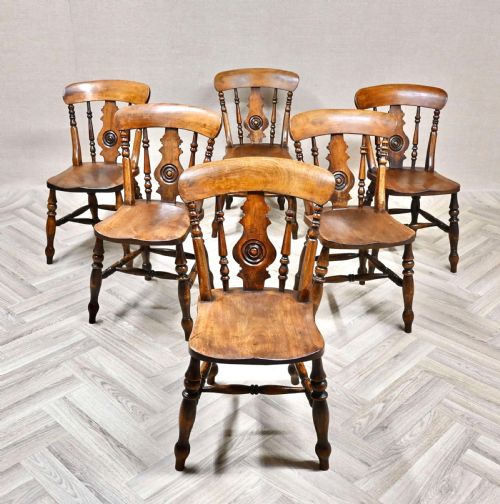
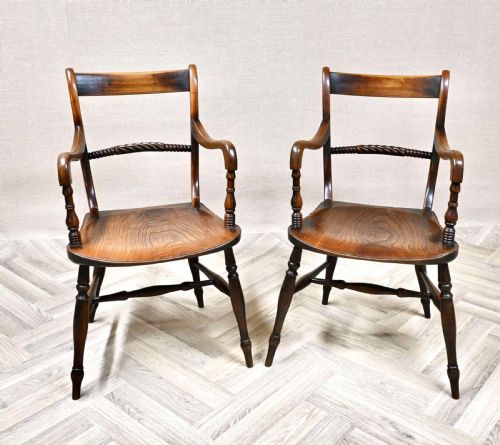
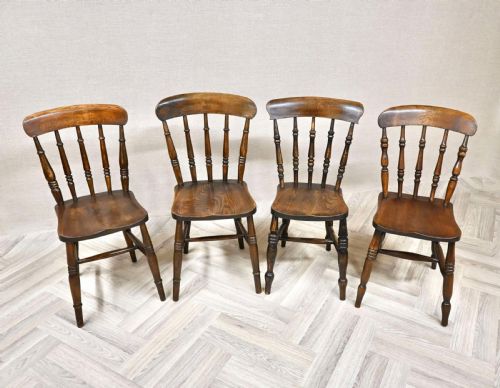
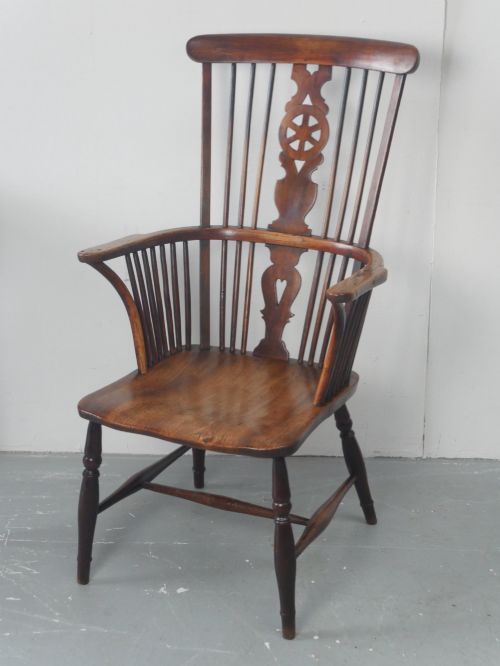
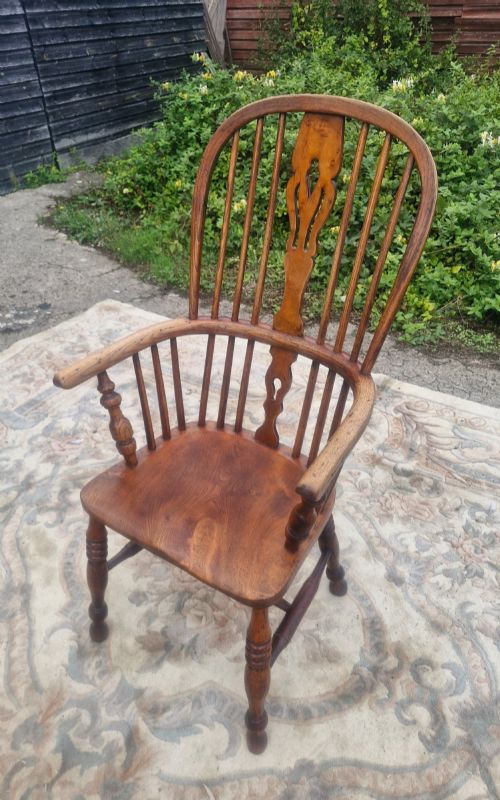
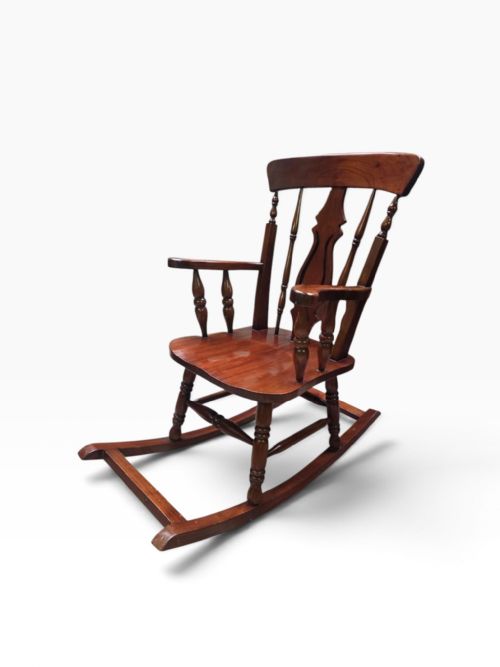
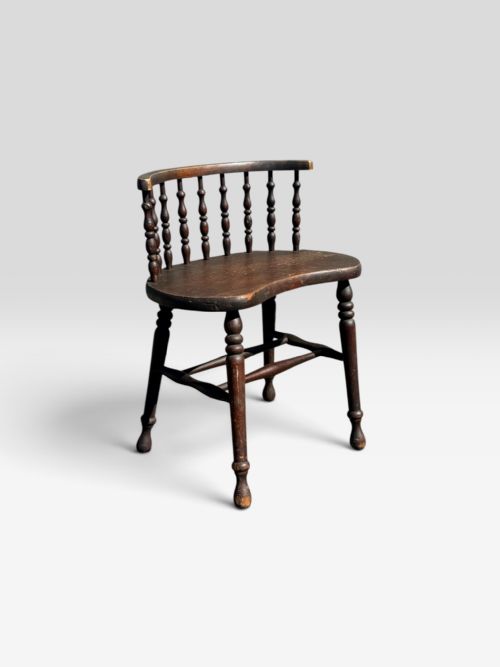
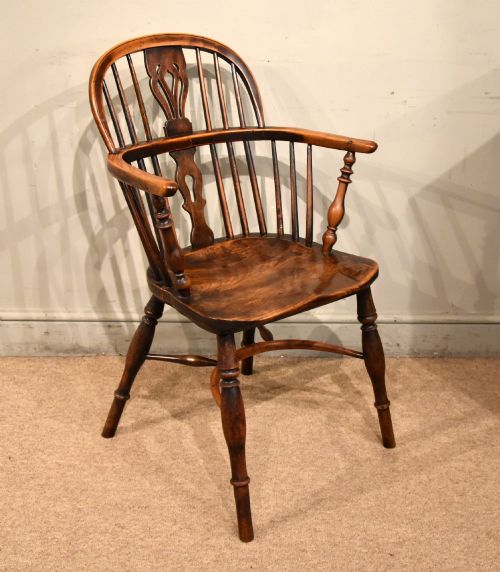
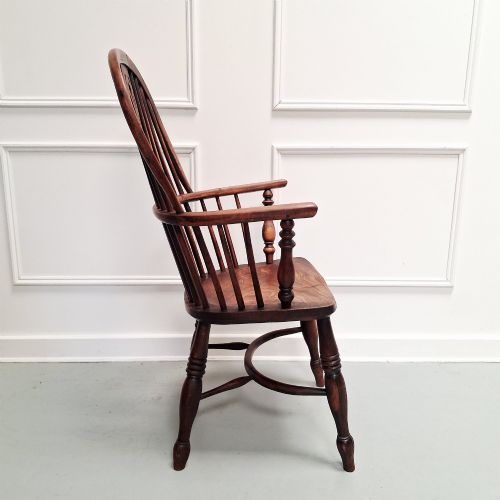
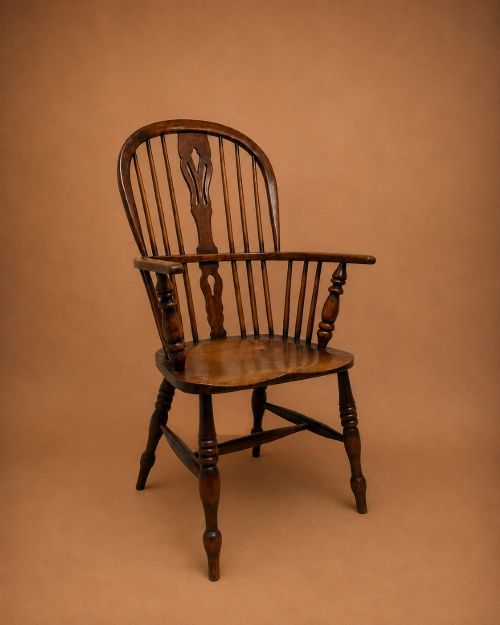
A turned wood windsor chair is a quintessential vernacular seating form rooted in English provincial and country traditions. These pieces combine a solid wooden seat carved for comfort with spindle-turned legs and various back constructions ranging from low barbacks to high hooped frames.
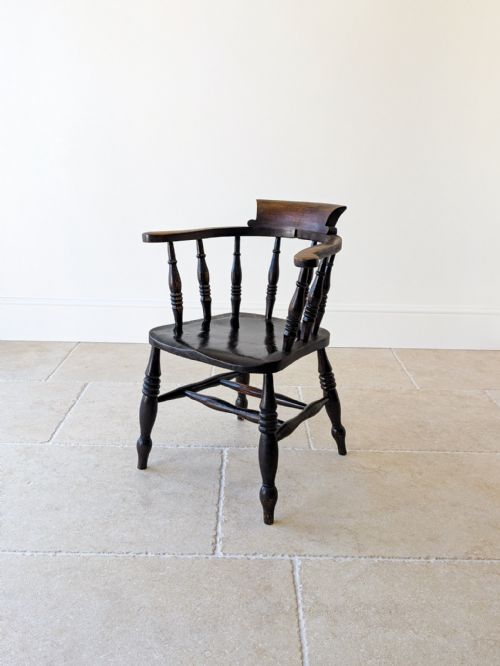
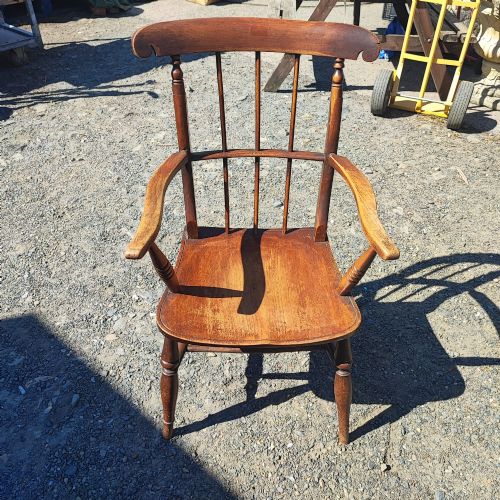
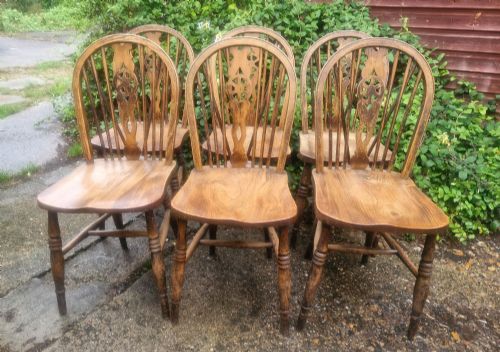
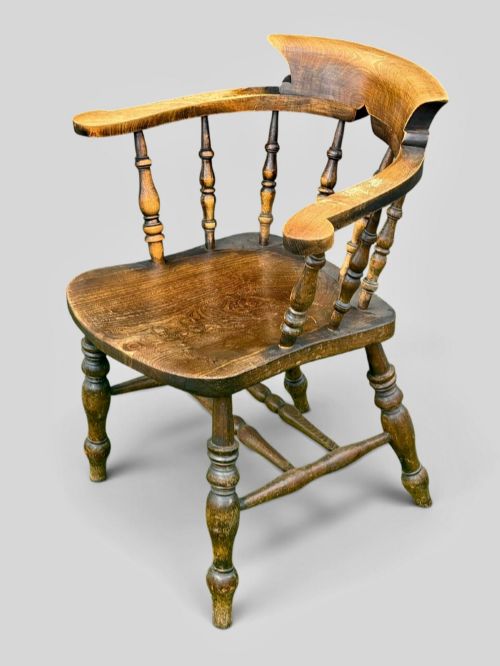
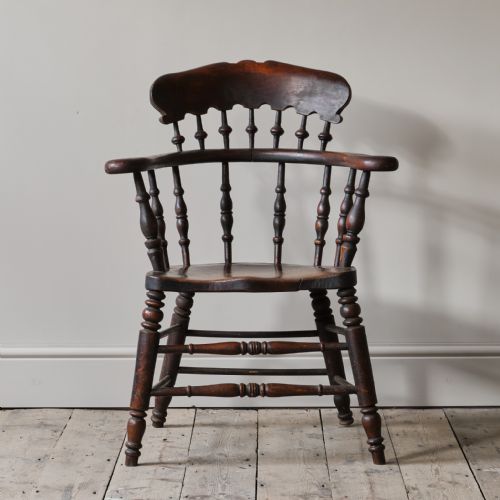
Buyers browsing this selection will frequently encounter nineteenth-century examples originating from domestic kitchens, farmhouses, and country houses. Common forms include Carver chairs, Captains chairs, Smokers bows, and sets of dining chairs designed for everyday utility.
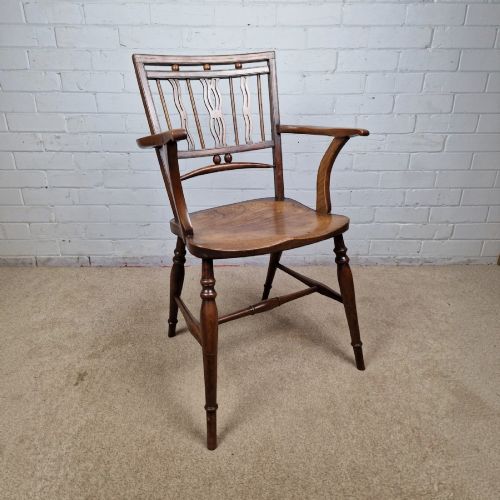
The aesthetic is defined by regional variations across England, incorporating styles such as wheel-backs, lath-backs, and Mendlesham designs. Each variant reflects the practical demands of nineteenth-century domestic life alongside the distinct preferences of local chairmakers.
How they were made
Makers utilised a combination of contrasting timbers selected for their specific mechanical properties within a single turned wood windsor chair. Elm was predominantly chosen for the solid, carved saddle seat due to its resistance to splitting under weight.
Frameworks, spindles, and legs typically relied on resilient hardwoods such as ash, beech, or birch shaped on a pole lathe. Selected examples incorporate yew wood or fruitwood, prized for distinct grain patterns and rich natural colour.
Construction methods relied on traditional joinery where turned legs and back spindles were wedged directly into bored holes within the solid seat slab. Additional rigidity was achieved through stretcher arrangements, including crinoline stretchers on certain provincial variants.
Listings feature nineteenth-century examples constructed from elm, ash, beech, yew, and oak across various regional English country styles.
What varies in quality
The calibre of a turned wood windsor chair depends heavily on the selection of timber and the depth of the sculpted seat. Superior examples display deeply dished elm seats that demonstrate careful hand-carving rather than flat, machine-sawn boards.
Proportion and the complexity of the spindle turnings dictate the refinement of the piece. Well-defined turnings, balanced hoop or comb backs, and the inclusion of desirable secondary woods like yew elevate an example above standard utility kitchen seating.
J SPENCER
The Turned Wood Windsor Chair Glossary
- Windsor chair
- A seating form characterised by a solid wooden saddle seat into which the legs and back bow are wedged directly. This construction separates it from standard framed chair designs.
- Smokers Bow
- A low-backed Windsor armchair featuring a rounded continuous arm rail supported by short spindles. These comfortable seats were common in parlours and public houses.
- Crinoline stretcher
- An arched underframe connecting the legs of a chair to provide lateral stability. The shape resembles the hoops of nineteenth-century petticoats.
- Mendlesham chair
- A distinct regional armchair originating from Suffolk, featuring a solid wood seat and a pierced splat within the back. They frequently incorporate contrasting timbers like elm and yew.
- Wheel-back
- A Windsor chair variation featuring a pierced splat carved in the shape of a spoked carriage wheel. This decorative motif gained popularity during the nineteenth century.
Turned Wood Windsor Chair: Frequently Asked Questions
How do I identify an older Windsor chair?
Look for construction details such as wedged tenons protruding through the seat, adzed seat shaping, and native British hardwoods like elm and ash.
Early pieces often display hand-turned components with minor irregularities that distinguish them from later mass-produced variants.
Were these chairs used for dining?
Many examples on this page served as farmhouse kitchen or dining seating, often found as single items or assembled sets.
Armchairs served as head-of-table seating, whilst smaller side chairs and lathbacks accommodated daily family meals.
How do I care for elm and ash timber?
Maintain stable indoor humidity levels to prevent the native hardwoods from drying out or splitting over time. Feed the surface periodically with traditional beeswax to preserve the natural lustre of the wood.
What is the difference between a hoop back and a lath back?
A hoop back utilises a continuous steam-bent wooden bow that forms both the arms and the top rail in one fluid sweep. A lath back incorporates a distinct horizontal top rail with vertical flat wooden slats forming the backrest.