
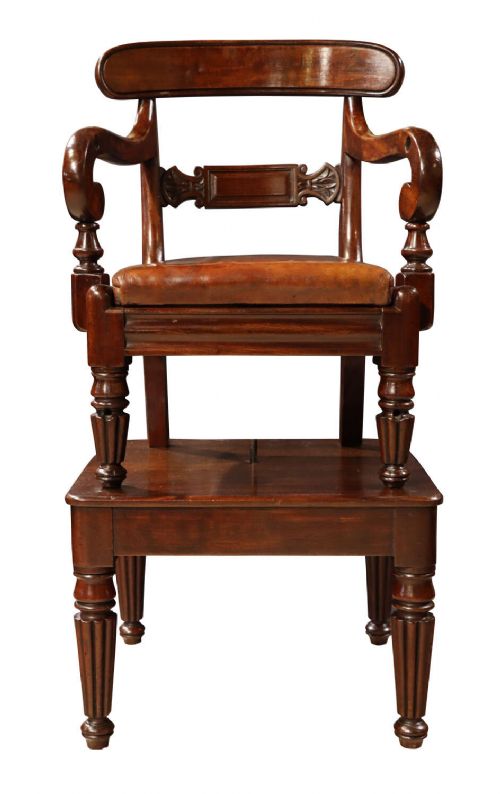

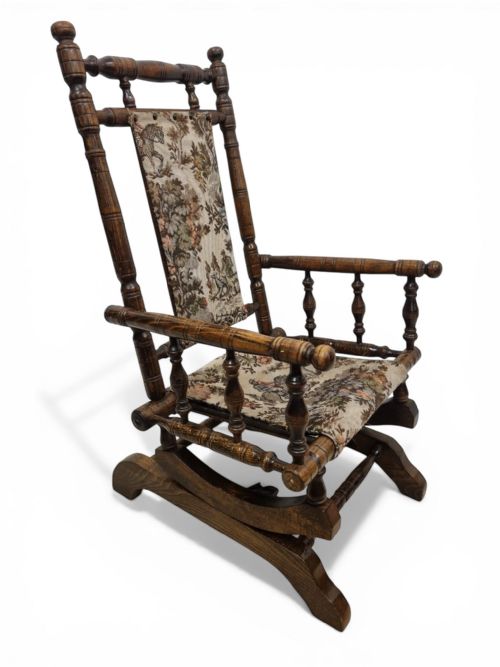


Victorian Wooden Child Chair
A victorian wooden child chair is small seating built for the nursery, combining sturdy domestic woods with miniature proportions.
Victorian Wooden Child Chair
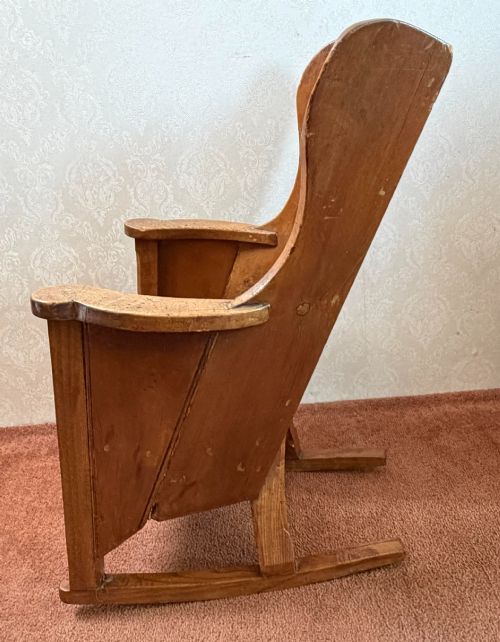
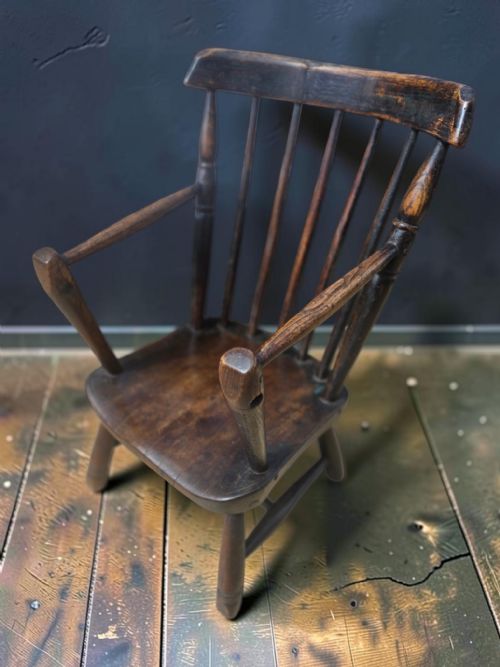
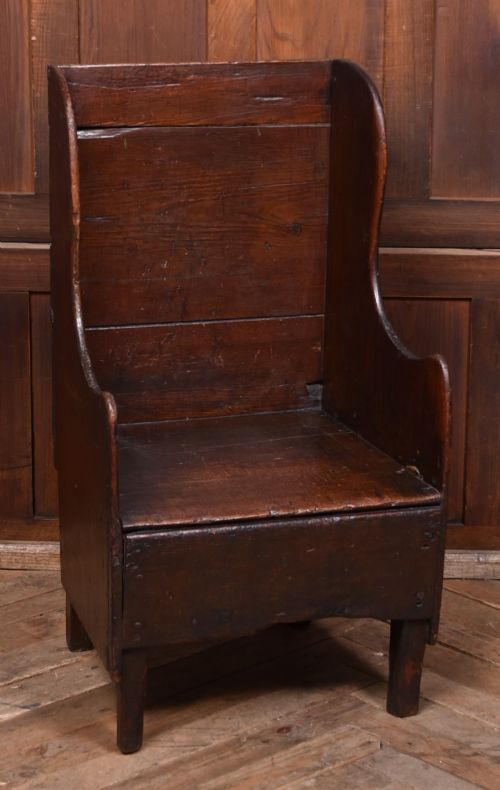
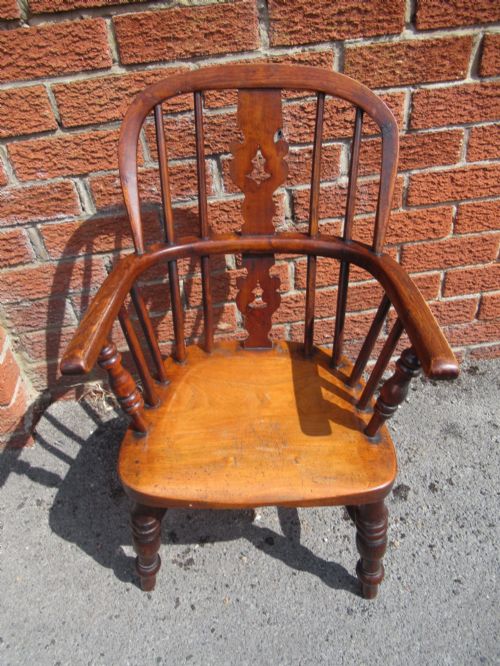
A victorian wooden child chair appears in several domestic forms, ranging from low nursery rockers to tall dining high chairs and small armchairs. These pieces mirror the adult seating of their day, scaled down for young children rather than made as simple toys.
The varieties on this page span vernacular country styles, such as Windsor hoopbacks and elm lambing chairs, alongside formal mahogany and yew wood designs. They come from the nineteenth century, with occasional pieces from the Georgian, Regency, and William IV periods.
Makers produced these chairs for everyday nursery use, meaning many bear the marks of real childhood wear. Collectors find everything from simple ash and elm country seating to sophisticated metamorphic high chairs that convert into low play chairs.
How they were made
Cabinetmakers and country joiners built these small chairs using traditional timbers like elm, ash, mahogany, oak, and yew wood. They combined turned spindles with solid timber seats, often steam-bending wood for hoops and crest rails.
Many high chairs and armchairs incorporate cane, rush, leather, or tapestry upholstery on seats and backs. Joinery methods relied on mortise and tenon construction to withstand the daily vigour of nursery life.
Some child rockers double as dolls' chairs when the nursery grows quiet.
What varies in quality
The distinction between ordinary and superior pieces rests on the choice of timber and the complexity of the form. Yew wood and figured mahogany command attention, as do metamorphic designs and clever engineering.
Country vernacular chairs vary according to the turning of the spindles and the comfort of the proportions. Simpler naive pieces hold charm, while finely turned Windsor high chairs show greater joinery skill.
The Victorian Wooden Child Chair Glossary
- Windsor
- A chair built with a solid wooden seat into which the legs and back spindles are wedged directly. These country classics often feature carved armbows and bentwood hoops.
- Metamorphic
- Describing furniture designed to transform from one form into another, such as a high chair that converts into a low play table and chair. This clever engineering saved space in period homes.
- Lambing chair
- A hooded or winged armchair designed to keep draughts away from the sitter. Miniature versions for children provide a cosy, enclosed seat.
- Vernacular
- Everyday furniture made by regional joiners and country craftsmen rather than London cabinetmakers. These local styles rely on available woods like ash, elm, and beech.
- Bergere
- A type of upholstered armchair with cane work panels set into the wooden frame. In child chairs, this appears on high chair backs and seats.
Victorian Wooden Child Chair: Frequently Asked Questions
How do I date a child chair?
Dating relies on timber choice, construction methods, and stylistic cues inherited from adult furniture trends. Cabinetmakers adapted prevailing Victorian, Regency, or Georgian tastes for smaller occupants.
Secondary clues include the type of fixings, wear patterns, and the evolution of hardware on metamorphic models.
Were these chairs meant for everyday use?
These pieces served practical roles in the 19th-century nursery, dining room, and parlour. High chairs kept infants secure during meals, while rockers entertained toddlers.
Their robust construction in oak, elm, and ash ensured they could survive generations of active childhood.
What is a metamorphic high chair?
A metamorphic high chair is a convertible piece of nursery furniture that shifts between a tall feeding position and a low play chair. Mechanisms often involve pivoting trays or sliding frames.
This ingenuity offered families two pieces of furniture in one footprint.
How do I style a child chair at home?
These small chairs suit modern interiors as standalone decorative accents in living rooms or hallways. They fit well in corners, beside fireplaces, or holding small plants and books.
Their diminutive scale brings character and warmth to contemporary spaces without dominating a room.