


Childs Windsor Armchair
A childs windsor armchair is a miniature version of the classic country seat, prized by collectors for its scaled-down proportions and honest vernacular craftsmanship.
Childs Windsor Armchair
A childs windsor armchair is a scaled-down seating form designed for young children, following the construction methods of full-sized country chairs. These pieces appear most frequently from the eighteenth, nineteenth, and early twentieth centuries, spanning Georgian and Victorian periods.
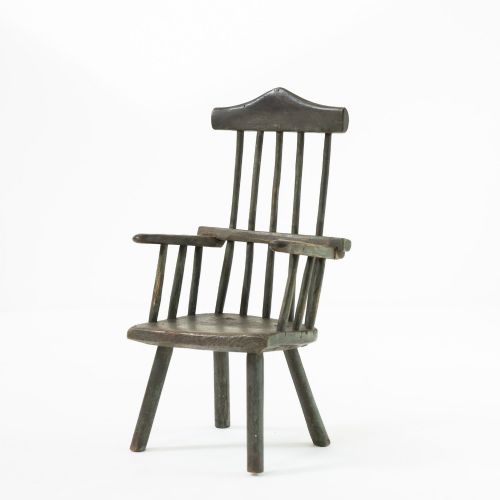
The regional variety is wide, taking in English country examples alongside Welsh vernacular styles and specific local forms. Makers produced armchairs, hoop-back chairs, stick-back chairs, and even high chairs, often utilising traditional regional framing techniques.
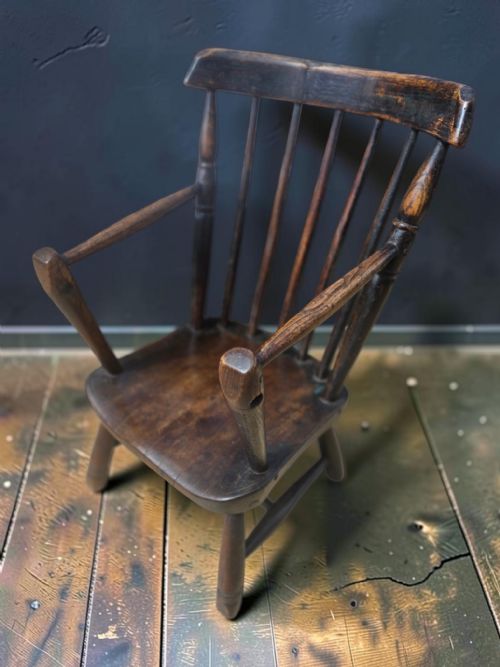
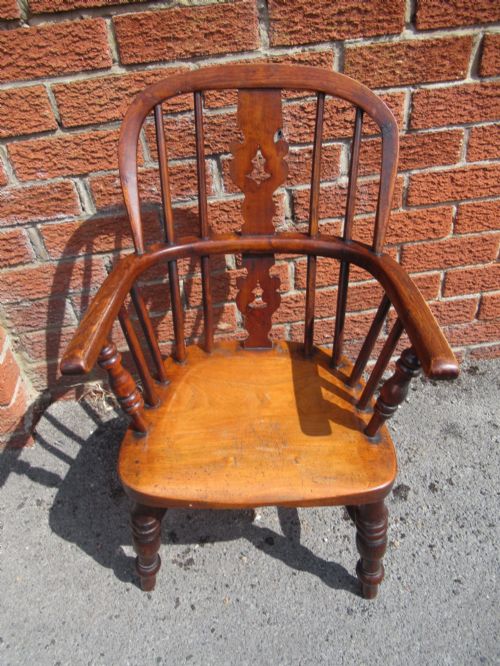
Surviving examples range from primitive folk art rocking chairs to refined yew wood pieces featuring carved details or crinoline stretchers. They offer a direct window into domestic life from historical periods, built to withstand daily use by children.
How they were made
Construction relies on a combination of solid timbers, utilising durable woods such as elm for seats, ash for spindles, and yew or fruitwood for arms and hoops. Craftsmen turned legs on a lathe and bored holes directly into thick wooden seats to secure the legs and back spindles.
Regional workshops employed vernacular joinery, shaping hoops from bent wood and securing components with wedges rather than modern metal fasteners. Painted finishes appear alongside natural oiled or polished grain surfaces, preserving the character of the hardwood.
Listings feature woods including elm, ash, yew, oak, beech, and fruitwood across Georgian and Victorian periods.
What varies in quality
Quality rests in the choice of timber and the fidelity of the miniature proportions to full-sized regional archetypes. Yew wood examples with rich grain patterns and well-formed hooped backs command greater attention than plainer ash or oak versions.
The crispness of the spindle turnings and the cleverness of the arm joinery distinguish standard vernacular items from finer regional pieces. Original surfaces and untouched patination elevate the standing of a chair above those with heavy later alterations.
The Childs Windsor Armchair Glossary
- Windsor
- A chair style characterised by a solid wooden seat into which the legs and back spindles are directly wedged. This method creates a sturdy, rigid frame without needing a traditional underframe box.
- Hoop-back
- A backrest formed from a single continuous piece of bentwood steam-bent into an arch and secured to the seat. It provides smooth, rounded lines common in country seating.
- Crinoline stretcher
- A curved under-stretcher linking the legs of a chair in a continuous loop, resembling the shape of a crinoline skirt. This adds structural stability while maintaining a graceful profile.
- Vernacular
- Objects designed and built by local craftsmen using regional traditions and readily available materials rather than following academic metropolitan styles. These pieces reflect the specific character of their geographic origin.
- Stick-back
- A chair back constructed from simple turned or cleft rods inserted into the seat and top rail. It represents a straightforward, functional approach to rural seating design.
Childs Windsor Armchair: Frequently Asked Questions
Were these miniature chairs actually used by children?
Yes, these seating pieces served functional roles in historical domestic settings, giving young children a sturdy seat at table or by the hearth.
Craftsmen built them with the same robust construction methods used for adult furniture to ensure they could withstand heavy daily use.
How do I identify a yew wood childs windsor?
Yew wood displays a distinctive warm golden-brown tone with intricate grain patterns and occasional dark knots. Examining the arms and hoop often reveals this specific timber.
Cabinetmakers reserved yew for finer regional pieces due to its decorative appeal and resilience.
How should I clean an antique childs armchair?
Maintain the surface by dusting gently with a dry cloth and applying traditional beeswax sparingly to nourish the dry wood. Avoid modern liquid cleaners or harsh detergents that strip the aged patina.
Keeping the chair away from direct heat sources and strong sunlight prevents the historic timber from splitting.