




Dark Elm Nursery Chair
These dark elm nursery chair pieces are sturdy little vernacular seats designed for children, offering character and domestic history for the home.
Dark Elm Nursery Chair
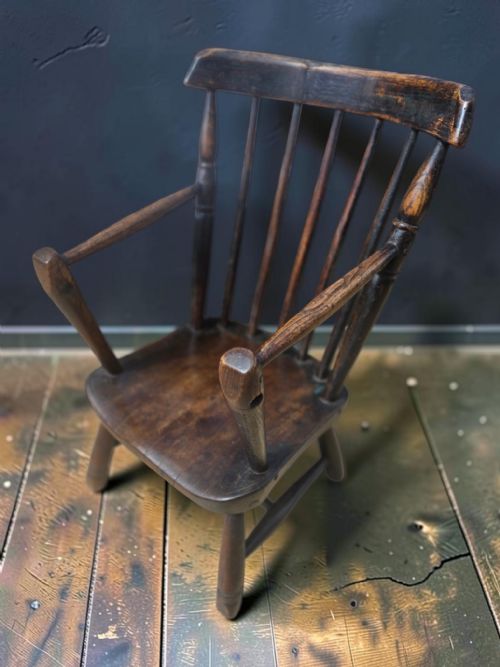
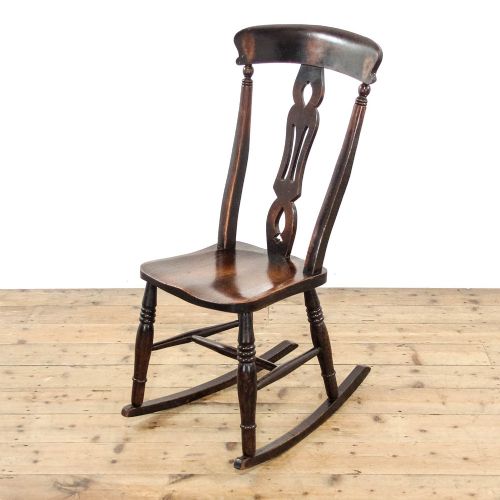
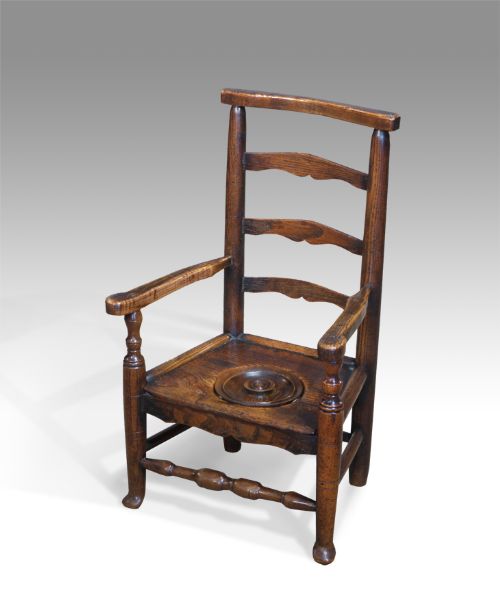
A dark elm nursery chair is a small domestic seat designed for children, built with the robust functionality typical of regional vernacular furniture. When exploring dark elm nursery chair examples, you encounter formats intended for everyday use in nineteenth-century households, including low armchairs, high chairs, rocking chairs, and commode chairs.
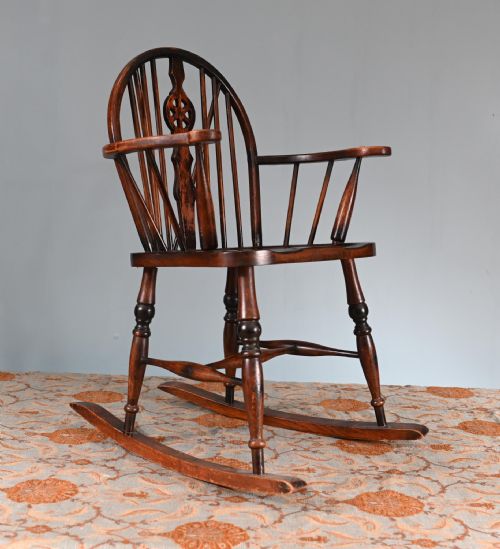
The prevailing forms on this page stem primarily from the nineteenth century, including Victorian and Edwardian interpretations, alongside a single Georgian example from 1800. These pieces often adopt Windsor construction methods, featuring distinctive wheelback or hoopback designs tailored for smaller occupants.
Makers working within English regional traditions built these seats to endure constant use by children, resulting in unpretentious proportions and practical forms. The survival of such pieces highlights the durable nature of domestic woodwork from the 1800s onward.
How they were made
Makers constructed these chairs primarily using elm for seats, paired with supporting timbers such as ash, beech, and oak for spindles, legs, and bentwood backs. This combination of resilient woods provided the necessary strength for seating subjected to heavy domestic wear.
The manufacturing process relied on traditional vernacular woodworking techniques, including turned components and steam-bent hoops fitted directly into solid timber seats. Stained hardwood finishes were occasionally applied to unify disparate wood grains across the various parts of the chair.
Dark Elm Nursery Chair Retail Price Guide 2026
Typical asking prices for dark elm nursery chair among the pieces listed under this phrase on Sellingantiques today, from the lower quarter to the upper quarter. They describe what is for sale here now, not the wider market.
Some chairs were made small enough to serve as doll's rocking chairs alongside full nursery seating.
What varies in quality
Quality in these domestic pieces depends upon the harmony of the timber selection and the retention of original structural integrity. Chairs that maintain balanced proportions between the child-scale seat and the supporting undercarriage demonstrate greater regional craftsmanship.
The distinctiveness of the turning on spindles and legs, alongside the execution of steam-bent hoopbacks or wheelbacks, separates standard utility items from finer vernacular examples. Surface patination and the honest integration of mixed woods such as elm and ash also influence the character of each piece.
The Dark Elm Nursery Chair Glossary
- Vernacular
- Everyday furniture made by local regional craftsmen rather than high-style urban cabinetmakers. These objects prioritise utility and local timber availability over fashionable ornament.
- Hoopback
- A chair back formed from a single continuous piece of timber steam-bent into a curve. This technique provides structural strength while supporting the sitter's back.
- Wheelback
- A Windsor chair design featuring a pierced wooden splat shaped like a cartwheel. It is a decorative yet sturdy feature common in nineteenth-century seating.
- Commode chair
- A utilitarian seat enclosing a chamber pot or receptacle for sanitary use. In children's furniture, these combined seating with necessary domestic management.
- Windsor chair
- A seat constructed with a solid wooden saddle-shaped seat into which the legs and back spindles are directly tenoned. This method creates a resilient and stable frame.
Dark Elm Nursery Chair: Frequently Asked Questions
What is a dark elm nursery chair used for?
These small seats were originally made for children to use at table, by the hearth, or during nursery hours. Their robust construction allowed them to withstand the daily demands of households.
Today, collectors use them as decorative accents or display pieces in domestic interiors, appreciating their historical utility and compact proportions.
Are rocking chairs and high chairs common?
The selection includes various functional types, such as rocking chairs, high chairs, armchairs, and commode chairs tailored for children. These variations reflect the specific domestic needs of nineteenth-century families.
Each form utilises similar regional woodworking traditions, adapting the basic Windsor or vernacular frame to suit a child's mobility or seating requirements.
What woods were used in these chairs?
Elm is the primary timber found in the solid seats, prized for its resistance to splitting under heavy use. Secondary woods like ash, beech, and oak frequently form the spindles, legs, and bentwood backs.
This mixed-timber approach was standard practice for regional makers who utilised readily available local materials to ensure structural longevity.