
Turned Wood Stool
A turned wood stool is a seat shaped at the lathe, offering honest timber construction and sturdy utility.
Turned Wood Stool
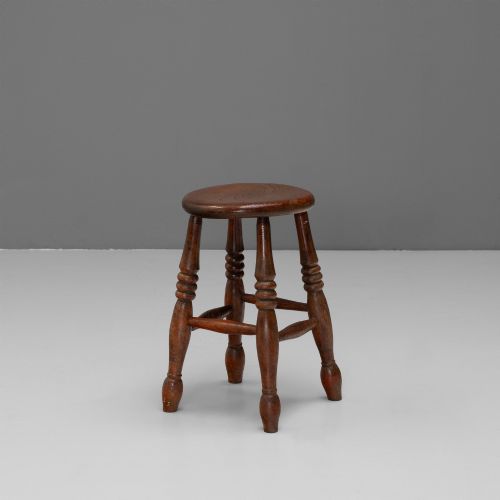
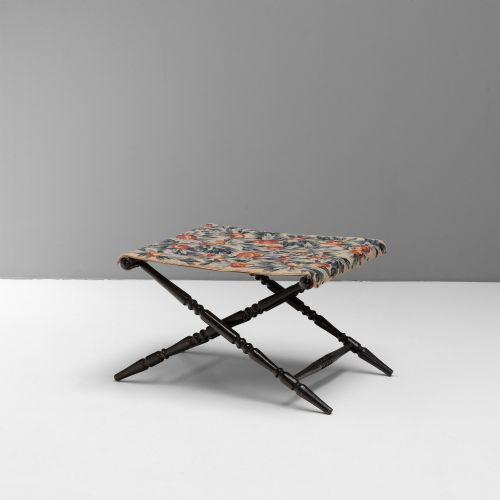
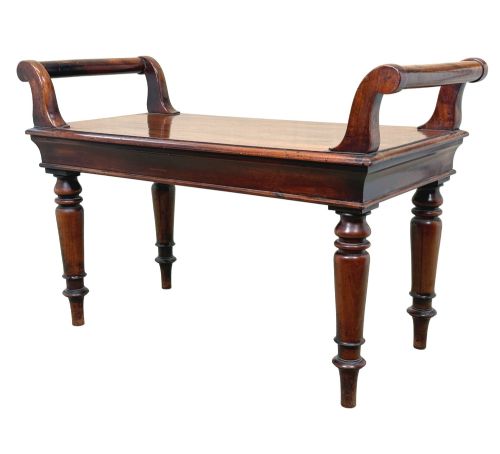
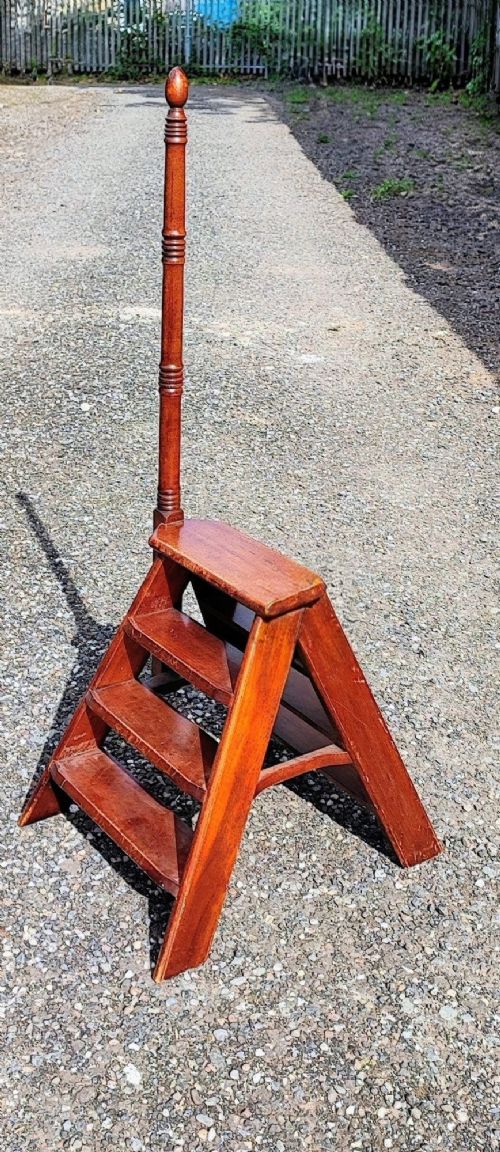
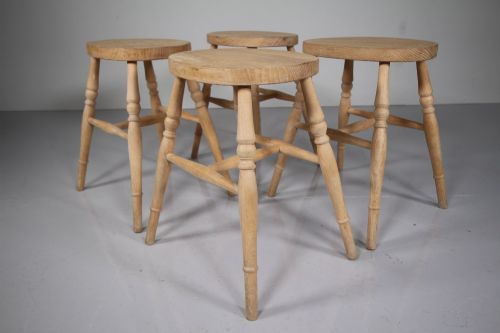
A turned wood stool represents a practical category of seating shaped by the lathe, encompassing tavern, pub, and country forms alongside adjustable piano stools. Buyers searching for a turned wood stool encounter pieces originating primarily across the nineteenth century and the Edwardian period.
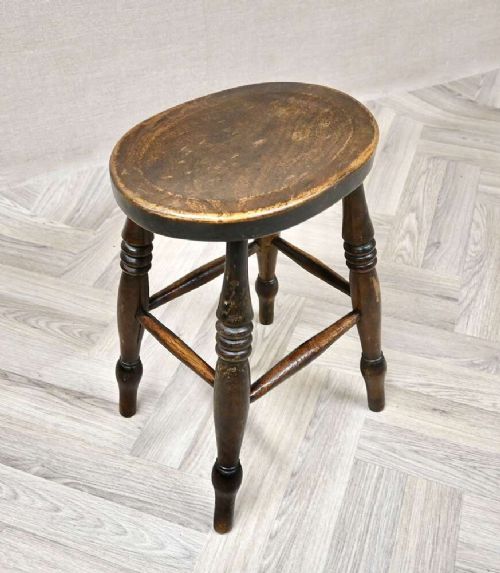
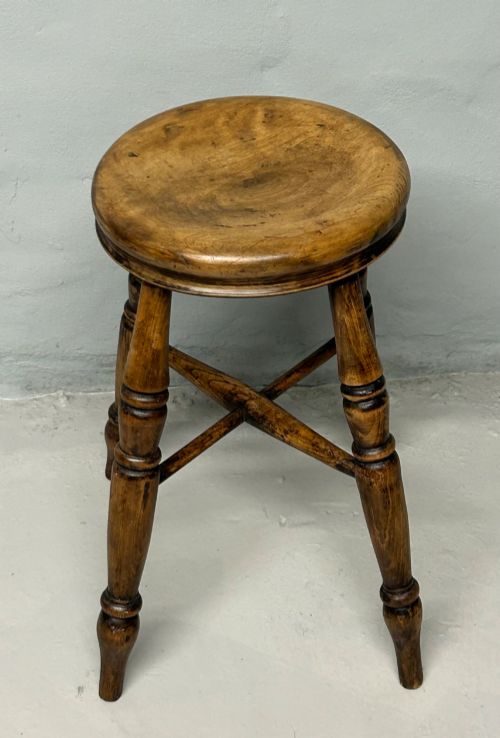
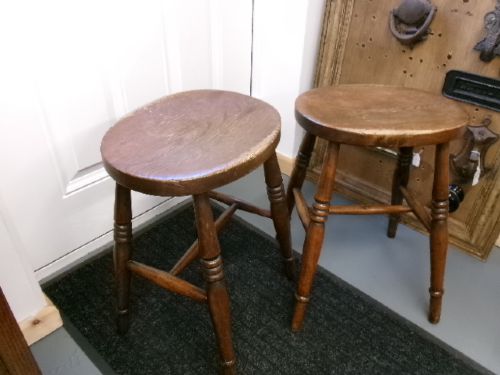
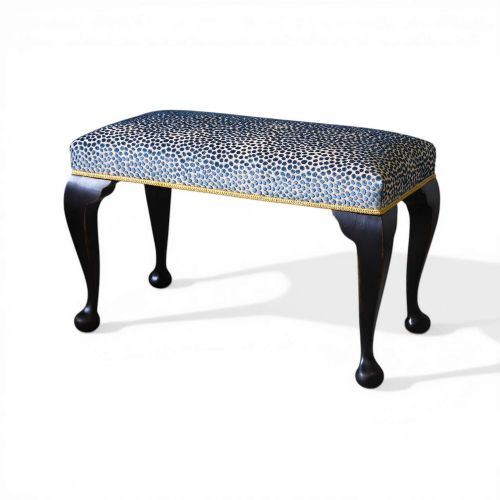
Simpler farmhouse and Windsor country stools appear frequently, often constructed with dished or oval seats supported by spindle legs. More formal examples include piano stools with swivel bases and adjustable heights.
Materials and Technique
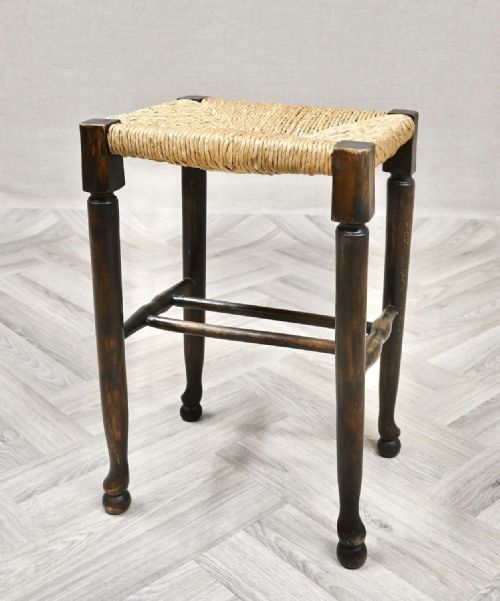
Cabinet makers and bodgers utilised native hardwoods like elm, beech, oak, yew, and fruitwood, turning uprights and legs on a lathe for structural strength. Tops were frequently fashioned from solid timber planks, sometimes dished for comfort or fitted with cane, rush, and upholstered pads.
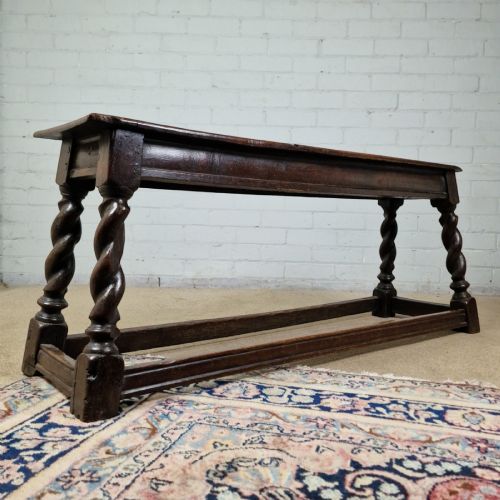
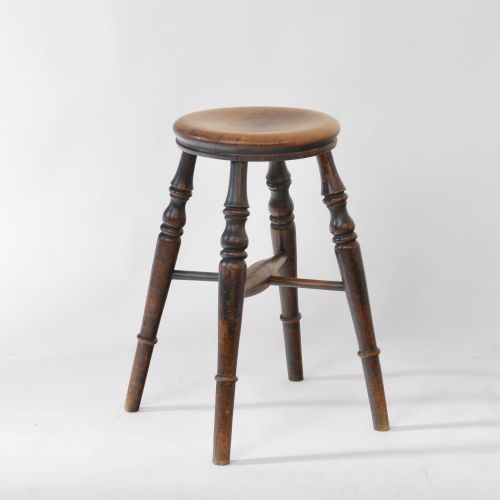
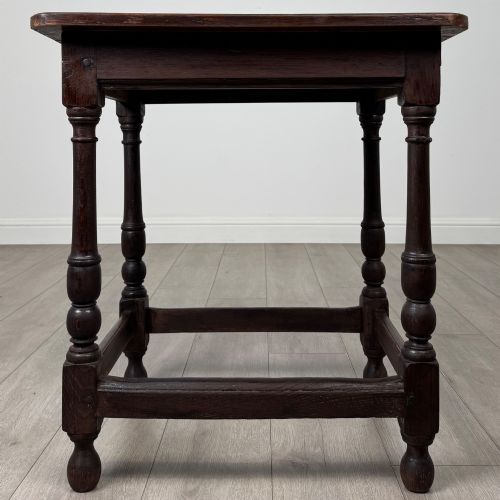
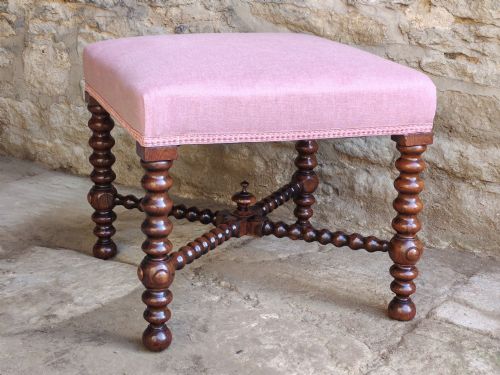
Joinery methods relied on traditional pegging and mortise and tenon joints to secure turned legs into solid timber seats. Decorative turning techniques, including bobbin and ball-foot configurations, demonstrated the lathe operator's skill.
Periods represented across the inventory span the Regency era through the nineteenth century and into Edwardian times.
Gradations in Execution
Quality rests in the selection of timber and the precision of the lathe work, distinguishing robust utility pieces from finer parlour seating. Dense hardwoods like yew, burr maple, and rosewood elevate a piece above standard beech or elm tavern furniture.
Proportion and the integrity of the structural turned joints dictate the longevity and aesthetic success of the design. Sharply defined turnings and original surface finishes separate superior examples from heavily altered or restored items.
Gillows·Brown & Lamont·Liberty & Co
The Turned Wood Stool Glossary
- Turned wood stool
- A seat featuring components shaped on a woodturning lathe, such as spindle legs or bobbin stretchers.
- Joint stool
- A sturdy wooden stool constructed using traditional mortise and tenon joints pegged together.
- Dished top
- A wooden seat carved into a shallow concave depression to fit the sitter.
- Bobbin leg
- A series of rounded spherical turnings resembling spools of thread along the length of a furniture leg.
- Treen
- Small handmade wooden household objects and domestic items produced before the era of mass manufacturing.
Turned Wood Stool: Frequently Asked Questions
How do I identify a tavern stool?
Tavern stools typically feature sturdy turned wooden legs and a solid timber top designed for heavy commercial use.
They often present simple circular or oval dished seats without upholstery.
What woods were used for these stools?
Makers utilised a variety of hardwoods suited to turning and structural load bearing.
Common choices include elm, beech, oak, yew, fruitwood, and mahogany.
How do adjustable piano stools work?
Piano stools often incorporate a central threaded screw mechanism or a swivel base.
This allows the pianist to alter the seat height by rotating the wooden top.
Where were country stools placed?
Country stools served practical seating needs in farmhouses, kitchens, and public houses.
Their robust turned construction made them suitable for daily utilitarian tasks.