


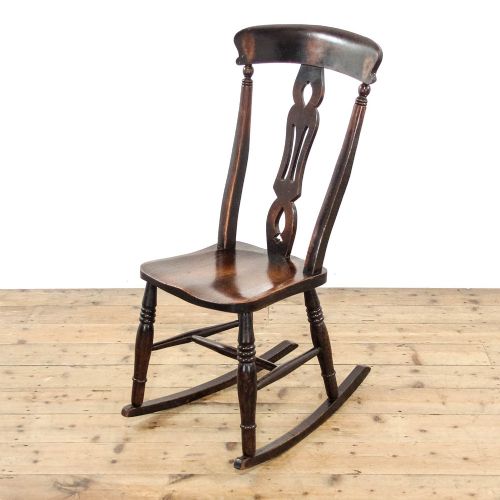


Turned Wood Rocker
These turned wood rocker examples combine vernacular comfort with vernacular craftsmanship, offering a seated piece that suits fireside spaces.
Turned Wood Rocker
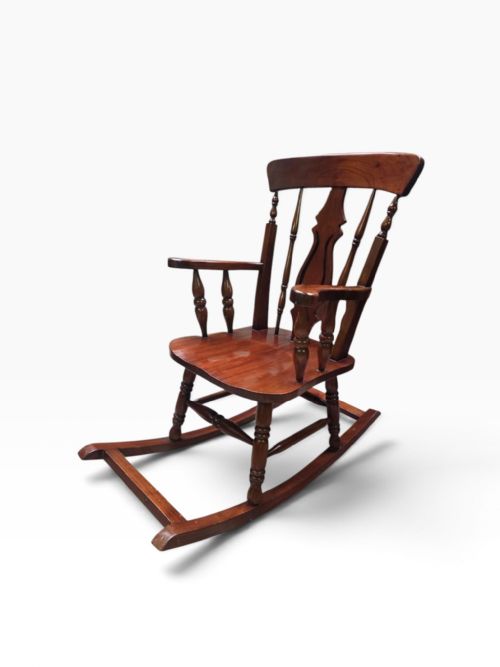
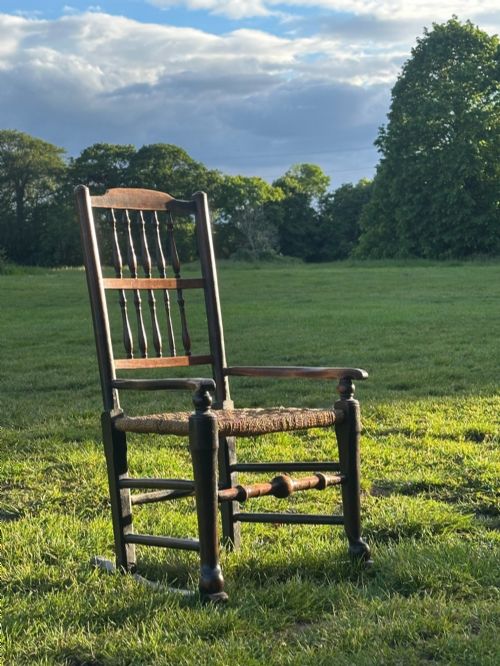
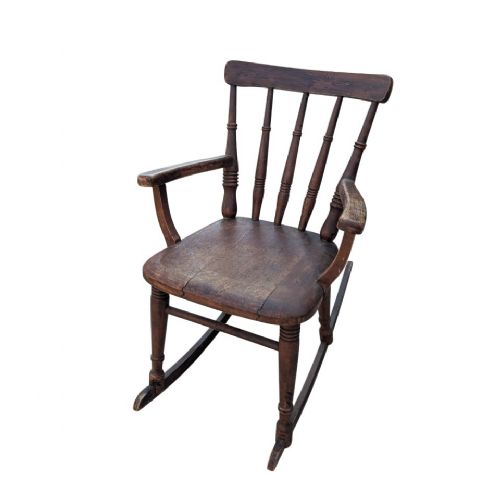
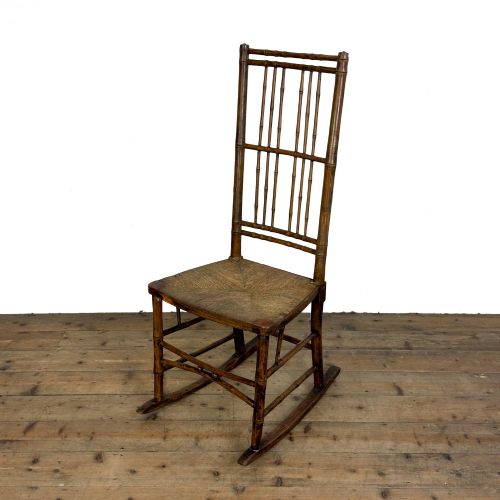
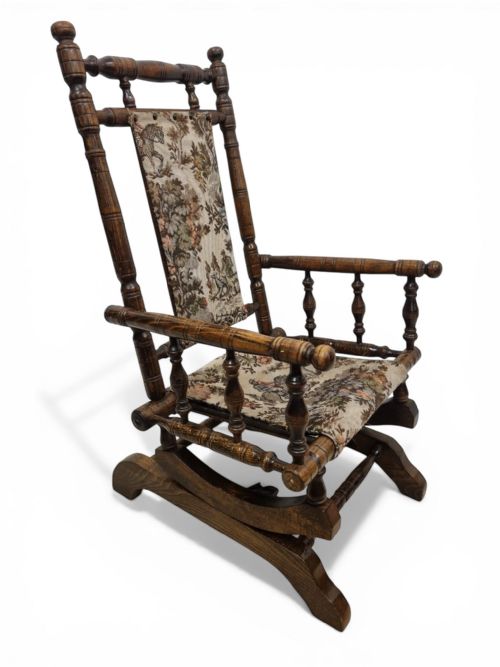
A turned wood rocker is a seating form defined by its rhythmic spindle turnings and curved runners. When you search for a turned wood rocker, you encounter pieces spanning from the eighteenth century through the Victorian era and into the early twentieth century.
The material palette draws heavily on regional timbers, with beech, elm, and ash appearing alongside fruitwood and mahogany. Forms range from full-sized country armchairs to smaller child versions and fireside ladder backs.
Origin points stretch across English, Scottish, American, and Scandinavian country traditions, often showing distinctive regional turning styles like bobbin framing or spindle backs.
Construction and Materials
Turners shaped timber on lathes to produce uniform structural posts and decorative bobbin or spindle components. These turned members were then joined using traditional peg and mortise techniques.
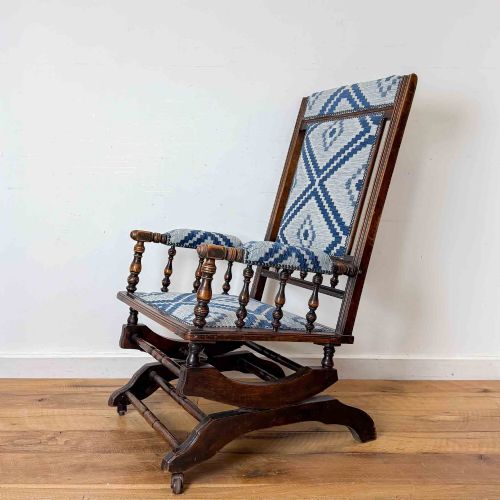
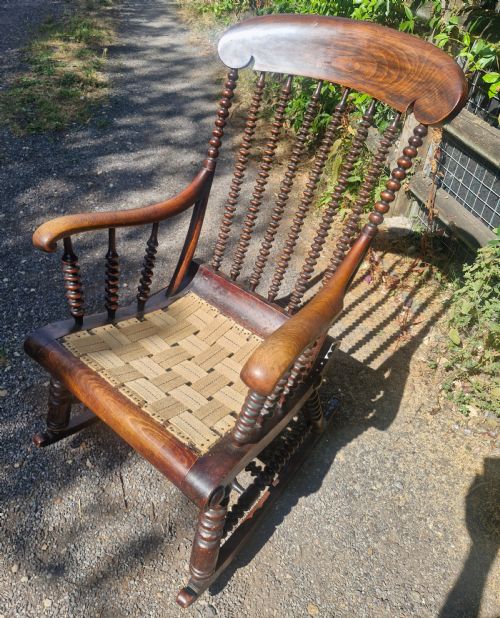
Seats utilise solid wood planks or woven surfaces such as cane, rush, and sea grass. Some versions incorporate upholstery over webbing or tapestries, supported by beech or mahogany frames.
Regional styles span English and Scottish vernacular workshops alongside American and Scandinavian country traditions.
Assessing Quality
Quality rests in the crispness of the lathe work and the integrity of the timber joints. Stronger examples maintain balanced proportions between the turned uprights and the curved rocking rails.
The choice of secondary woods and the retention of original surface finishes, whether paint or polish, distinguish finer workshop output from simpler utilitarian seating.
The Turned Wood Rocker Glossary
- Bobbin turning
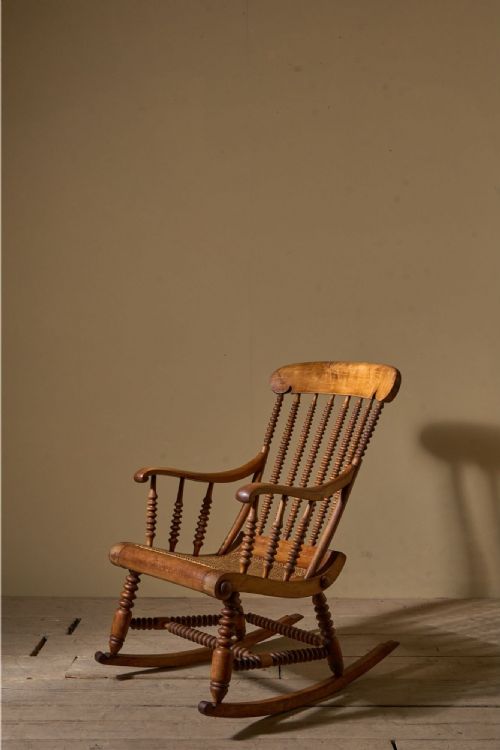
- A form of lathe work featuring a series of rounded, spool-like shapes carved along the length of a wooden spindle. This decorative motif appears frequently on nineteenth-century vernacular frames.
- Spindle back
- A chair back constructed from a series of vertical turned wooden rods fitted into top and bottom rails. These components provide lightweight structural support.
- Windsor
- A chair type featuring a solid wooden seat into which the legs, back staves, and arms are separately inserted. They often include steam-bent bow backs.
- Vernacular
- Objects made by local craftsmen following regional traditions rather than high-style academic designs. These pieces prioritize practical utility and local materials.
Turned Wood Rocker: Frequently Asked Questions
What is a turned wood rocker?
A turned wood rocker is a chair built with lathe-shaped spindles and curved base rails for motion. They draw on regional country traditions from Britain, America, and Scandinavia.
These pieces use timbers like beech, elm, and ash, often featuring woven rush or solid wooden seats designed for domestic comfort.
How do I date a turned wood rocker?
Dating relies on identifying the turning style, timber choice, and construction methods. Bobbin framing often points to mid-nineteenth-century vernacular work, while heavier Windsor forms can stretch back to the eighteenth century.
Changes in seat materials, from solid plank to cane or sea grass, also help place a chair within the Victorian or Edwardian periods.
Where were these chairs used?
These rockers served primarily in domestic country houses, farmhouses, and fireside settings. Smaller versions were built specifically for nurseries and children.
The inclusion of ladder backs and upholstered pads made them suited for prolonged sitting in private rooms rather than formal parlours.
How do I care for a wooden rocker?
Care involves maintaining stable indoor humidity to prevent timber shrinkage and joint loosening. Regular dusting with a dry cloth protects the original wood finish.
Avoid placing chairs near direct heat sources and treat woven cane or rush seats with care to prevent breakage.