
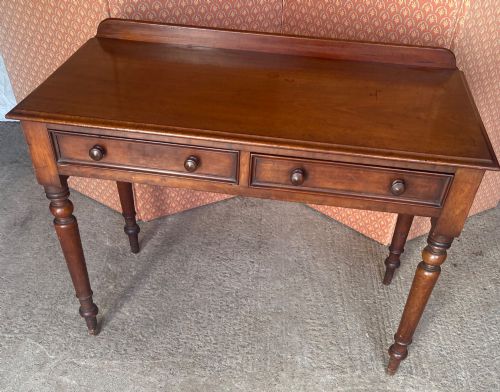
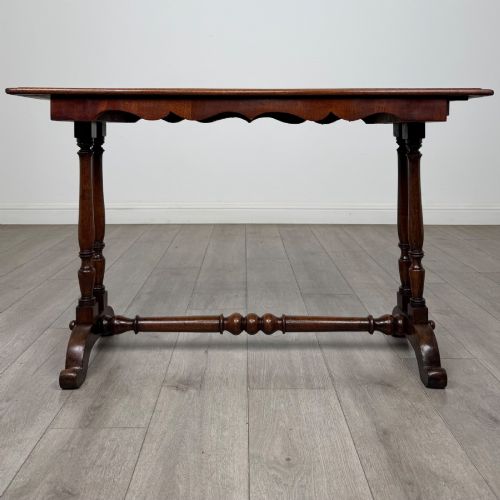
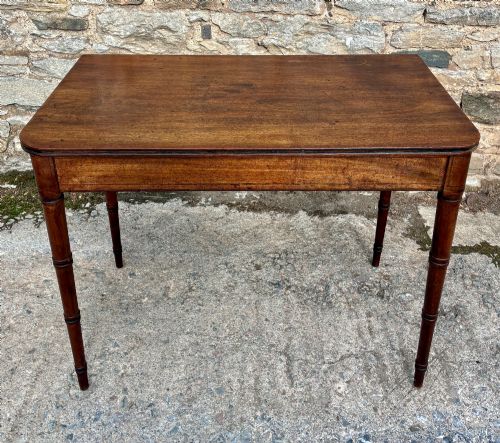
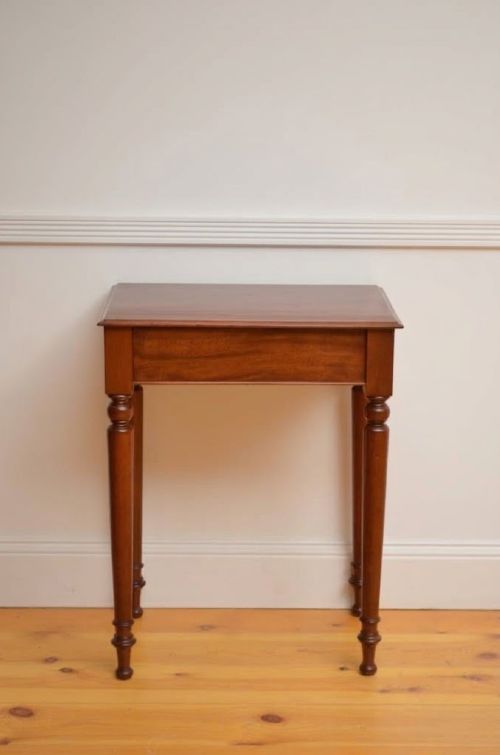
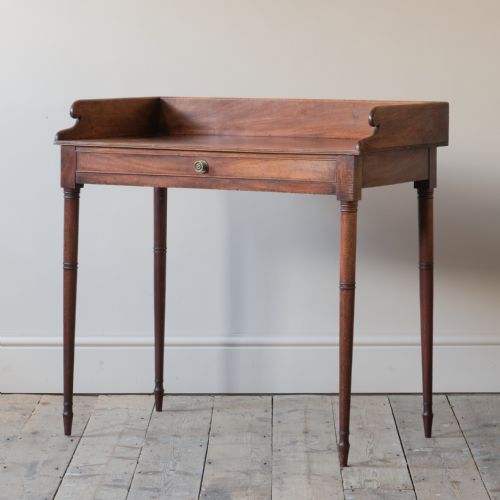
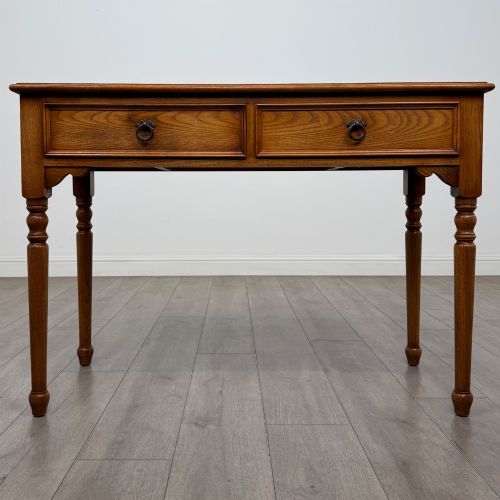
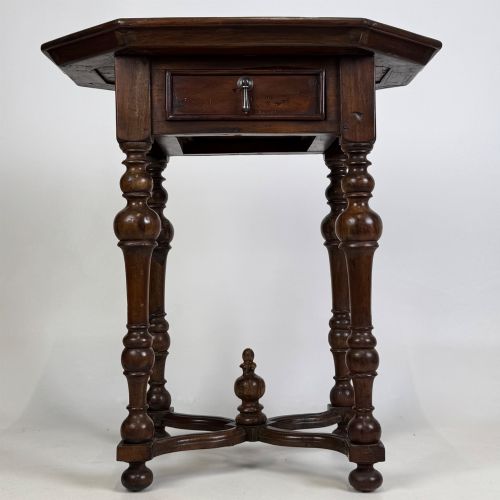
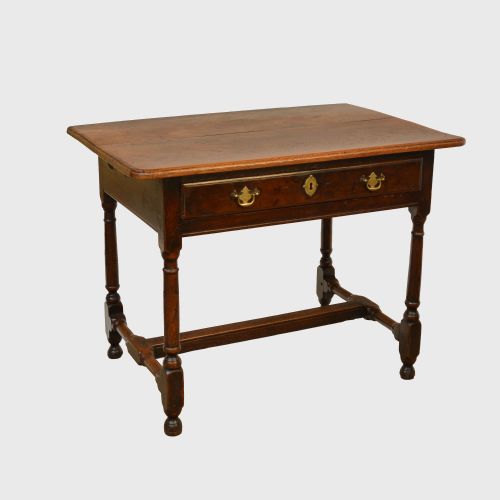
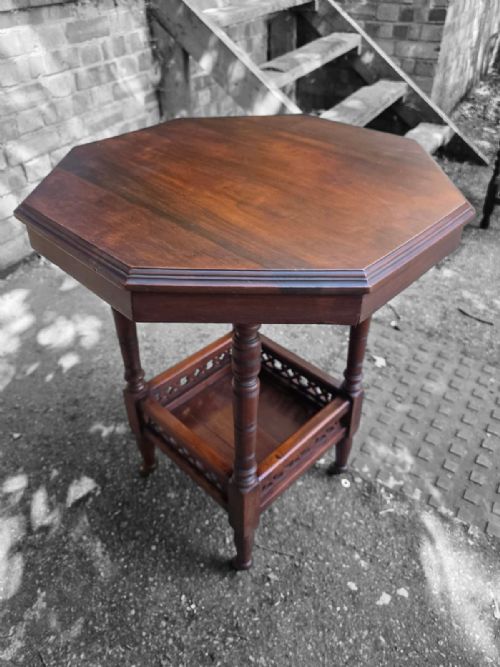
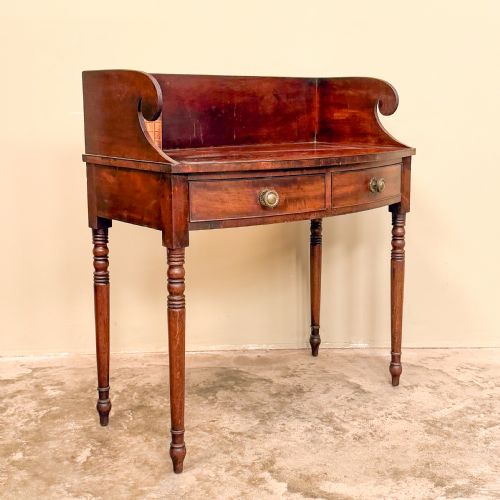
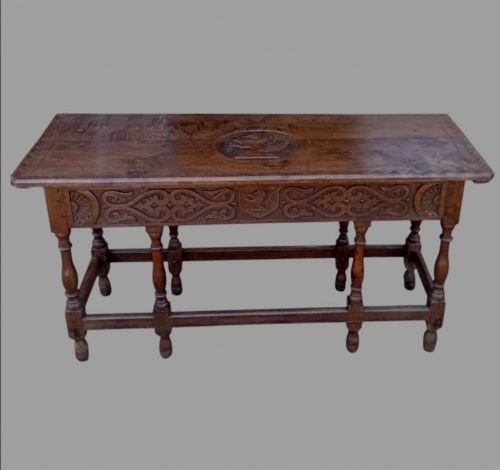
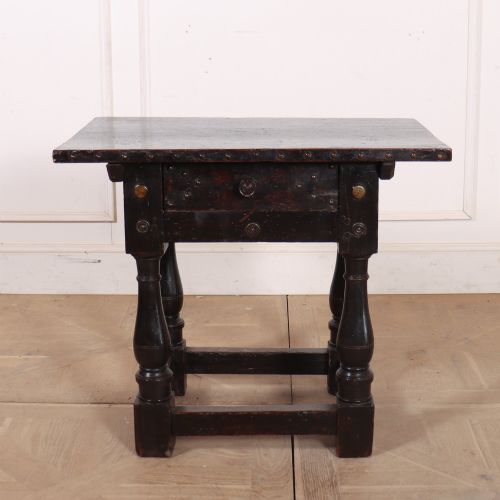
Turned Wood Hall Table
A turned wood hall table brings structural rhythm to an entrance, offering practical surface space rooted in centuries of cabinet-making.
Turned Wood Hall Table
A turned wood hall table draws on centuries of domestic furniture design, encompassing forms built for corridors, passages and reception rooms. These pieces often overlap with side tables, console tables and occasional tables recorded across the periods.
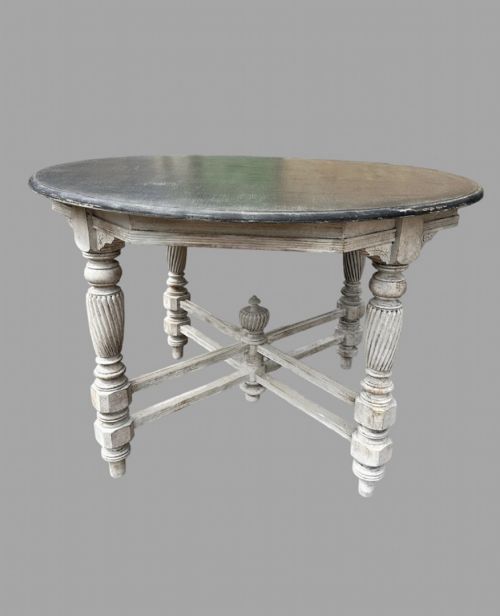
The materials span oak, mahogany, walnut, pine, elm and yew, appearing in forms from the seventeenth century through the Victorian and Edwardian eras. Buyers encounter solid timbers alongside painted finishes, reflecting the functional demands of historic interiors.
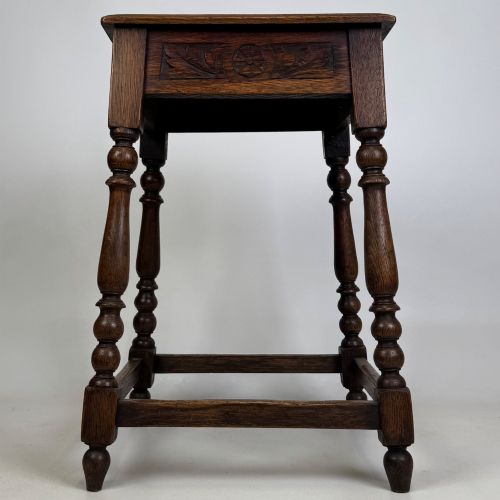
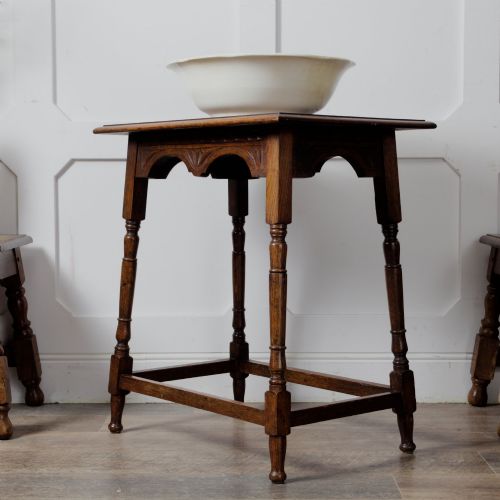
Makers and workshops produced these tables with single drawers or open frames, utilising turned supports such as barley twist and bobbin motifs. The resulting profile provides a steady surface for daily use without dominating narrow spaces.
Materials and construction
Cabinet-makers relied on native and imported hardwoods, pairing oak, walnut and mahogany with secondary woods like pine and elm for internal framing and drawer construction. Timber selection governed both the structural integrity of the legs and the visual character of the top.
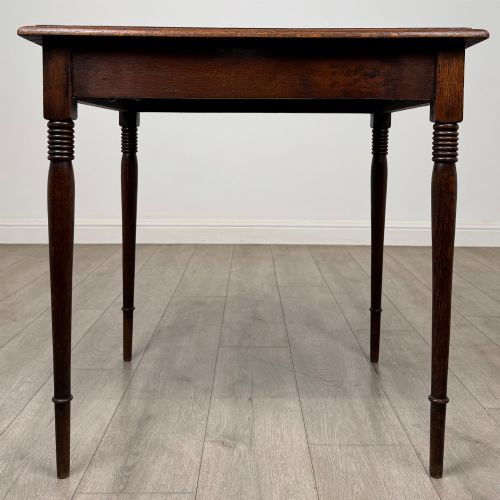
Turning techniques defined the legs and stretchers, utilising lathes to shape cylindrical, bobbin or spiral profiles that added rigidity and decorative detail. Joinery relied on traditional mortise and tenon methods to secure the frame under regular weight.
Early turners spent hours carving barley twists by hand before sandpaper existed, relying purely on sharp chisels and steady nerves.
Assessing quality and proportion
Quality rests in the crispness of the turning and the selection of timber, where tightly figured grain and substantial stock mark superior examples. Lesser pieces display simpler assemblies, thinner timber sections and minimal attention to the junction of legs and rails.
Proportion dictates utility in a hallway setting, with finer tables maintaining balanced clearances between drawers and floor frames. Original hardware, sound timber movement and uncompromised structural joints separate standard utility items from distinguished survivals.
Gillows·J A Mein Edinburgh Cabinet Maker·Druce and Co·Liberty of London·William Birch
The Turned Wood Hall Table Glossary
- Bobbin-turned
- A style of furniture leg or stretcher shaped on a lathe to resemble a string of rounded wooden beads. This method appeared frequently on seventeenth-century pieces.
- Barley twist
- A spiral carving or turning on table legs resembling a twisted rope. It gained popularity during the seventeenth century and returned in later revival periods.
- Potboard
- A lower shelf fitted between the legs of a table or dresser, historically used for storing ceramic vessels. It provides additional bracing to the frame.
- Washstand
- A domestic table designed to hold basins and jugs, frequently adapted today for hallway use due to its narrow proportions and useful surface.
- Console table
- A wall-mounted or freestanding table designed to stand against a hallway or parlour wall, often featuring decorative front legs.
Turned Wood Hall Table: Frequently Asked Questions
What is a turned wood hall table?
A turned wood hall table is a narrow functional surface supported by legs shaped on a lathe. These pieces provide a practical landing space in entryways while displaying traditional cabinet-making.
They draw on historic forms from the seventeenth century onwards, utilising timbers like oak, mahogany and walnut to suit domestic corridors.
How were these tables used historically?
Historically, side and hall tables served as functional surfaces for holding lighting, letters and everyday items near household entrances. Some variants, such as washstands and writing tables, performed dual duties in bedrooms and reception rooms.
Their narrow footprints allowed them to sit flush against corridor walls without obstructing movement through the house.
How do I identify the period of a table?
Dating relies on examining the timber species, construction methods, tool marks and turning styles visible on the frame. Seventeenth-century examples often feature heavy oak frames with bobbin or spiral turnings, whilst Georgian and Victorian pieces utilise mahogany or walnut with different leg proportions.
Secondary woods inside drawers and the presence of hand-cut joints offer further clues to the era of manufacture.
How do I style a hall table?
Styling a hall table involves balancing practical needs with the proportions of the hallway and the character of the wood. A slim lamp or a small ceramic dish for keys utilises the surface without cluttering the space.
Pairing the table with a mirror or hanging artwork above it creates a balanced focal point at the entrance of a home.