


Rustic Fruitwood Side Table
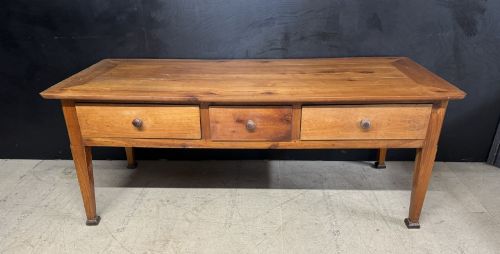
A rustic fruitwood side table offers a warm, honest surface with the honest grain and tactile depth that define period country furniture.
Rustic Fruitwood Side Table
When you search for a rustic fruitwood side table, you are looking at domestic utility tables shaped by regional European cabinetmakers. These pieces bring domestic warmth through timber chosen for its character rather than formal display.
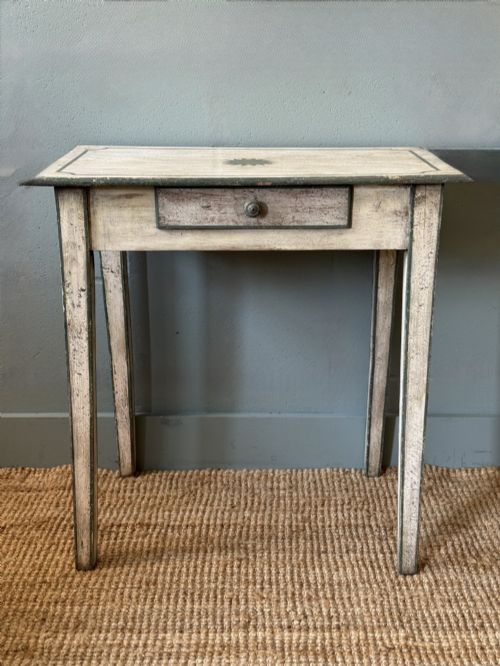
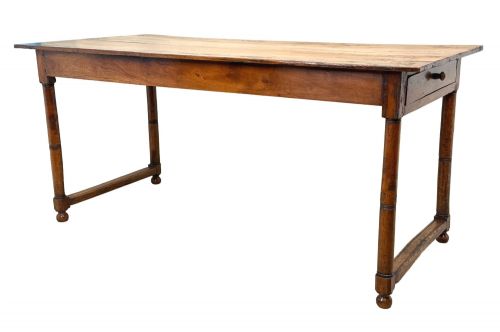
You are most likely to meet French provincial examples alongside English Georgian pieces and Spanish country furniture. Their forms range from compact lamp tables to small farmhouse tables and servers with drawers.
The periods represented span the eighteenth and nineteenth centuries, capturing generations of daily use in provincial kitchens and parlours. Elm, cherry and mixed fruitwoods predominate, often showing the mellow patination of decades.
These tables served practical domestic roles before finding a place in modern sitting rooms as bedside stands, lamp tables or low occasional surfaces. Their modest proportions make them versatile additions to contemporary interiors.
How they were made
Makers utilised solid timbers such as elm, cherry, walnut and mixed fruitwoods, selected for local availability and hard-wearing qualities. These woods were joined using traditional pegged mortise and tenon construction designed for daily hard work.
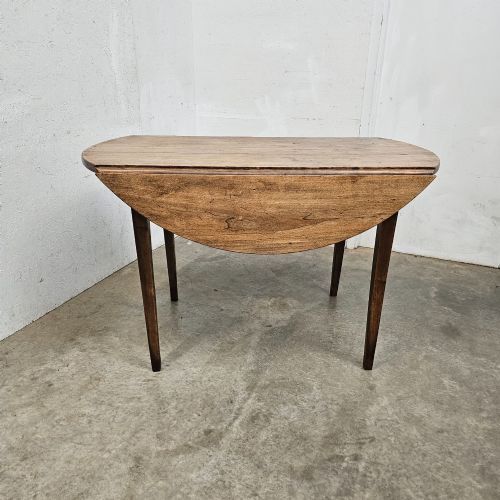
Turned legs, drop-leaf mechanisms and simple drawers were incorporated by regional joiners using hand planes, saws and drawknives. Surfaces were finished simply, allowing the natural grain and warmth of the fruitwood to emerge without heavy varnish.
What varies in quality
The distinction between a standard utility piece and a superior example lies in the proportion of the timber and the integrity of the original construction. Better tables display thoughtful selection of fruitwood grain and well-balanced turned legs.
Proportion and scale dictate the appeal of country furniture, with smaller proportions commanding greater attention from interior decorators. Original brass drawer pulls and untouched surface patination elevate simpler provincial pieces into desirable collectors' items.
The Rustic Fruitwood Side Table Glossary
- Fruitwood
- Timber derived from fruit-bearing trees such as cherry, pear or apple. It is prized by country cabinetmakers for its dense grain and warm, honeyed tone that deepens with age.
- Patina
- The surface sheen and colour acquired by wood over decades through handling, polishing and exposure to light. It serves as a visual indicator of age and authenticity.
- Drop-Leaf
- A table design featuring a fixed central section with hinged flaps that fold down. This mechanism allowed tables to be tucked away when floor space was needed.
- Mortise and Tenon
- A traditional woodworking joint where a projecting tongue fits snugly into a matching cavity. This method provides robust structural integrity without relying on metal fasteners.
Rustic Fruitwood Side Table: Frequently Asked Questions
How old are these tables?
The pieces listed span the eighteenth and nineteenth centuries, encompassing the Georgian era and Victorian period. Regional workshops in France, England and Spain produced them for everyday domestic service.
Their age is visible in the hand-planed boards, pegged joints and deep surface patination.
Where should I place one?
These tables suit sitting rooms as lamp or side tables, or bedrooms as compact nightstands. Their modest scale allows them to fit into alcoves and narrow hallways.
Keep them away from direct heat sources and strong sunlight to protect the aged fruitwood timber.
How do I care for fruitwood?
Maintain the surface with a gentle application of beeswax rather than modern silicon sprays. This preserves the natural breathability and depth of the timber.
Handle the drawers and drop-leaf mechanisms carefully to respect the historical joinery.