
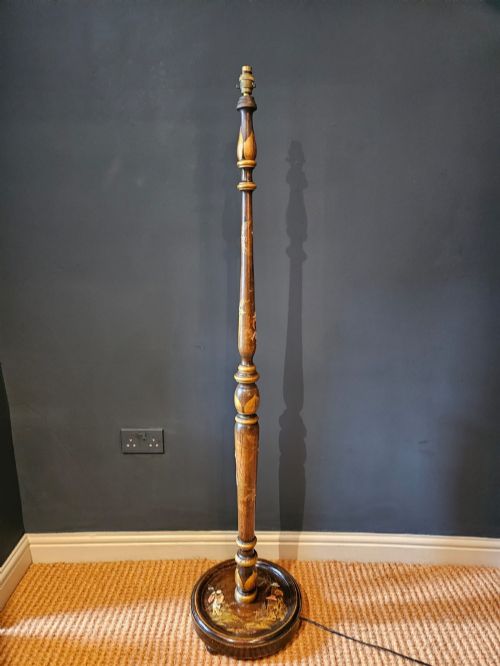
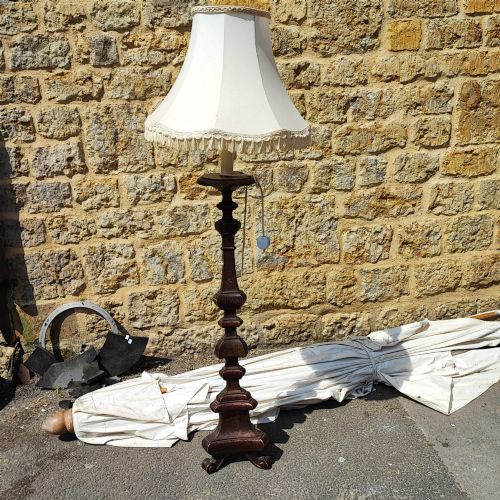
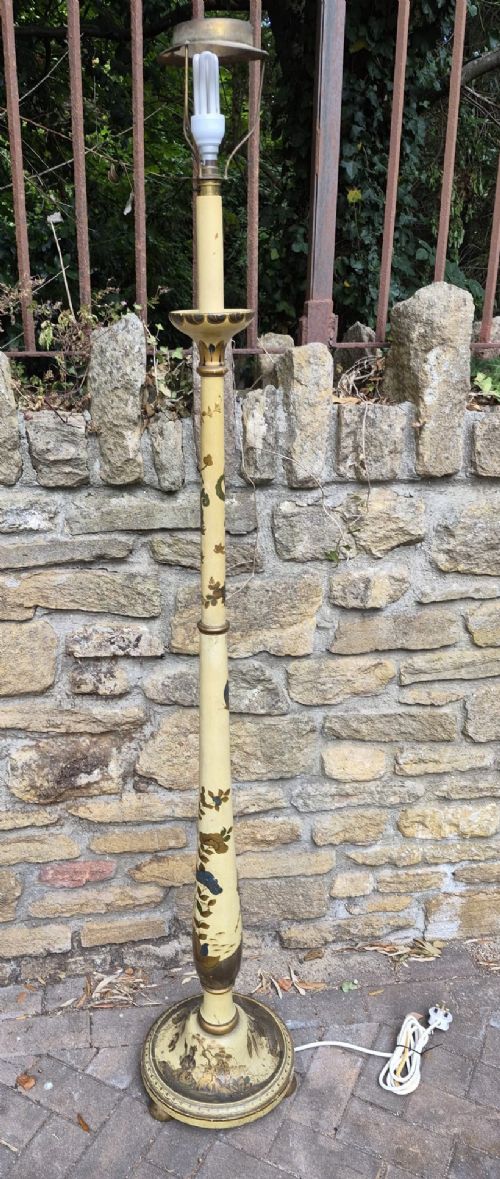


Turned Wood Floor Light
These turned wood floor light pieces provide commanding vertical presence and warm illumination, combining practical lighting with traditional craftsmanship.
Turned Wood Floor Light
When you search for a turned wood floor light, you encounter tall upright standards designed to illuminate a room from a standing position. These tall fixtures appear primarily as floor lamps, standard lamps, and torchere forms originating from periods spanning the nineteenth and twentieth centuries.
The materials and styles visible in these pieces range from early twentieth century mahogany and Edwardian oak to painted wood, carved pine, and beech. Many examples incorporate brass components or fabric shades to complete the lighting fixture.
Stylistic influences vary widely across the selection, encompassing English Country, Traditional, Regency Revival, Chinoiserie, and Edwardian designs. These variations show how makers adapted the turned wood standard to suit changing domestic interiors over the decades.
Materials and construction methods
Makers shaped the upright shafts of these lamps using wood-turning techniques on a lathe, producing balanced profiles in oak, mahogany, beech, pine, and carved pinewood. Some pieces feature painted or parcel gilt surfaces, while others display the natural grain of the timber.
Brass fittings and hardware frequently accompany the wooden standards, particularly in examples paired with glass shades or fabric elements. Carved details and applied Chinoiserie decoration add surface texture to selected columns and bases.
Recorded styles span Edwardian, Chinoiserie, Regency Revival, and traditional English country aesthetics.
Distinctions in standard and execution
Quality in these floor lights rests upon the stability of the turned column and the weight distribution of the base. Solid timbers and precise lathe work provide better balance than lighter, less substantial constructions.
The refinement of carved details and the execution of decorative finishes, such as painted Chinoiserie motifs or parcel gilding, separate standard production pieces from more ambitious workshop examples.
The Turned Wood Floor Light Glossary
- Torchere
- A tall stand or floor-standing pillar originally designed to carry a candle or torch. In later periods, these tall stands were adapted to hold electric lamp fittings.
- Standard lamp
- A British term for a floor lamp featuring a tall vertical post supported by a heavy base. This term appears frequently in historical listings for these pieces.
- Chinoiserie
- European imitation and interpretation of Chinese artistic traditions and motifs. This style appears on several painted and decorated lamp standards.
- Parcel gilt
- Partially gilded or covered with gold leaf on specific carved details. This technique highlights particular areas of the wooden surface.
- Regency Revival
- A stylistic movement looking back to the early nineteenth century Regency period for design inspiration. Pieces in this style often feature classical proportions and dark mahogany timbers.
Turned Wood Floor Light: Frequently Asked Questions
What is a standard lamp?
A standard lamp is a tall floor-standing lighting fixture designed to illuminate a room from standing height. These pieces use a weighted base to support a vertical turned wooden post.
They serve the same function as modern floor lamps, providing ambient or reading light without requiring table space.
How do I date a turned wood floor light?
Dating relies on examining the timber species, the turning profile, and any decorative surface treatments like paint or gilding. Edwardian and early twentieth-century pieces often show specific revival styles.
Hardware elements such as brass switches and original lamp holders also offer clues to the manufacturing decade.
Where should I place a floor lamp?
These tall fixtures suit corners, beside armchairs, or near seating groups where they provide layered illumination at a higher level than table lamps. Their vertical form makes them ideal for filling empty wall space.
Ensure the placement allows easy access to the cord and switch while keeping the heavy base stable.
Are these lamps electrified originally?
Most surviving examples from the late nineteenth and twentieth centuries were adapted for electricity or wired during their working lives. Earlier precursors, such as rushlight candlesticks, relied on entirely different illumination methods.
Buyers should inspect the wiring and consult an electrician to ensure safety compliance with modern standards.