




Turned Spindle Display Shelf
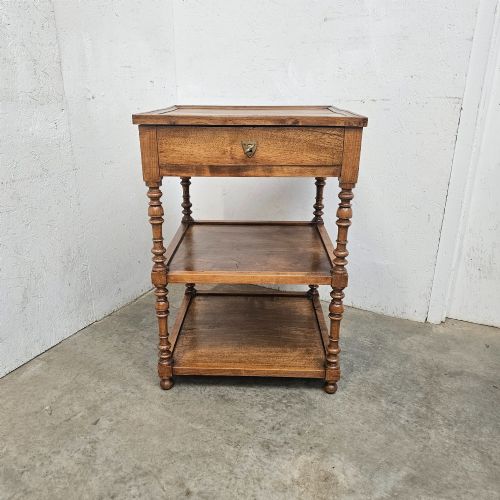
A turned spindle display shelf provides tiered display space using slender turned uprights, offering both utility and decorative charm for any interior.
Turned Spindle Display Shelf
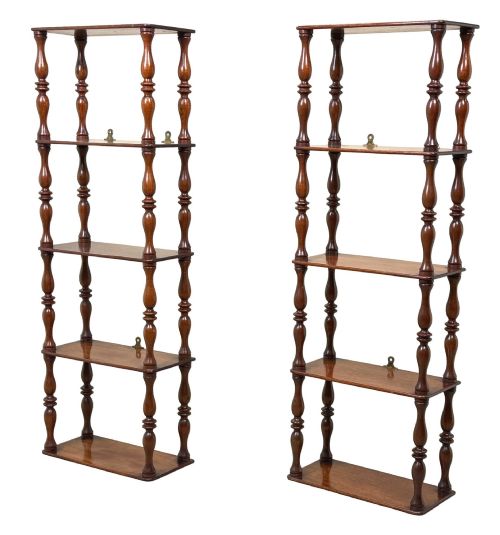
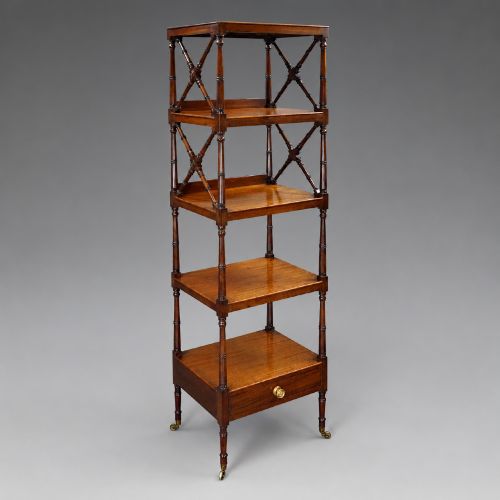
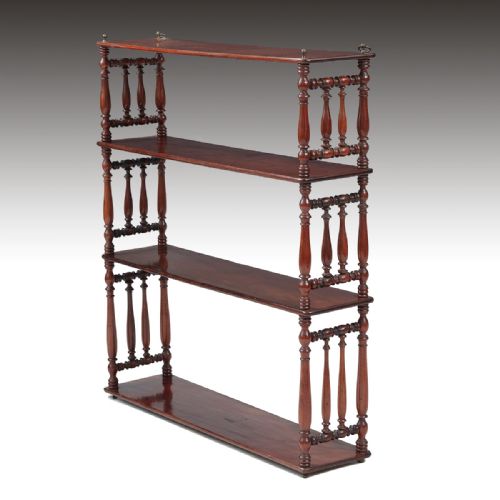
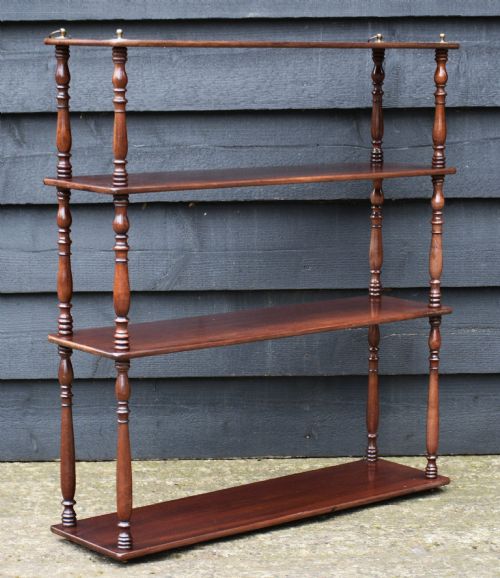
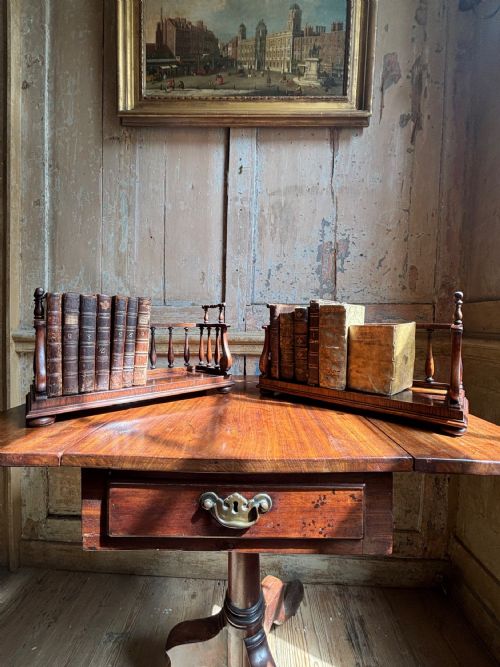
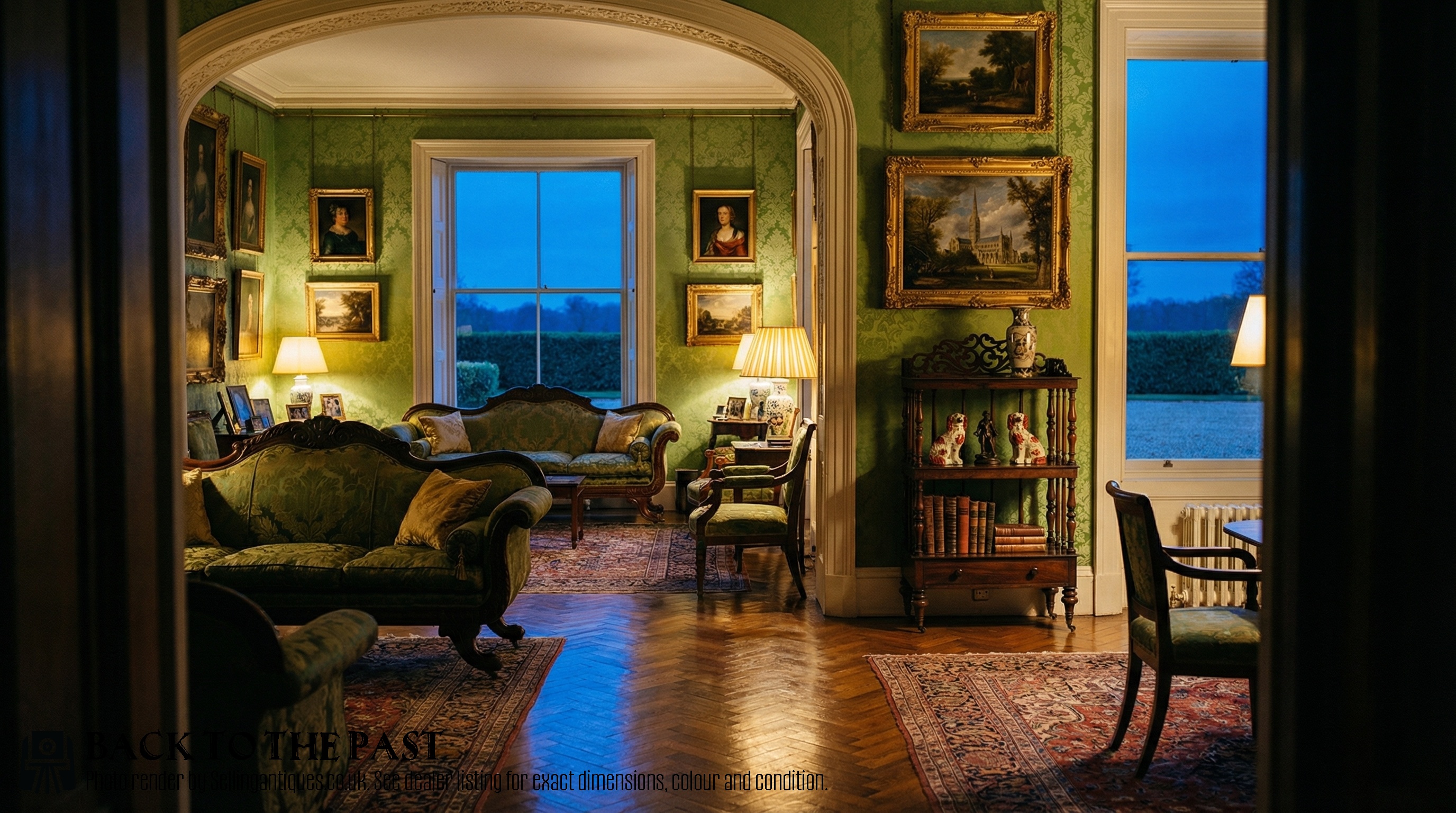
A turned spindle display shelf brings together multitiered storage and vertical display space for books, ornaments, and small objects. When you search for turned spindle display shelf, you encounter pieces designed to mount directly onto a wall or stand freely upon the floor as whatnots and etageres. These pieces appear across several periods, including the Georgian, Regency, William IV, and Victorian eras.
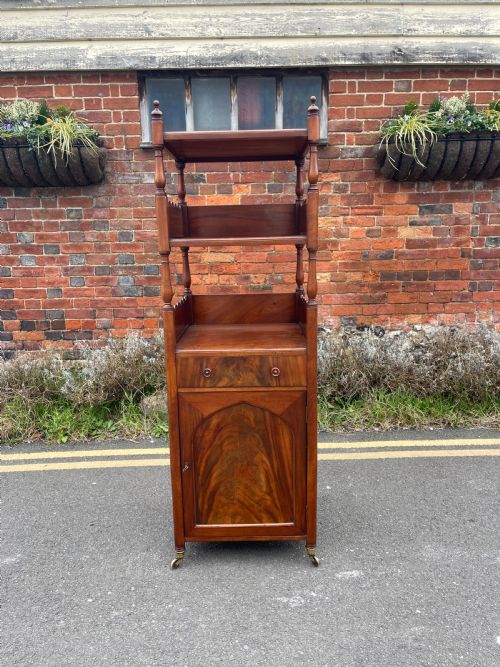
The configurations range from compact wall-hanging shelves to large multitiered floor-standing whatnots and etageres, occasionally incorporating cupboard bases or cellarettes. Materials span mahogany, walnut, rosewood, cherry wood, satin birch, and ebonised wood, sometimes accented with brass details. The styling embraces English Country House tastes alongside French Provincial and French Chateau influences.
Floor-standing variants often feature multiple tiers supported by turned columns, whilst hanging versions utilise sturdy brackets or suspension loops. The proportion of each tier dictates whether the piece suits narrow corridors or expansive reception rooms. Examining the structural arrangement reveals how makers balanced decorative spindle work with the practical demands of holding heavy books or decorative porcelain.
How they were made
Makers utilised dense cabinet timbers such as mahogany, walnut, and rosewood, alongside lighter woods like satin birch and cherry wood. These hardwoods were selected for their grain and stability, allowing slender spindles and uprights to support heavy loads without bowing. Timber preparation involved careful seasoning to prevent warping across the tiers.
Turning lathes shaped the upright spindles and columns, ensuring uniform profiles that define the visual rhythm of each shelf. Joinery methods relied on traditional dowels, mortise and tenon joints, and secure screw fixings to anchor the tiers firmly to the vertical supports. Brass hardware, where present, was integrated to reinforce joints or provide decorative foot caps.
Some Victorian whatnots arrived with built-in cellarettes, proving that ancestors appreciated storing their wine right next to their poetry collections.
What varies in quality
The refinement of the turning work on the spindles and columns separates standard items from superior examples. Crisp, deeply carved profiles and well-balanced proportions indicate skilled craftsmanship, whereas flat or hastily finished turnings suggest simpler production.
Timber selection dictates the overall presence of the piece, with richly figured mahogany, burr walnut, or carefully matched rosewood marking out the better productions. The structural integrity of the tier joints and the precision of the shelf alignment further distinguish higher grades of cabinetmaking.
The Turned Spindle Display Shelf Glossary
- Whatnot
- A multitiered piece of furniture designed for displaying ornaments, books, or small objects. These pieces became popular in the Georgian and Victorian periods as domestic spaces required dedicated display surfaces.
- Etagere
- A piece of furniture consisting of a series of open shelves for displaying small articles. The French influenced these designs, bringing lighter proportions into English Country House interiors.
- Spindle
- A slender, turned piece of wood forming part of the upright support or gallery rail. Turned on a lathe, these elements provide decorative rhythm and structural division between shelves.
- Cellarette
- A lockable compartment or fitted box incorporated into the base of certain floor-standing units. Originally designed to hold wine bottles safely, it adds weight and enclosed storage to an open display structure.
Turned Spindle Display Shelf: Frequently Asked Questions
What is a whatnot?
A whatnot is a multitiered piece of furniture designed specifically to hold and display ornaments, books, and small decorative objects. These items evolved during the eighteenth century and became essential household fixtures through the Victorian era.
They appear in various formats, ranging from wall-hanging versions with delicate brackets to large floor-standing units featuring three or four tiers. Their open construction allows light to pass through while providing ample surface area for collections.
Where should I hang a wall shelf?
Wall-hanging shelves suit locations where floor space is limited, such as narrow hallways, above sideboards, or beside fireplaces. Their lightweight construction requires secure fixing directly into wall studs or solid masonry to support the weight of the timber and displayed objects.
Positioning them at eye level ensures the turned spindles and decorative details can be appreciated properly. Balance the visual weight of the shelf by pairing it with surrounding pictures or mirrors.
How do I date a Victorian whatnot?
Dating a Victorian whatnot involves examining the timber species, joinery methods, and overall decorative styling. Mahogany and walnut dominate this period, often accompanied by heavy turned uprights and serpentine fronts.
Comparative analysis with documented examples from the mid-nineteenth century helps narrow down the decade of production. Secondary woods used at the back or underneath provide further clues regarding the era of manufacture.