


Turned Leg Upholstered Stool
A turned leg upholstered stool brings solid timber framing and soft seating together in compact forms spanning multiple centuries.
Turned Leg Upholstered Stool
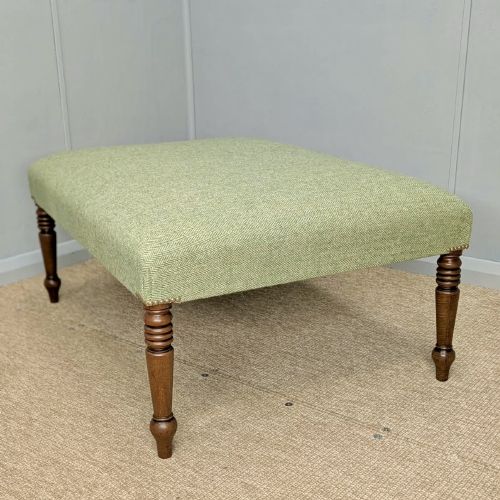
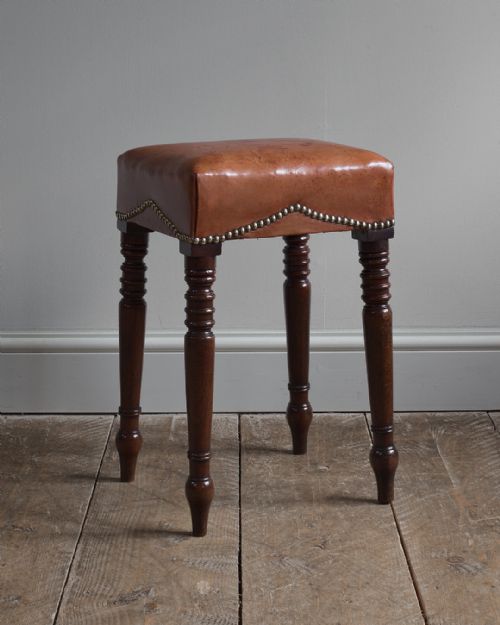
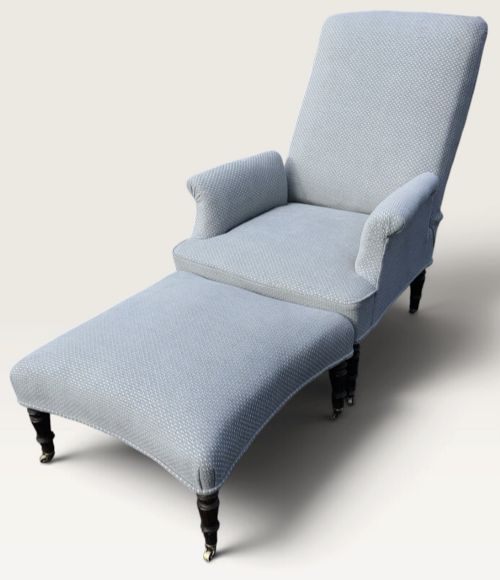
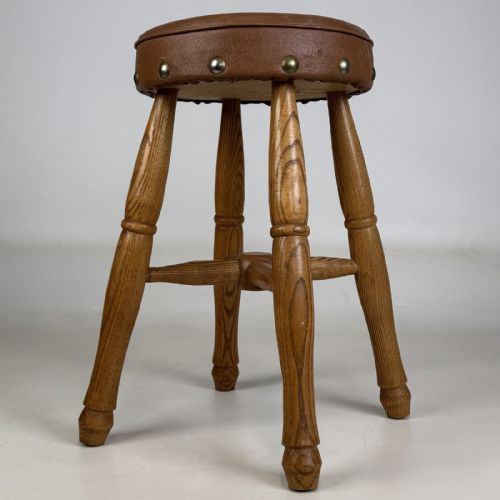
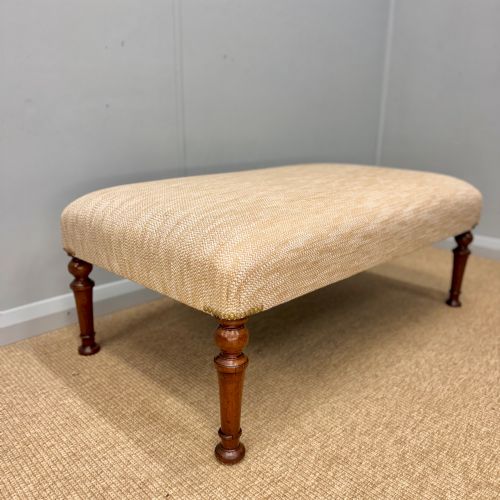
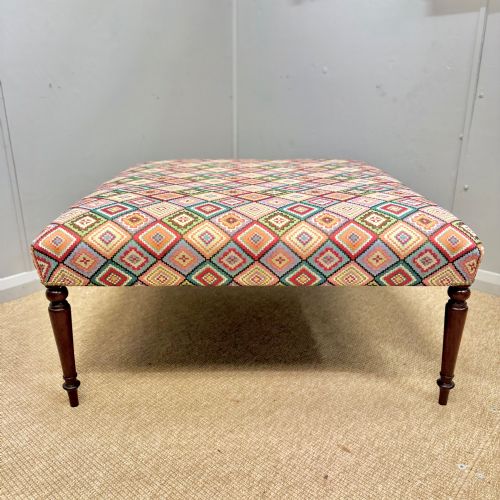
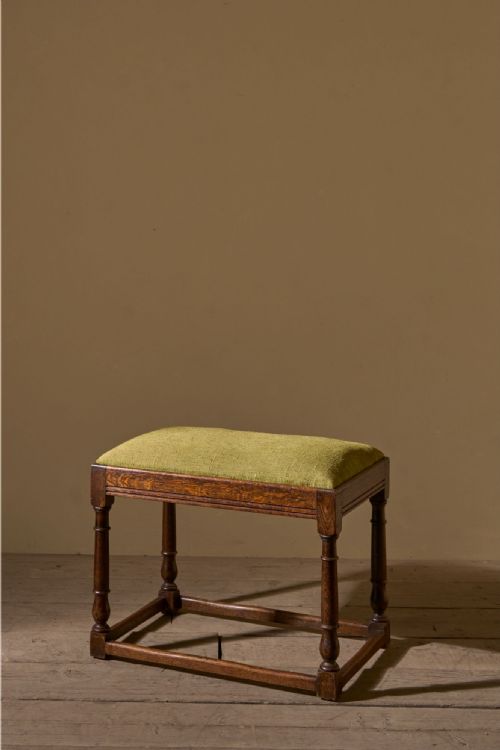
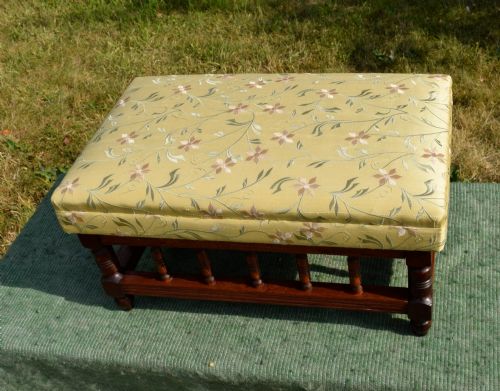
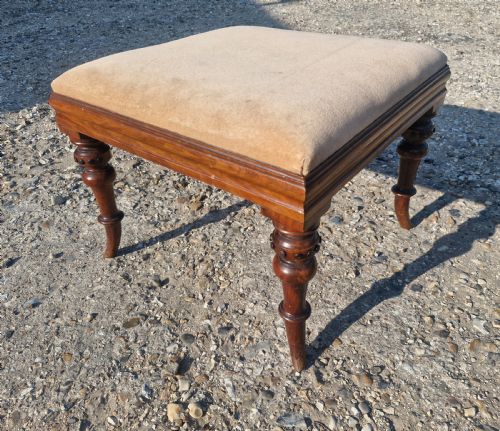
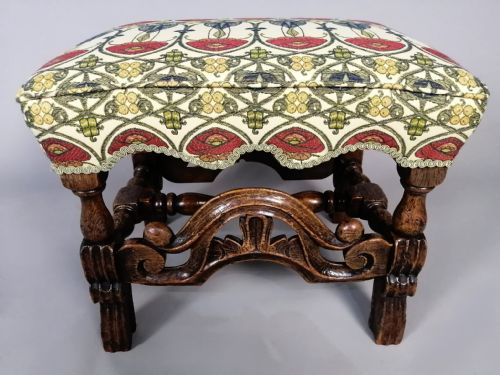
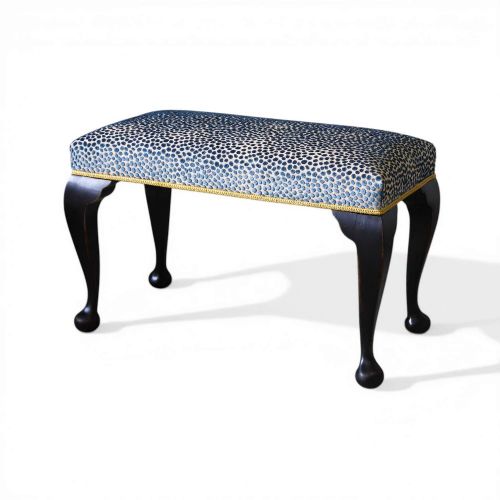
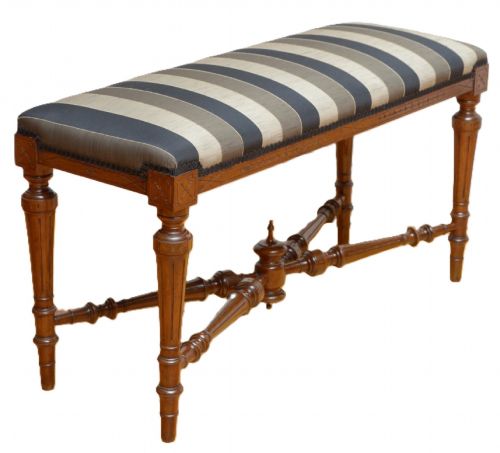
A turned leg upholstered stool appears across nineteenth century, Victorian, and Edwardian periods in forms ranging from small footstools to large window seats and piano stools. The pieces combine sturdy wooden frames with textile, leather, linen, or kilim coverings to serve functional seating needs in domestic rooms.
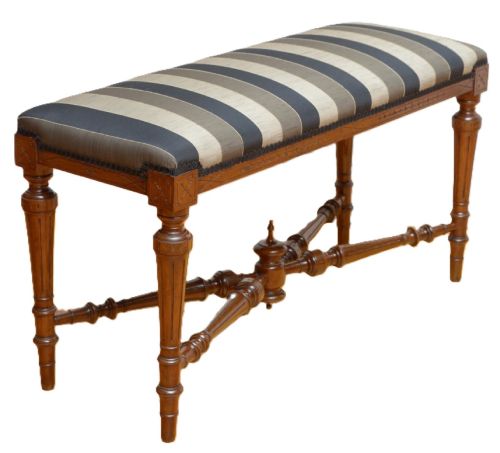
Buyers encounter rectangular footstools, square ottomans, duet benches, and adjustable piano stools sharing characteristic turned wooden supports. These items originate from English, French, and Swedish workshops utilising traditional cabinet-making methods.
Construction and materials
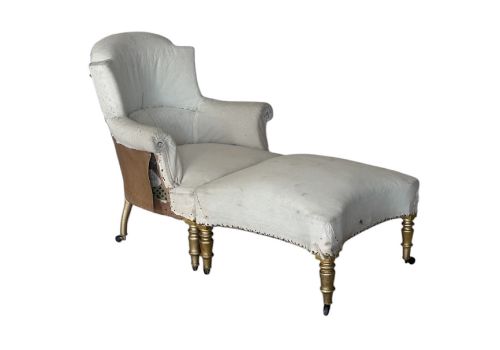
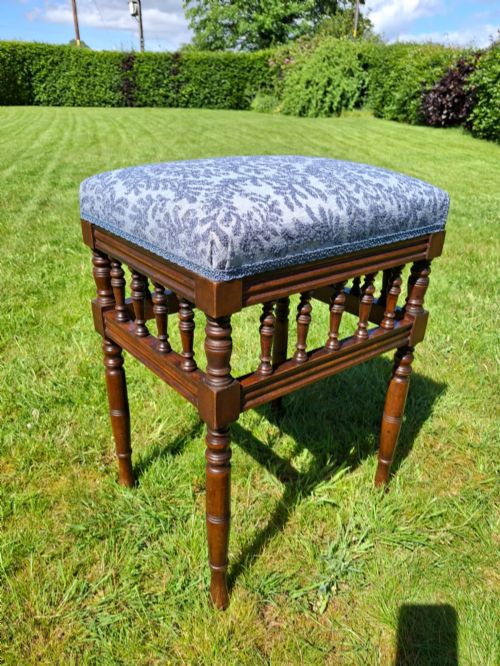
Carpenters constructed the underlying frames using hardwoods including mahogany, oak, walnut, rosewood, and yew, shaped on lathes to produce characteristic turned or bobbin legs. Brass castors occasionally appear on larger examples to aid movement across flooring.
Upholsterers layered webbing, stuffing, and textile coverings - ranging from heavy green linen and herringbone fabric to patterned tapestry and buttoned leather - secured directly to the timber seat rails.
Turned Leg Upholstered Stool Retail Price Guide 2026
Typical asking prices for turned leg upholstered stool among the pieces listed under this phrase on Sellingantiques today, from the lower quarter to the upper quarter. They describe what is for sale here now, not the wider market.
The listings span mahogany, oak, walnut, rosewood, and yew wood alongside fabric, leather, linen, and brass components.
Distinctions in quality
Quality rests upon the selection of timber and the precision of the lathe work shaping the legs, where denser hardwoods like rosewood, mahogany, and walnut provide superior structural integrity. Heavier framing timbers and substantial brass castors indicate sturdier construction.
The standard of upholstery materials, from simple linen to specialised designer textiles and traditional leather buttoning, determines the refinement of the finished seat.
Liberty and Co·James Shoolbred
The Turned Leg Upholstered Stool Glossary
- Turned leg
- A wooden support shaped on a lathe to create cylindrical, decorative profiles. This technique defines the structural appearance of the legs on these stools.
- Kilim
- A flat-woven textile used as a durable covering material. Pieces recovered in kilim display distinctive geometric patterns.
- Joint stool
- A traditional wooden stool constructed with mortise and tenon joints rather than turned components. These early forms represent older vernacular woodworking traditions.
- Duet stool
- An extended seating bench designed for two people, often utilised alongside musical instruments or window recesses.
Turned Leg Upholstered Stool: Frequently Asked Questions
What rooms suit a turned leg upholstered stool?
These compact seating items function effectively as footstools beside armchairs or as low seats positioned near dressing tables and windows.
Larger duet benches and long footstools serve living rooms and hallways as flexible auxiliary seating.
How do I identify a Victorian stool?
Victorian examples frequently employ dense mahogany or walnut timbers paired with buttoned leather or heavy fabric upholstery.
Turned supports on pieces from this era often feature robust proportions and occasionally incorporate brass castors.
Were these stools used for pianos?
Specific variants functioned as piano stools, offering adjustable height mechanisms or revolving seats for musicians.
Such pieces combine timber frames with compact upholstered tops suited for prolonged sitting.
What textiles cover antique stools?
Surviving pieces feature diverse coverings including linen, wool tapestry, patterned herringbone fabric, and buttoned leather.
Many listings also indicate modern professional reupholstery using contemporary designer textiles.