

Turned Leg Tripod Table
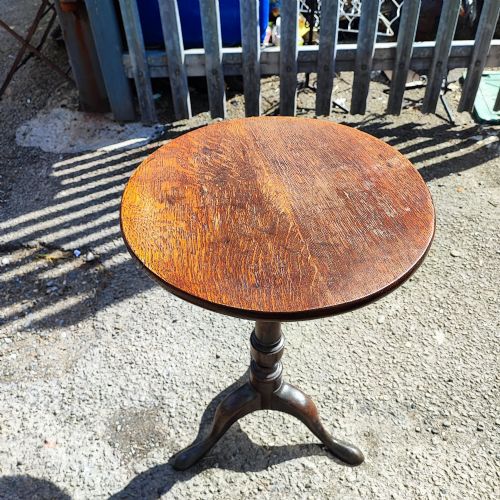
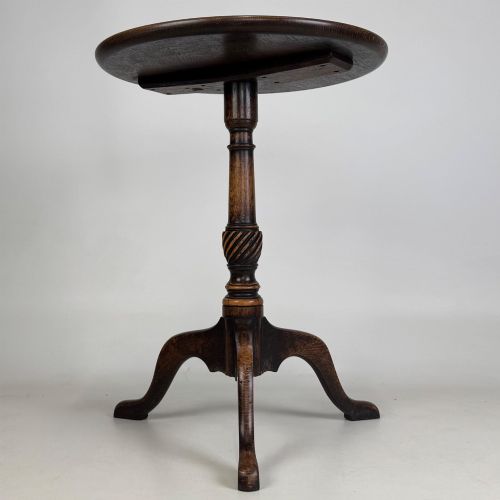
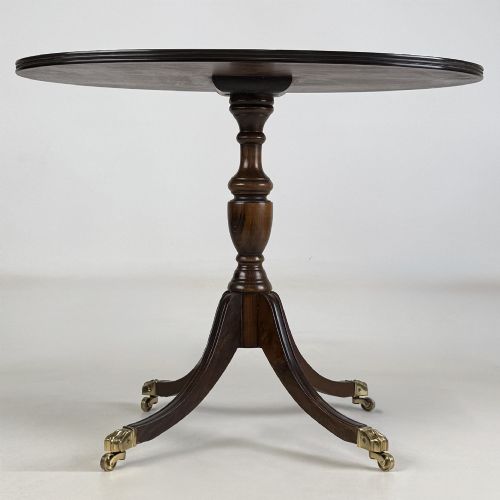
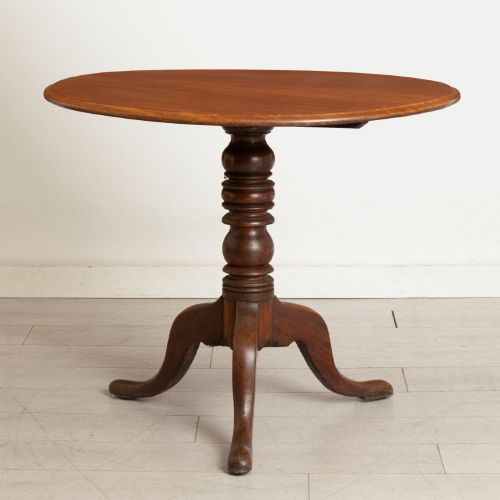
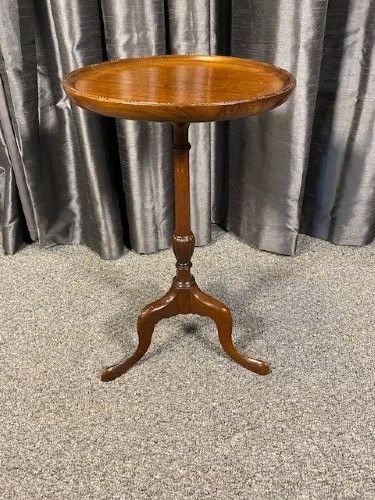
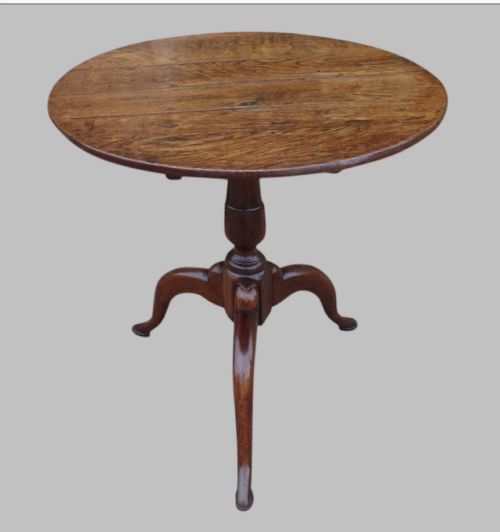
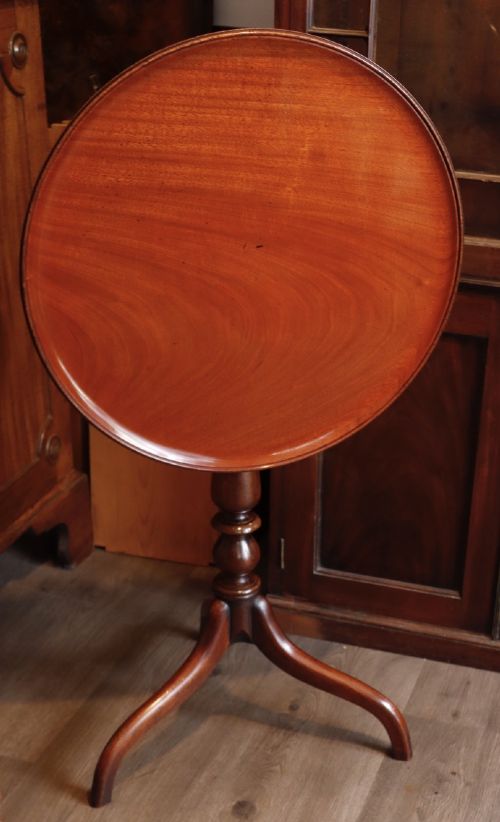
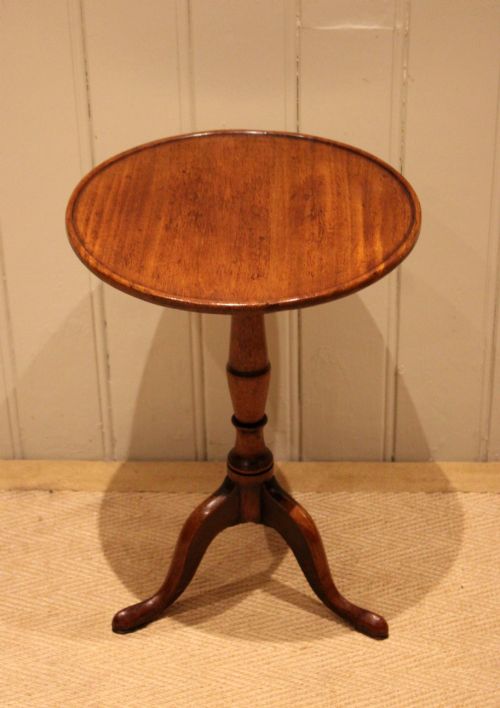
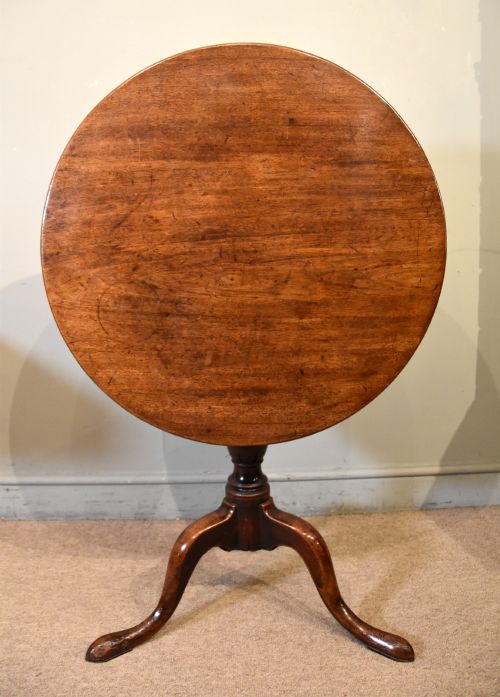
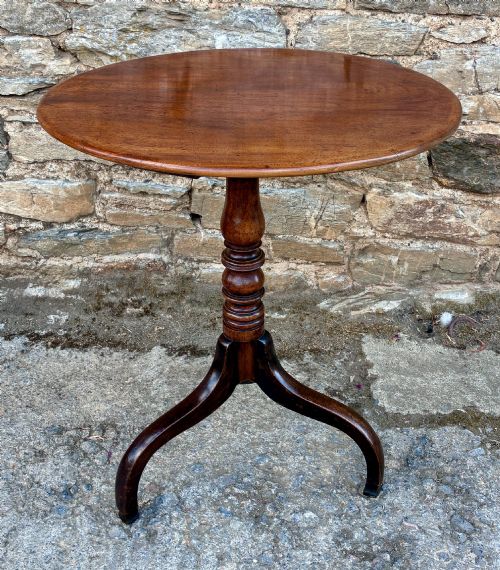
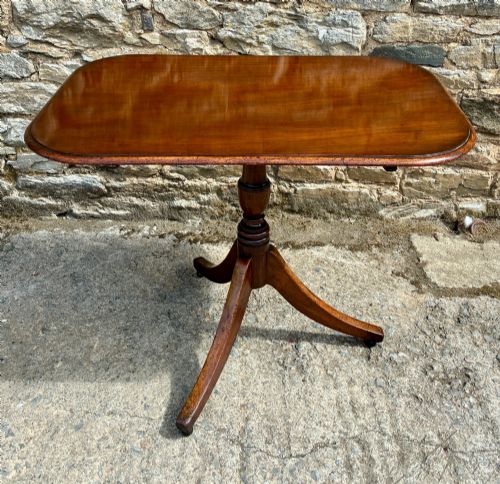
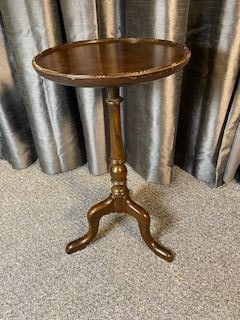
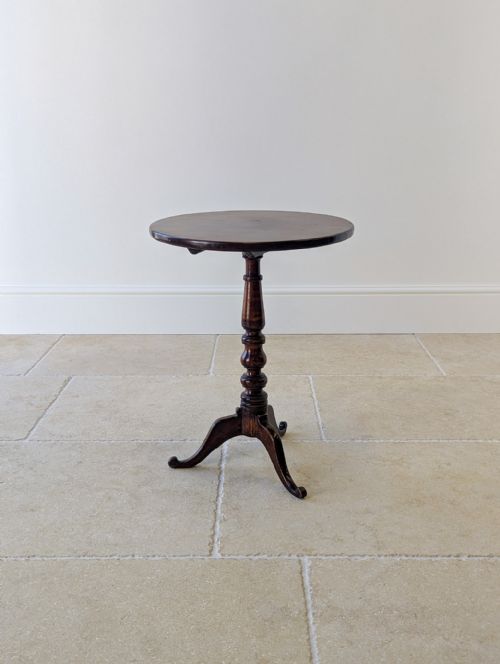
A turned leg tripod table balances a circular or shaped top on a central pedestal supported by three splayed feet, offering a versatile surface for daily use.
Turned Leg Tripod Table
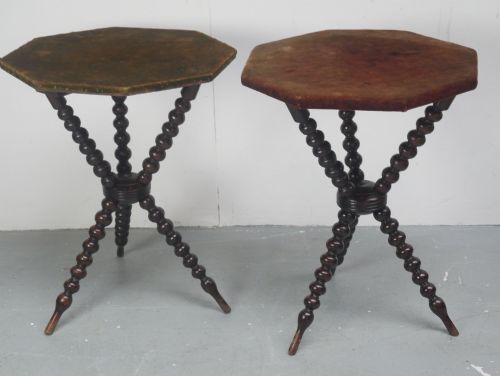
A turned leg tripod table brings together a stable three-legged base and a central column, frequently appearing in forms such as wine tables, side tables, and occasional tables. These pieces span the eighteenth century, the Georgian era, the nineteenth century, and the Victorian period, reflecting centuries of domestic utility.
Materials and construction
Cabinet makers relied principally on timbers like mahogany and oak, alongside variants such as burr oak, pine, padouk, and ebonised wood. These woods provided the structural integrity required for slender turned columns and supporting legs.
Joinery methods combined traditional turning on a lathe for the central pillars and legs with pivoting mechanisms or fixed braces beneath the tops. Iron and brass components occasionally reinforced the joints and feet on specific examples.
Listings feature woods spanning mahogany, oak, pine, and padouk, alongside styles from the Georgian, Victorian, and Aesthetic Movement eras.
Distinctions in quality
Quality rests in the precision of the timber selection and the crispness of the turning on the column and legs. Finer examples display carefully matched wood grain on the top and well-balanced proportions across the pedestal and feet.
The smoothness of the tilt-top mechanism and the stability of the three-legged junction dictate the functional standard of the piece. Superior construction ensures the top rests flat and the legs meet the central column with absolute rigidity.
The Turned Leg Tripod Table Glossary
- Tripod base
- A support structure consisting of three spreading feet attached to a central pillar, providing stability on uneven floors. This arrangement allows the table to stand firmly without rocking.
- Tilt-top
- A hinged tabletop mechanism that allows the surface to pivot into a vertical position when not in use. This feature saved valuable floor space in historical interiors.
- Birdcage
- A wooden box frame beneath the tabletop that allows the surface to both tilt and revolve. It represents a more complex piece of joinery found on select eighteenth-century examples.
- Cricket table
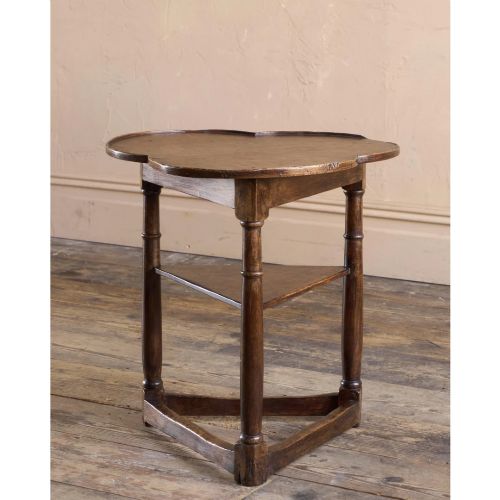
- A small, three-legged occasional table typically constructed from oak or pine with a sturdy circular top. The design derives from early utilitarian household furnishings.
Turned Leg Tripod Table: Frequently Asked Questions
What is a turned leg tripod table used for?
These tables served as movable surfaces for holding drinks, books, or lamps beside seating areas in period homes.
Today, they function easily as bedside tables, plant stands, or compact side surfaces in modern rooms.
How do I identify a Georgian tripod table?
Georgian examples often feature rich mahogany or oak timbers, slender turned pedestals, and classical leg profiles such as pad foot or snake foot designs.
Construction details like hand-cut dovetails and pegged joints further point to eighteenth-century craftsmanship.
What does tilt-top mean on these tables?
A tilt-top incorporates a wooden catch and pivot block beneath the surface, enabling the top to fold flat against the pedestal.
This mechanism allowed owners to tuck the tables away against walls when the room was needed for other activities.
Where should I place a tripod table?
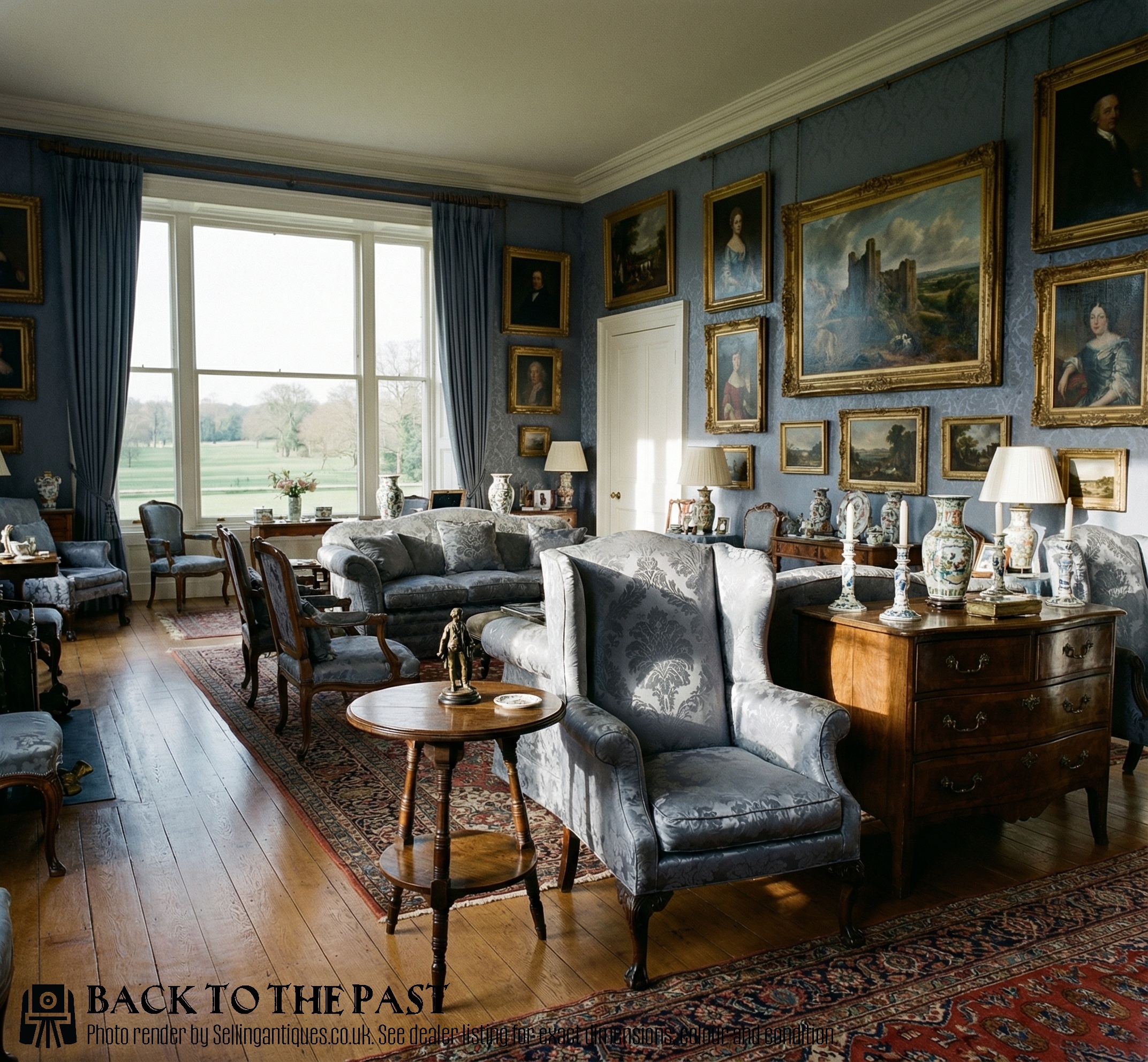
The compact footprint makes them ideal for tight corners, beside armchairs, or between windows where larger furniture will not fit.
Because the three-legged base distributes weight evenly, they sit steadily even on older, uneven floorboards.