
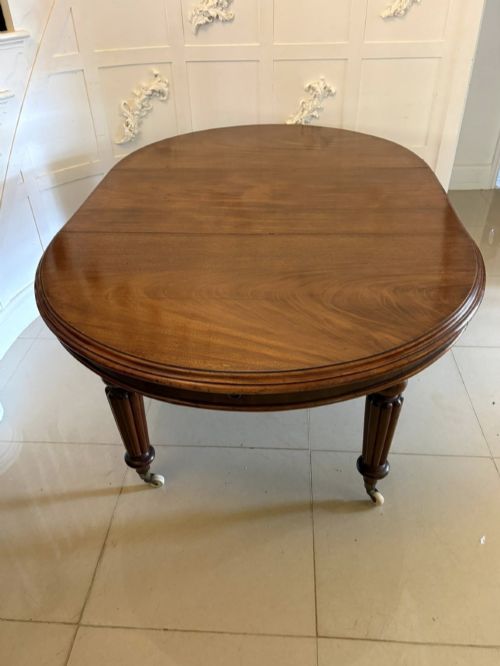
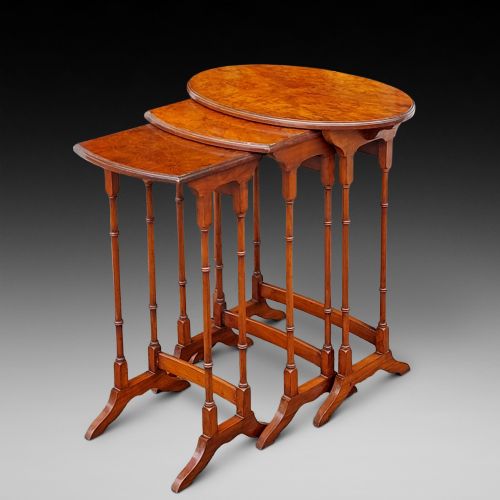
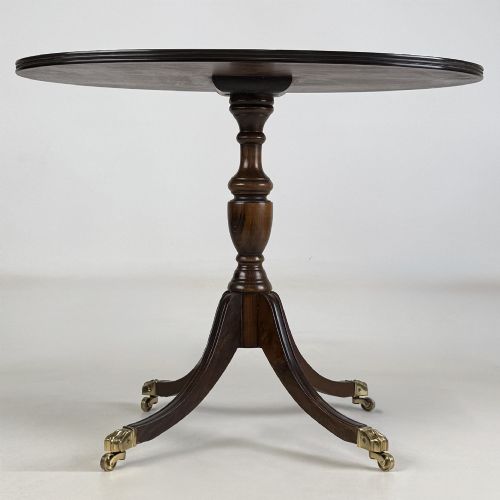
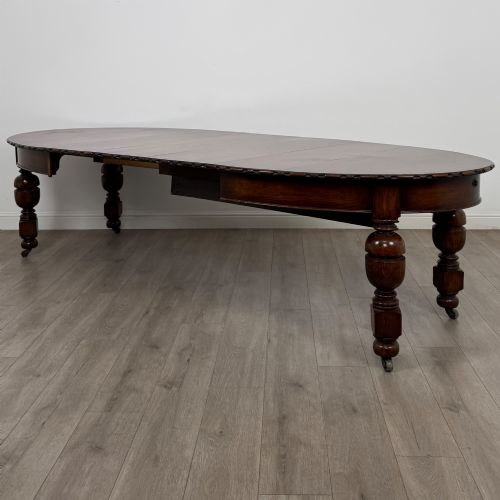
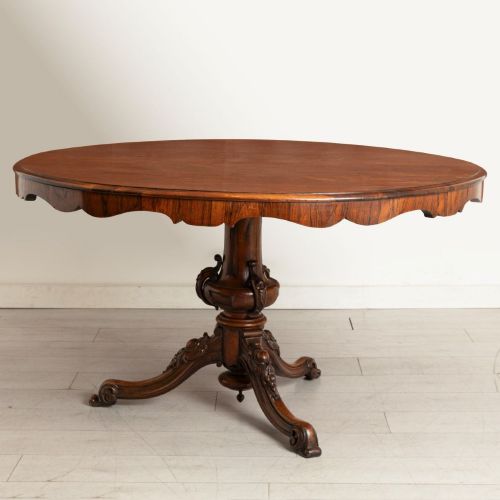
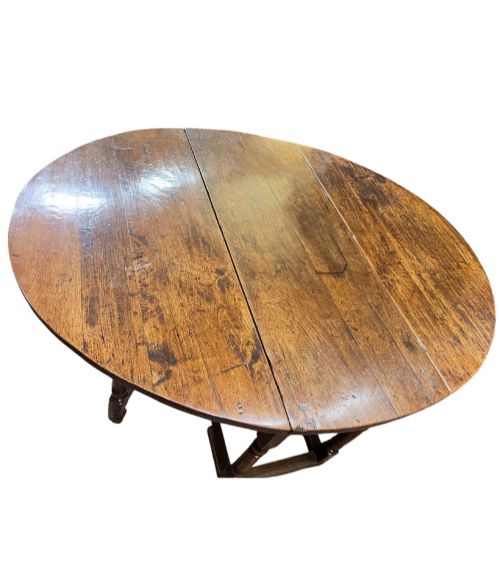
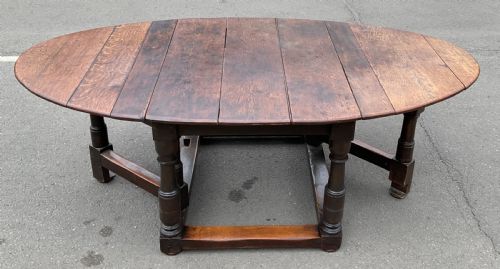
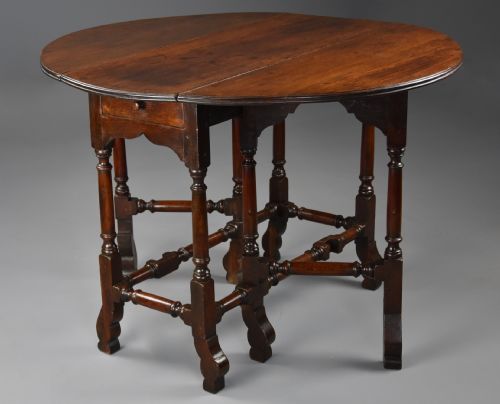
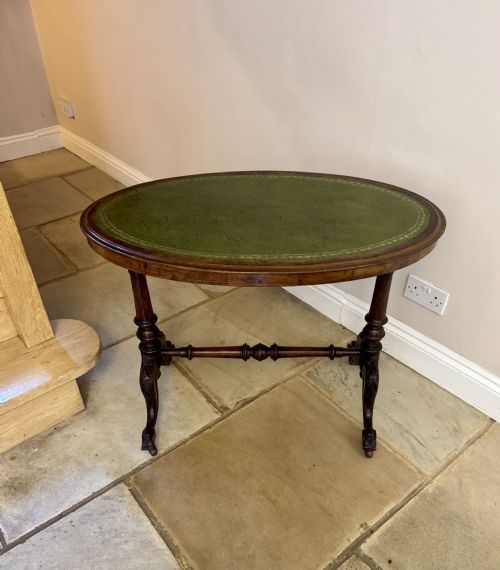
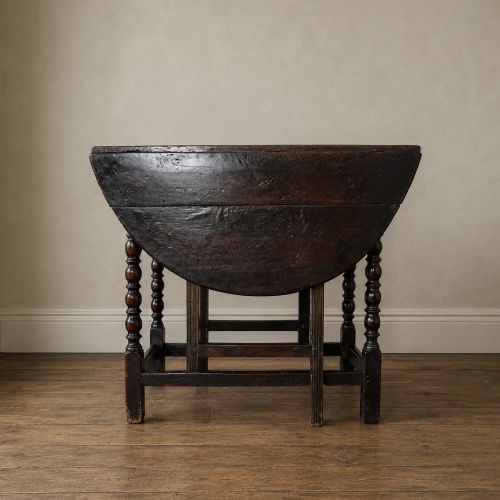
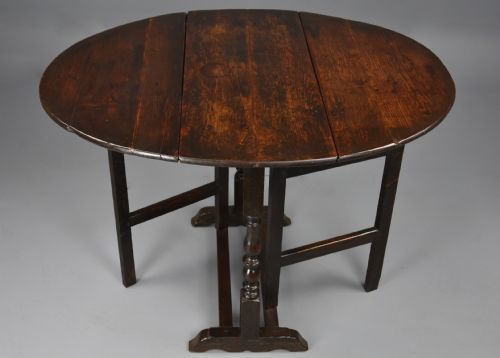
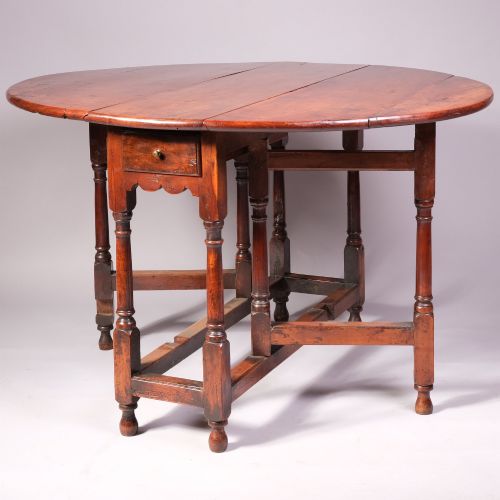
Turned Leg Oval Table
When you search for a turned leg oval table, you are looking at centuries of clever carpentry designed to save space and seat guests.
Turned Leg Oval Table
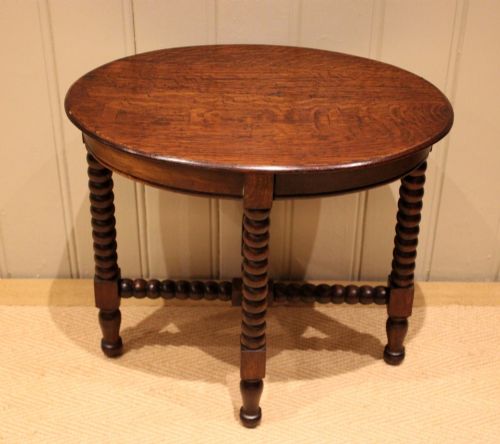
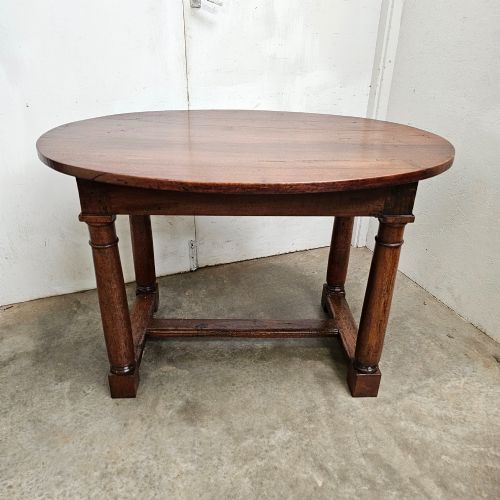
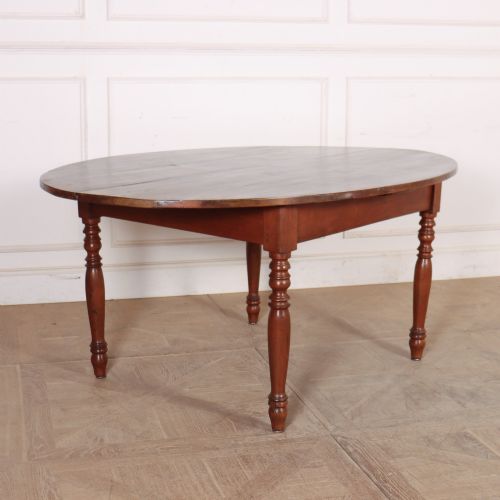
A turned leg oval table brings together centuries of practical furniture design, spanning from compact side pieces to large dining formats.
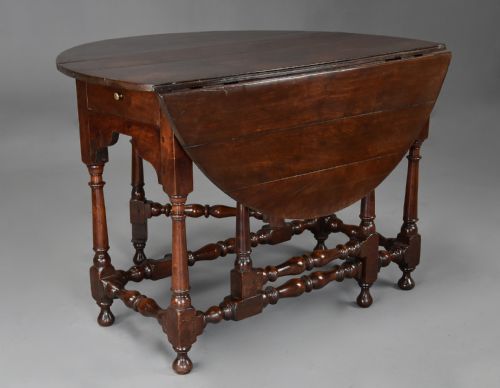
The turned leg oval table frequently appears as a gateleg or drop-leaf design, allowing the sides to fold down when floor space is at a premium.
Examples on this page stretch across periods from the 17th century through the Edwardian era and beyond, utilising forms like occasional, dining, and coffee tables.
How they were made
Cabinet makers built these pieces using timbers like oak, walnut, and mahogany, often pairing solid woods with burr veneers for decorative surfaces.
Turning lathes shaped the supporting legs into bobbin, spiral, or tapered profiles, which were then joined with stretchers to ensure structural rigidity.
Hinges and gate mechanisms allowed leaves to drop or swing outwards, supporting folding flaps with pivoting leg structures.
Some 17th-century tables feature clever gate legs that swing out on wooden pivots, proving that flat-pack space saving was mastered centuries ago.
What varies in quality
The distinction between tiers rests on the choice of timber, the crispness of the leg turning, and the survival of an original surface finish or patina.
Superior examples demonstrate careful timber selection, such as figured walnut or dense oak, alongside robust joinery that keeps drop-leaf mechanisms operating smoothly over centuries.
The Turned Leg Oval Table Glossary
- Gateleg table
- A table with hinged flaps supported by legs that swing outward like a gate to hold the leaves up. This mechanism allows the table to expand significantly from a narrow footprint.
- Patina
- The deep surface sheen and colour developed by timber over long periods through handling, polishing, and ageing. It signals uncompromised age and gentle care.
- Tilt-top table
- A table featuring a mechanism that allows the top to pivot into a vertical position when not in use. This design saved valuable floor space in historic rooms.
- Bobbin turning
- A form of wood turning that creates a series of rounded, spool-like shapes along the length of a leg. It is frequently seen on 17th-century oak furniture.
- Stretcher
- A horizontal wooden bar connecting the legs of a table to provide extra stability. They often feature matching turned details.
Turned Leg Oval Table: Frequently Asked Questions
How do I use a gateleg table daily?
You can keep the drop leaves folded down against a wall as a slim console or side piece when floor space is tight.
When visitors arrive, simply swing the supporting gate legs outward and lift the leaves to create a full dining surface.
What is a tilt-top table used for?
Historic households utilised tilt-top tables as versatile occasional surfaces that could be tucked away against the perimeter of a room when not needed.
Today, they function well as decorative display pieces or lamp tables where floor area is limited.
How can I tell a 17th century table apart from later revivals?
Seventeenth-century originals display hand-tooled joinery marks, peg construction, and dense native timbers like oak that exhibit deep, authentic patination.
Later revival pieces often show mechanical uniformity in their turning and lack the distinct surface wear accumulated over centuries.
Are these tables sturdy enough for regular dining?
Solid timber construction and sturdy under-frame stretchers make many of these historic tables remarkably robust for daily use.
Care should be taken with drop-leaf joints and gateleg pivots to ensure weight is distributed evenly across the extended surface.