
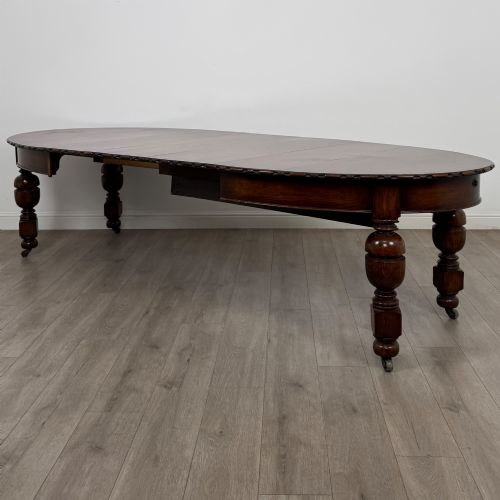
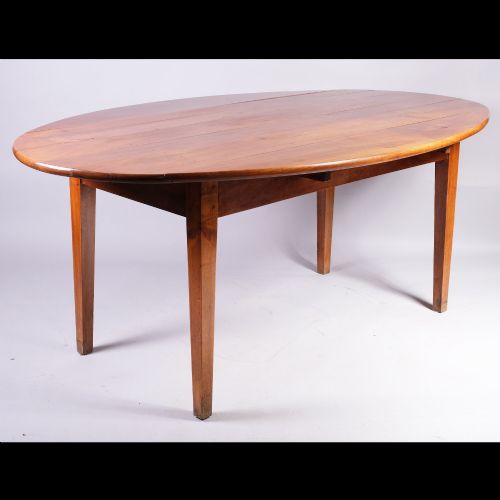
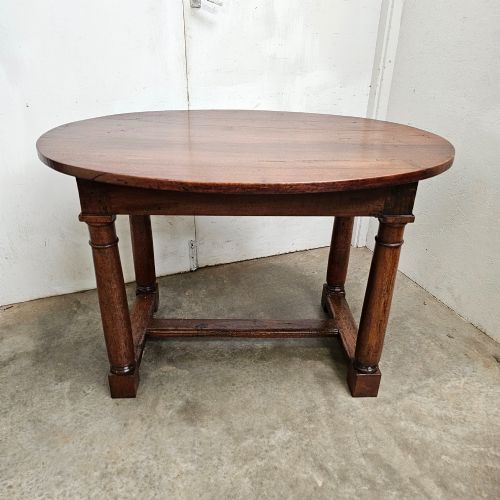
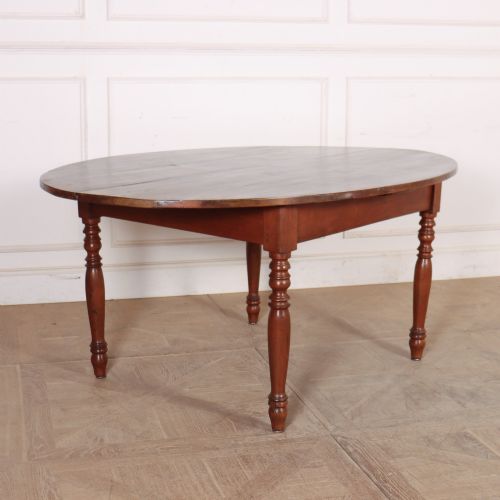


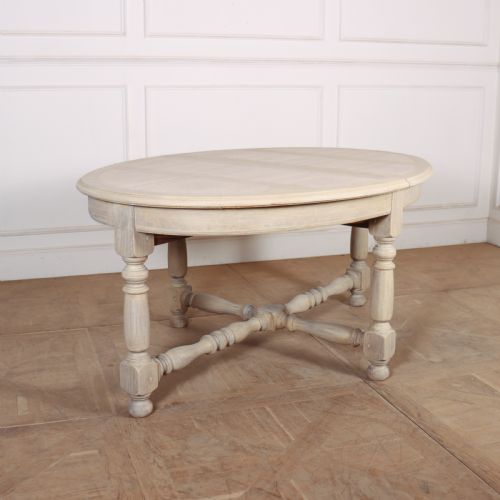


Oval Kitchen Table
An oval kitchen table brings curved lines and a softer footprint to the room, and the versions here span French farmhouse pieces to solid oak gatelegs.
Oval Kitchen Table
An oval kitchen table serves as a sociable centrepiece for everyday dining, offering softer edges than a traditional rectangular board while maintaining generous surface area. When searching for an oval kitchen table, buyers encounter everything from modest gateleg designs to substantial farmhouse boards intended for larger rooms.
The selections range across multiple periods, including 18th-century European examples, 19th-century French country tables, and early 20th-century oak designs. French provincial and English country styles appear frequently, often showing the honest wear of daily domestic use over generations.
Many items combine practical drop leaves or gateleg actions with sturdy timber frames, making them adaptable for both compact spaces and family gatherings. Dining tables and centre tables dominate the selection, built primarily for utility and regular household gathering.
How they were made
Makers relied heavily on native hardwoods such as oak, fruitwood, cherrywood, and walnut, selecting solid timber for durability in busy kitchen environments. Elm and pine also feature in provincial pieces, providing sturdy tops and practical underframes.
Joinery methods focused on stability, utilising traditional gateleg mechanisms, drop leaves, and refectory framing to support large spanning tops. Hardware such as brass occasionally appears on hinges, catches, or subtle decorative mounts.
Surfaces show various historic treatments, from natural waxed patinas to bleached oak finishes and occasional marquetry inlay on Victorian examples. The construction prioritises robust daily use over delicate ornamentation.
Materials recorded across the inventory include solid oak, walnut, cherrywood, fruitwood, elm, pine, and beech.
What varies in quality
The grade of timber and the integrity of the original construction set exceptional examples apart from standard utility furniture. Heavier gauge oak and well-figured fruitwoods command attention for their visual depth and resistance to warping.
Proportion and balance dictate the aesthetic success of an oval top, particularly on gateleg frames where the leaves must meet the centre section with precision. The sophistication of provincial carving or the restraint of Georgian style details further distinguishes finer workshop output.
The Oval Kitchen Table Glossary
- Gateleg table
- A table with hinged leaves supported by swing-out legs that pivot from the frame to hold the flaps upright. This clever mechanism allows the surface area to expand or contract depending on daily requirements.
- Farmhouse table
- A utilitarian domestic board built for heavy daily use in country kitchens, typically featuring generous proportions and sturdy timber legs. These tables carry the marks of culinary preparation and family life.
- Fruitwood
- Timber harvested from fruit-bearing trees such as cherry, pear, or apple, prized by cabinet makers for its warm tone and fine grain. It ages gracefully with a rich, mellow lustre.
- Refectory table
- A long dining table traditionally used in monastic refectories, characterised by stretcher-supported legs and a fixed top. Versions adapted for domestic use offer substantial seating capacity.
- Marquetry
- Decorative veneer work arranged in geometric or pictorial patterns across a surface. It adds visual complexity to select Victorian and later tables.
Oval Kitchen Table: Frequently Asked Questions
How do I choose the right size?
Consider the daily seating requirements of your household and leave ample clearance around the perimeter for chairs to pull out easily. Oval shapes are particularly forgiving in tighter rooms because the curved ends soften traffic flow.
Measure your floor space carefully before browsing, keeping in mind that gateleg versions can fold down to save precious floor space when not in use.
Are these tables suitable for daily dining?
Most of these pieces were built precisely for everyday use in kitchens and dining rooms, employing durable hardwoods like oak and fruitwood. Their historical survival proves their structural resilience.
Routine maintenance involves using simple wax or mild soap depending on the finish, allowing the timber to continue absorbing the history of daily meals.
What is the difference between French and English styles?
French provincial and country styles often utilise fruitwood, cherry, or bleached oak, displaying softer lines and warmer tones suited to relaxed interiors. English country pieces tend to rely on sturdy oak, featuring simpler gateleg or refectory constructions.
Both traditions prioritise practical utility, but the regional choice of timber and slight variations in leg turning give each school its distinct character.
How do I identify the period of a table?
Period identification relies on observing construction techniques, tool marks, timber selection, and stylistic cues like leg turning or apron shaping. 18th-century and earlier pieces often display hand-sawn boards and pegged joinery.
Later Victorian and 20th-century examples may incorporate machine assistance, standardised hardware, or lighter secondary timbers beneath the main surface.