



Turned Leg Ottoman
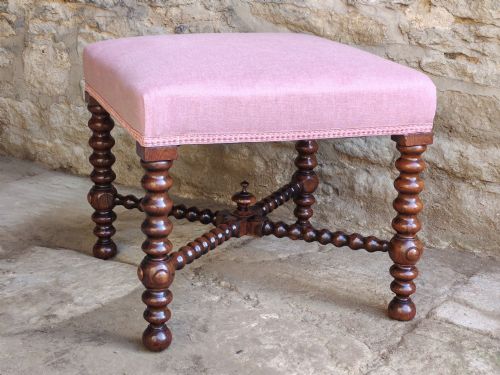
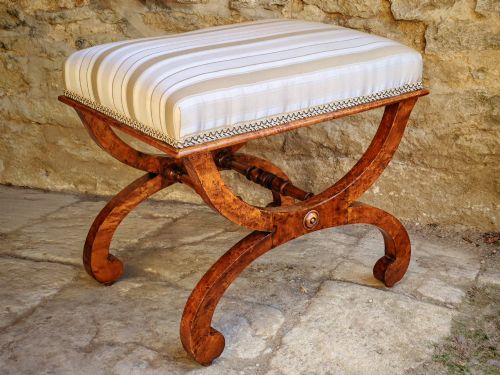
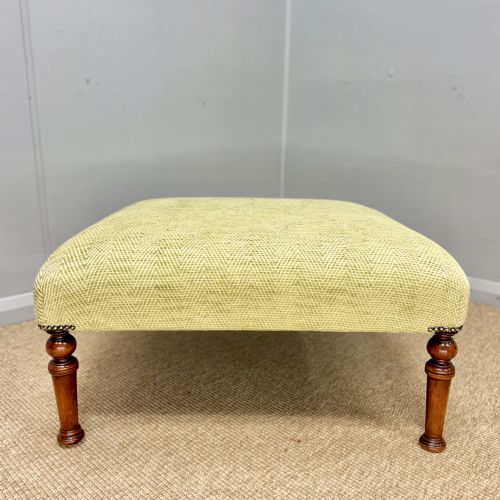
A turned leg ottoman provides a sturdy, low seat or footrest, bringing nineteenth-century timber frames and traditional upholstery into modern rooms.
Turned Leg Ottoman
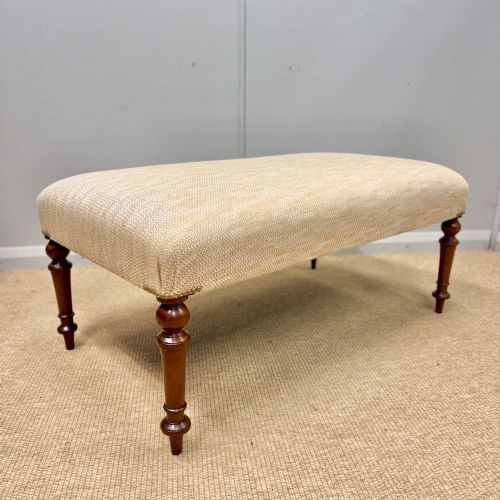
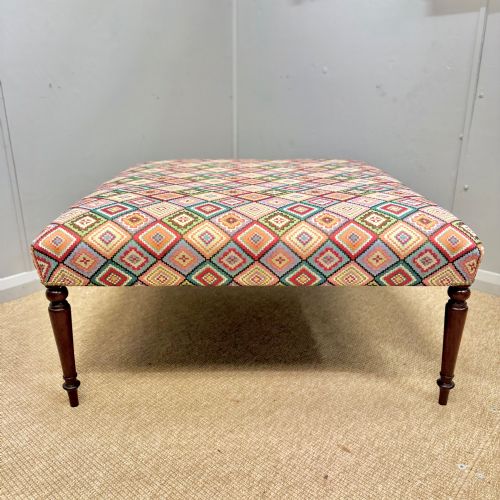
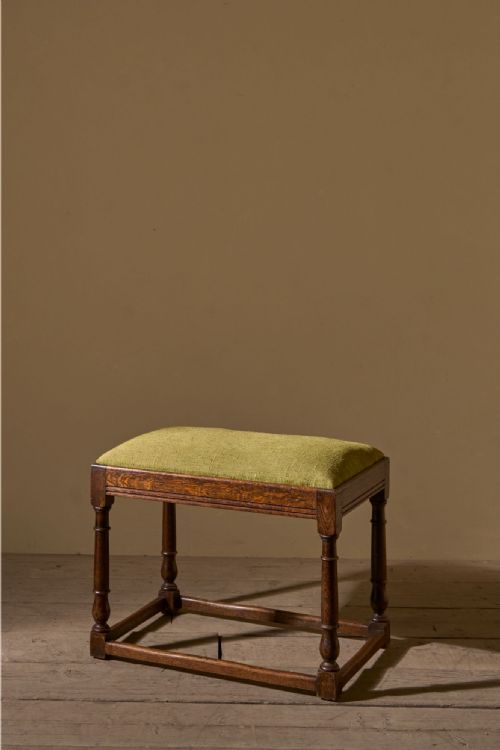
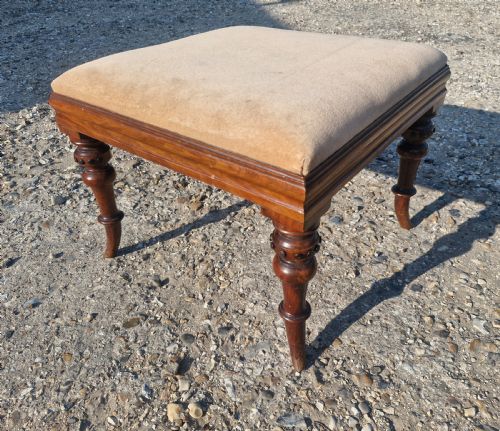
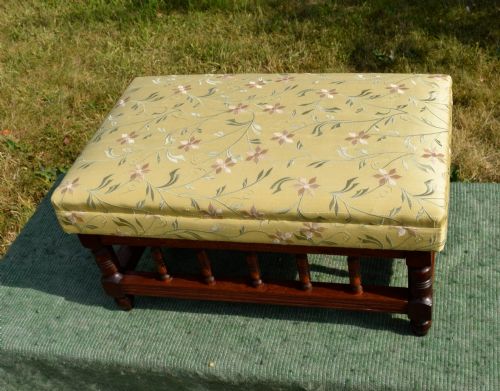
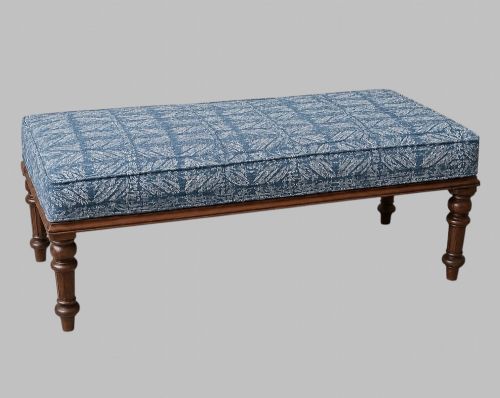
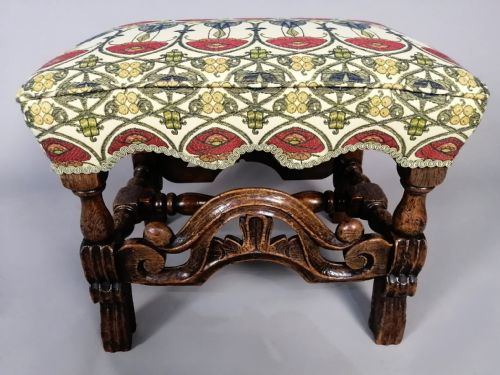
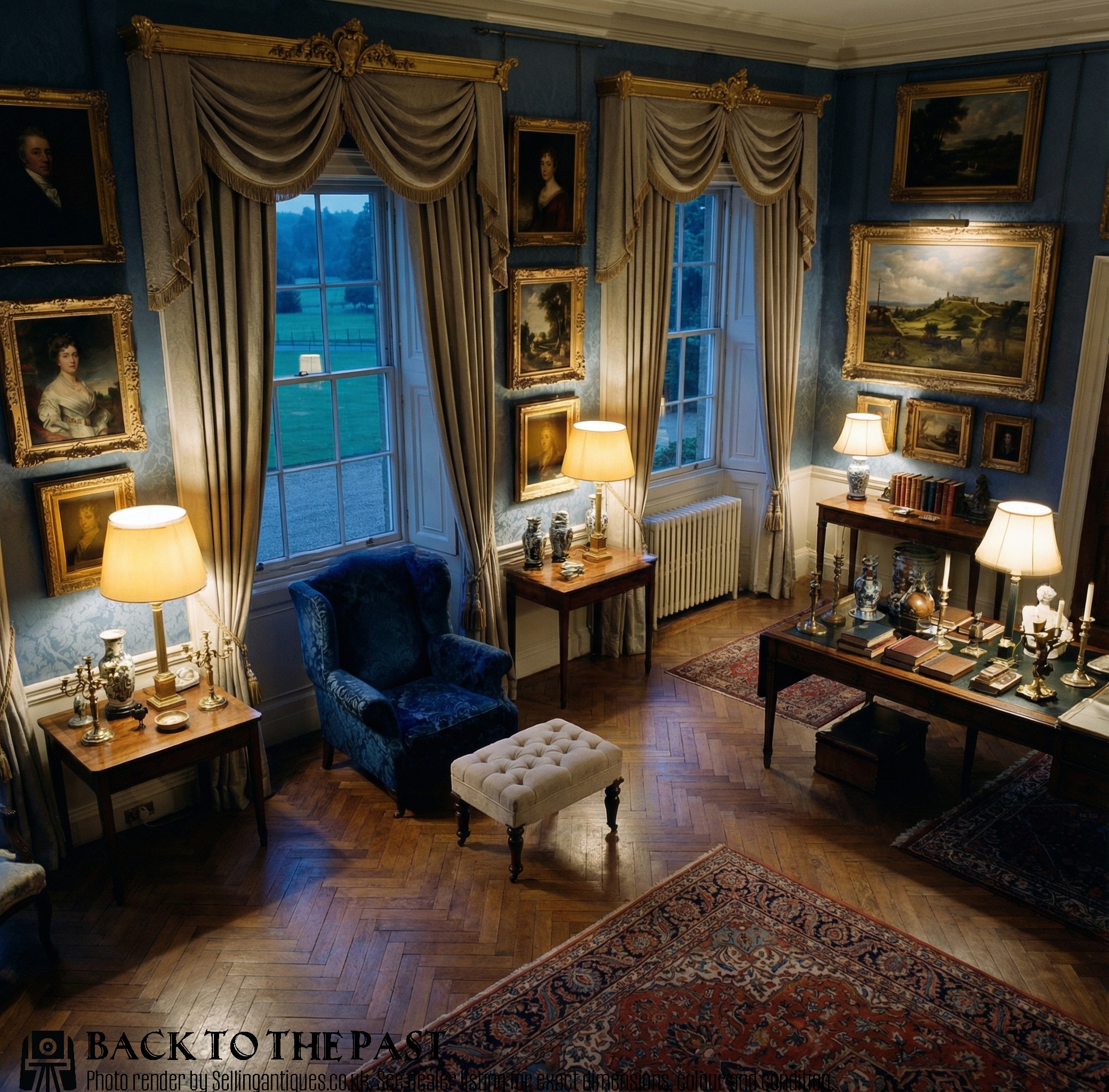
A turned leg ottoman encompasses low footstools, long window seats, and generous centre stools originating from the nineteenth and early twentieth centuries. These pieces appear across Victorian, Edwardian, and Regency periods, often built with substantial timber frames supported by distinctive turned supports.
The most common examples on this page are nineteenth-century footstools and window seats, frequently updated with contemporary textiles such as linen, wool, or patterned cotton. Dimensions range from small gout stools to very large country house ottomans designed for heavy daily use.
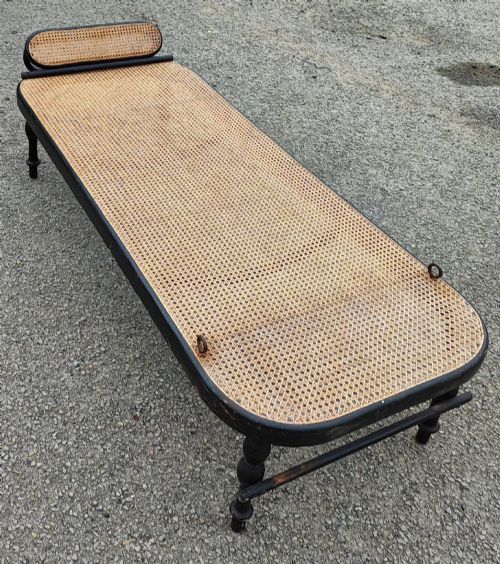
Makers and manufacturers produced these forms in woods like mahogany, walnut, and oak, occasionally incorporating brass castors or caned tops. Their primary function has shifted from private dressing rooms and country house drawing rooms to versatile living space seating.
Assessing Quality
The distinction between standard utility seating and finer examples lies in the selection of timber and the complexity of the frame's turning. Dense, well-figured rosewood or burr maple and crisply carved details indicate a higher standard of cabinet-making.
Proportion and scale also dictate quality, as longer window seats and substantial square ottomans require superior timber stability to prevent warping. The integration of original brass castors and the execution of deep buttoning or upholstery work further distinguish the better examples.
One exceptional nineteenth-century specimen doubles as a gout stool, built specifically to pamper aching ankles with an adjustable lean.
The Turned Leg Ottoman Glossary
- Ottoman
- A low upholstered seat or footstool without arms or a back. They were designed for domestic comfort and often placed in bedrooms or drawing rooms.
- Bobbin leg
- A turned furniture leg shaped to resemble a string of rounded bobbins or spools. This decorative woodworking style appears frequently on mid-nineteenth-century seating.
- Gout stool
- A specialised low footstool featuring an adjustable inclined top. They were built to support the feet and legs of individuals suffering from joint ailments.
- Kilim
- A flat-woven textile originating from the Middle East or Eastern Europe. These durable fabrics are often repurposed to cover nineteenth-century footstool tops.
- Caning
- A woven lattice made from peeled rattan or bamboo strips. It provides a lightweight, flexible surface for seat panels.
Turned Leg Ottoman: Frequently Asked Questions
How do I clean the wooden frame?
Dust the turned wood regularly with a dry, soft cloth to prevent grime accumulation.
Apply a traditional beeswax polish sparingly with a lint-free cloth to maintain the timber's natural finish, avoiding modern silicone sprays.
Can I use an ottoman as a coffee table?
Many large square or oblong stools function effectively as coffee tables by placing a rigid tray on the upholstered surface.
Ensure the chosen stool has a firm, stable stuffing layer so items placed on the tray remain balanced.
How do I date a turned leg stool?
Examine the secondary timbers underneath the frame, along with the hand-cut fixings and general wear patterns on the wood.
Turned leg styles shifted from the heavy proportions of William IV and early Victorian periods to lighter Edwardian formats.
Are these stools suitable for daily seating?
Nineteenth and early twentieth-century frames are constructed from solid hardwoods designed to withstand regular domestic weight.
Periodic inspection of the internal webbing and joints ensures the piece remains safe for everyday use in living spaces.