

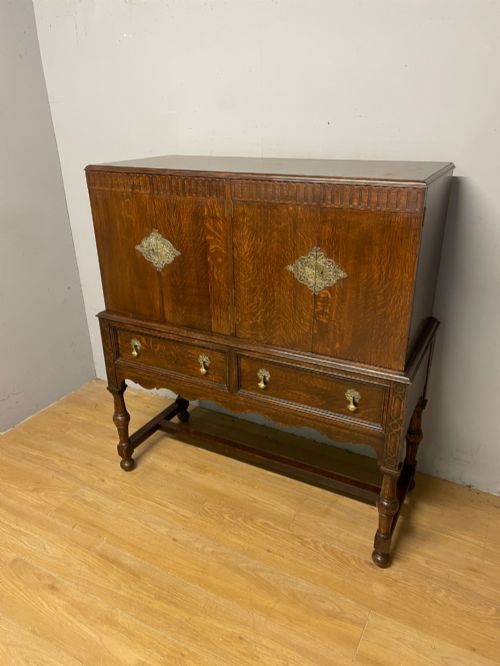
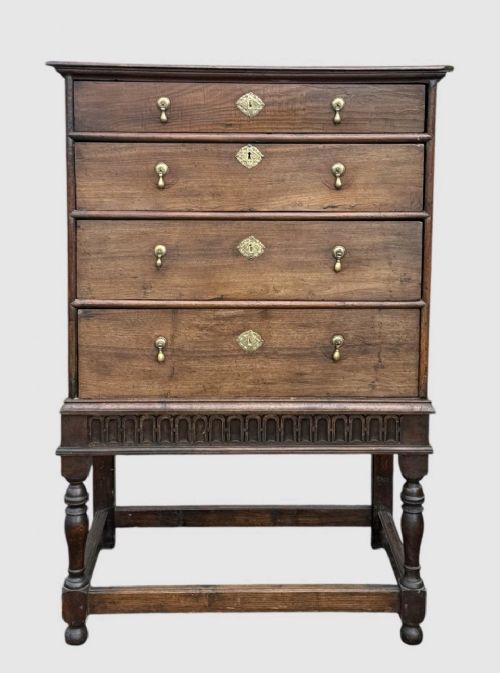

Turned Leg Oak Cabinet
These turned leg oak cabinet examples bring solid timber utility and centuries of domestic craft directly into a room.
Turned Leg Oak Cabinet
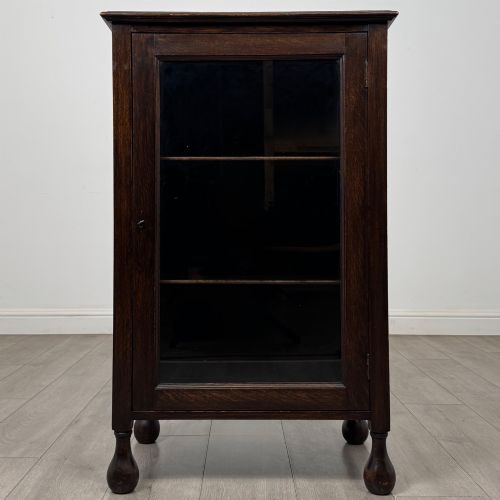
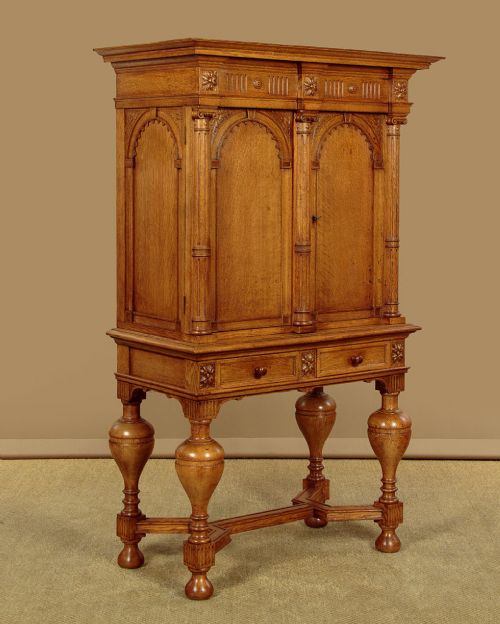
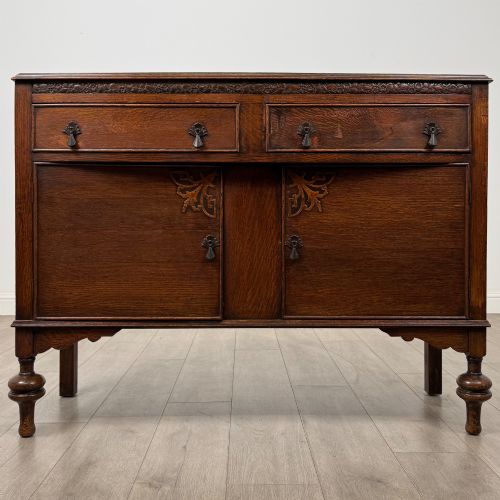
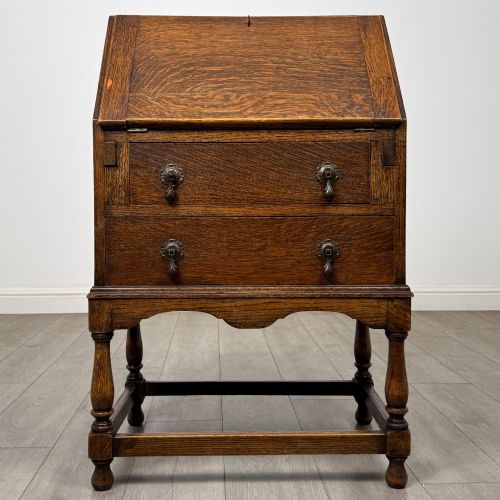
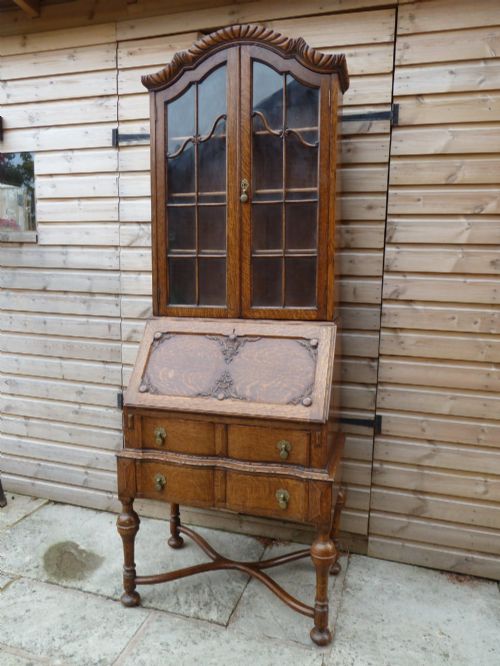
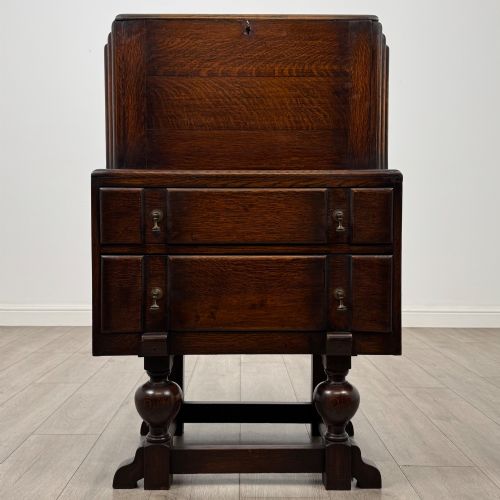
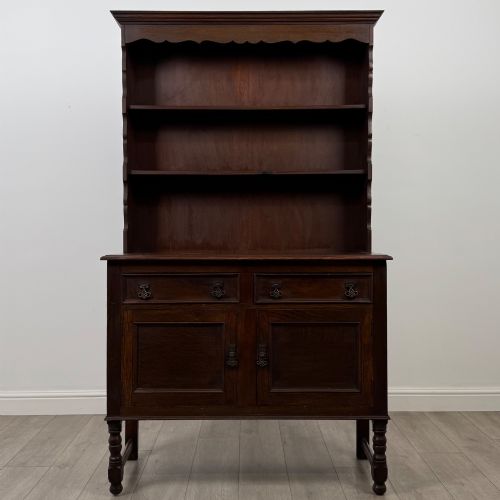
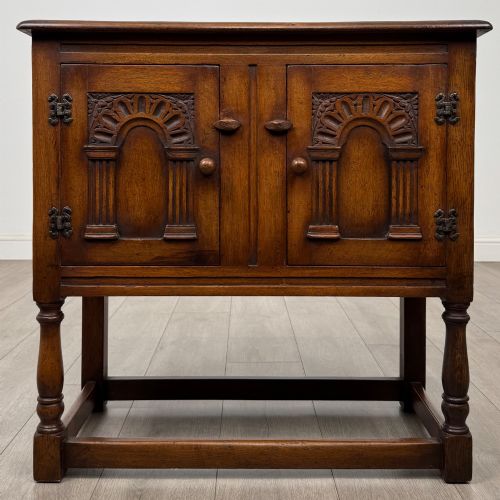
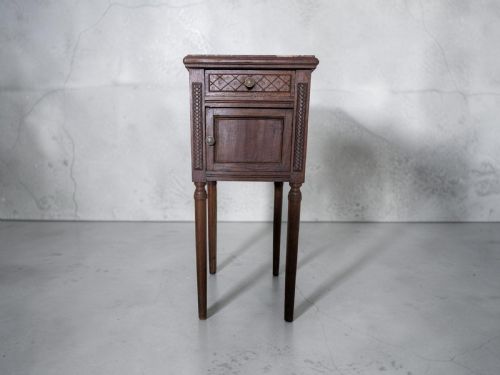
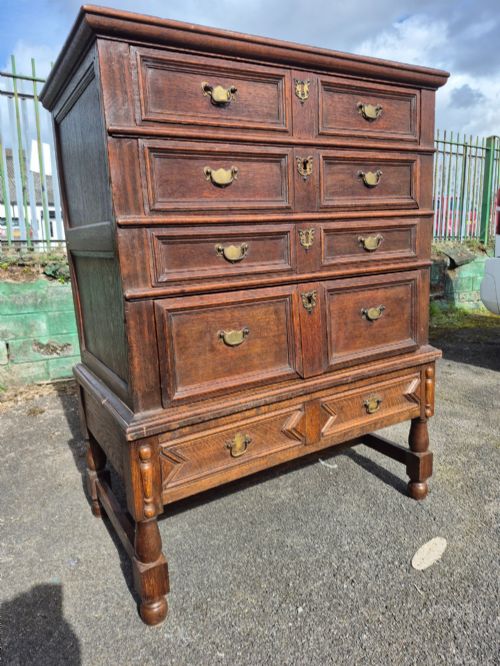
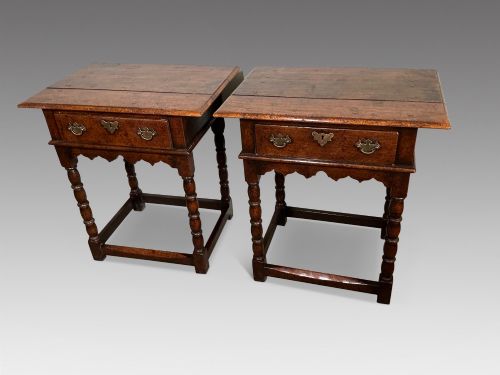
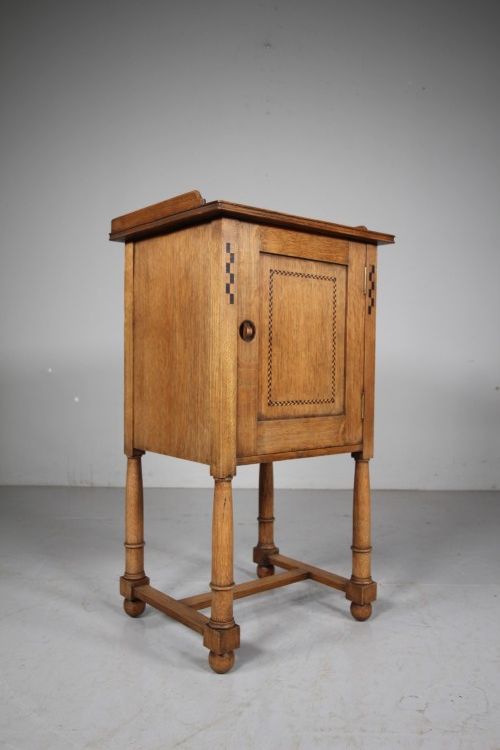
A turned leg oak cabinet combines sturdy hardwood storage with the distinct decorative detail of lathe-shaped supports. Buyers searching for a turned leg oak cabinet will encounter pieces ranging from seventeenth-century chests on stands to twentieth-century Jacobean revival bureaux and bedside tables.
The inventory spans multiple eras, including seventeenth-century, eighteenth-century, Edwardian, and 1920s revivals. Forms vary widely from bureau bookcases and sideboards to compact bedside tables and cabinets on stands.
The most common expressions on this page are revival pieces from the early twentieth century alongside genuine seventeenth-century survivals. Each piece utilises sturdy oak construction paired with functional drawer or cupboard storage.
How they were made
Makers built these pieces primarily from solid oak, frequently enhanced by boxwood and ebony inlay for decorative contrast. Structural stability relied upon traditional joinery techniques combined with turned wooden supports.
Hardware and secondary elements often incorporated brass, glass, iron, and marble depending on the period and function of the furniture. Lathe turning shaped the legs, creating distinct profiles that anchor the heavier rectilinear cabinetry above.
Listings feature oak combined with brass, iron, glass, and marble across styles spanning Jacobean Revival to Arts and Crafts.
What varies in quality
The standard of timber selection and the precision of the lathe work largely distinguish the finer pieces from simpler workshops. Grain pattern consistency and the crispness of carved or inlaid details elevate the overall presence of the furniture.
Age and authenticity also drive distinction, separating seventeenth-century originals from twentieth-century revivals. The integrity of the original hardware, drawer linings, and structural joints remains central to the character of each piece.
Heals
The Turned Leg Oak Cabinet Glossary
- Chest on stand
- A cabinet or chest raised off the floor on an independent frame with legs. This form lifts the storage compartment for easier access and lighter visual weight.
- Bureau bookcase
- A writing desk with a sloping flap combined with shelving above. These pieces provide enclosed writing space alongside display or storage areas.
- Inlay
- A technique where contrasting materials such as boxwood and ebony are inserted into recesses within the oak surface. This creates decorative patterns and highlights the primary timber.
Turned Leg Oak Cabinet: Frequently Asked Questions
How do I date a turned leg oak cabinet?
Dating relies on examining construction marks, timber shrinkage, and the style of the turning. Seventeenth-century pieces show hand-cut joinery and heavy patination, whereas revivals from the 1920s display more uniform machining.
Hardware styles, secondary woods, and lock mechanisms also provide clear chronological markers for distinguishing between original periods and later revivals.
Where should I place a turned leg oak cabinet?
These cabinets suit hallways, living rooms, and bedrooms depending on their scale. Compact bedside tables fit smaller spaces, while bureau bookcases and sideboards work best against large, uninterrupted walls.
Keep oak furniture away from direct heat sources and strong sunlight to protect the finish and prevent the timber from splitting.
Are turned leg oak cabinets heavy?
Solid oak furniture is naturally dense and substantial in weight. Pieces built with stands or integrated drawer units require careful lifting and placement.
The turned legs distribute the weight effectively, but two people are generally needed to move larger bureau bookcases or chests safely.
What is the difference between revival and original pieces?
Original pieces date from the seventeenth or eighteenth centuries and exhibit the wear patterns and tool marks of their era. Revival pieces, common from the Edwardian period and the 1920s, interpret those earlier styles using twentieth-century workshop methods.
Both categories offer robust construction, but originals carry greater historic age while revivals provide accessible period styling.