
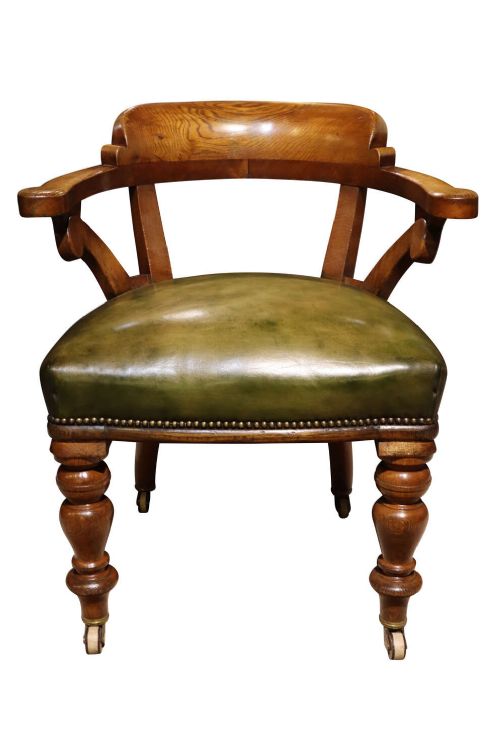
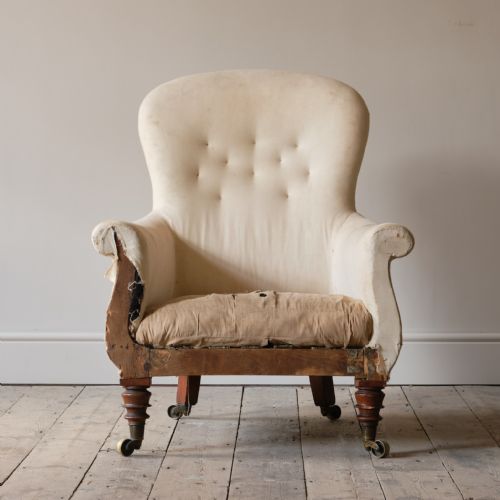
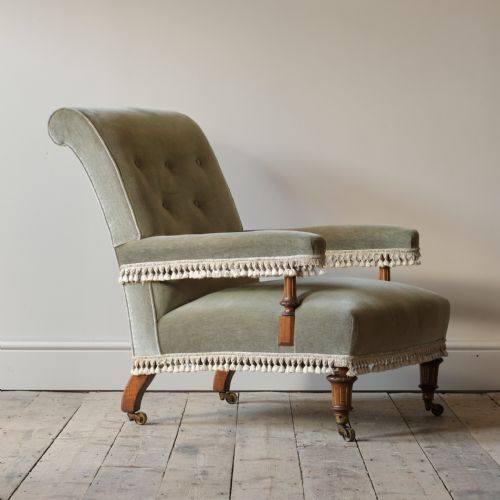
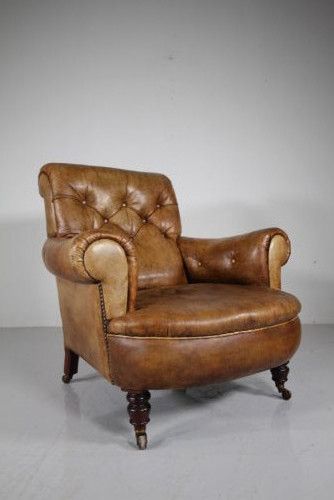
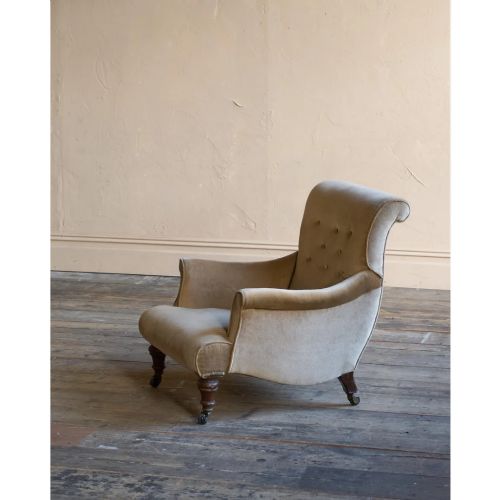
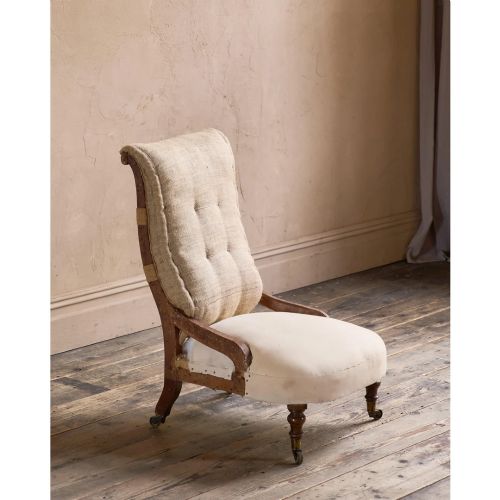
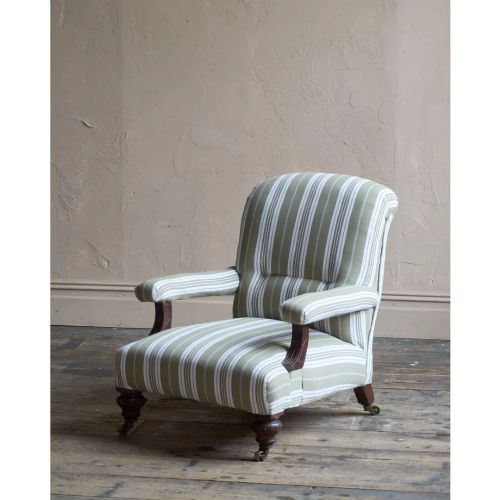
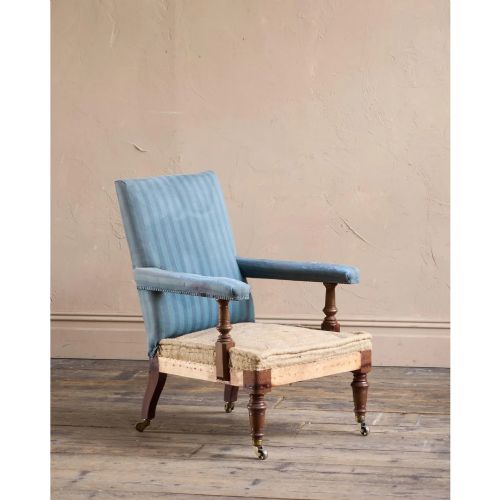
Turned Leg Library Armchair
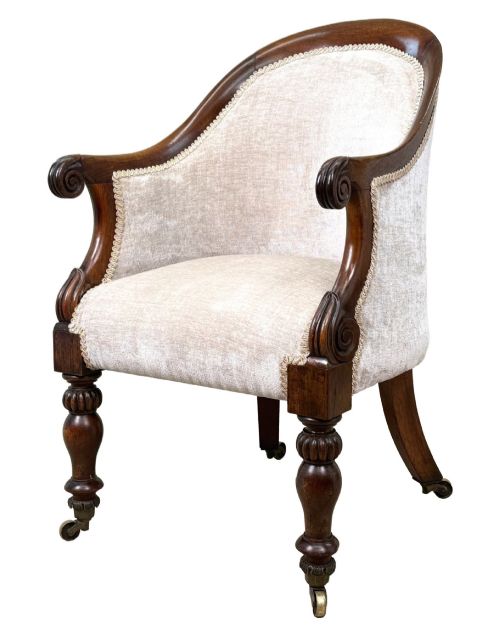
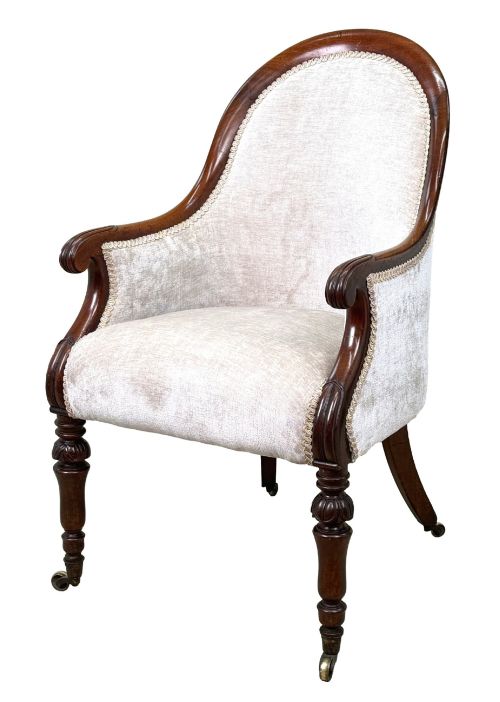
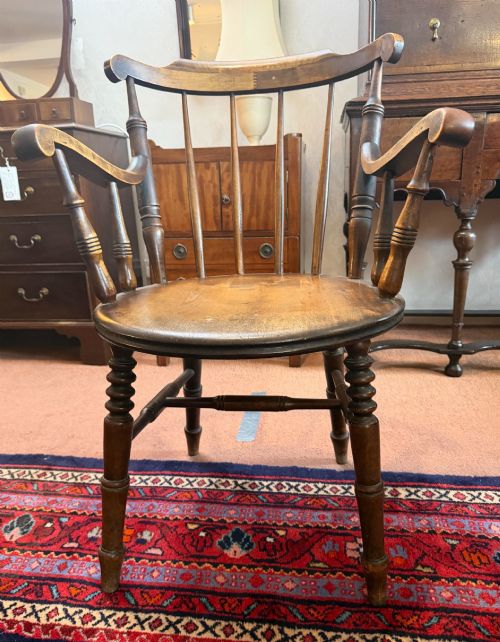
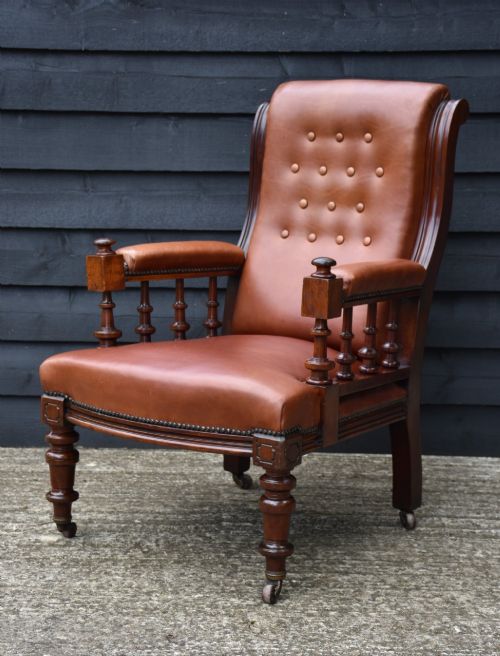
A turned leg library armchair brings substantial character and working comfort to a study, built from solid timbers with sturdy turned supports.
Turned Leg Library Armchair
A turned leg library armchair is a sturdy seating option designed for reading spaces, home offices, and studies. These chairs combine deep seating comfort with robust wooden frames suitable for daily use.
You will most commonly encounter pieces originating from the nineteenth century, including Regency, William IV, and Victorian periods. Mahogany and walnut form the primary wooden structures, often paired with leather upholstery.
Materials and Construction
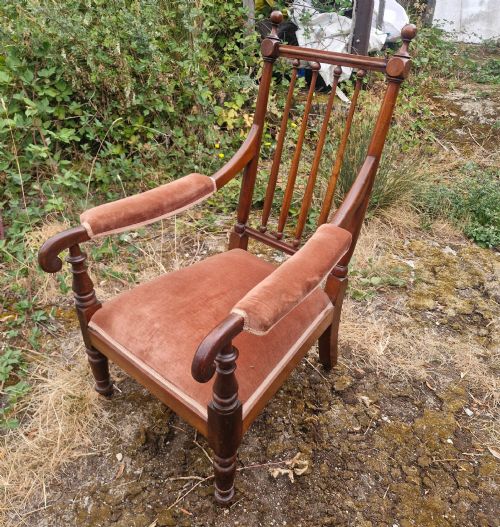
Cabinet makers utilised dense hardwoods such as mahogany, walnut, rosewood, and oak to construct the supportive frames of these library chairs. Turned legs require precise lathe work to achieve uniform cylindrical or reeded profiles.
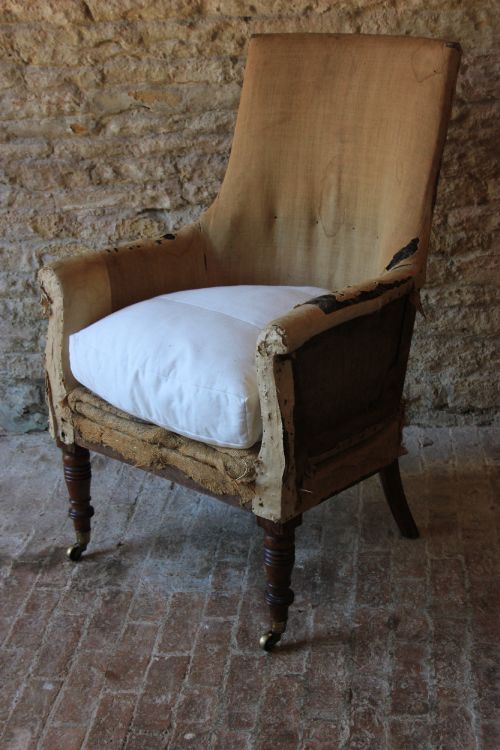
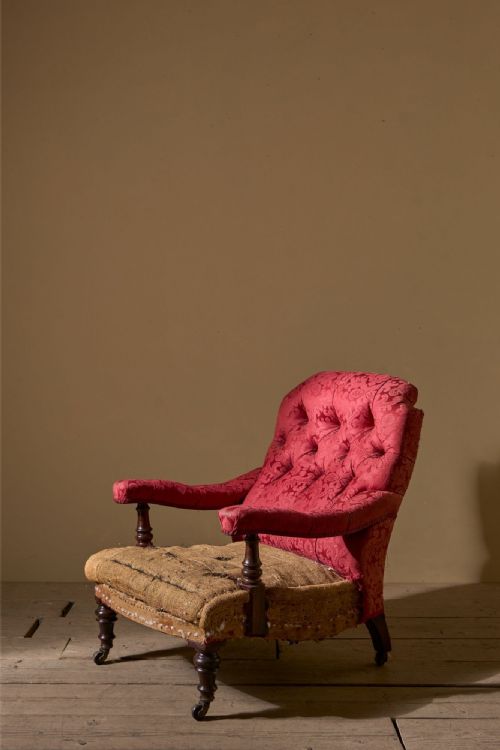
Traditional upholstery methods incorporated durable coverings like leather, velvet, and fabric over hessian and calico foundations. Brass castors and cappings frequently finished the feet of nineteenth century examples for ease of movement.
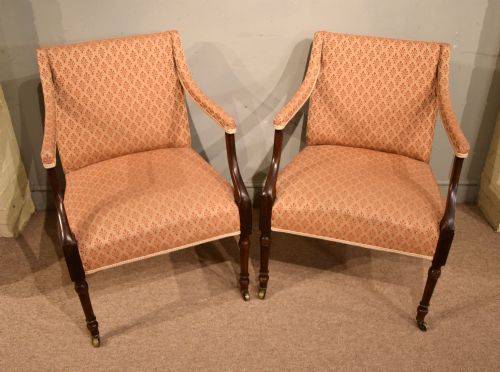
Several armchairs come equipped with original brass castors designed to glide smoothly across nineteenth century carpets.
Quality Variations
The refinement of the timber turning and the crispness of any hand-carved details distinguish superior pieces from standard workshop output. Heavier gauge hardwoods and select grain patterns indicate higher grade cabinet making.
The integrity of the frame construction and the quality of the underlying upholstery materials dictate the longevity and overall presence of the chair. Maker attribution, such as work originating from Gillows or Howard and Sons, elevates the standing of a piece.
Gillows·Howard and Sons·Morison and Co·Robert Strahan·William Birch
The Turned Leg Library Armchair Glossary
- Tub chair
- A seating form featuring a continuous curved back and arms that encircle the sitter. This shape provides enclosed support ideal for prolonged reading.
- Castor
- A small wheel attached to the base of a furniture leg to facilitate smooth movement across floors. Brass mounts often secure these wheels to nineteenth century chair feet.
- Reeded
- A decorative moulding consisting of parallel convex strips resembling bundled reeds. Cabinet makers turned this profile directly into wooden furniture legs.
- Bergere
- An enclosed upholstered armchair with a wooden frame that traditionally incorporates cane panelling. These chairs offer a lighter visual profile within a room.
- Hessian
- A coarse woven fabric typically utilised as a strong foundation layer beneath top upholstery. It provides essential internal support for sprung seats.
Turned Leg Library Armchair: Frequently Asked Questions
Where should I place a library armchair?
These chairs suit studies, home offices, and reading corners where comfortable seating is required for extended periods. Their sturdy wooden frames and supportive upholstery provide an ideal spot beside a desk or bookshelf.
Because they feature finished backs and robust turned legs, they also sit well away from walls in the centre of a room.
How do I identify a Regency period chair?
Regency pieces typically display clean architectural lines, dark mahogany timbers, and classical carved or reeded details. The proportions often reflect early nineteenth century design influences.
Checking the secondary woods and construction methods helps confirm the age of these earlier frames.
What is a captains desk chair?
Captains desk chairs are sturdy seating options designed for working environments, often featuring low backs and comfortable armrests. They provide the stability needed for daily office use while maintaining traditional aesthetic appeal.
Many examples combine solid oak or mahogany frames with durable leather seat pads.
How do I care for leather upholstery?
Leather upholstery benefits from regular dusting with a dry cloth and occasional application of suitable leather conditioner to maintain suppleness. Keeping the material away from direct heat sources prevents drying and cracking.
Natural patination adds character to older leather, so gentle cleaning preserves the historic surface finish.