

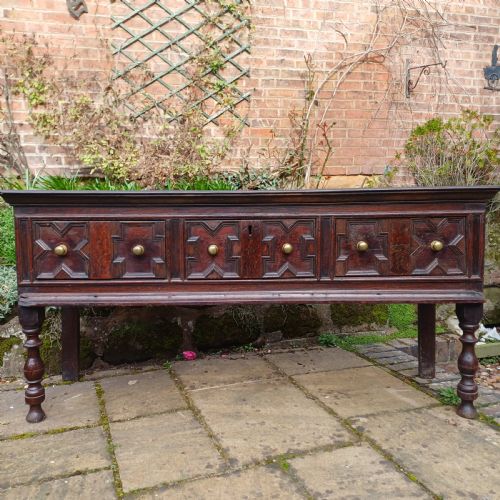


Turned Leg Dresser
A turned leg dresser brings seventeenth and eighteenth-century utility into a modern room through sturdy timber framing and characteristic architectural supports.
Turned Leg Dresser
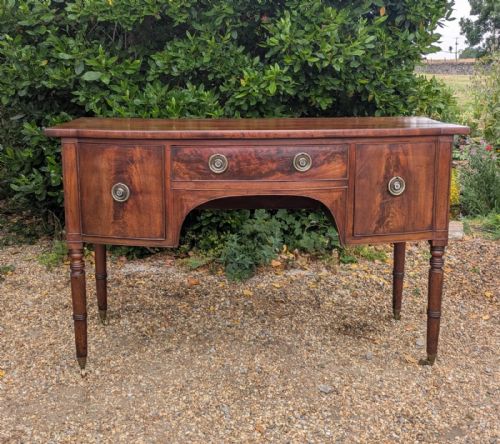
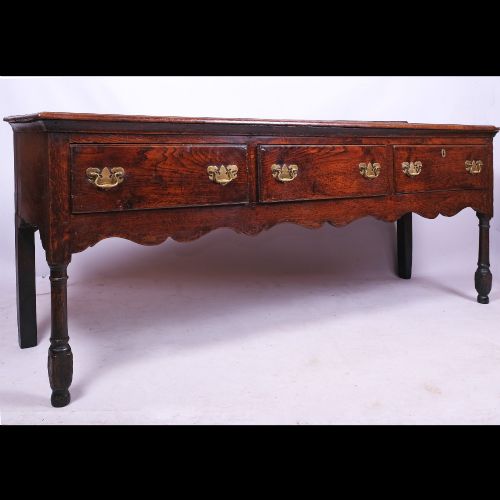
A turned leg dresser is a substantial storage piece built primarily for domestic utility in early British households. When you search this phrase, you encounter low bases, serving tables, and potboards designed to hold kitchenware or dry goods.
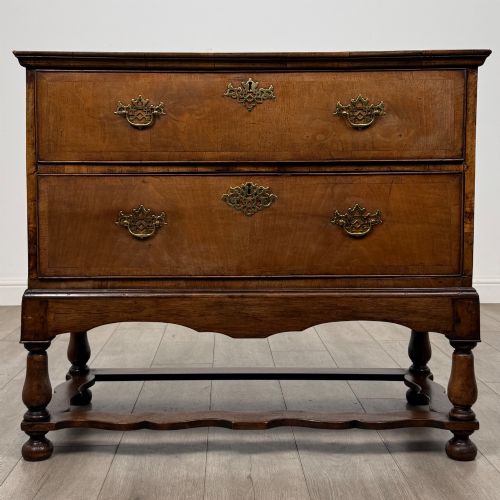
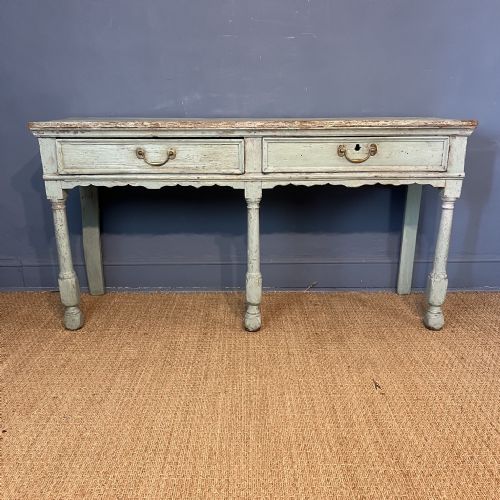
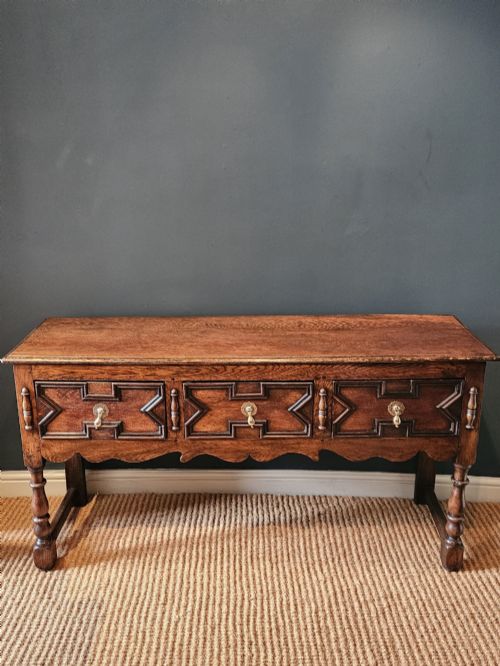
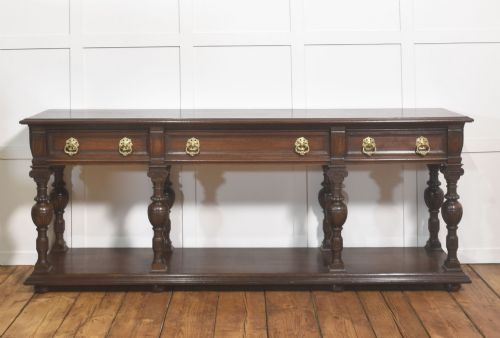
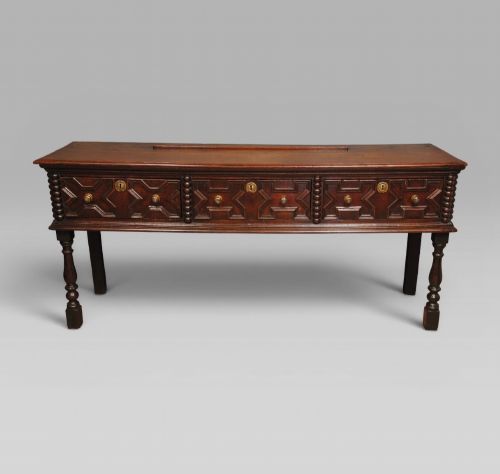
The versions most common on this page date from the seventeenth and eighteenth centuries, constructed predominantly in oak with occasional elm or painted pine. These items often feature drawer configurations set above open potboards or sturdy turned uprights.
How they were made
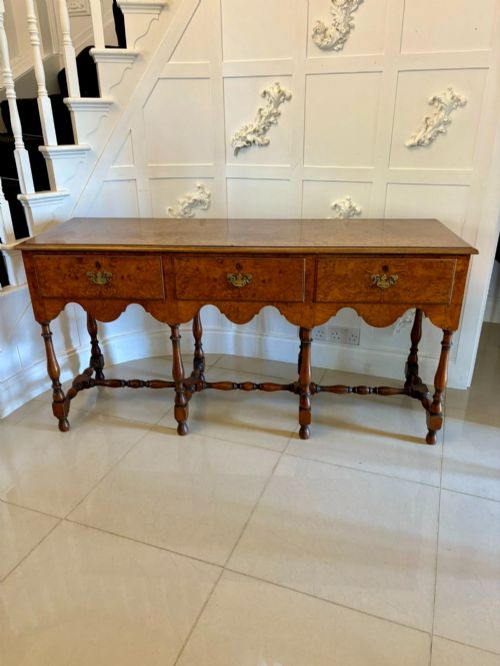
Cabinet makers utilised native hardwoods like oak and walnut, often pairing solid primary timber with elm or pine for secondary structural elements. Surfaces frequently display geometric moulding, oyster veneering, or historic painted finishes.
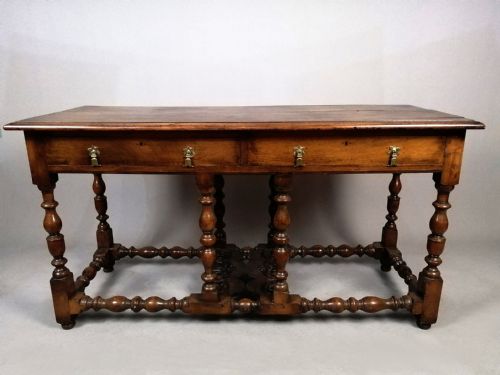
Supports were shaped on a lathe to create distinctive bolster or turned profiles, joined to heavy framing with traditional pegged mortise and tenon joints.
What varies in quality
The degree of original timber retention dictates much of the standing of a piece, distinguishing items with untouched structural integrity from those altered over centuries of domestic service. Integration of earlier panels into later frameworks appears across several examples.
Surface patination and the crispness of turned leg profiles separate standard utilitarian furniture from items displaying finer geometric mouldings and sophisticated grain selection.
The Turned Leg Dresser Glossary
- Potboard
- An open lower shelf fitted beneath a dresser base, traditionally used for storing pots and heavy ceramic vessels. This practical feature defines many seventeenth and eighteenth-century examples.
- Bolster turned
- A type of lathe-formed leg featuring a rounded, compressed swelling profile. It frequently appears on seventeenth-century and Jacobean style supports.
- Geometric moulded
- A decorative front treatment using applied mouldings to create repeating rectilinear patterns on drawer faces. This technique is typical of the seventeenth-century style.
- Oyster veneer
- Thin slices cut horizontally across small branches to produce circular or oval wood patterns resembling oyster shells. This decorative surface treatment appears on high-status walnut furniture.
- Block front
- A cabinet face divided into three distinct vertical planes, with the outer sections projecting forward and the central section recessed. This form provides strong architectural depth.
Turned Leg Dresser: Frequently Asked Questions
What is a turned leg dresser base?
A turned leg dresser base is a low wooden storage unit supported by lathe-turned legs rather than straight or bracketed feet. These pieces served as primary workspace and storage in historical kitchens.
They typically include multiple drawers above an open lower shelf or potboard, offering robust utility and visible timber construction.
How do I date a turned leg dresser?
Dating relies upon examining construction methods, timber species, and hardware types used throughout the piece. Seventeenth-century examples often display heavy oak framing and geometric mouldings.
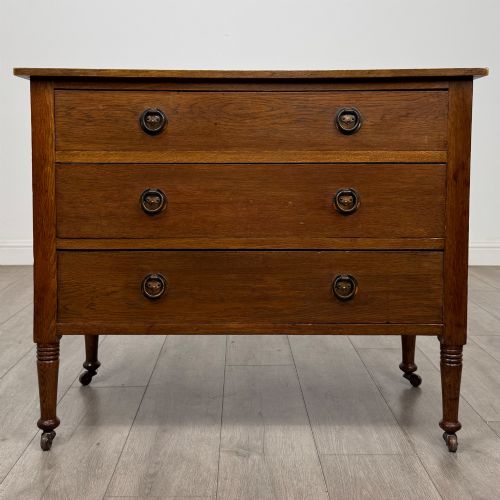
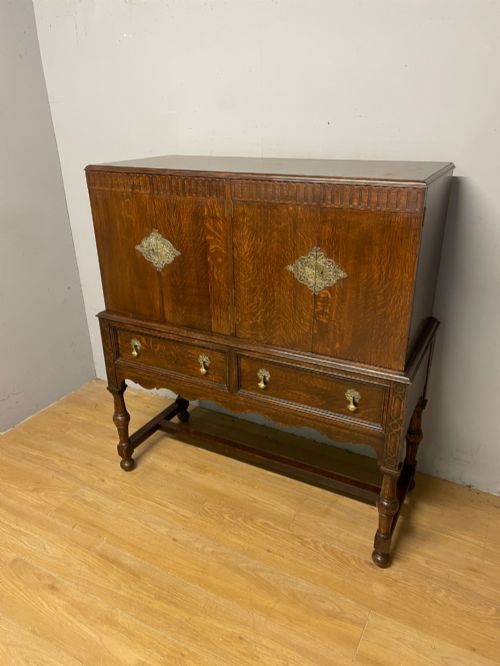
Later interpretations from the Edwardian period or the 1920s adopt Jacobean Revival styles using older construction idioms but clean internal joinery.
Where were these dressers used?
Historically, these items stood in the kitchen or dining hall to hold heavy pewter dishes, earthenware, and cooking implements. The open lower boards kept everyday items accessible.
In modern interiors, they function effectively in dining rooms or hallways as sideboards for serving and general storage.
How do I care for antique oak furniture?
Maintain antique oak by keeping it away from direct heat sources and sudden humidity changes that cause timber to split. Apply microcrystalline wax occasionally to protect the dry wood surface.
Avoid liquid polishes that build up residue and dull the natural historic patination accumulated over centuries.