
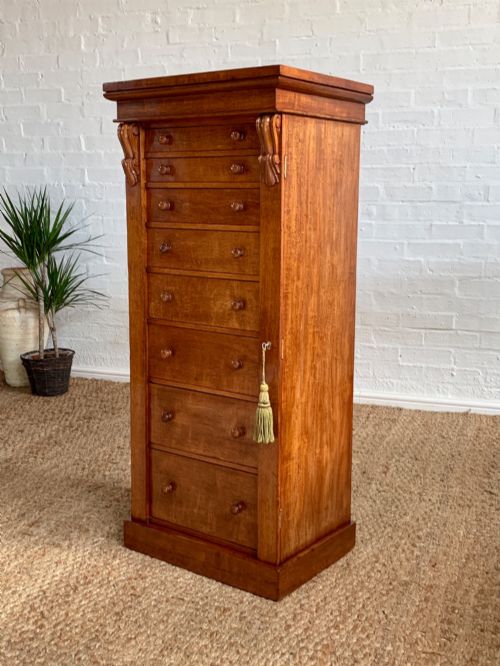
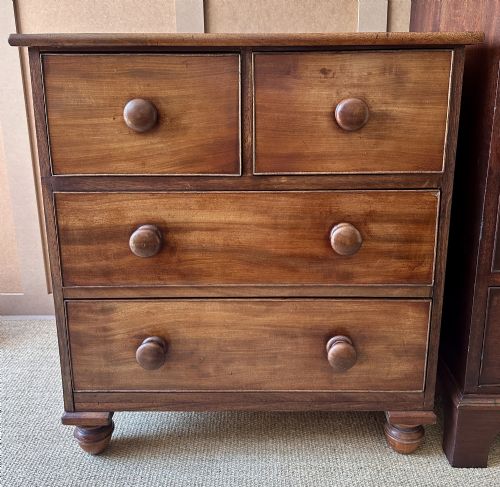
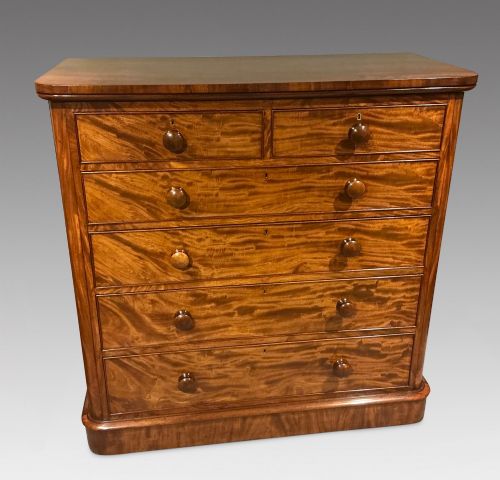
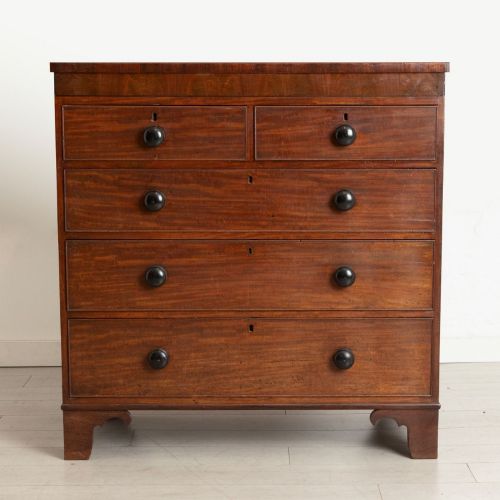


Turned Knob Mahogany Chest
These turned knob mahogany chest pieces are substantial timber storage furniture built for British and American domestic interiors.
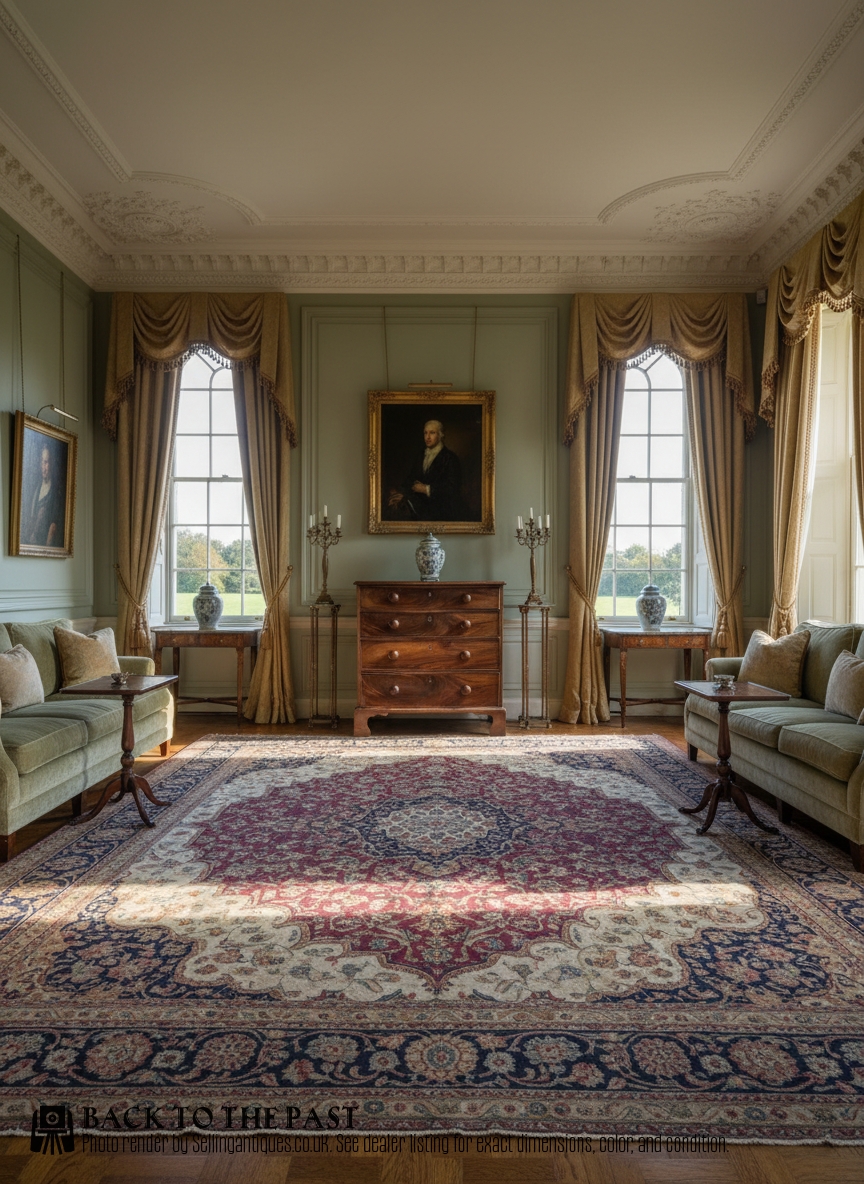
Turned Knob Mahogany Chest
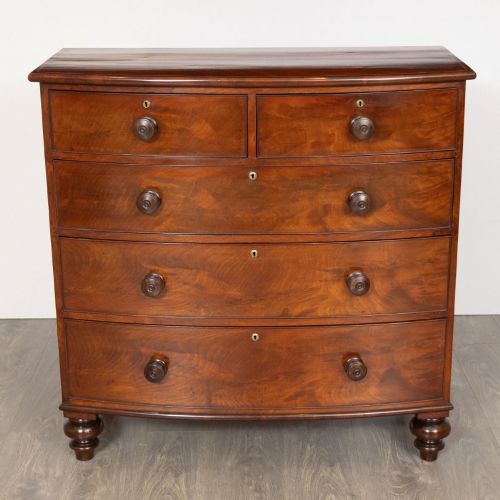
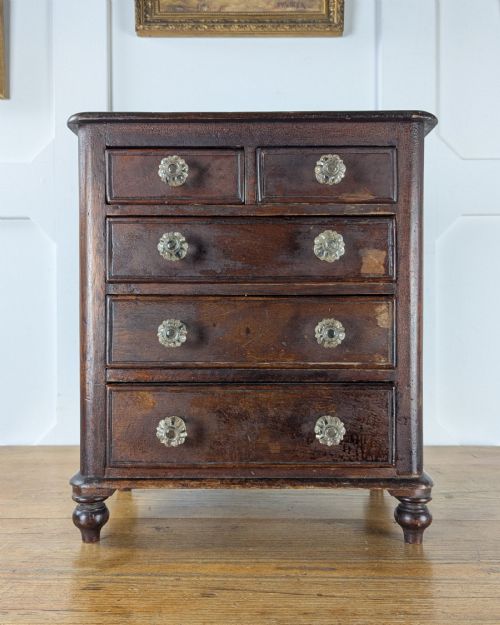
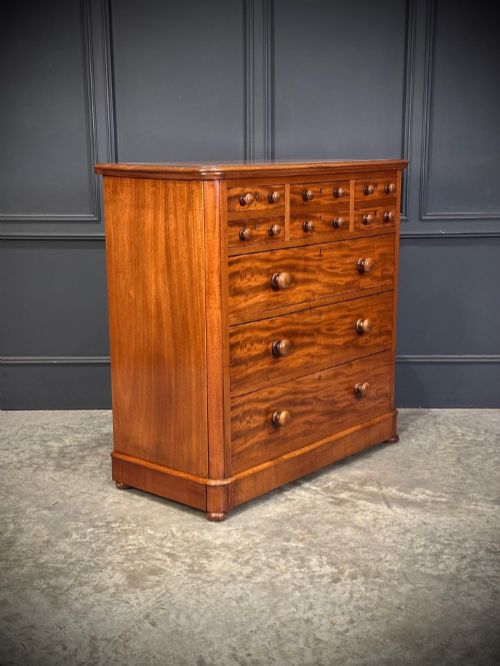
A turned knob mahogany chest brings together solid timber construction and functional drawer arrangements across the Georgian and Victorian eras. These pieces include standard domestic chests, bow front variants, Scottish seven-drawer formats, and small apprentice or miniature examples.
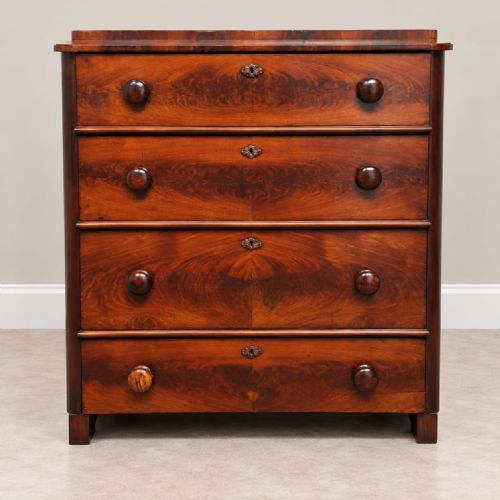
The material palette spans standard mahogany, figured mahogany, and flame mahogany veneer, often supported by secondary pine internal framing. Most pieces date from the nineteenth century, including specific occurrences from eighteen fifty and eighteen sixty alongside earlier Georgian examples.
Materials and construction
Cabinet makers utilised mahogany timber, frequently selected for figured grains or applied flame mahogany veneer over structural carcases. Drawers were fitted with turned wooden knob handles, while additional detailing included brass keyhole escutcheons, ivory inset escutcheons, and turned feet.
Internal elements such as drawer linings commonly relied on pine, paired with brass hardware and occasionally glass components. The construction prioritised robust joinery to support heavy timber drawers across multi-tier arrangements.
Listings feature Victorian and Georgian periods alongside American styles, utilising mahogany, pine, and brass materials.
Judging execution
Quality rests upon the selection of timber veneers, such as flame mahogany or figured mahogany, and the preservation of original turned knobs and feet. Pieces featuring intact brass or ivory escutcheons and well-matched drawer configurations show superior original intent.
The precision of the cabinet work in standard and miniature formats determines the overall standard. Greater refinement appears where timber selection and turned elements remain unaltered from the period of manufacture.
The Turned Knob Mahogany Chest Glossary
- Mahogany
- A durable tropical hardwood prized for its deep reddish-brown tone and stable grain. It forms the primary structural and visual surface for these chests.
- Flame mahogany veneer
- A thin slice of timber applied to a carcase, exhibiting a fiery, undulating grain pattern. It signals higher decorative ambition in cabinet making.
- Bow front
- A convex curved drawer front that projects outward at the centre. This configuration requires advanced carpentry to shape timber accurately.
- Escutcheon
- A protective plate surrounding a keyhole, frequently fashioned from brass or inset ivory. It prevents timber wear around the lock.
- Wellington chest
- A tall, vertical chest of drawers secured by a hinged locking side stile. This specific form allows multiple drawers to be locked simultaneously with a single key.
Turned Knob Mahogany Chest: Frequently Asked Questions
What periods do these chests date from?
The available pieces span the Georgian and Victorian eras, with manufacturing dates stretching through the nineteenth century.
Specific examples reflect cabinet making traditions from eighteen hundred up to eighteen sixty and the broader Victorian period.
How do you identify original turned knobs?
Original turned knobs match the timber species, finish, and patina of the surrounding drawer fronts.
They show consistent wear and ageing that aligns directly with the main body of the chest.
Where were these pieces used?
These chests functioned as primary bedroom and domestic storage furniture in period homes.
Smaller variants, including miniature apprentice pieces, served specific display or workshop roles.