
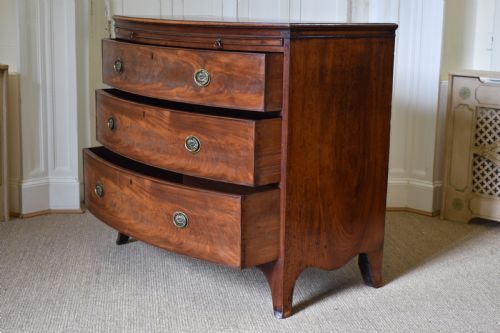
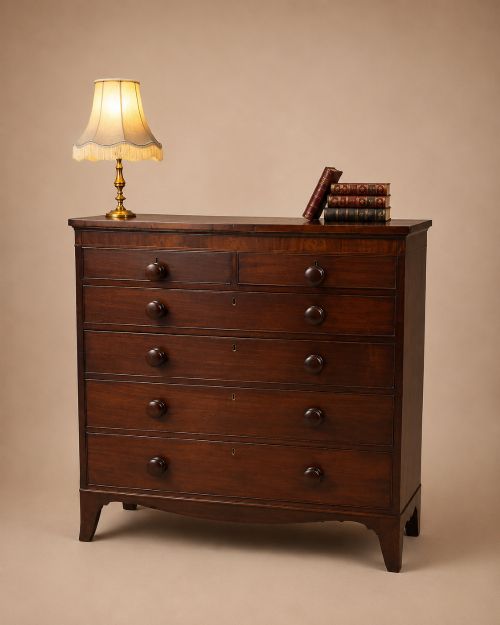
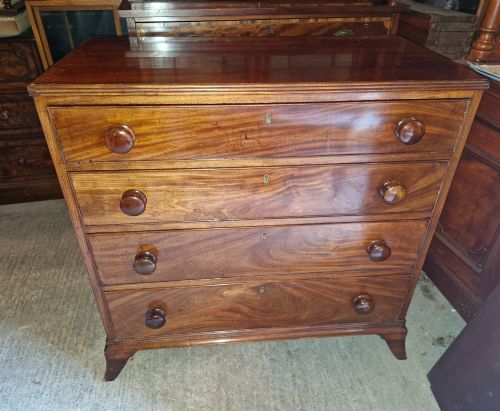
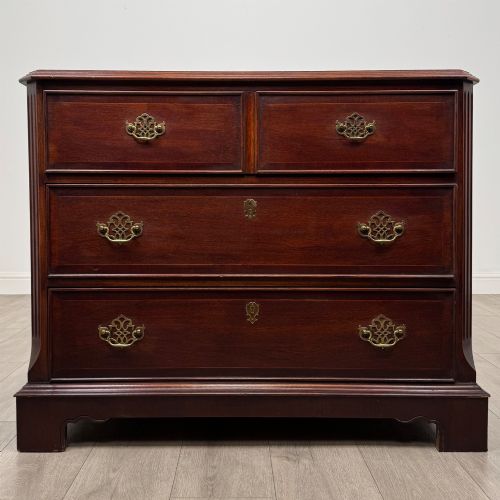
Georgian Storage Bureau
A georgian storage bureau offers classic proportions and practical timber construction, providing timeless utility for daily organisation.
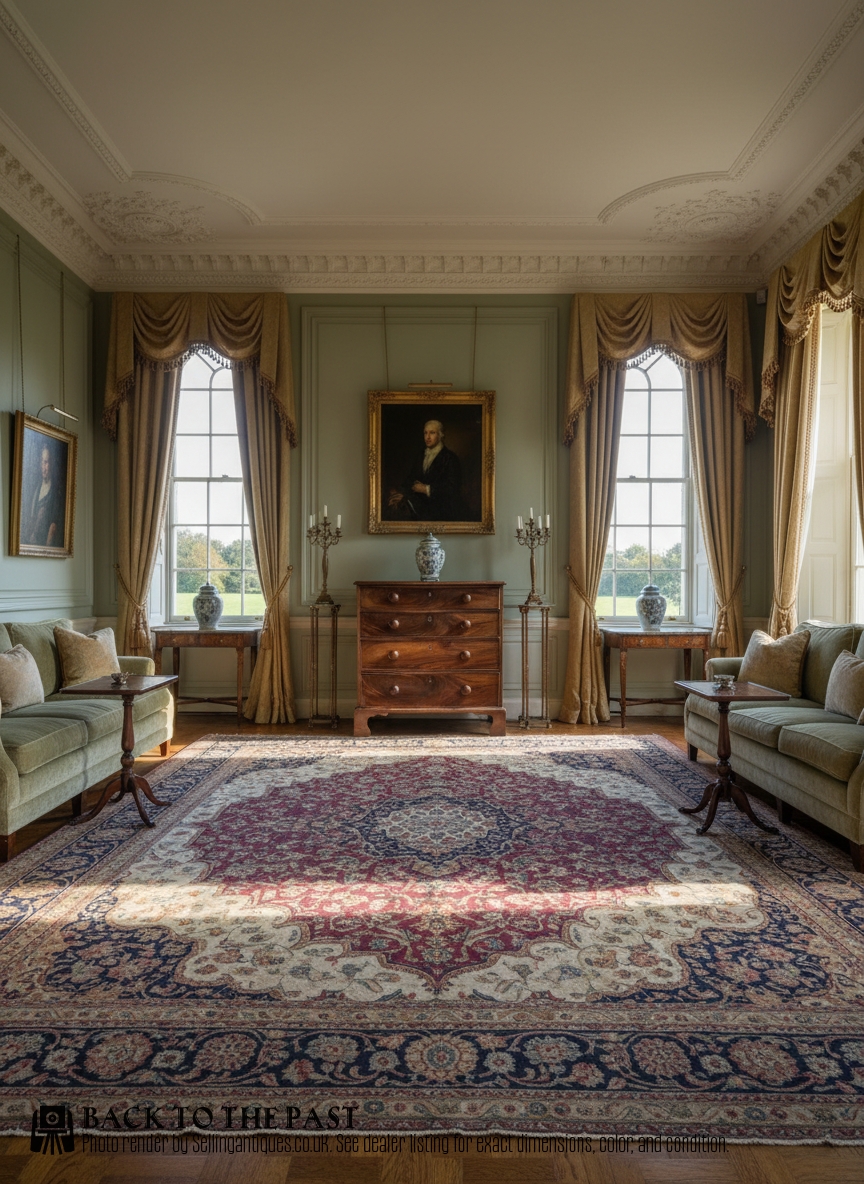
Georgian Storage Bureau
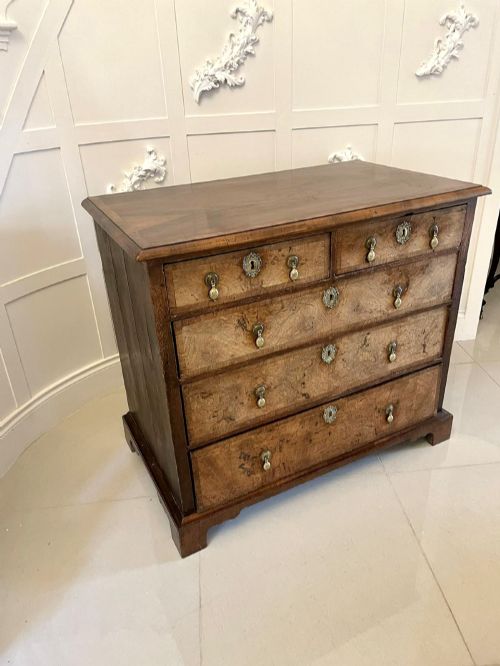
A georgian storage bureau encompasses traditional timber forms designed for domestic storage and organisation, with chests of drawers appearing frequently across this selection. These pieces date across the Georgian, Regency, Victorian, and Edwardian periods, stretching into the twentieth century through revival pieces.
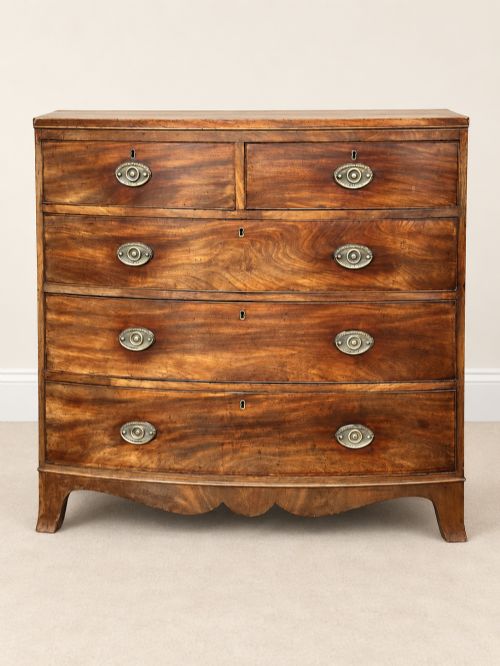
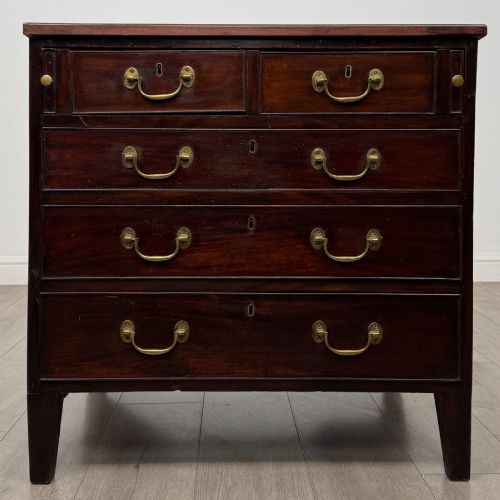
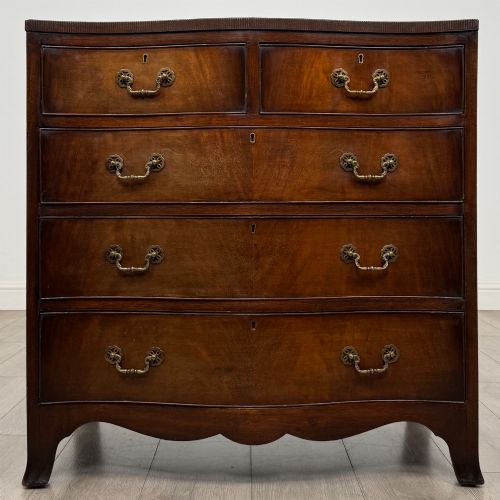
The dominant material format relies on mahogany, walnut, and oak, often shaped into straight or bow front configurations. Makers constructed these items using various regional styles, including George III, George IV, and Queen Anne influences.
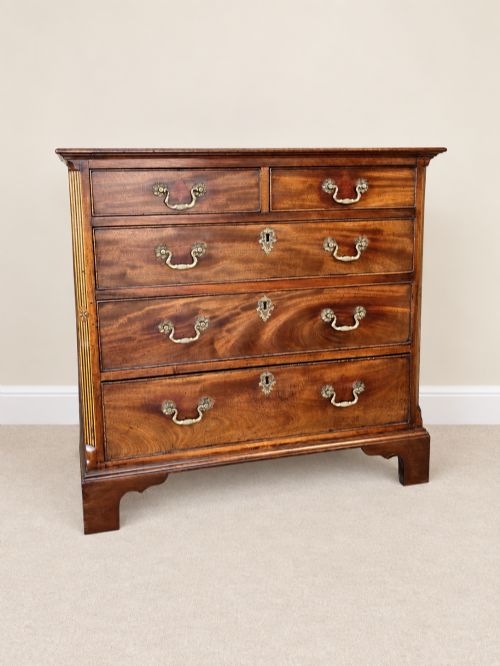
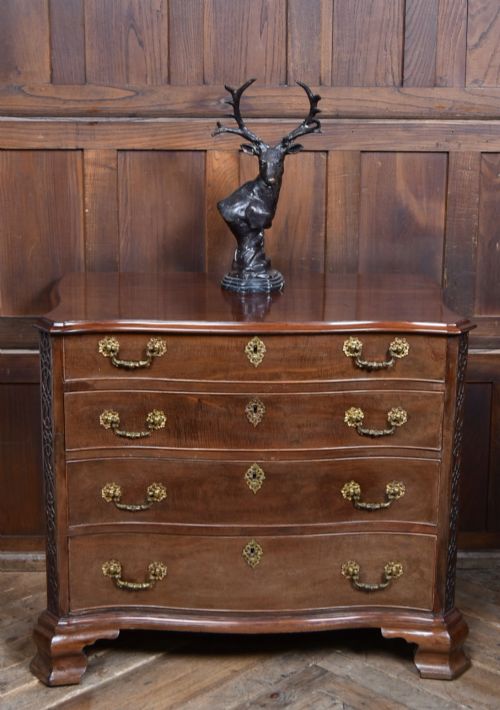
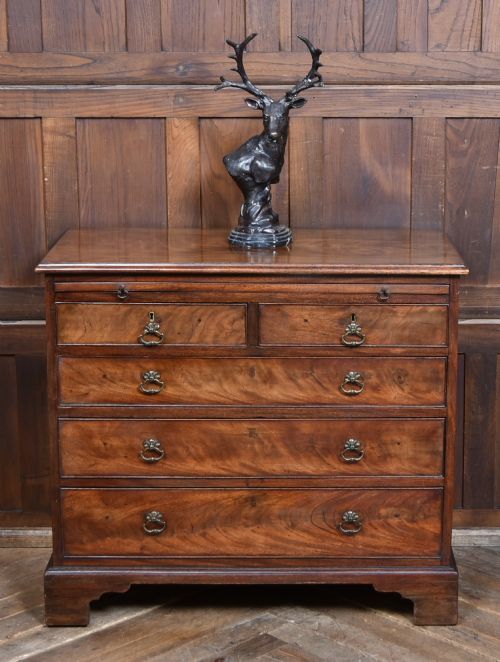
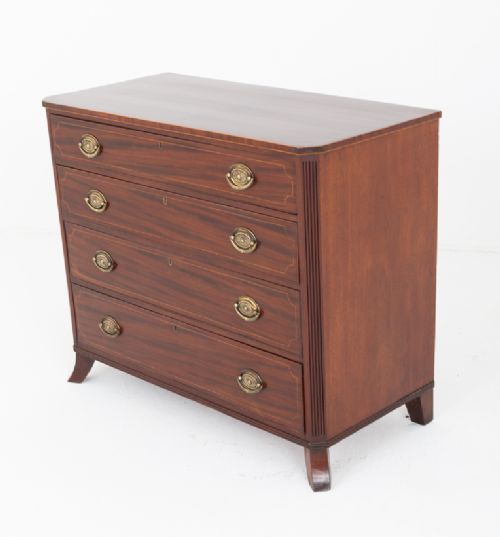
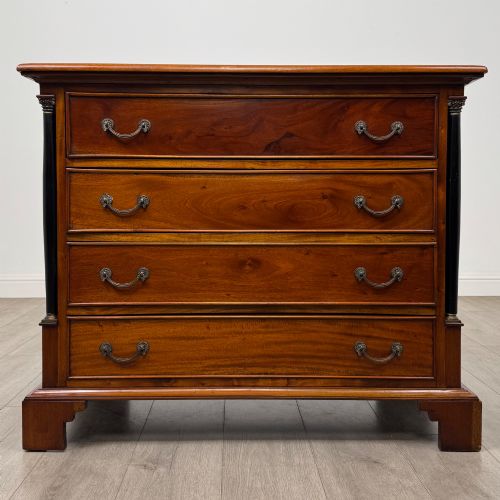
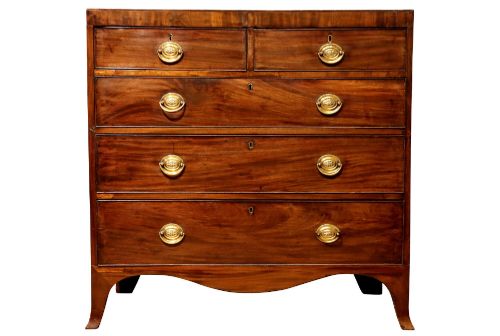
Buyers encounter multiple drawer arrangements, from small three-drawer formats up to five-height elevations and serpentine facades. Certain examples incorporate satinwood, pine, and inlaid details alongside brass handles.
Materials and construction methods
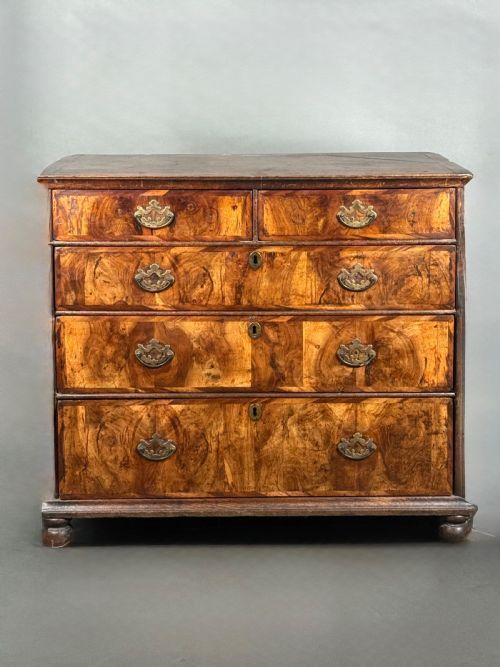
Cabinet makers utilised dense hardwoods such as mahogany, oak, and walnut to build the primary carcass and drawer structures. Secondary timbers like pine appear internally, whilst specialist surfaces feature figured veneers and burr walnut.
Surface decoration relies on contrasting stringing, boxwood inlay, and polished timber grains. Metalwork consists of cast brass handles and escutcheons secured to the drawer fronts.
Certain pieces arrive equipped with secret compartments hidden behind seemingly ordinary drawer divisions.
Distinctions in construction and finish
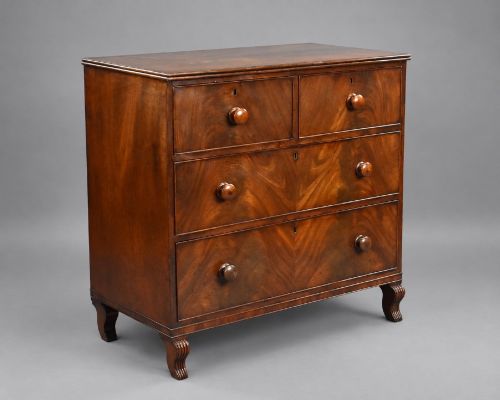
The standard of timber selection determines the visual impact, particularly where cabinet makers chose symmetrical flame mahogany or figured walnut veneers. Superior items display careful grain matching across multiple drawer tiers and serpentine curves.
Internal construction details such as oak linings, hand-cut dovetail joints, and original brass hardware elevate the standard of a piece. Lesser examples exhibit plain secondary woods and simpler mechanical execution.
The Georgian Storage Bureau Glossary
- Serpentine
- A curved front configuration that sweeps outward at the sides and recesses in the centre. This undulating shape demands advanced woodworking skill.
- Bow front
- A convex curved front facade projecting outward in an arc. It appears frequently on mahogany and satinwood examples from the Regency period.
- Flame mahogany
- A veneer cut from timber fork where branches join the trunk, producing a distinctive flickering flame pattern. Cabinet makers utilised this to ornament primary drawer fronts.
- Dovetail joint
- An interlocking wood joint utilised in drawer construction to secure sides to fronts. Hand-cut variations indicate traditional craftsmanship.
- Escutcheon
- A protective plate surrounding a keyhole, usually cast from brass. These fixtures complement the drawer handles.
Georgian Storage Bureau: Frequently Asked Questions
What periods do these pieces date from?
The listings span the eighteenth and nineteenth centuries, taking in the Georgian, Regency, and Victorian eras alongside later Edwardian and twentieth-century revivals.
Craftsmen produced these items across successive reigns, incorporating changing stylistic preferences while maintaining utilitarian storage functions.
Which timbers appear most frequently?
Mahogany forms the primary material across the majority of examples, accompanied by walnut, oak, and pine.
Cabinet makers also employed satinwood for specific decorative surfaces and boxwood for contrasting inlay work.
How do bow front and serpentine shapes differ?
A bow front projects outward in a smooth convex curve from edge to edge. A serpentine front curves inward and outward in a continuous undulating wave.
Both forms required advanced carpentry techniques to shape solid timber and apply matching veneers.