
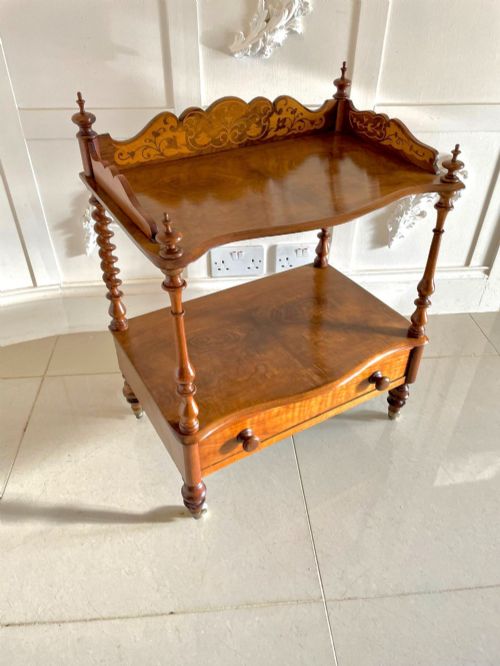
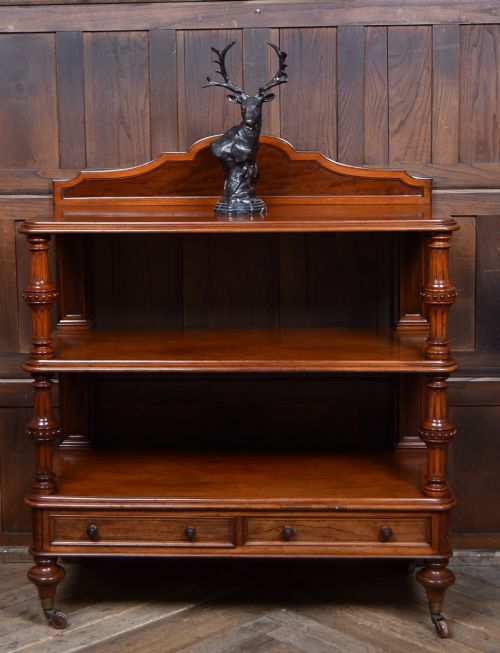
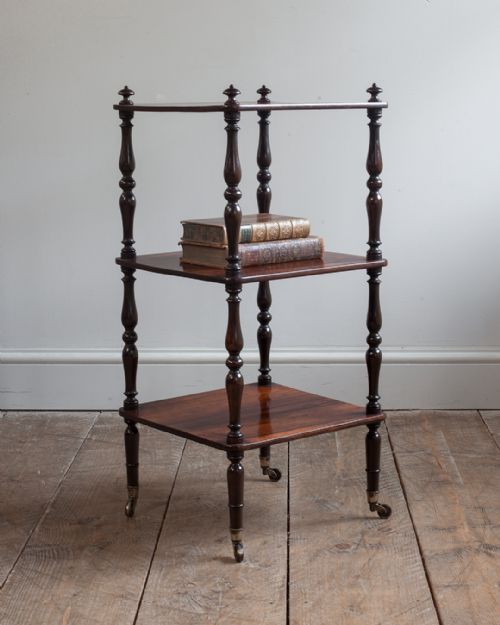
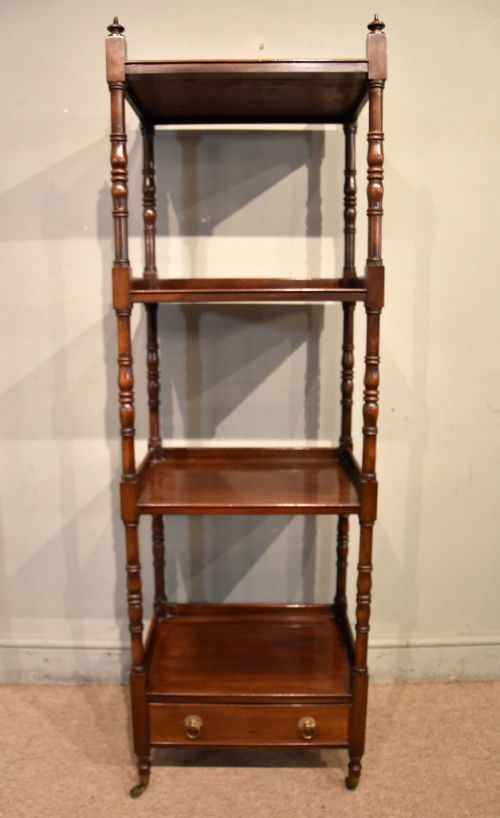





Turned Column Whatnot
These turned column whatnot pieces bring tiered display and practical surface area to a room, valued for upright proportions and timber grain.

Turned Column Whatnot
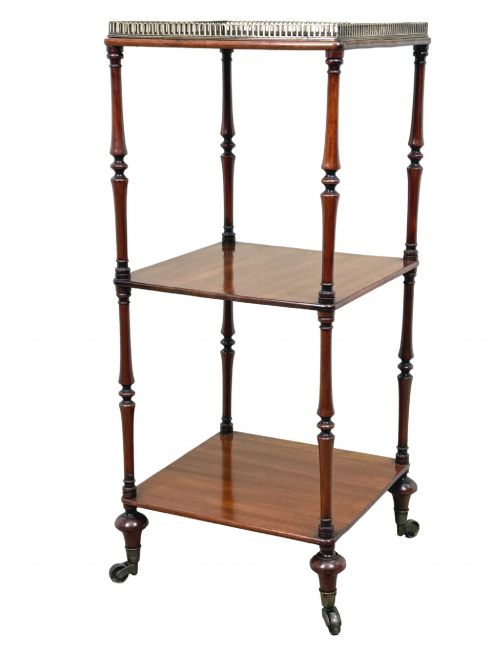
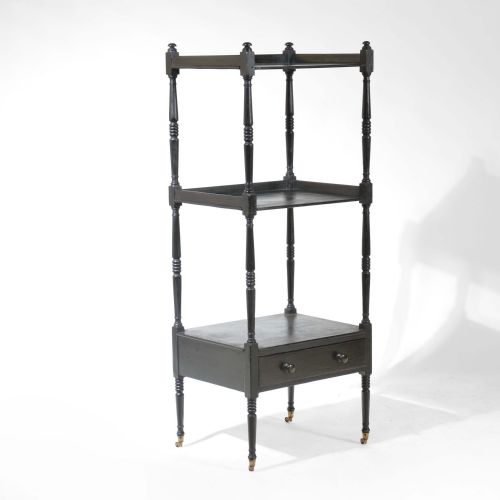
A turned column whatnot is a tiered shelving unit designed for open display and storage in domestic spaces, appearing across Georgian, Regency, and Victorian periods. Buyers search for this phrase to find vertical furniture pieces that hold books, ceramics, or decorative objects without dominating the floor space.
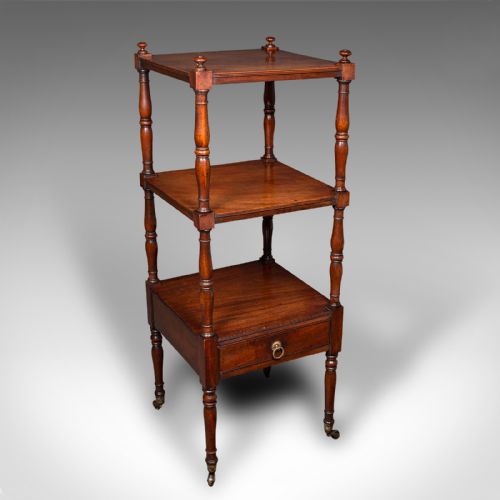
The most common versions met on this page are mahogany and walnut multi-tier stands featuring upright turned supports separating each shelf. These pieces range from three-tier corner units to tall four-tier rectangular étagères and occasional tables.
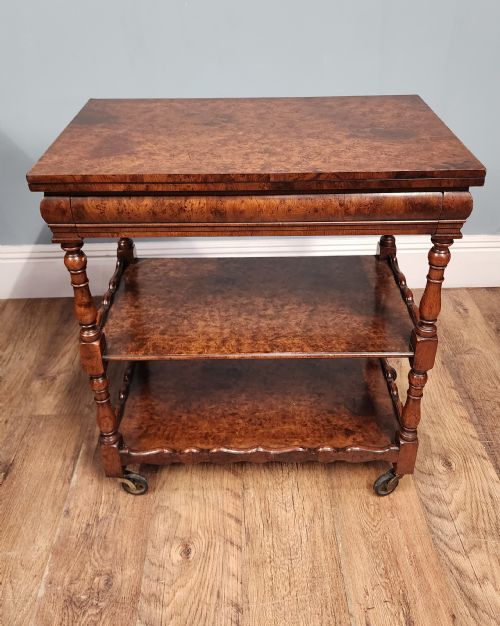
Origins span the nineteenth century, taking forms from early Regency tapering designs and George IV proportioned pieces to late Victorian and Edwardian examples. They function equally as standalone display stands, lamp tables, or butler trolleys depending on the specific tier arrangement.
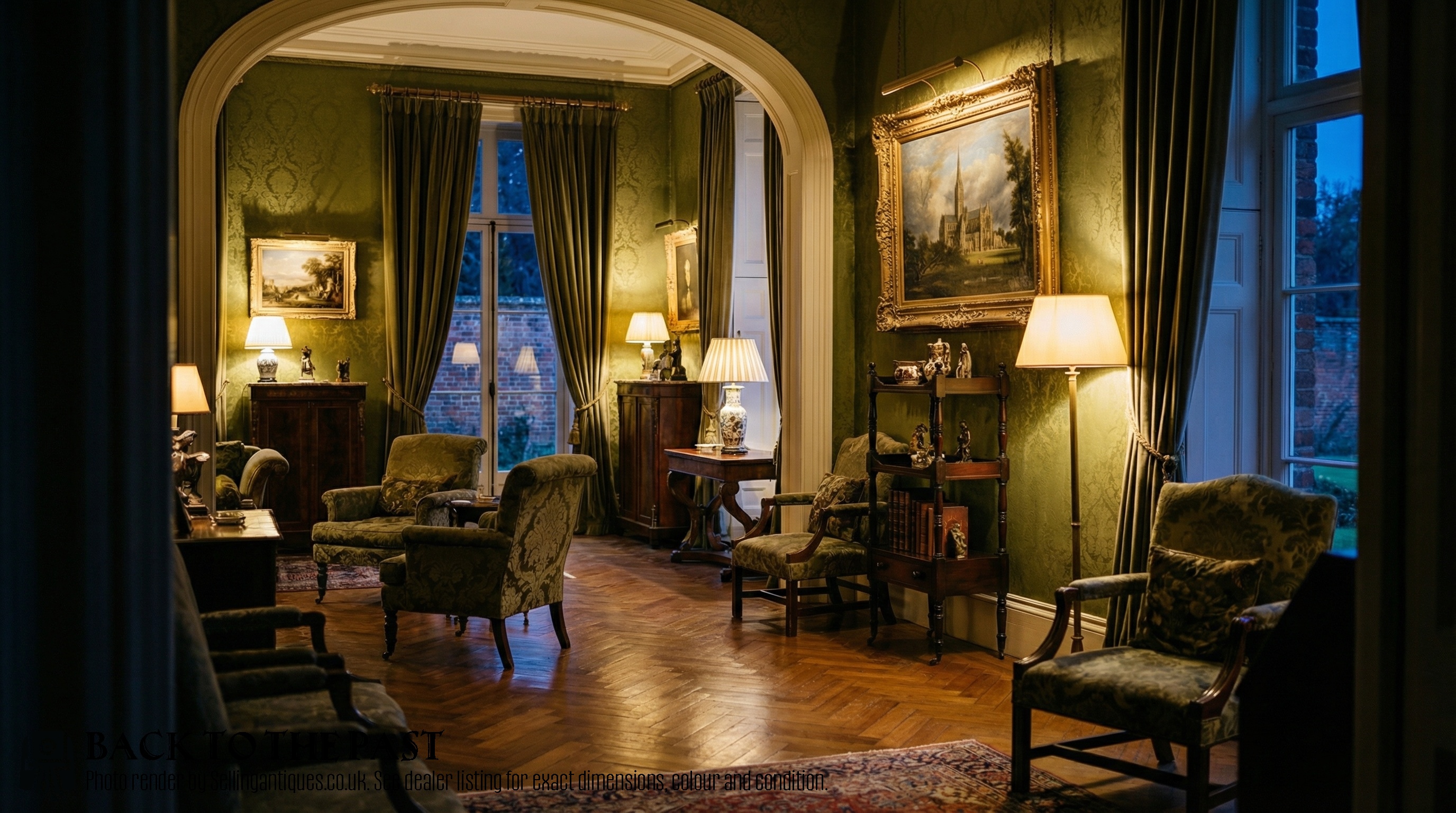
Materials and construction
Cabinet makers utilised dense hardwoods such as mahogany, walnut, burr walnut, and rosewood, often pairing solid timber framing with fine veneer panels on surfaces. Brass details appear on castors, hinges, or gallery rails, while secondary timbers provide structural stability to the tiers.
The characteristic uprights involve lathe-turned columns, sometimes featuring spiral twists or slender spindles that support each successive shelf above. Joinery relies on precise fitting between the vertical turned supports and the horizontal platforms to maintain rigid stability across multiple tiers.
Turned Column Whatnot Retail Price Guide 2026
Typical asking prices for turned column whatnot among the pieces listed under this phrase on Sellingantiques today, from the lower quarter to the upper quarter. They describe what is for sale here now, not the wider market.
Materials recorded include mahogany, walnut, burr walnut, rosewood, birdseye maple, oak, and brass.
Judging quality in turned column whatnots
Quality rests upon the choice of timber and the depth of figure in veneers, where richly grained burr walnut or figured mahogany elevates a piece above plain stock. Crisp execution of the lathe-turned columns and delicate detailing on finials or inlaid borders distinguish superior workshop production.
Proportion and structural integrity dictate the upper tier of examples, ensuring that multi-tier units remain balanced and plumb without looseness in the joints. The integration of brass castors and original gallery rails further separates standard utilitarian items from finer decorative pieces.
The Turned Column Whatnot Glossary
- Étagère
- A French term for a piece of furniture consisting of a set of open shelves for displaying small objects. It is frequently used interchangeably with whatnot in nineteenth-century listings.
- Burr walnut
- A prized timber harvested from walnut tree growths, displaying complex, swirling grain patterns. Cabinet makers used its veneer on prominent surfaces.
- Finial
- A decorative terminal ornament, often turned on a lathe, capping the top of vertical posts or column supports. It provides a neat visual conclusion to the uprights.
- Butler trolley
- A mobile tiered serving or display stand fitted with wheels or castors. These items combine the open shelving of a whatnot with functional portability.
Turned Column Whatnot: Frequently Asked Questions
How were these stands used originally?
Original nineteenth-century households used these tiered units in drawing rooms and parlours to hold decorative ceramics, silver, and reading material. Some variants functioned as music cabinets or occasional tables for lamps.
Their open construction made displayed items visible from multiple angles within the interior space.
Where should I place a whatnot?
These units fit well against drawing room walls, in corners using specialised triangular shelving, or beside seating as lamp tables. Their slender proportions make them useful for filling narrow wall spaces.
Ensure the surface weight remains balanced across the tiers to maintain stability on wooden floors.
How do I date a mahogany whatnot?
Dating relies on stylistic shifts from the clean lines of the Regency period to the heavier, carved walnut forms of the Victorian era. Earlier pieces often feature tapering uprights and delicate brass castors.
Later Victorian and Edwardian examples introduce richer veneers like burr walnut and more elaborate inlaid borders.