
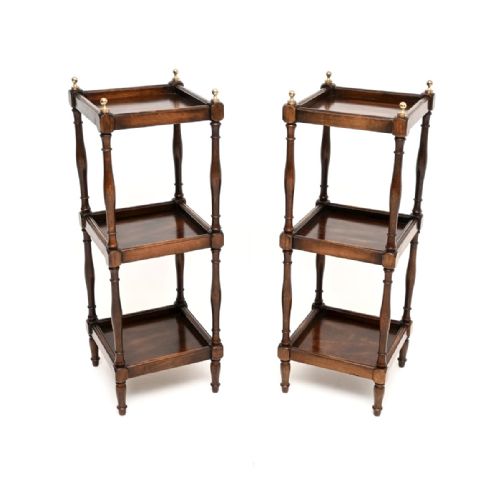
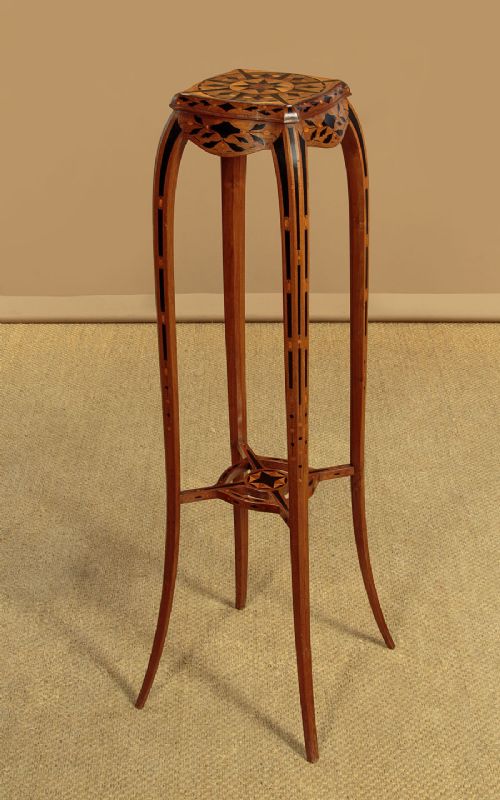
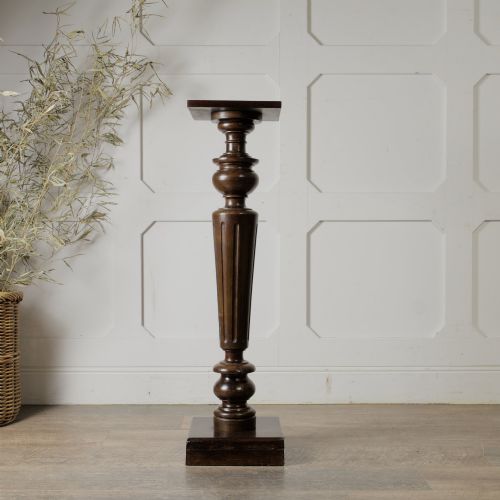
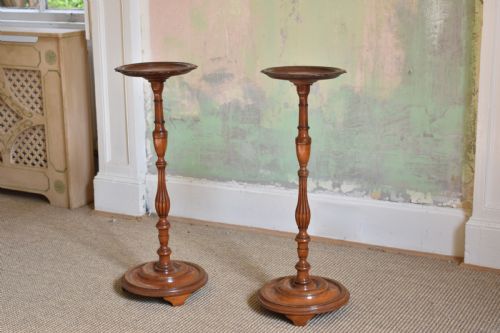




Turned Column Plant Stand
These turned column plant stand examples elevate floral displays and sculpture, bringing classical proportion and height into domestic interiors.
Turned Column Plant Stand
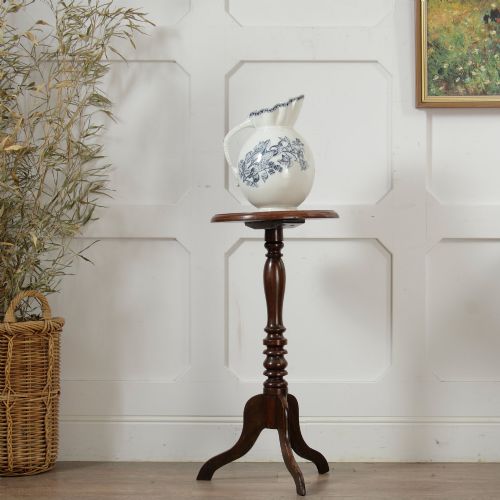
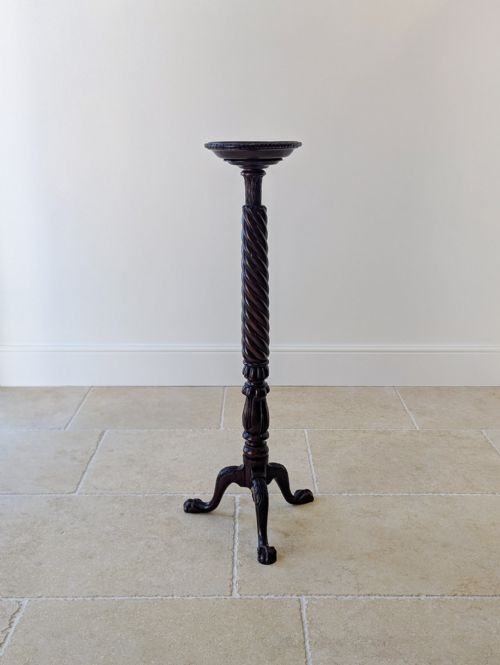
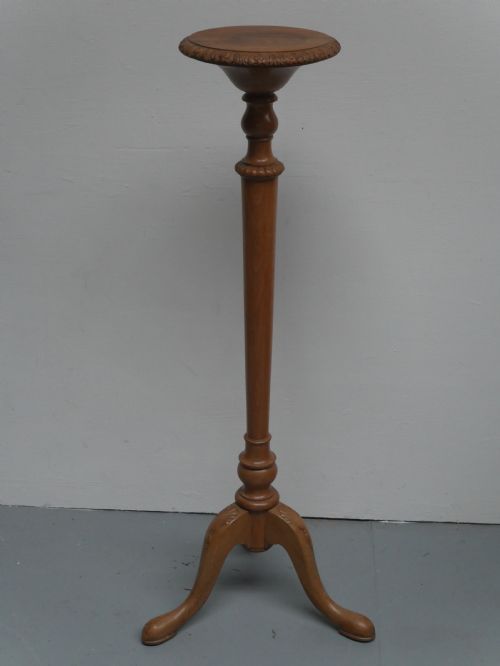
A turned column plant stand elevates heavy pots and ornaments using a vertical shaft turned on a lathe, providing stability and visual height. You will encounter these supports spanning the Victorian, Edwardian, and Georgian periods, alongside later revival pieces.
The primary forms include tall torchères, jardiniere stands, and smaller display pedestals fashioned from timber or stone. Makers adapted these structural supports to hold potted plants, urns, and sculptural busts within reception rooms and hallways.
Materials and construction methods
Cabinetmakers turned dense timbers such as mahogany, walnut, oak, and satinwood on lathes to create the central columns, frequently pairing them with inlaid veneers or ebonised details. Selected examples incorporate brass mounts or contrasting specimen woods to enrich the surface.
Structural integrity relies on traditional joinery, connecting circular or multi-sided tabletops firmly to central pillars and weighted base plates. Surface finishes range from polished french polish to painted lacquer and black lacquer decoration.
The listings here span the Victorian, Edwardian, and Georgian eras, constructed from mahogany, walnut, oak, brass, and satinwood.
Judging the quality of construction
Superior examples demonstrate crisp lathe work with deep mouldings and substantial timber selection that resists warping under heavy loads. The weight and balance of the base plate determine how securely the stand carries tall arrangements.
Fine craftsmanship shows in the precision of decorative inlays, tight joints between the column and top, and the choice of dense hardwoods over softer secondary woods.
Shoolbred
The Turned Column Plant Stand Glossary
- Torchère
- A tall, slender stand designed to support a light source, plant, or decorative urn. These vertical pieces emerged during the seventeenth century and remained popular through the Victorian era.
- Jardiniere stand
- A specialised piece of furniture built to hold a floral container or planter. These stands often feature waterproof liners or raised rims to contain moisture.
- Turning
- Shaping wood on a revolving lathe using cutting tools to create symmetrical columns and balusters. This technique defines the central shafts of these stands.
- Pedestal
- A structural support or base for a bust, statue, or vase. These forms lift display items to eye level within a room.
- Specimen wood
- Furniture constructed using multiple different decorative timbers, often arranged in geometric patterns or banding. This method highlights the natural colour variations of each species.
Turned Column Plant Stand: Frequently Asked Questions
What is a plant stand used for?
These tall supports elevate potted plants and heavy jardinieres off the floor to catch better light and protect interior flooring.
They also serve as display columns for sculptures, bronze figures, and decorative urns.
How do I date a turned column stand?
Dating relies on identifying the prevailing timber choices, turning profiles, and decorative revival styles such as Chippendale or Queen Anne.
Victorian and Edwardian pieces frequently utilise dense mahogany or walnut alongside machine-assisted joinery.
Where should I place a torchere stand?
These slender supports fit neatly into empty room corners, hallways, and beside seating areas where floor space is restricted.
Their vertical proportions draw the eye upward and fill empty vertical gaps in interior schemes.
Are these stands stable for heavy pots?
Most antique columns use weighted bases or wide tripod feet to counterbalance heavy ceramic planters and stone urns safely.
Checking the width of the base relative to the top platform helps determine load capacity.